

This recipe for benne wafers follows the traditional Charleston Lowcountry method: butter, brown sugar, and toasted sesame seeds baked into a thin, crispy sesame cookie. Benne, the Bantu word for sesame, arrived in South Carolina with enslaved West Africans, who planted benne plants in their own garden plots for good luck. This version keeps that history intact while giving you exact timing and technique so your batch turns out deep golden brown and crunchy every time.

I first tasted benne wafers at the City Market in downtown Charleston, standing on the cobblestones with a box of cookies in one hand and absolutely no idea how addictive these little wafers are. It's a good thing you'll get about 175 from this batch.
This recipe for benne wafers rebuilds that exact cookie: thin, crispy, and studded with toasted sesame seeds that carry a nutty flavor no other cookie quite matches.
My parents lived in the Charleston area for 20 years, so this isn't a one-time tourist memory; it's a flavor I've circled back to again and again. Charleston has kept this recipe close for three centuries, and every bag of benne wafers you buy downtown carries that same story forward.
Unlike vanilla wafers that bake up with real thickness and a soft-crisp bite, benne wafers have a thinner, brittle texture. The high sugar ratio and the way the batter spreads thin in the oven are what create that snap, while a thicker dough like vanilla wafers holds its shape and bakes into something you can actually sink your teeth into.
If you've only had one style of "wafer," the other one will genuinely surprise you.
Back in the Lowcountry: West Africans Brought Benne to Charleston
Long before benne wafers ever landed in a cookie tin, benne seeds were considered a good luck charm, tucked into pockets and planted in small garden plots by the West Africans who carried them across the Atlantic during the transatlantic slave trade.
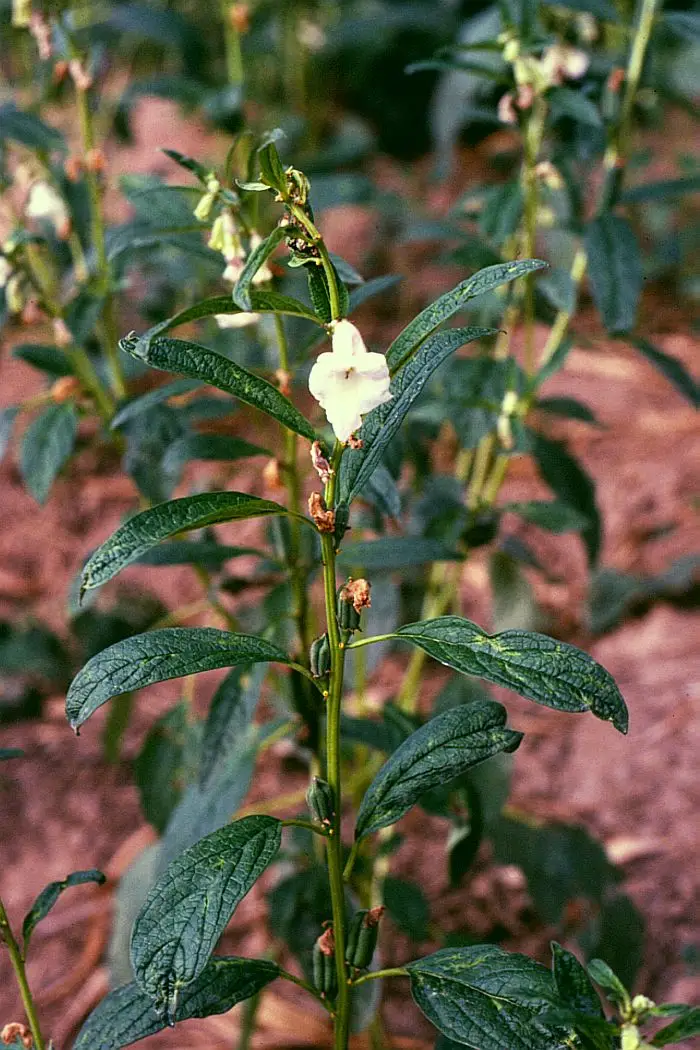
Sesamum indicum (sesame plant) — Photo by Franz Xaver, via Wikimedia Commons
Benne is the Bantu word for sesame, and the belief that these seeds bring good fortune wasn't a minor detail; it traveled fully intact from West Africa to the Lowcountry, and people still repeat it today.
In a very real sense, benne wafers are America's original fortune cookie, a treat eaten for good luck generations before the fortune cookie most people know ever existed, and one that deserves the same recognition.
Enslaved people brought deep agricultural knowledge with them, and that expertise shaped what would grow, and thrive, in Lowcountry soil, including the sesame plants that colonial planters had struggled to cultivate on their own.
Given small plots of their own to tend, they planted benne and folded the seeds into daily cooking, using the oil to flavor rice and pounding the seeds into flour for biscuits, stews, and candy long before anyone wrote the recipe down.
From Enslaved Gardens to Charleston Bakeries
Benne wafers as a sweet, buttery cookie grew out of Gullah Geechee foodways, a culture built through the ingenuity, adaptability, and resilience of West Africans and their descendants along the South Carolina and Georgia coast.
That same skill turned a humble seed into a genuine cash crop for the Lowcountry, and by the time the Charleston Receipts cookbook was documenting local recipes, benne had earned a permanent place in biscuits, brittle, candy, and wafers alike.

Charleston City Market
The wafer's delicate, nearly translucent shape has stayed remarkably consistent for over 300 years, a direct thread back to the people who first grew and cooked with benne here.
Why Charleston Still Claims This Cookie
Discover South Carolina food history and you'll find benne wafers listed among the state's oldest surviving Lowcountry recipes, still sold in gift shops and grocery stores across Charleston.
Charleston has kept this recipe close for three centuries, and every bag of benne wafers you buy downtown carries that same story forward, one rooted in African skill, tradition, and a belief in good luck that still holds up every time you eat one.
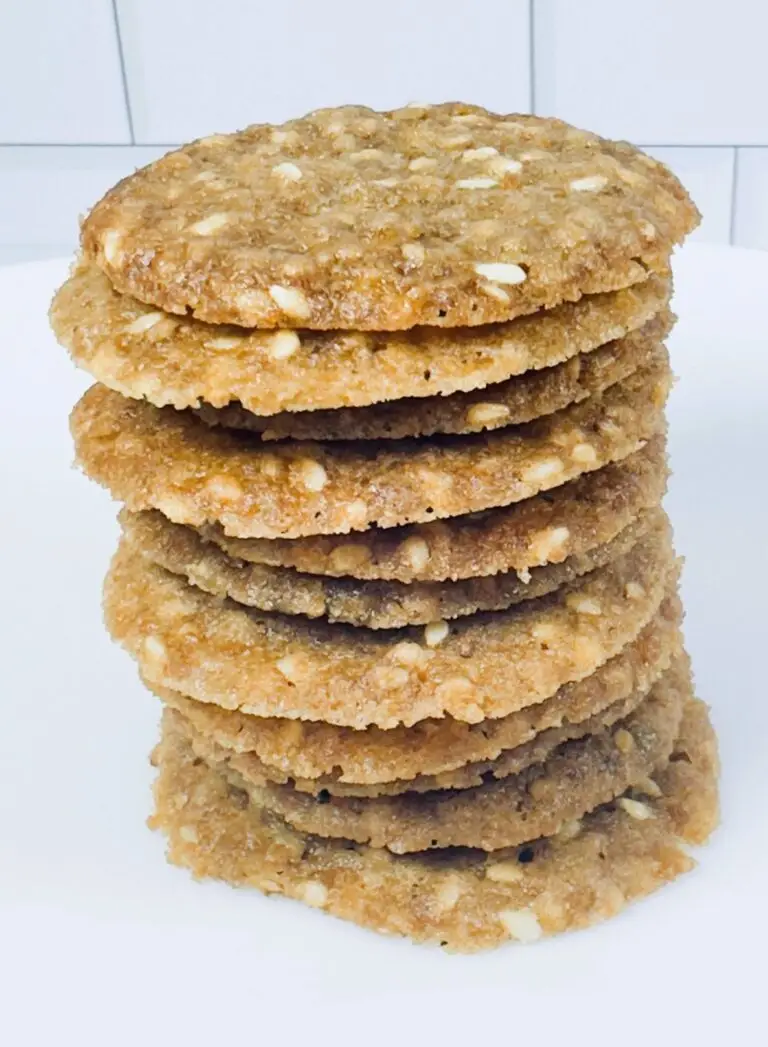
Traditional Benne Wafers – Charleston Lowcountry Recipe
This traditional benne wafers recipe follows the classic Charleston Lowcountry method, using toasted sesame seeds folded into a buttery brown sugar dough for a thin, crispy cookie with a deep nutty flavor. Rooted in Gullah Geechee foodways, these sesame cookies bake up nearly translucent at the edges, a signature texture that’s stayed consistent in South Carolina kitchens for generations. This version gives exact toasting and baking guidance so the wafers turn out crunchy and deep golden brown every time.
- Total Time: 45 minutes
- Yield: 175 wafers 1x
Ingredients
- 1 cup all-purpose flour
- 1/4 teaspoon baking powder
- 1/4 teaspoon salt
- 3/4 cup butter, at room temperature
- 1 cup firmly packed light brown sugar
- 1 teaspoon vanilla
- 1 large egg
- 3/4 cup toasted sesame seeds
Instructions
- Toast the seeds first: Spread the sesame seeds in a single layer on a dry skillet or jellyroll pan and bake in a 300 degree oven, stirring every few minutes, until deep golden brown and fragrant, about 20 minutes. Let them cool while you prep everything else. This step is the key component of real benne flavor, so don’t shortcut it or swap in raw seeds.
- Bump up the oven temp: After the sesame seeds are toasted, set the oven to 350 degrees.
- Prep your station: Line a cookie sheet or prepared baking sheet with waxed paper or parchment paper before you turn on the mixer. This batter spreads fast once it hits the oven, so having your pans ready means you’re not scrambling between batches.
- Mix the dry ingredients: In a small bowl or separate bowl, thoroughly stir together the flour mixture: the all-purpose flour, baking powder, and salt. Set this aside; you’ll add it in one step, not gradually.
- Cream the butter mixture: In a large bowl, use an electric mixer or electric hand mixer on medium speed to cream the butter, brown sugar, and vanilla extract until light and fluffy, about 2 to 3 minutes, scraping the sides of the bowl as needed.
- Add the egg and dry ingredients: Beat in the egg on low speed until just combined, then add the flour mixture and mix on low speed until no streaks remain. Switch to medium-high speed for a few seconds only if the batter looks uneven, then stop.
- Fold in the sesame seeds: Fold in the cooled toasted sesame seeds by hand until evenly distributed through the dough.
- Drop and bake: Drop level 1/4 teaspoonfuls of batter onto your prepared baking sheet, spacing them at least 1 inch apart since they’ll spread to about the size of a quarter. Bake in a preheated 350 degree oven until deep golden brown at the edges, 8 to 9 minutes.
- Cool completely, then store: Slide the entire sheet of parchment paper, wafers and all, off the pan and onto the counter or a wire rack to cool completely before handling. Store cooled benne wafers in a tightly covered tin or airtight container.
Pin This Benne Wafers Recipe For Later
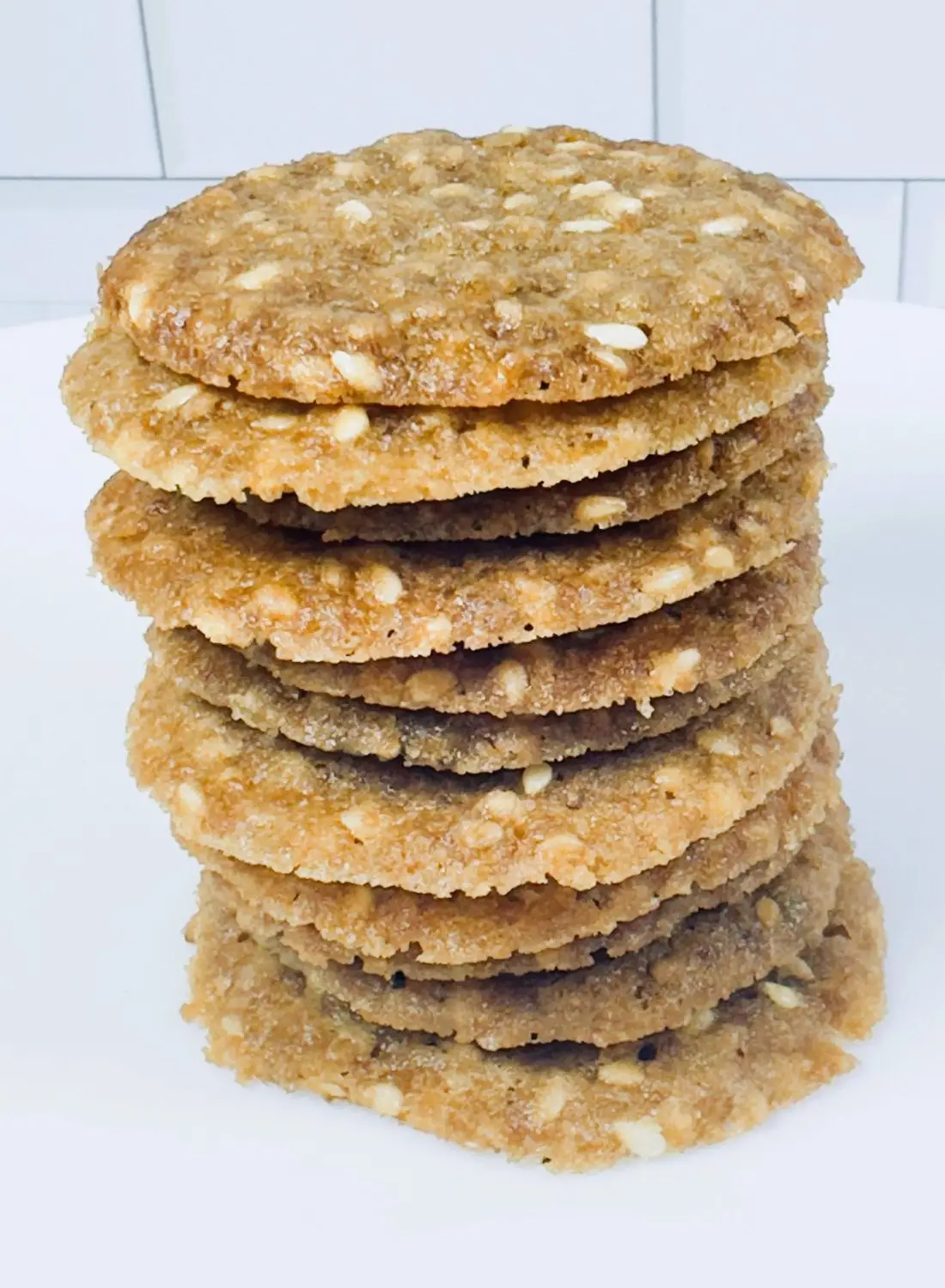
Why This Recipe for Benne Wafers Still Works Today
Toasting the Sesame Seeds Builds Real Flavor
Toasted sesame seeds taste dramatically different from raw ones, and this recipe asks you to toast them once, fully, before they ever hit the batter.
Raw sesame seeds are mild and slightly bitter, but a slow toast in a 300 degree oven pulls out a deep, nutty flavor that raw seeds simply can't deliver. Skipping this step, or toasting only partway, is the single biggest reason homemade benne wafers taste flat compared to a bakery version.
A High Sugar-to-Flour Ratio Creates the Signature Crunch
This batter uses far more sugar relative to flour than a standard cookie, and that ratio is exactly what makes these wafers spread thin and crisp instead of puffing up soft.
The brown sugar also adds moisture and a deeper caramel note than white sugar would, which matters once the edges start turning deep golden brown. Modern sesame seed cookies that use less sugar tend to bake up cakier and lose that classic snap.
Room Temperature Butter Keeps the Dough Spreadable
Butter that's fully at room temperature creams smoothly into the sugar without leaving hard lumps that block even spreading in the oven.
Cold butter mixture resists blending and often bakes into wafers with uneven thickness, some thin and crisp, others thick and chewy.
Letting the butter sit out for a full hour before you start solves this before it becomes a problem.
How to Make Perfect Benne Wafers Every Time
Toast Your Sesame Seeds Until They're Fragrant, Not Just Colored
Spread the benne seeds in a single layer on a dry skillet or jellyroll pan and bake at 300 degrees, stirring every few minutes so they toast evenly.
You're looking for a light golden color and a smell that's nutty and slightly smoky; if you can smell them from across the kitchen, they're done. Pull them a minute early if you're unsure, since seeds continue browning slightly from residual heat.
Cream the Butter Mixture on Medium Speed, Not High
Use an electric mixer or electric hand mixer on medium speed to cream the butter, brown sugar, and vanilla extract until light and fluffy, scraping down the sides of the bowl once or twice.
Running the mixer on high speed incorporates too much air too fast and can make the dough harder to control once you add the egg. This step should take about 2 to 3 minutes, not seconds.
Drop Batter the Size of a Quarter and Leave Room to Spread
Use a 1/4 teaspoon to drop batter onto your prepared baking sheet, spacing each mound at least an inch apart since these wafers spread significantly as they bake.
Crowding the pan is the most common reason home bakers end up with wafers fused together at the edges.
Watch for Deep Golden Brown, Not Just Golden
Pull the pan when the edges turn deep golden brown and the centers look just slightly less dark; benne wafers continue to firm up as they cool; they won't feel crisp straight out of the oven.
If you pull them too early, they'll be pale and soft even after cooling completely. This is the one step where trusting your eyes matters more than trusting the timer.
Cool Wafers Completely Before Moving Them
Slide the entire sheet of parchment paper or waxed paper, wafers and all, onto your counter or a wire rack and let everything cool completely before handling.
These cookies are fragile and thin while warm, and moving them too soon almost always cracks them. Once fully cool, they lift off cleanly and hold their shape in an airtight container.
Recipe Variations, Serving Ideas, & Storage
Recipe Variations
Benne wafers aren't really a recipe built for variations, and that's actually part of what makes them worth making. This exact combination of butter, brown sugar, and toasted sesame seeds has stayed consistent in Charleston kitchens for over 300 years, and swapping ingredients or flavors would trade away the very history this cookie is known for. If you're craving a sesame cookie you can play around with, this isn't that recipe; it's the one you make when you want the real thing, exactly as it's always been done.
Tools & Ingredients Worth Having For This Recipe
We don’t run an ad network here because nobody wants a recipe with a side of ads. Instead, we quietly use Amazon links for tools that we actually use in our kitchen and make sense for the recipes we share. If you choose to shop through those links, you help keep these vintage recipes alive and off the endangered list, at no extra cost to you.


Last update on 2026-11-19 at 09:46 / Affiliate links / Images from Amazon Creators API
Frequently Asked Questions
Benne wafers that stay soft usually came out of the oven too early, since these cookies firm up almost entirely during cooling rather than while baking. Pull your next batch when the edges look deep golden brown, then let them cool completely and undisturbed before judging the texture.
Regular modern sesame seeds from the grocery store will work in this recipe, though they tend to have a slightly milder flavor than heirloom benne seeds from a source like Anson Mills. Either way, toasting is what develops the nutty flavor, so don't skip that step regardless of which seed you use.
Benne wafers stored in a tightly covered tin or airtight container stay crisp at room temperature for up to 2 weeks. Their low moisture content actually helps them hold up longer than many other cookies, which is part of why they've traveled well as a gift for generations.
This recipe doubles cleanly since the ratios stay proportional, though you'll want to toast the sesame seeds in two batches rather than overcrowding one pan. Plan on baking in more rounds too, since these wafers need real spacing on the sheet to bake evenly.
Uneven spreading almost always comes down to butter temperature or inconsistent scoop sizes rather than anything wrong with the recipe itself. Make sure your butter is fully at room temperature and use a consistent 1/2 teaspoon scoop so every wafer has the same amount of batter to work with.
Benne wafers are distinguished by their history as much as their ingredients, tracing back to benne seeds carried by enslaved West Africans to the South Carolina Lowcountry. The traditional recipe also produces a notably thinner, almost translucent cookie compared to most modern sesame cookies.
A Charleston Tradition Worth Baking Again
That bag of benne wafers from the City Market started as a vacation memory, but it's turned into a recipe I come back to every time I want something that tastes like Charleston.
Good luck was the original reason anyone planted benne seeds in the first place, and there's something fitting about carrying that same small ritual into a modern kitchen.
Give this one a try next time you want a cookie with real history behind it, and let us know how your batch turns out in the comments below.
