

How to make hummingbird nectar takes five minutes and two ingredients: mix 1 part plain white sugar with 4 parts water, stir until the liquid is completely clear, and let it cool to room temperature before filling the feeder. Skip honey, brown sugar, and red dye. Clean the feeder and swap in fresh nectar every other day, and daily when it's hot.
Why I Make My Own Hummingbird Food
By the second week of September, my three feeders were emptying faster than I could carry a pitcher out the door. Houston had been swarming with hummingbirds since summer, and store-bought hummingbird food at that rate would have cost me a small fortune. Once you know how to make hummingbird nectar yourself, it costs pennies per batch. It also needs only simple ingredients you already own.
Homemade nectar runs on regular granulated sugar and a kettle, and I've never added dye to a single batch. Texas Gulf Coast birders know the feeling of a feeder going dry at noon. Mine get refilled every single day, and the little hummingbirds line up on the nearby Magnolia tree branches like a crowd outside a bakery.
Commercial hummingbird nectar works fine, but the cost of pre-made nectar adds up quickly when three feeders are draining daily.
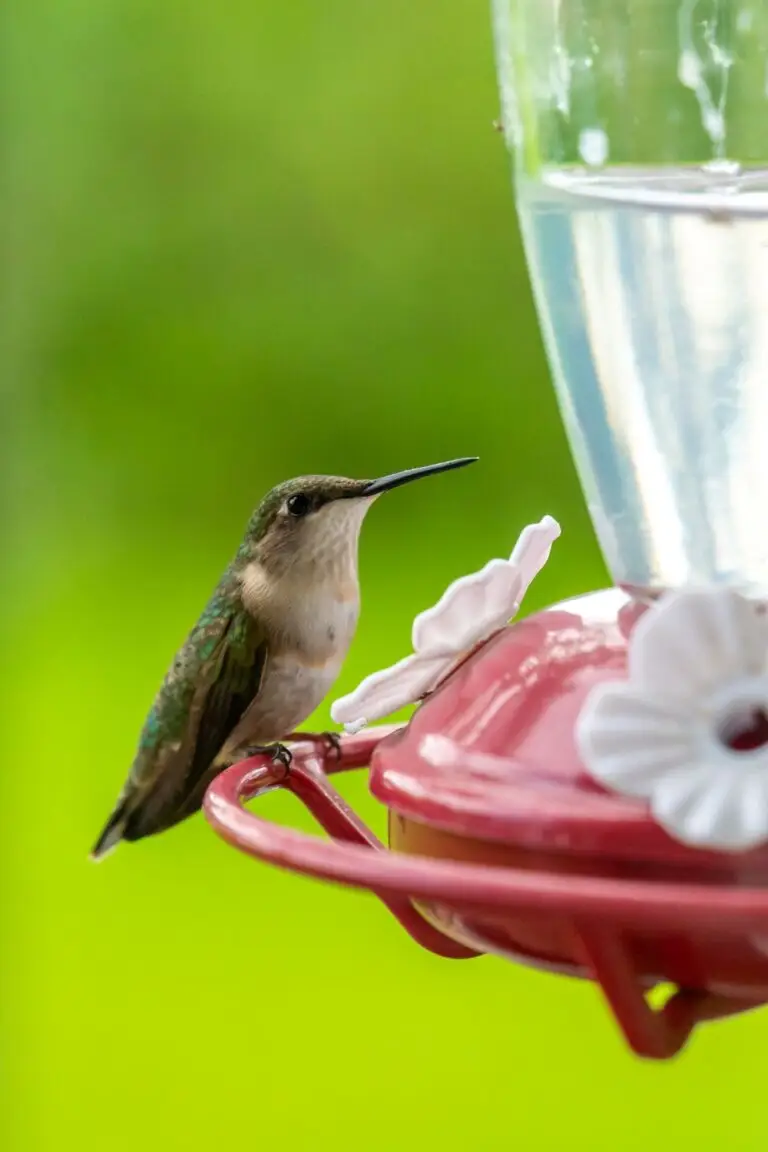
Easy Hummingbird Nectar Recipe With 1:4 Ratio
An easy hummingbird nectar recipe made with only refined white sugar and water. It mimics natural flower nectar, takes about 5 minutes, and skips the red dye.
- Total Time: 35 minutes
- Yield: 4 cups 1x
Ingredients
- 4 cups water
- 1 cup plain white granulated sugar (refined white or pure cane sugar only)
Instructions
- Measure and heat the water: Measure 4 cups of water and heat it in a saucepan, or in an electric kettle, or use very hot tap water. The water needs to be hot enough to dissolve the sugar completely.
- Dissolve the sugar: Pour the hot water into a large pitcher or glass measuring cup, then add the sugar. Stir for about a minute, until the liquid is completely clear with no grains on the bottom.
- Cool it completely: Let the nectar come to room temperature before adding it to a feeder.
- Fill and store: Fill the feeder and refrigerate the leftovers in a covered jar. Use refrigerated nectar within 1 week.
Notes
Cold weather: A slightly stronger mix is fine in cold, rainy weather, up to ⅓ cup sugar per cup of water, according to the Cornell Lab of Ornithology. In hot, dry weather, keep it at ¼ cup per cup.
Changing the nectar: The Smithsonian’s National Zoo recommends changing the nectar every other day and cleaning the feeder each time.
Scaling down: Keep the 1:4 ratio. For 1 cup of water, use ¼ cup sugar.
Pin This Easy Hummingbird Nectar Recipe For Later

The History of Homemade Hummingbird Nectar and Feeders
Why Plain Sugar Water Mimics Flower Nectar
In the wild, hummingbirds drink nectar that is mostly sucrose. Hummingbirds.net calls sucrose by far the most common sugar in the flowers hummingbirds primarily pollinate.
A survey of 40 plant species thought to be hummingbird-pollinated found sucrose made up about 74% of their sugars on average. Plain white table sugar is refined sucrose, so a bag from the pantry stands in for the blossom.
Early Hummingbird Feeding Experiments
Feeding hummingbirds by hand is older than the airplane. BirdNote reports that late in the 1600s, Benjamin Bullivant, the attorney general of colonial New England, described a small glass covered with paper, with holes just big enough for a Ruby-throated Hummingbird's bill.
His recipe leaned heavily on honey. Others of the era brewed dry white wine, cracker crumbs, and molasses, and only the tropical colonies had cane sugar cheap enough to share with the birds. Honey is now off the list, since it ferments rapidly when diluted with water and can kill hummingbirds. Early bird lovers did the guessing so you don't have to.
The First Commercial Hummingbird Feeder
The first commercial feeder arrived in the twentieth century. Hummingbirds.net explains that Laurence J. Webster of Boston designed it for his wife, who had read a 1928 National Geographic story about feeding hummingbirds from small glass bottles.
An MIT lab glassblower produced it sometime between 1929 and 1935. Interest grew after National Geographic ran a 1947 article by Harold Edgerton on his strobe flash, with photos of hummingbirds at Webster's feeder. The Audubon Novelty Company began selling the feeder in 1950.
A Texas Feeder Inventor in Kerrville
Texas has its own chapter. According to Wikipedia's entry on W. R. Sullivan, he invented a feeder in 1932 to keep other birds and insects out, and sold it around Kerrville, Texas.
He made feeders from Heinz vinegar bottles and IV bottles. By 1936 he'd hung one outside his patient room at the Veterans Administration Hospital near Kerrville, and he eventually placed about 25 around the grounds.
In 1939 he noted that hummingbirds drank a US quart of the sweetened water every day. Anyone refilling three feeders each morning will recognize the math.

The Ratio Behind How to Make Hummingbird Nectar
The right ratio for how to make hummingbird nectar is 1 part plain white sugar to 4 parts water. Hummingbirds.net says the mix approximates the average sucrose content of about 21% in the flowers favored by North American hummingbirds, without being so sweet it draws too many insects.
What to Leave Out of Hummingbird Nectar
Hummingbird nectar needs only refined white sugar and water, so leave out honey, brown sugar, raw sugar, artificial sweeteners, and dye. Hummingbirds have a legendary sweet tooth, but they've never asked for a gourmet blend.
- Honey: It ferments rapidly when diluted with water and can kill hummingbirds.
- Brown and raw sugar: Both contain molasses and minerals the birds don't need.
- Artificial sweeteners: They give hummingbirds no usable energy.
- Red dye: Audubon and the National Zoo both advise against it, and the bright color on the feeder already does the job.
Which Sugar Works Best for Hummingbird Nectar?
Plain white granulated sugar works best for hummingbird nectar. Pure white cane sugar is the classic choice, and regular table sugar labeled just "sugar" may come from beets instead. Both are refined sucrose, so either one works as long as the bag lists nothing extra.
Do You Need to Boil the Water?
Very hot water is enough to dissolve the sugar for hummingbird nectar, although Audubon recommends boiling for one to two minutes. I use very hot kettle water and stir for a full minute, but boil it if you'd feel better about it. Either way, let the nectar cool to room temperature before it goes in the feeder.
Once the feeders are filled, wander over to our kitchen tips for more simple tips & how-tos that make life easier.
Keeping Hummingbird Nectar Fresh: Storage & Cleaning Tips
Homemade hummingbird nectar keeps up to a week in the fridge, but nectar in the feeder needs changing every other day.
How Long Does Homemade Nectar Last in the Fridge?
Refrigerate extra nectar in a covered jar for up to 1 week. Bird experts give different limits, from 1 to 3 weeks, but you'll be swapping in fresh nectar often anyway, so 1 week is a safe window.
How Can You Tell When Hummingbird Nectar Has Gone Bad?
Fresh nectar looks as clear as tap water, so any cloudiness means it's time to dump it. Bacteria and yeast turn the liquid hazy or milky first. White threads, floating specks, and dark spots near the feeding ports follow, and a sour or yeasty smell like bread dough means fermentation is well underway.
Spoiled nectar can harm hummingbirds. Fermentation produces alcohol, and black mold in a dirty feeder has been linked to a fungal infection that swells a hummingbird's tongue and throat. Hot weather speeds the process up, and in the hottest part of summer, nectar can spoil in two to three days. Birds that suddenly ignore a full feeder are often telling you something.
When you spot any of the signs, take these steps:
- Empty the feeder right away and pour the nectar down the drain.
- Take the feeder apart and scrub every port with a bottle brush, since mold hides there even when the reservoir looks clean.
- Rinse with very hot water or soak in vinegar water, and skip the dish soap.
- Let every part dry completely before you refill.
- Don't top off old nectar with fresh nectar. Mixing in a new batch won't rescue what's already contaminated, so start from clean.
How Often Should You Change Hummingbird Nectar?
Change the nectar every other day and clean the feeder each time. Hot weather shortens the clock, so switch to daily changes on the hottest days. In cooler weather, every few days is enough.
How to Clean a Hummingbird Feeder
To clean a hummingbird feeder, take it apart, scrub the ports with a bottle brush, rinse with very hot water or vinegar water, and let every part dry before refilling. Skip dish soap, since residue can linger.
Hummingbird feeders get dirty faster than most people expect. Sugar water leaves a sticky film on everything it touches, and the film collects dust, pollen, and grime. Warm weather speeds up the buildup, but cooler weather doesn't stop it, so scrub at every refill.
The two types of feeders in my Texas yard show how quickly it happens. Neither looks dirty from across the yard, but a close look at the bases and ports tells a different story.
 |  |
|---|
Do Hummingbirds Prefer a Certain Type of Feeder?
In my yard, the hummingbirds visit the feeder with the sturdy red plastic perch more than the one with the thin metal ring.
Both feeders from the photos above hang within sight of each other. The plastic one has no decorative flowers around the ports, yet it gets steady traffic, while the metal-perched feeder is visited less. The birds don't seem to care about the flowers at all.
My yard isn't a lab, and I haven't run a controlled test. Still, three feeders and months of daily refills add up to a pattern worth sharing. Pick a feeder you can take apart and scrub easily, since a clean feeder matters more than any extra design details.
Where to Hang a Hummingbird Feeder
Pick a Shady Spot
Hang feeders in the shade, because Audubon says shade keeps the sugar solution from fermenting. The Bird Collective suggests partial shade, or a spot with cool morning sun and afternoon shade. Mine hang near our kitchen nook windows, under an awning, so the show is front row.
Keep Feeders Apart
Hang several feeders far enough apart that the hummingbirds can't see one another. Audubon says this keeps one bird from dominating the rest. Three feeders spread around the yard beat one big feeder with a bully guarding it.
Protect Birds From Window Strikes
Place feeders within 3 feet of a window or more than 30 feet away to reduce window collisions, per the Bird Collective.
When to Put Feeders Up
Audubon suggests checking eBird for the first hummingbird sightings in your area each spring, then hanging feeders a couple of weeks before. Texas is early: Texas Parks and Wildlife recommends having feeders up by March 15, and says migration begins as early as January or February in some areas.
When to Take Feeders Down
Audubon says to keep feeders up for two weeks after you see the last bird using one. Leaving a feeder out won't keep hummingbirds from migrating. The Cornell Lab says they'll use it as cheap energy to help them along the way.
Winter Feeders
In mild regions, hummingbirds can stay all winter. In the Houston area, Birds Houston says fall and spring migration run August to October and March to May, and TPWD says a feeder can stay up all year to help winter hummingbirds such as the Rufous. Check your local Audubon chapter or eBird to see if winter birds visit your area.
Plant Flowers Hummingbirds Already Love
Planting native flowers gives hummingbirds natural flower nectar to visit between feeder stops. Bee balm, trumpet honeysuckle, milkweed, and trumpet vine are all favorites, and bright blooms catch their attention from far away. Pick species native to your area, since your state's native plant society can tell you which ones thrive near you.
 Bee Balm |  Trumpet Honeysuckle |
|---|---|
 Milkweed |  Trumpet Vine |
How to Keep Ants and Bees Away From a Hummingbird Feeder
An ant moat filled with plain water, a feeder hung from fishing line, and red feeding ports instead of yellow ones keep most ants and bees away. Hang the feeder away from trees, fences, and walls ants can use as a bridge, and wipe up drips right away, since leaks attract insects.
Never use cooking oil, petroleum jelly, or insecticides near a feeder, since they can harm hummingbirds.
Tools & Ingredients Worth Having For Hummingbird Nectar
We use Amazon links for tools that we use in our own kitchen and make sense for the recipes we share. If you choose to shop through those links, you help keep these vintage recipes alive and off the endangered list, at no extra cost to you.



Last update on 2026-11-14 at 05:50 / Affiliate links / Images from Amazon Creators API
Frequently Asked Questions
The right ratio for hummingbird nectar is 1 part plain white sugar to 4 parts water, such as 1 cup of sugar with 4 cups of water. The mix comes close to the sugar level in natural flower nectar. Measure carefully rather than guessing.
Hummingbird nectar doesn't require boiled water, although Audubon recommends boiling for one to two minutes. Very hot tap water or kettle water dissolves the sugar just fine if you stir for a full minute, and boiling is a reasonable extra step if you'd like it. Either way, let the nectar cool to room temperature before it goes in the feeder.
Plain refined white sugar is the only sugar safe for hummingbird nectar. Brown sugar and raw sugar contain molasses and minerals the birds don't need, diluted honey grows bacteria and fungus fast, and artificial sweeteners give hummingbirds no usable energy. A bag of ordinary white sugar from the pantry is all you need.
Hummingbird nectar works best without red dye or red food coloring. Bright colors on the feeder already tell hummingbirds where to look, and dye adds risk with no benefit. Clear nectar draws birds just as well.
Hummingbird nectar should be changed every other day, and the feeder cleaned each time. In hot weather, switch to daily changes. In cooler weather, every few days is enough.
Homemade hummingbird nectar keeps up to 1 week in the fridge in a covered jar. Outdoors in a feeder, it spoils far faster, especially in the heat. Toss anything cloudy, stringy, or sour-smelling.
A smaller batch of hummingbird nectar works as long as you keep the 1:4 ratio. For 1 cup of water, use ¼ cup sugar, and scale up from there. Small batches make sense for a single feeder or the slow weeks of early spring.
A hummingbird feeder should come down about two weeks after the last hummingbird visit, once it's been cleaned and dried for storage. Leaving it up won't keep birds from migrating. If you live where hummingbirds stay for winter, leave one feeder up all year.
Now You Know How to Make Hummingbird Nectar: Keep Your Feeders Full
Now that you know how to make hummingbird nectar, keeping feeders full costs a bag of sugar and about five minutes.
Keep the ratio at 1 part sugar to 4 parts water, skip the dye, and scrub the ports every time you refill. Do all three and the hummingbirds will treat your yard like the best diner on the migration route.
If your own feeders are emptying fast, tell me in the comments how many hummingbirds you're hosting.
