Recipe Rewind - Vintage Recipes Worth Remembering

• About Recipe Rewind   • Shop Vintage Inspired  

  • Main Course
    • Beef Recipes
    • Breakfast Recipes
    • Casserole Recipes
    • Lunch
    • Pasta Recipes
    • Poultry Recipes
    • Soups + Stews
  • Sides + More
    • Appetizers
    • Drinks + Cocktails
    • Potato Recipes
    • Salads
    • Sandwiches
    • Side Dishes
    • Snacks
    • Vegetable Recipes
  • Bread Recipes
    • Yeast Bread Recipes
    • Quick Bread Recipes
  • Sweet Treats
    • Cakes + Cupcakes
    • Cookies
    • Confections & Sweet Treats
    • Pie Recipes
  • Holidays
    • Fall + Halloween
    • Thanksgiving
    • Winter + Christmas
    • Cinco de Mayo
    • Mother's Day Recipes
    • Summer Holiday Recipes
  • Kitchen Tips

Vintage Fall & Halloween Recipes: Harvest Comfort Food and Classic Treats

Recipe Rewind's Fall and Halloween Recipes category collects vintage Halloween treats and vintage fall comfort food, tested in a modern kitchen. The category includes candy-era classics like caramel apples and candied nuts alongside everyday harvest dishes such as corn chowder, chili, and pumpkin desserts, spanning Victorian-era Halloween traditions through mid-century American kitchens.

Scroll to Explore

Recipes From Halloween's History

Vintage Halloween recipes come from a holiday that started as a Celtic harvest festival, traveled to America in the pockets of Irish and Scottish immigrants, and did not get its first mass-produced candy until an 1880s Philadelphia candymaker started selling something called Chicken Feed.

Carved turnips, roasted nuts, and homemade caramel apples pulled straight from the stove defined Halloween for decades, back when plastic pumpkins and fun-size candy bars did not exist and there was no candy aisle to shop.

We have tested each recipe below in a modern kitchen while staying true to the flavors that defined Halloween ahead of the candy companies: caramel apples, spiced nuts, popcorn balls, and the kind of homemade treats families made with love.

September 12, 2026

The 1984 Gingerbread Pancakes Recipe That Turned Sunday Breakfast Into a Tradition


August 13, 2026

Vintage Halloween Decor: Bringing Retro Charm Back to Spooky Season


August 9, 2026

This 1882 Corn Chowder Recipe Got a Serious Flavor Upgrade


August 6, 2026

This Pumpkin Waffles Recipe Survived America’s Most Expensive Fall in 1919


July 4, 2026

Libby’s Pumpkin Pie Recipe: The 1951 “Pilgrim Pie” Secret Step Most Bakers Skip


June 18, 2026

Lady Bird Johnson Mailed This Pedernales River Chili Recipe to Thousands of People Who Asked for It


February 17, 2026

This Sweet-Tangy Harvard Red Beets Recipe Tastes Like Autumn Harvest on a Plate


October 26, 2025

The 1985 Pumpkin Soup Recipe That Turns Canned Pumpkin Into a Bisque


October 13, 2025

1958 Hot Pineapple Spiced Rum Toddies


Page [tcb_pagination_current_page] of [tcb_pagination_total_pages]

First

Previous

Next

Last

Cozy Vintage Fall Comfort Food

Kitchens didn't wait for a holiday to justify cooking with the harvest. Corn, pumpkin, root vegetables, and whatever meat was on hand got stretched into dishes built to hold heat through a long, cold supper.

The chowders, chilis, and harvest sides on Recipe Rewind carry the harvest tradition into your kitchen. An 1882 corn chowder recipe predates trick-or-treating by decades. Pumpkin waffles survived one of America's most expensive fall harvests, in 1919.

A chili recipe Lady Bird Johnson mailed to thousands of strangers who wrote in asking for it. You don't need a costume to enjoy any of them; you just need a spoon and an appetite. You get the same modern-kitchen testing on every recipe here, so you know what to expect before you even turn on the oven.

The History Behind Halloween

An Irish Legend Started With a Hollowed-Out Turnip

Halloween's roots trace back roughly 2,000 years to Samhain, a Celtic festival marking the end of harvest and the start of winter, when the boundary between the living and the dead was believed to thin. Irish folklore later added the tale of "Stingy Jack," a trickster damned to wander the earth with only a burning coal inside a hollowed turnip to light his way, and Irish and Scottish families started carving their own turnip lanterns to keep his spirit at bay.

Pumpkins Only Showed Up After the Journey Across the Atlantic

The turnip-carving tradition crossed the Atlantic with Irish immigrants, especially during the wave of emigration driven by the 1840s Potato Famine. Once here, families found a vegetable that carved far more easily and grew in far greater abundance than turnips: the pumpkin. The jack-o'-lantern you carve today is really an Irish legend that just happened to meet American produce.

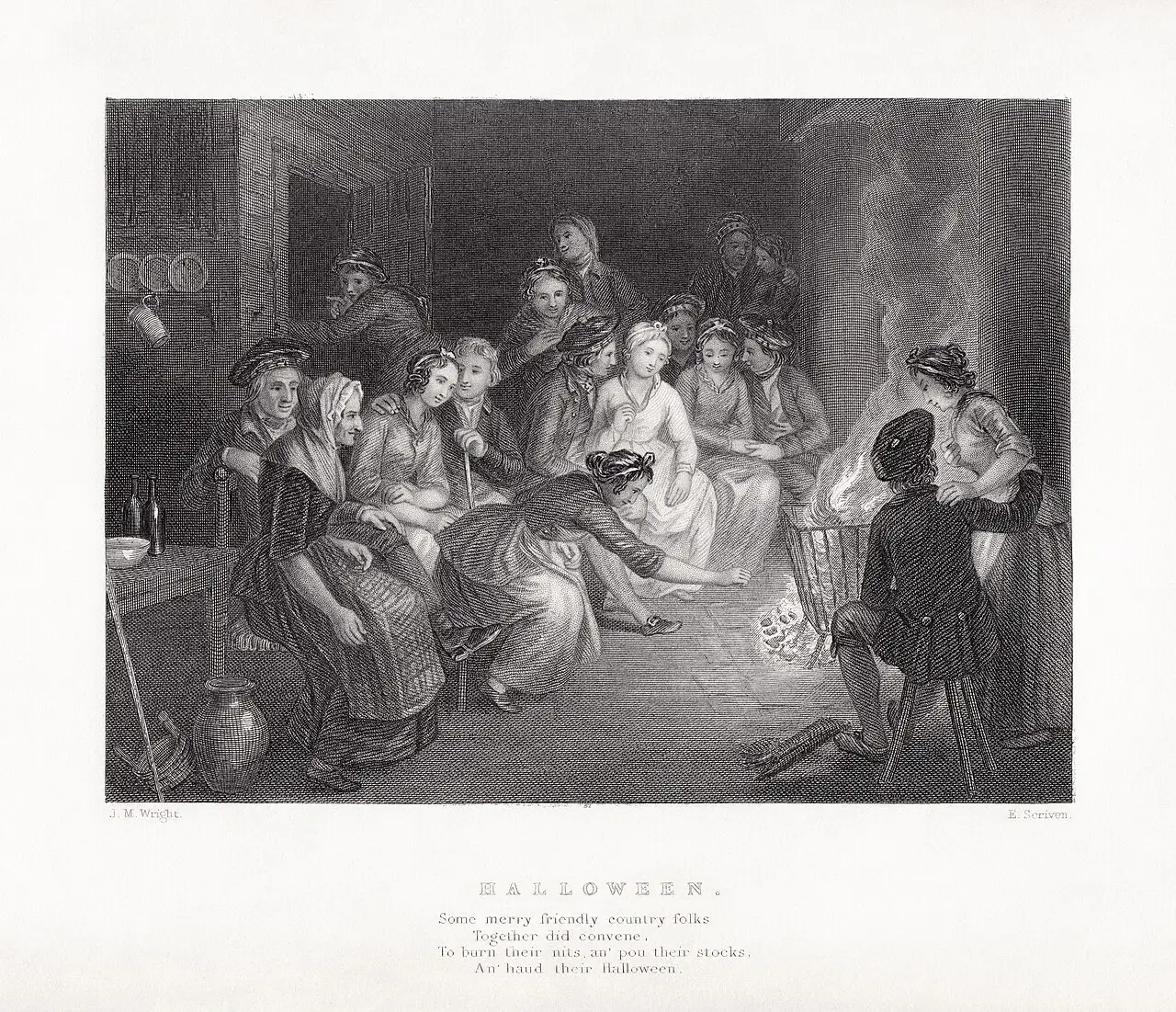
Illustration to Robert Burns' poem Halloween by J.M. Wright and Edward Scriven. circa 1841

Nuts in the Fire Told You Who You'd Marry

In 1785, Scottish poet Robert Burns documented a Halloween custom in his poem "Halloween": a courting couple would name two nuts for each other and set them side by side in a fire. If the nuts burned quietly together, the match was solid. If they popped apart, the romance was doomed, and everyone at the party knew it.

Ireland had its own name for the whole night: "Snap-Apple Night." One popular ritual had a hopeful bachelor or bachelorette stare into a mirror by candlelight, waiting to catch a glimpse of their future spouse's face over their shoulder. None of it involved a single wrapped candy.

A Philadelphia Candymaker Invented Candy Corn Before It Had a Name

In the 1880s, George Renninger, an employee at the Wunderle Candy Company in Philadelphia, created a tri-colored candy meant to resemble kernels of corn. It sold under the name "Chicken Feed," marketed to a largely agricultural population, and it wasn't mass-produced until the Goelitz Confectionery Company picked it up around 1898. The candy didn't get its now-familiar name, or its firm link to Halloween, until decades later.

"Trick or Treat" Didn't Appear in Print Until 1927

The phrase most associated with modern Halloween is newer than most people assume. Etymologist Barry Popik traced its earliest documented print appearance to a 1927 article in the Blackie Herald of Alberta, Canada, describing children demanding "trick or treat" at neighborhood doors. The earliest confirmed U.S. use followed in 1928, and the practice wouldn't become a widespread national tradition until well into the mid-20th century. It's a newer custom than the candy that now defines it.

A Halloween History Timeline

AD 43 to 500

Samhain, the Celtic harvest festival marking the border between the living and the dead, takes shape across Ireland and Scotland.

1600s

The Irish legend of "Stingy Jack" spreads, and families begin carving turnip lanterns to keep his wandering spirit away.

1840s to 1850s

The Irish Potato Famine drives major emigration to America, carrying turnip-lantern traditions across the Atlantic.

Late 1800s

Victorian Halloween parties center on apple-bobbing, nut-roasting, and fortune-telling games rather than candy.

1880s

George Renninger invents what will become candy corn at the Wunderle Candy Company in Philadelphia, sold as "Chicken Feed."

1898

The Goelitz Confectionery Company begins mass-producing candy corn, helping it become a lasting seasonal product.

1927

The phrase "trick or treat" appears in print for the first time, in a newspaper article from Alberta, Canada.

1950s

Trick-or-treating becomes a widespread American tradition, and candy corn gets marketed directly as a Halloween candy for the first time.

What Halloween Looked Like Before Candy

Why Do We Carve Pumpkins For Halloween

Before the Pumpkin Jack-o-Lantern, There Was a Turnip

Long before a carved pumpkin sat on anyone's porch, Irish and Scottish families carved turnips, potatoes, or beets, hollowing them out and setting a coal or candle inside to keep Stingy Jack's wandering spirit at bay. Nobody picked the turnip for its looks. Families picked it because it was what grew in an Irish garden.

When Irish immigrants arrived in America, especially during the Potato Famine years of the 1840s, they found pumpkins growing in far greater abundance and far easier to carve than a turnip. The swap wasn't symbolic; it was just practical, and it stuck.

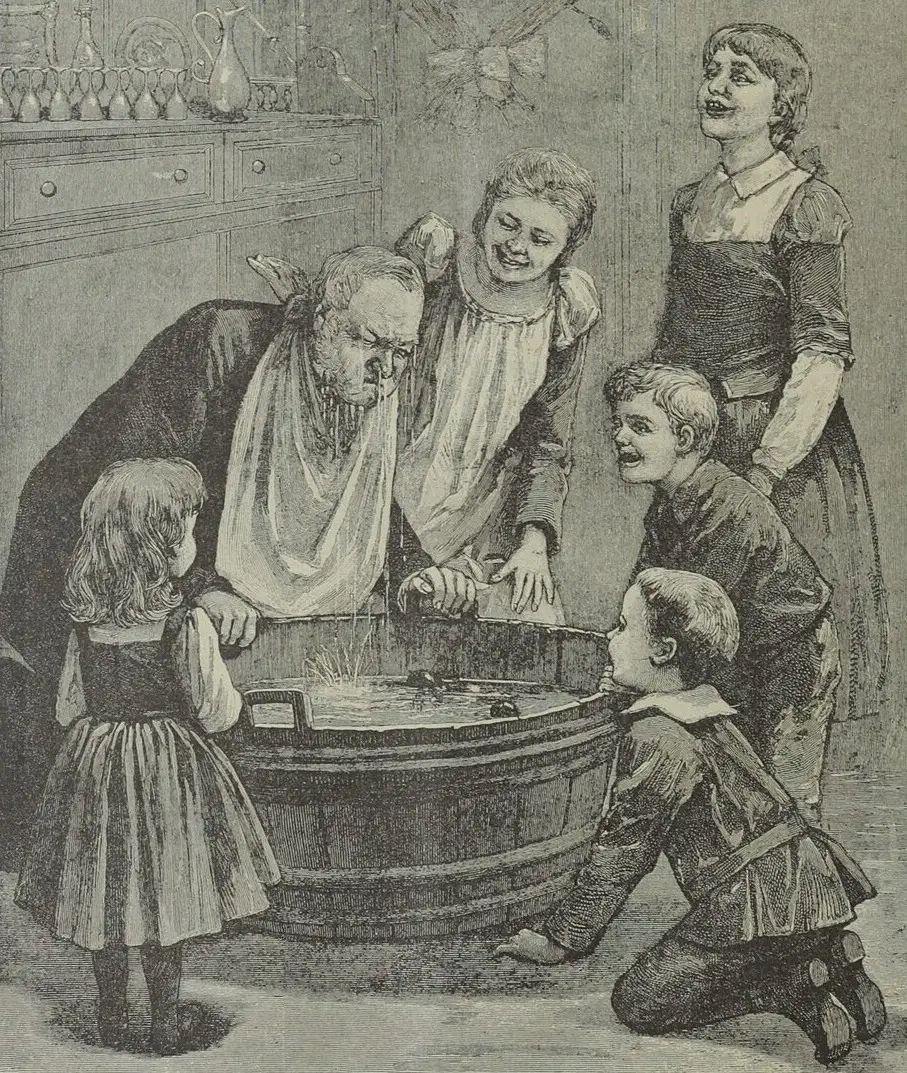
Bobbing for apples, 1887

Victorian Halloween Was Built Around Apples and Nuts

Victorian-era Halloween parties in America looked almost nothing like the holiday we know now. Apple bobbing, roasted chestnuts, and games built around peeling an apple in one long strip and reading the shape it fell in for a future spouse's initial were the entertainment of the night.

Candy wasn't part of the equation yet. The holiday was still closer to a courtship-and-superstition ritual borrowed from the old country than the sugar-driven night it would eventually become.

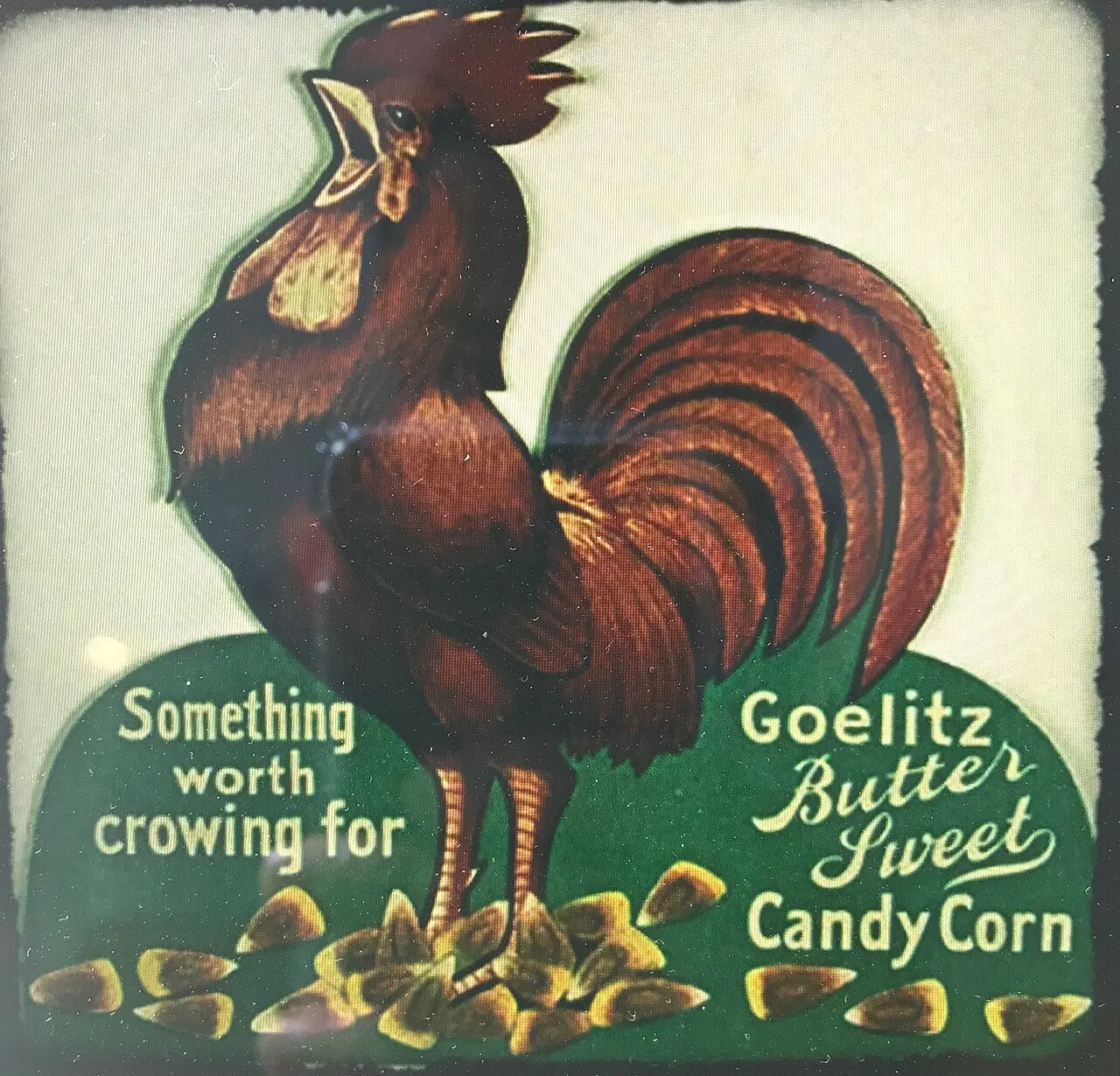
An early advertisement for Goelitz candy corn. Contrary to the file name, the first, i.e., "original", candy corn was produced by the Wunderle Candy Company. Candy corn was nicknamed "chicken feed" sometime in the late 19th or early 20th century.

Candy Corn Started Out as Animal Feed

When George Renninger created what we now call candy corn in the 1880s, he wasn't marketing it to trick-or-treaters at all. It sold as "Chicken Feed," a name that stuck for decades and reflected exactly who it was for: rural households who'd recognize the corn-kernel shape on sight.

Goelitz Confectionery began mass-producing it around 1898, but candy corn didn't become a dedicated Halloween candy until the 1950s, right around the same time "trick or treat" turned into a phrase most American kids actually recognized.

Recipe Rewind - Vintage Recipes Worth Remembering

Copyright 2026 Recipe Rewind - Privacy Policy

>