The History Behind Christmas in America
Christmas Was Illegal in Boston for Twenty-Two Years
In 1659, the Massachusetts Bay Colony passed a law banning Christmas outright, fining anyone caught skipping work, feasting, or celebrating the day five shillings. Puritan leaders viewed the holiday as a manmade festival with no biblical basis, closer to Catholic excess than genuine worship. The ban held in Boston until 1681, when the Crown finally forced the colony to loosen its grip.
A Poem and a Novel Rebuilt the Holiday
Christmas as most Americans picture it owes a lot to two pieces of writing. Clement Clarke Moore's 1823 poem "A Visit from St. Nicholas" introduced the sleigh, the reindeer, and the chimney visit most families still recognize. Charles Dickens followed in 1843 with "A Christmas Carol," which helped push Victorian-era Christmas toward warmth, generosity, and family gatherings rather than religious solemnity alone.
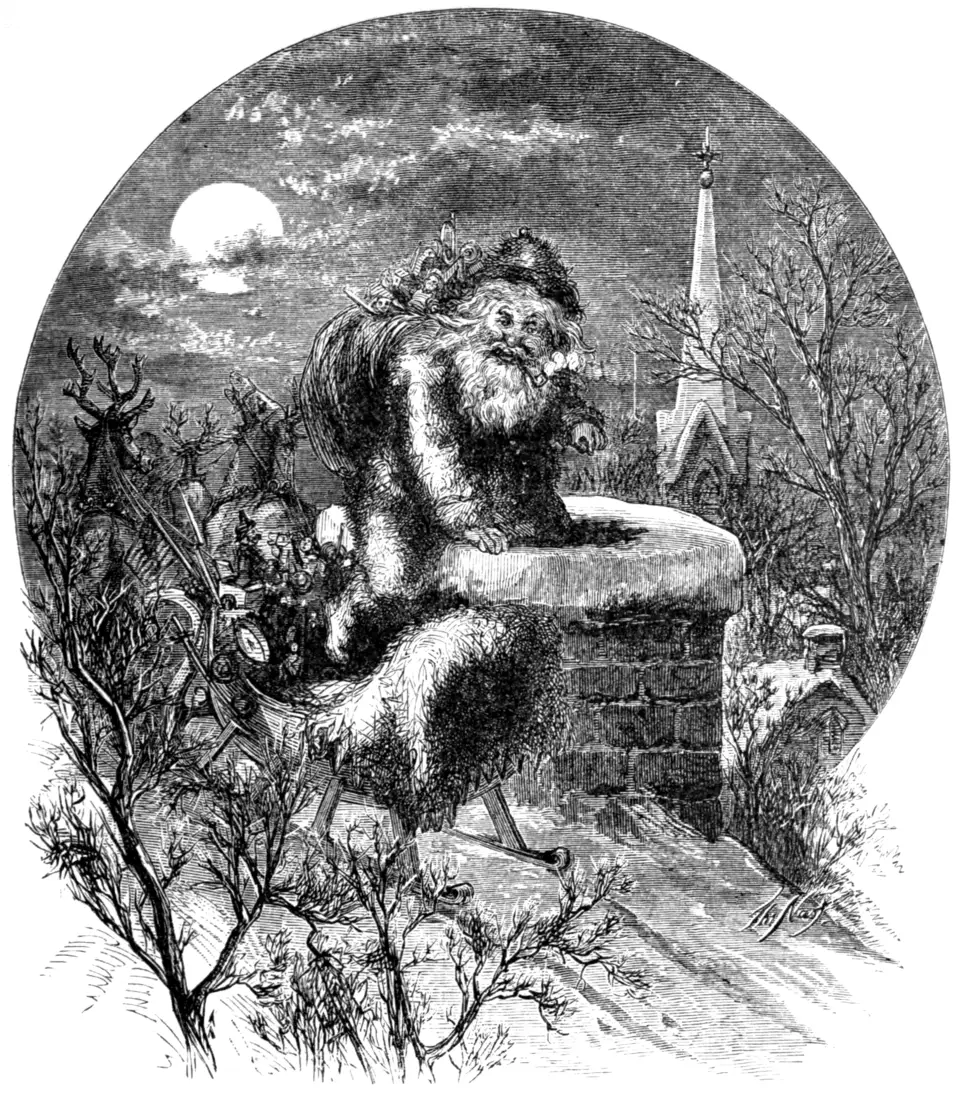
A Civil War Illustrator Gave Santa His Modern Face
Thomas Nast drew Santa Claus for Harper's Weekly starting in 1863, right in the middle of the Civil War, giving the character his round belly, full beard, and jolly expression for the first time. Before Nast, depictions of St. Nicholas varied wildly and often looked nothing like the Santa we know now. Boston printer Louis Prang added the red suit to a Christmas card in 1886, cementing the look for good.
Christmas Didn't Become a Federal Holiday Until 1870
President Ulysses S. Grant signed Christmas into law as a federal holiday on June 28, 1870, alongside New Year's Day, Independence Day, and Thanksgiving. At the time, it applied only to federal workers in Washington, D.C., and the holiday was still viewed as primarily religious, without the commercial weight it carries today.
Candy Canes Stayed Plain White for Two Hundred Years
German-Swedish immigrant August Imgard decorated one of America's earliest known Christmas trees with candy canes in Wooster, Ohio, in 1847, but those canes were solid white with no stripes at all. Illustrations from Christmas cards confirm striped candy canes didn't appear until the turn of the 20th century, roughly two hundred years after candy canes first showed up on a European tree.