

Spritz cookies are buttery, crisp-edged press cookies, and the spritz cookies recipe printed in the December 21, 1923 Evansville Journal uses only butter, sugar, egg yolks, flour, and extract. Unchilled dough presses cleanly into wreaths, trees, and rosettes, and one batch yields about 108 old fashioned Christmas cookies.
Old fashioned spritz cookies, delicate and buttery with crisp edges, need no chilling; only a cookie press and five ingredients. I found this recipe in the Christmas cookie section of the December 21, 1923 Evansville Journal, and one batch makes about 108 cookies, enough to fill a holiday cookie platter.
The dough does not get chilled or rolled out, so a full tray of wreaths, snowflakes, stars, and trees goes from mixing bowl to oven in minutes. As fate would have it, a local antique shop had a 1940s Wear-Ever cookie gun, and I scooped it up fast. Such a cool find!
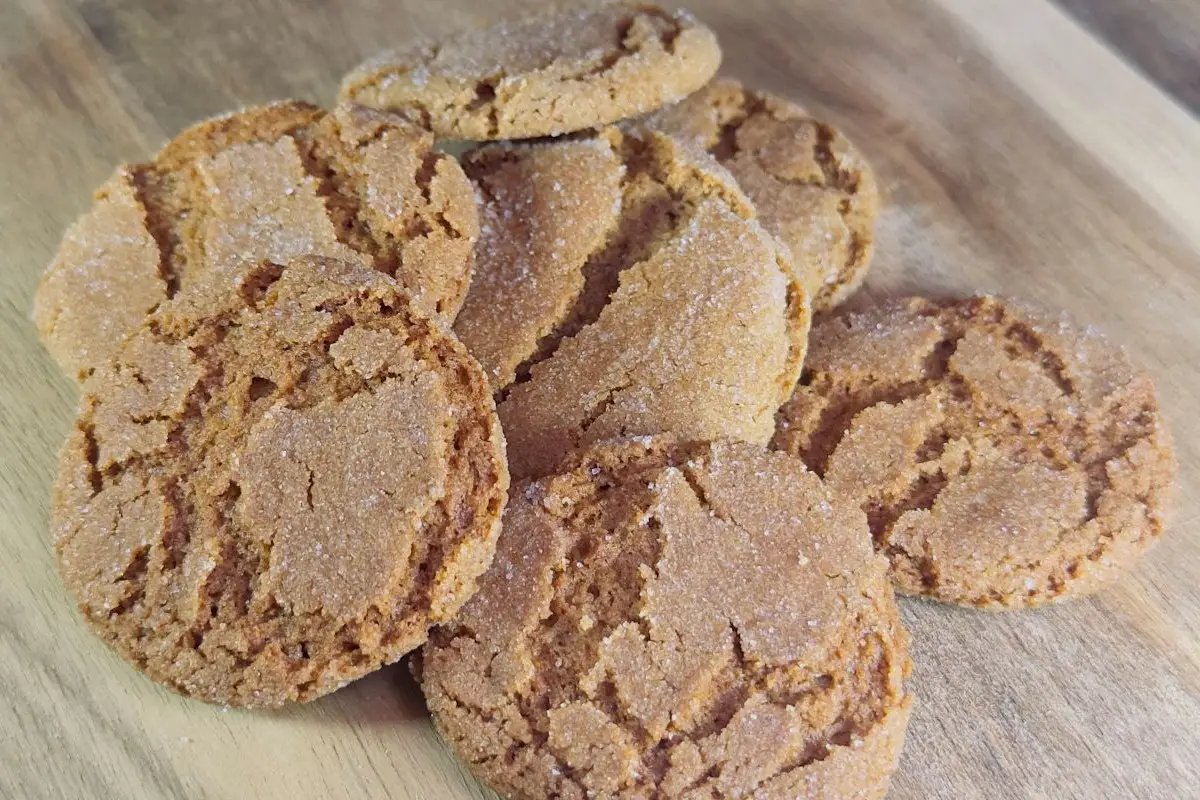
Planning a Christmas cookie tray? These two vintage favorites round it out beside the spritz cookies. Classic Peanut Butter Blossoms bring a chocolate kiss to the center, and 1968 Ginger Snaps add crackled sugar-coated tops with a crisp edge and a chewy middle.

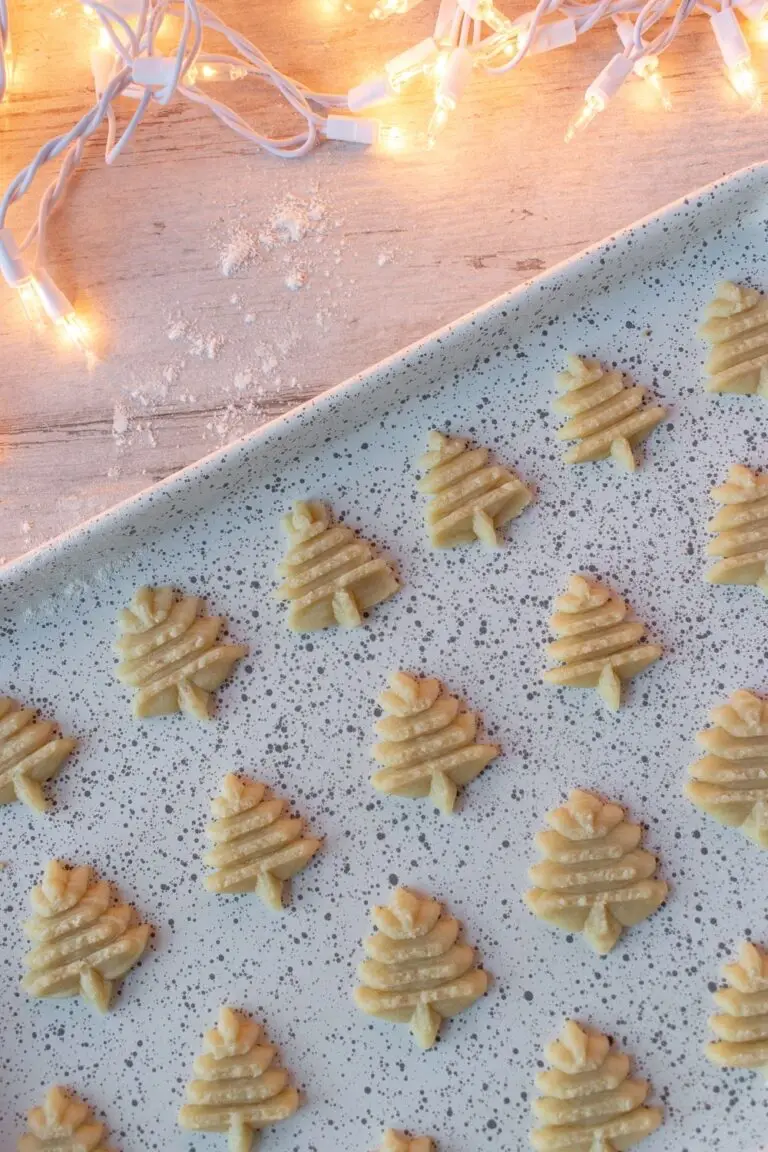
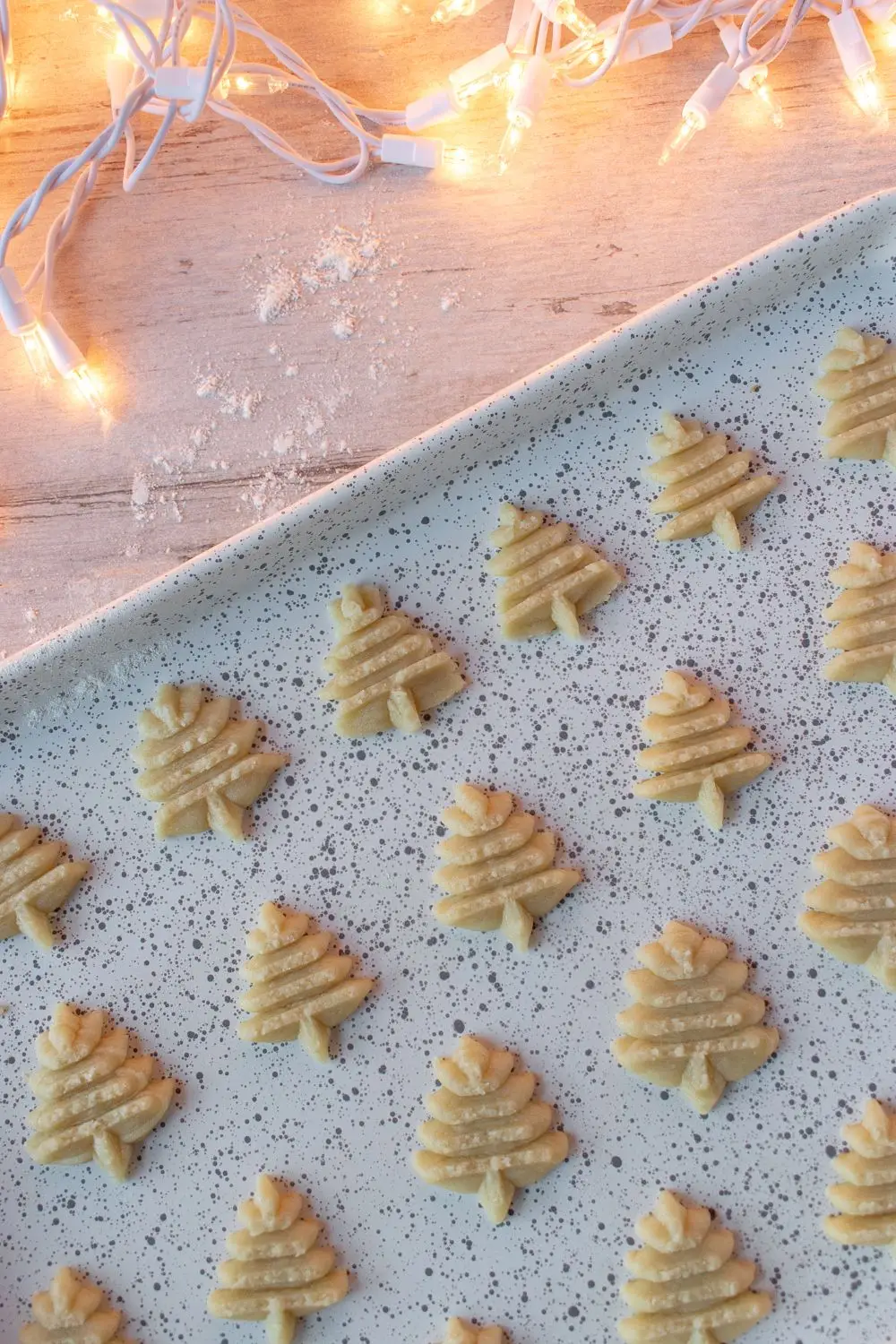
Classic 1923 Spritz Cookies Recipe
Adapted from the Christmas cookie section of the December 21, 1923 Evansville Journal, the cookies rely on egg yolks and unchilled dough to press cleanly into wreaths, trees, and rosettes. The bake is tender and buttery with crisp edges that melt in your mouth. One batch makes about 80.
- Total Time: 45 minutes
- Yield: 108 cookies 1x
Ingredients
- 1 cup butter, softened
- 2 cups granulated sugar
- 2-1/2 cups all-purpose flour
- 3 large egg yolks
- 1 teaspoon vanilla extract or almond extract (or 1/2 teaspoon of each)
Instructions
Preparing the Dough:
- Chill the cookie sheets: Place your ungreased cookie sheets in the refrigerator before you start mixing, and leave them there until the dough is ready to press.
- Cream butter and sugar: Cream the butter and sugar together until light and fluffy, about 3-4 minutes using an electric mixer or by hand.
- Add egg yolks: Add the egg yolks one at a time, beating well after each addition.
- Add extract: Stir in 1 teaspoon of vanilla or almond extract (or 1/2 teaspoon of each).
- Add the flour: Gradually add the flour, mixing until just combined. Do not overmix. The dough should be soft but hold its shape.
Forming and Baking:
- Preheat oven: Preheat your oven to 350°F.
- Keep the dough at room temperature: Don’t chill the dough. It must be at room temperature to press properly.
- Press the cookies: Fill your cookie press with dough according to the manufacturer’s directions. When the press is ready to dispense, pull one cold cookie sheet from the refrigerator and press cookies onto it, spacing them about 1 inch apart. The cookies should stick slightly to the pan to hold their shape. Keep the remaining sheets chilled until you’re ready for them.
- Decorate cookies: If desired, decorate with colored sugar or candies before baking.
- Bake the cookies: Bake for 9-12 minutes, until the edges are set and just barely beginning to turn golden; they should not brown.
- Cool the cookies: Let cool on the baking sheet for 2 minutes, then transfer to a wire rack to cool completely.
Notes
Yield: The original 1923 recipe lists a yield of 80 cookies. Made with a vintage 1940s cookie gun, which presses small cookies, the recipe made 9 dozen. The number of cookies depends on the size you press, so a modern press with larger discs will make fewer.
Back in 1923, a Recipe Was a Reminder
A list of five ingredients was the whole recipe. The version in the December 21, 1923 Evansville Journal gave quantities and stopped there: no oven temperature, no baking time, and no instructions on how to get butter and sugar from the bowl to the press. The sugar line reads 2 to 3 cups, a measurement only a 1923 recipe writer would call a measurement.
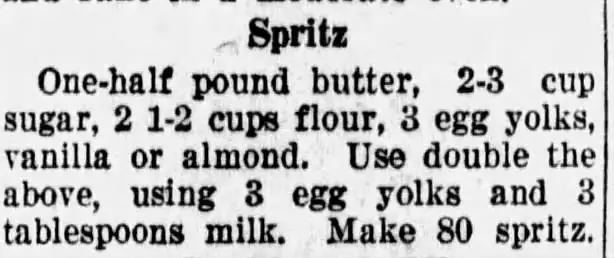
As far as I can tell, newspaper recipes of the time assumed readers already knew the basics, so a list worked as a reminder instead of a guide. A 1923 home baker could fill in the blanks from memory, because those skills were passed down in the kitchen.
Today's recipes tend to spell out every step, so I've written the missing details below. I suspect clippings like this one ended up folded into recipe tins with penciled notes in the margins, which was about as close as a 1923 baker got to a tested method.
Why This Spritz Cookies Recipe Still Works Today
Butter Does the Heavy Lifting
Butter supplies both flavor and tenderness in classic spritz cookies. Its fat coats the flour proteins and limits gluten, while the milk solids brown lightly at the edges. Unsalted butter lets you control the salt, and salted butter works if it's what you have.
Egg Yolks Keep the Crumb Tender
Egg yolks add fat and emulsifiers without the extra water in whites. Yolks hold less water than whole eggs, so the dough stays rich and tender. It's the same logic that makes shortbread cookies crumbly.
Room Temperature Dough Presses Cleanly
Soft dough flows through the press, and cold dough locks up in the barrel. Butter at room temperature turns the dough pliable enough to extrude but firm enough to hold the pattern. Chilling is the one rule from other cookie recipes to forget here.
Mixing Stops When the Flour Disappears
Once the flour goes in, mixing builds gluten with every pass. More gluten means a chewier, tougher cookie instead of the delicate snap spritz cookies should have. Stop as soon as no dry streaks remain.
How to Make The Perfect Spritz Cookies
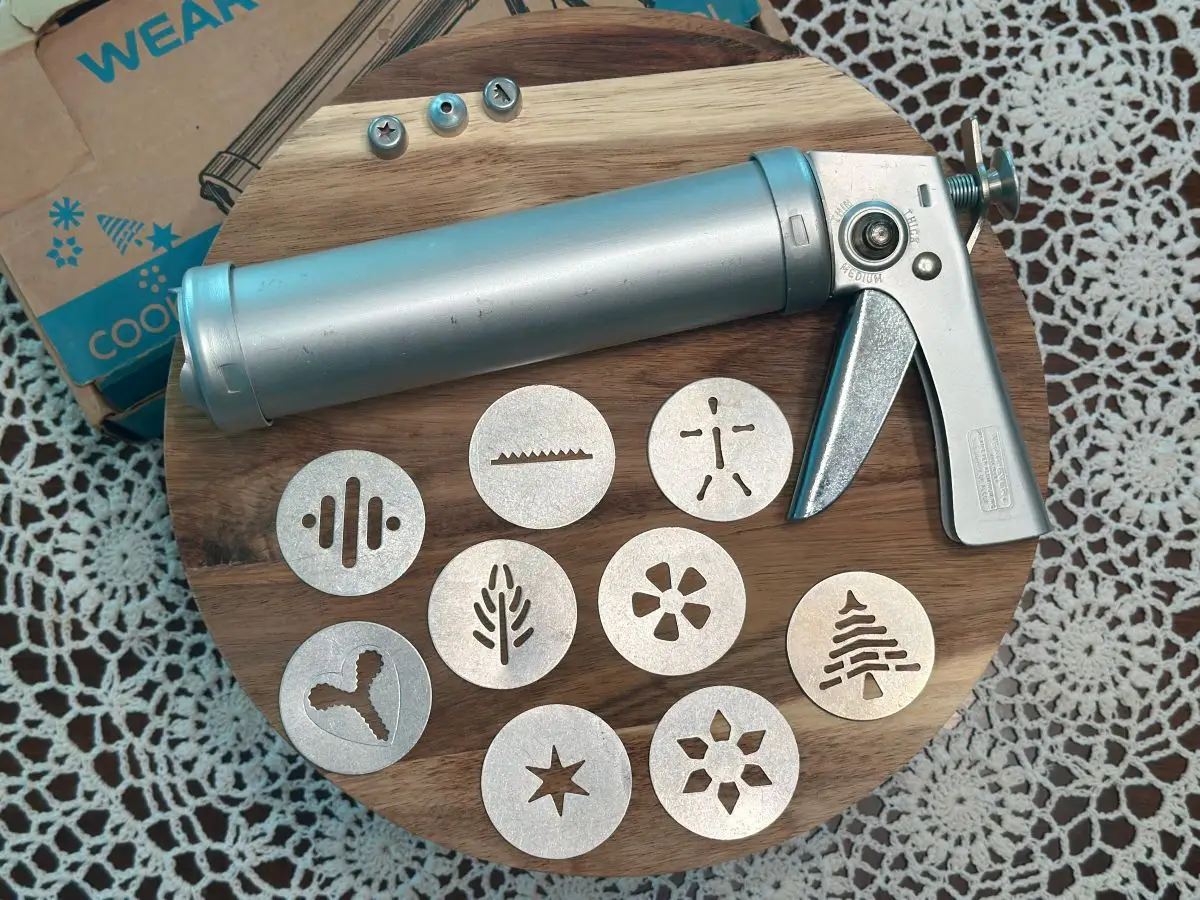
My 1940s Wear Ever Cookie Press
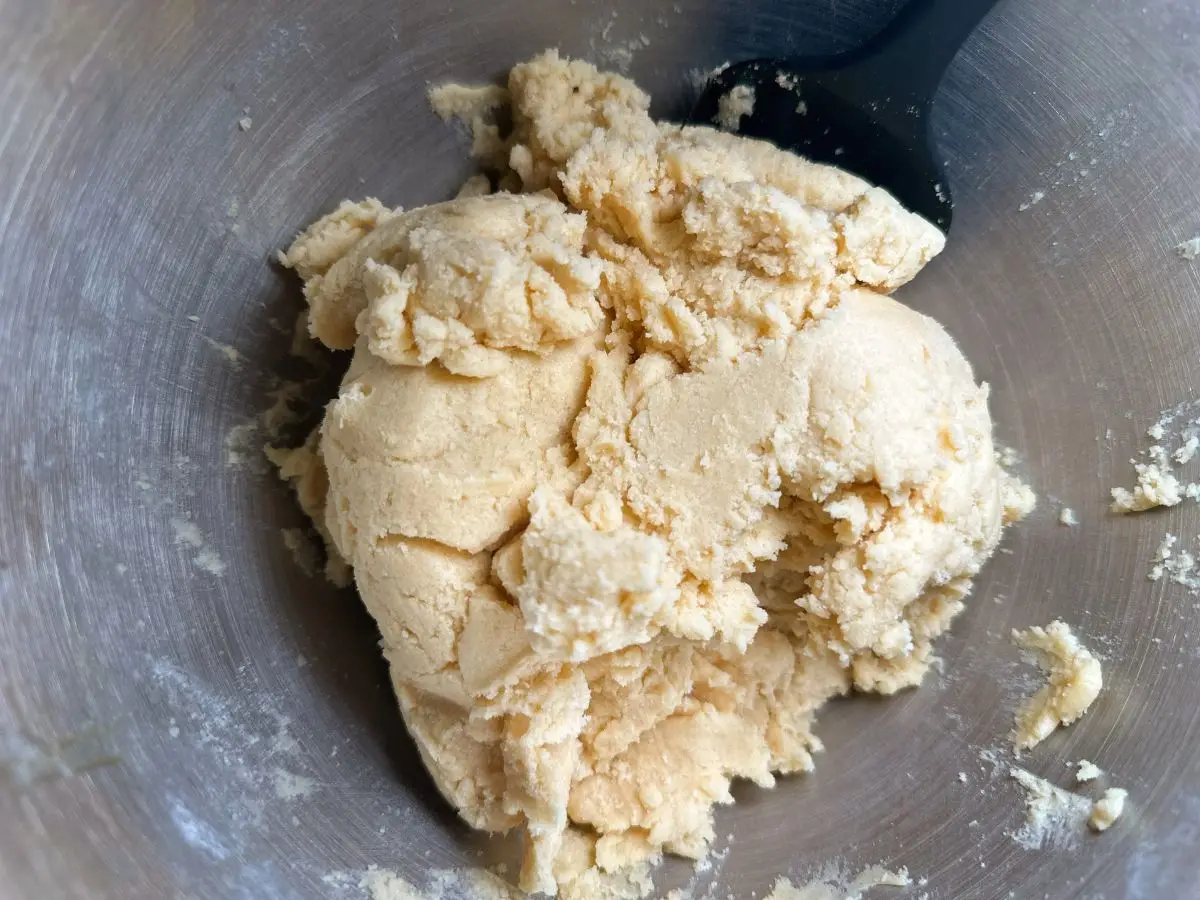
Dough will be soft but hold it's shape
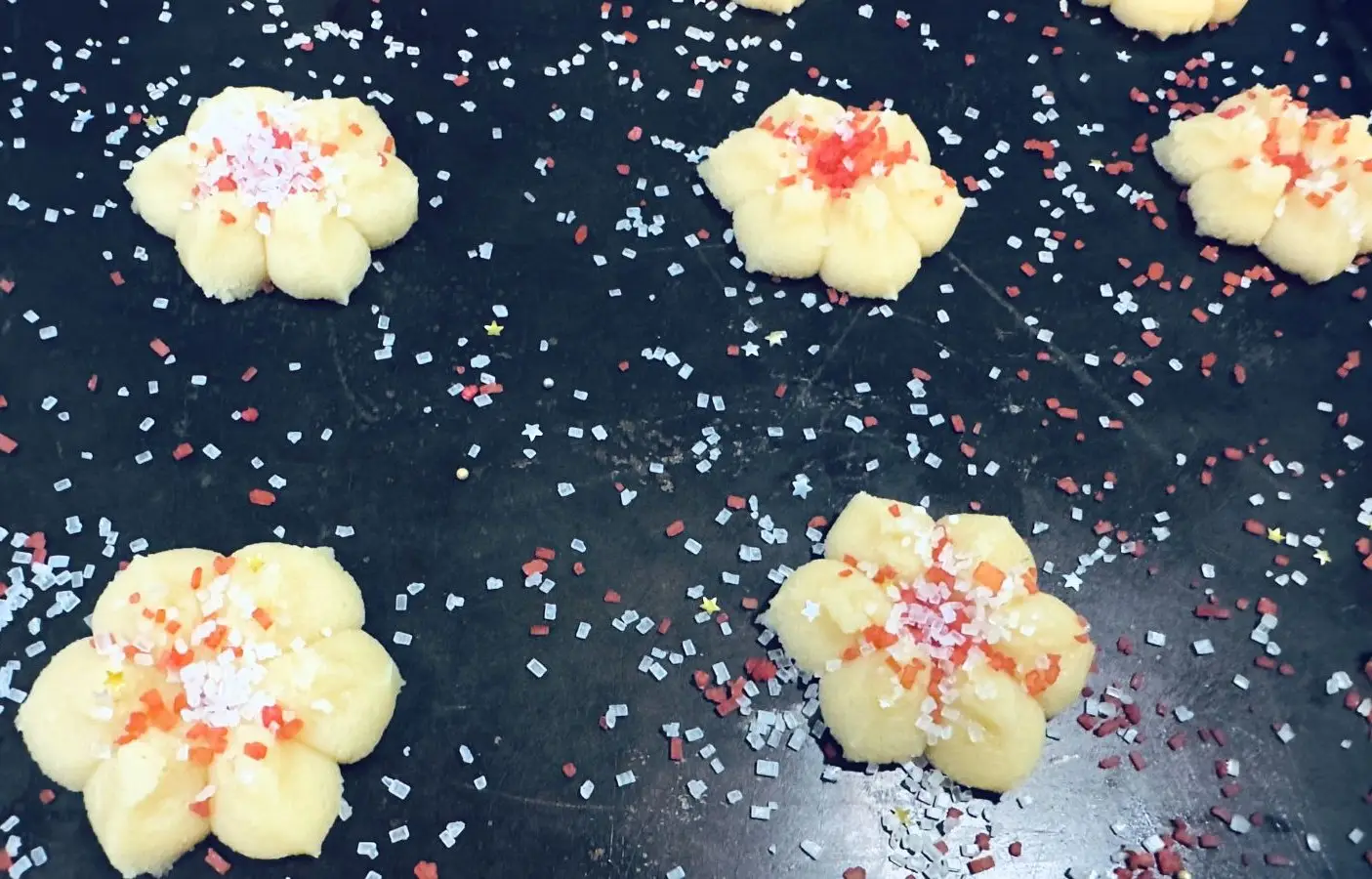
Decorate spritz cookies before baking
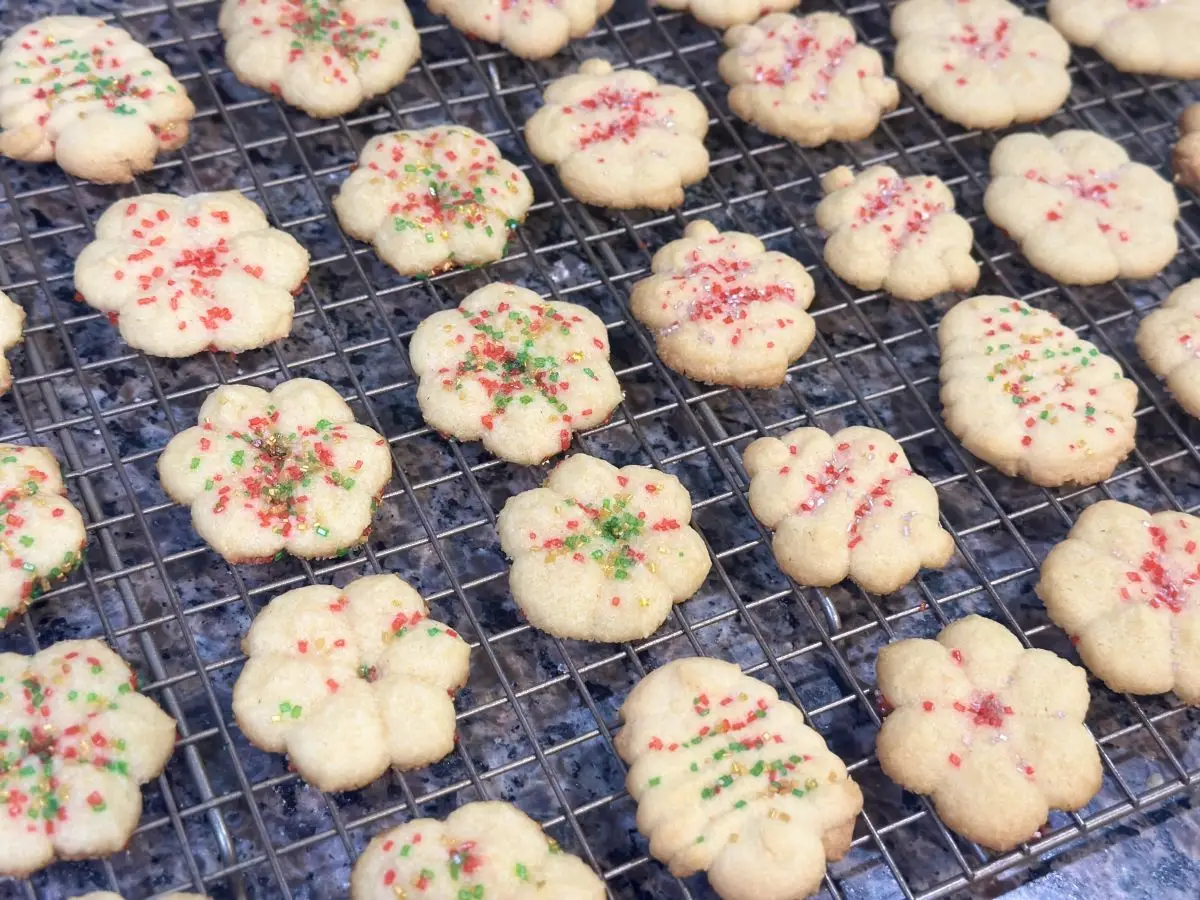
Cool spritz cookies on a wire rack
Chill the Cookie Sheets, Not the Dough
Cool, ungreased cookie sheets help spritz dough grip the pan, while the dough itself stays at room temperature. Cold metal firms the butter in the dough on contact, so each cookie holds its place as the press lifts away. Slide two sheets into the refrigerator before you start mixing, and they'll be ready by the time the dough is.
Cream Until the Butter Turns Pale
Beat the butter and sugar a full 3 to 4 minutes, scraping the bowl halfway. Creaming beats tiny air pockets into the fat, and the pockets expand in the oven for a lighter cookie. A stand mixer with the paddle attachment on medium speed or a hand mixer both work, and the cue is color: bright yellow turns to pale cream.
Add the Yolks One at a Time
Beat each yolk until it disappears before adding the next. Slow additions keep the emulsion stable, so the batter doesn't look curdled. A slightly broken look smooths out once the flour goes in.
Pack the Press Without Air Pockets
Press the dough firmly into the barrel, then test-press one cookie onto a cold sheet before filling a full tray. Air pockets cause sputtering and uneven shapes. A test cookie costs one cookie and tells you whether the dough is ready.
If the Dough Isn't Pressing Cleanly, Here's the Easy Fix
A teaspoon or two of heavy cream or whole milk thins spritz dough just enough to press cleanly. The dough stiffens as it sits because the flour keeps absorbing moisture, so a batch that pressed easily at first can start to resist the gun. Stir in the liquid one teaspoon at a time, only until the dough dispenses from the gun easily. The video below shows what easy looks like.
Check Early, Then Trust the Edges
Look at the cookies a minute or two before the timer ends. Edges should be set and barely golden, with pale centers. The cookies keep cooking on the hot pan after the oven comes off, so pulling them while they look slightly underdone gives the best crisp-tender bite.
Recipe Variations, Serving Ideas, & Storage
Recipe Variations
Tools & Ingredients Worth Having For This Recipe
We use Amazon links for tools that we actually use in our kitchen and make sense for the recipes we share. Shop through the links and you help keep these vintage recipes alive, at no extra cost to you. As an Amazon Associate, I earn from qualifying purchases.
🛒 Cookie press: Spritz dough only becomes wreaths, trees, and rosettes through a press. A trigger-style model with multiple discs presses one cookie per squeeze, and that matters across 108 cookies. Look for a barrel that holds a good amount of dough, so you refill less often.
🛒 Cookie sheets: The recipe calls for two ungreased sheets that go into the refrigerator before you mix. Cold, bare metal helps each pressed cookie grip the pan as the press lifts away. Choose light-colored sheets, and measure your refrigerator shelf so two can fit at once.
🛒 Hand mixer: Creaming the butter and sugar takes a full 3 to 4 minutes, and the dough gets better with each one. A hand mixer does the work without a stand mixer's setup, and it makes the egg yolks easy to beat in one at a time.
🛒 Pure vanilla and almond extract: Butter and sugar carry most of the flavor, and the extract is the only seasoning in the recipe. Pure extracts give the cookies a rounder flavor than imitation, and almond adds the nutty note traditional spritz cookies are known for.
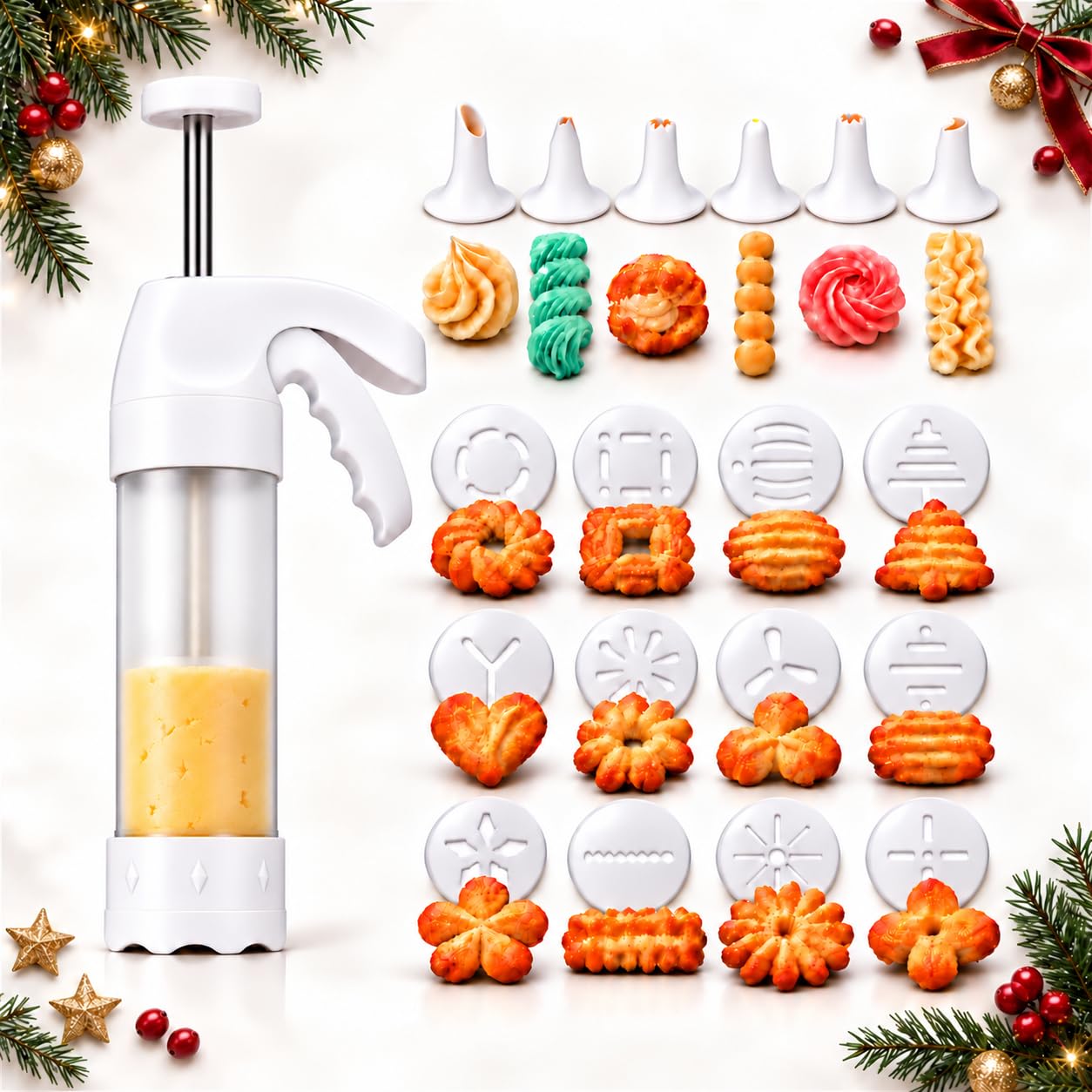


Last update on 2026-11-22 at 11:09 / Affiliate links / Images from Amazon Creators API
Frequently Asked Questions
Spritz cookies get their name from the German verb spritzen, which means to squirt, because the dough is pressed through a cookie press. The name describes the method more than the flavor.
Spritz cookie dough can be piped through a piping bag fitted with a large star tip. The ridged shapes will look different from a press, but the buttery flavor stays the same.
Butter is the only fat the recipe has been tested with, and it's the one I'd choose. Stick margarine with at least 80 percent fat is the closest swap, but tub spreads contain extra water and aren't recommended for baking.
Spritz cookies taste good with vanilla extract alone. Almond extract adds a nutty note that many traditional versions include, and a teaspoon of lemon zest makes a fine alternative.
Spritz cookies suit beginner bakers, since the recipe has five ingredients and no chilling. The learning curve is the press, so test one cookie on a cold sheet before filling a tray.
From 1923 Clipping to Christmas Cookie Tray
A 1923 baker got five ingredients and a great deal of confidence. You get the same five ingredients and the steps, so the first tray can go from mixing bowl to oven without guesswork.
If the cookies earned a spot on your cookie tray, leave a star rating so other bakers can find the recipe. Then tell me in the comments which shape your family fought over, and whether anyone ever admitted to taking the last one.
