

Sweet potato custard is a spoonable baked dessert of mashed sweet potato, eggs, and half and half, spiced with cinnamon, nutmeg, and ginger. The version here bakes in a 1-quart dish in 25 minutes and finishes with honey and pecans. A sweet potato custard made the Delaware State Journal in October 1870, blamed for a cannery poisoning.
Somebody in 1870 told cooks to "bake brown" and left the oven temperature to luck. Sweet potato custard gives you a smooth, spiced dessert with no rolling pin, no blind baking, and no soggy bottom to worry about.
Fifteen minutes on the stove cooks the moisture out of mashed sweet potato, and honey is drizzled on at the last second so the nuts stay crunchy. Two cups of sweet potato, three eggs, and 1½ cups of half and half fill a 1-quart dish, and the doneness cues below keep grainy, weeping custard off your Thanksgiving table.
A cloud of whipped cream and a few ruby-red candied cranberries turn the custard into a showpiece for the holiday table.

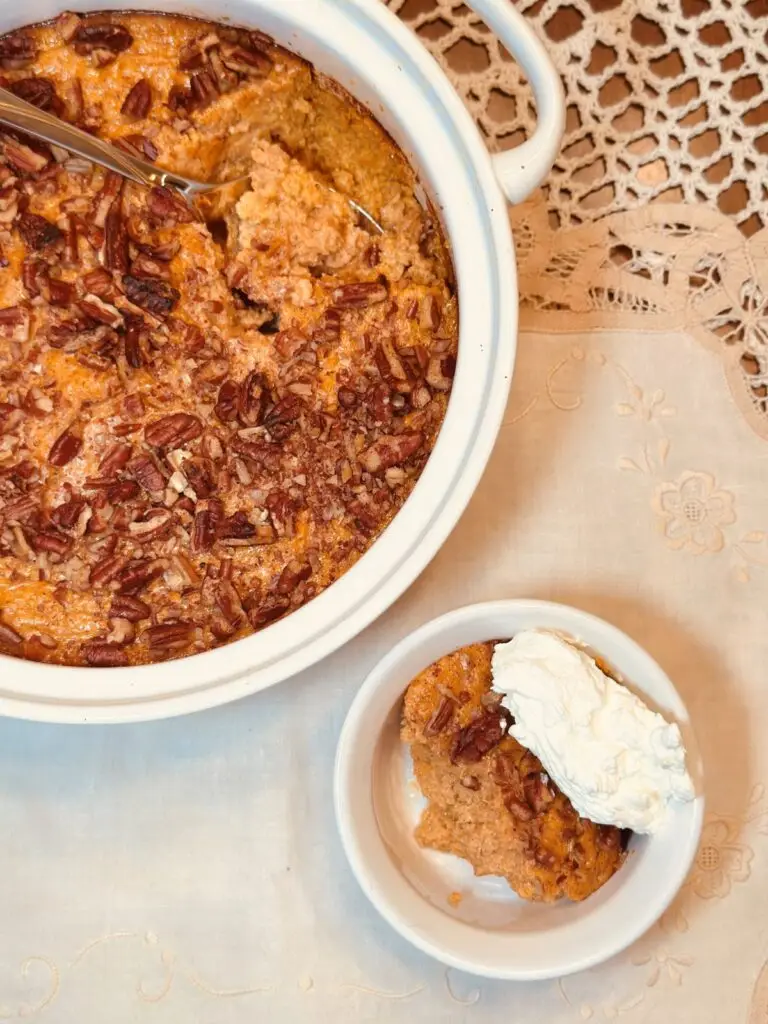
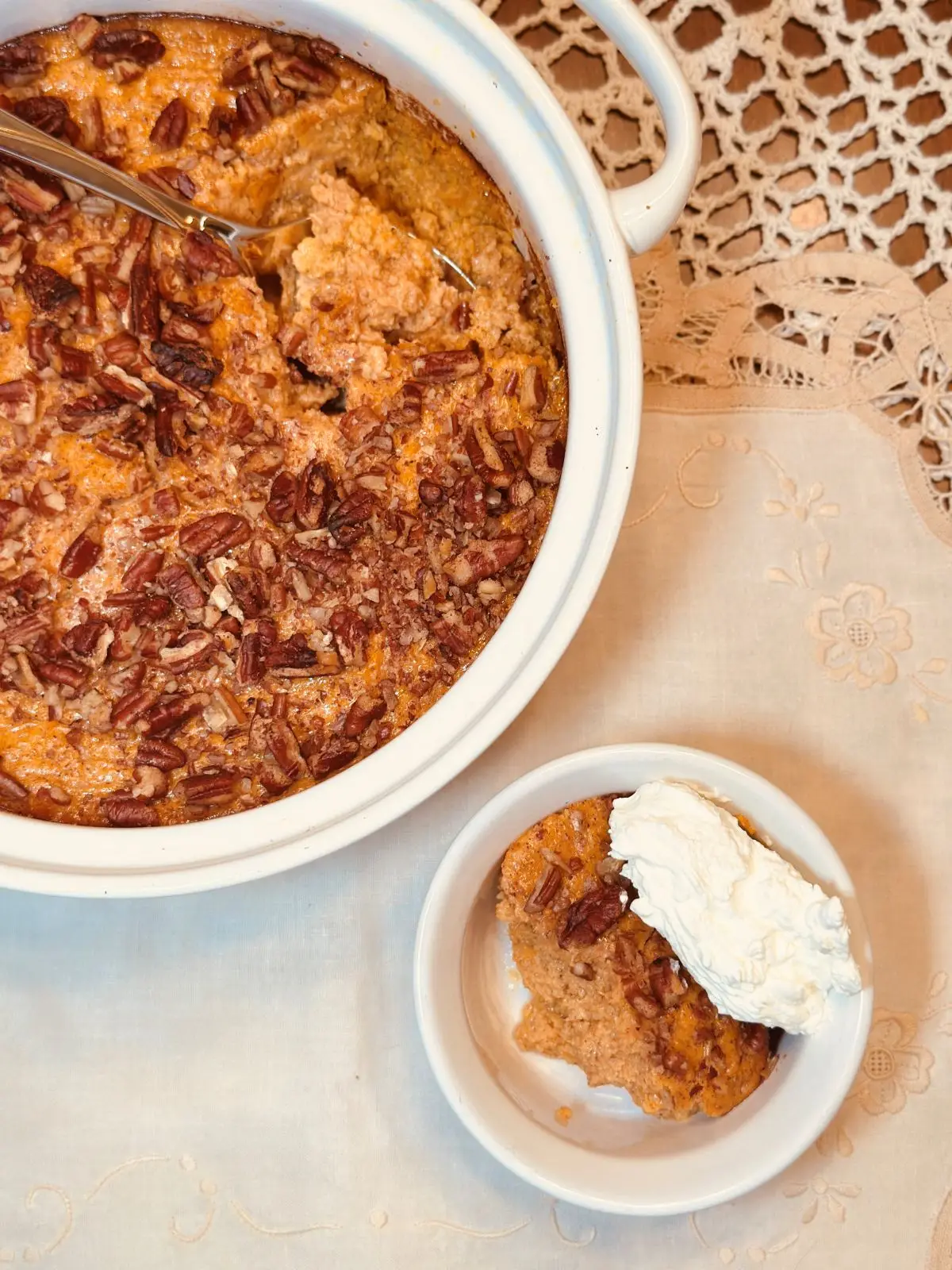
Sweet Potato Custard Recipe
Sweet potato custard sets in a 1-quart dish from mashed sweet potato, three eggs, and half and half. The puree cooks down on the stove first, and honey and chopped pecans go on just before serving, so a smooth, gently spiced base meets a sweet, crunchy finish.
- Total Time: 1 hour 15 minutes
- Yield: 8 servings 1x
Ingredients
For the Custard
- A pinch of salt
- 2 cups cooked sweet potatoes, mashed
- 1 teaspoon ground cinnamon
- 1/2 teaspoon ground nutmeg
- 1/4 teaspoon ground ginger
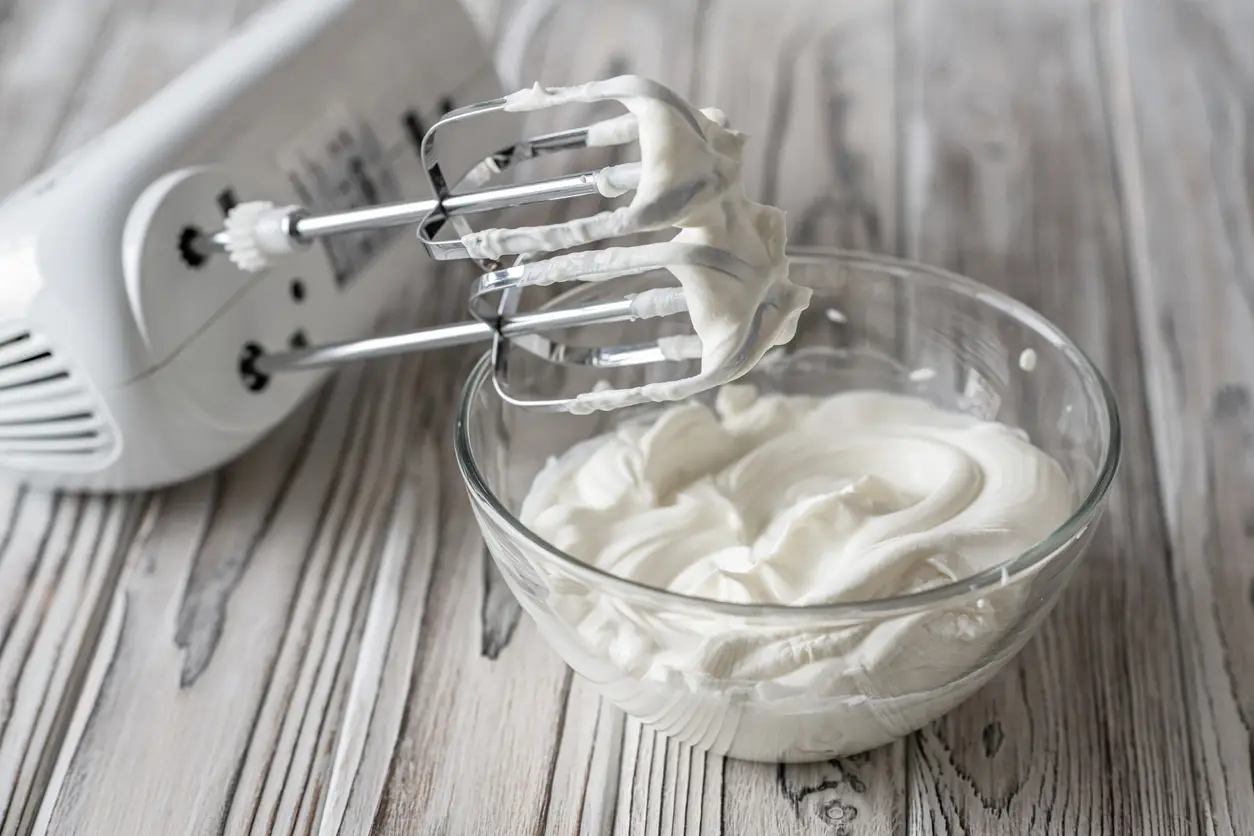
- 3 large eggs, beaten to a froth
- 1-1/2 cups half and half
For the Topping
- 1/3 to 1/2 cup honey
- 1 cup pecans, chopped
- Whipped cream (optional)
Instructions
- Prep the sweet potatoes: Peel 2 lbs of sweet potatoes and cut them into 1-inch pieces.
- Boil: Bring a large pot of water to a rolling boil. Add the sweet potatoes and boil for about 20 minutes, until fork tender and easy to mash.
- Mash then cook down the puree: Drain well, and mash the sweet potatoes until smooth, then cook them in a saucepan over medium heat for 15 minutes, stirring every few minutes. Cool the puree until it’s back to room temperature so the heat doesn’t scramble the eggs.
- Heat the oven and prep the dish: Preheat the oven to 425°F. Lightly grease a 1-quart round baking dish and set it on a baking sheet.
- Mix the base: In a medium mixing bowl, stir the cooled sweet potato, spices, eggs, half and half, and salt until smooth. Pour into the dish.
- Bake until set: Bake for 25 minutes, until a dinner knife inserted into the center comes out clean. Check a few minutes early if your oven runs hot.
- Cool, then top: Cool on a wire rack. Just before serving, spoon the honey over the custard and scatter the pecans on top.
Notes
Sweet potatoes can have stringy fibers. To remove them, press the mashed sweet potatoes through a fine mesh sieve. The original recipe calls for sieving. I don’t sieve mine.
Pin This Sweet Potato Pecan Custard Recipe For Later
Back in 1870, Sweet Potato Custard Made the News
On October 13, 1870, the Delaware State Journal reported that three women at a Chestertown canning establishment had been poisoned, and a sweet potato custard was the suspected cause.
According to the clipping, Mrs. Susan Chamberlain sent the custard to Mrs. Elizabeth Smith at the cannery, who shared it with two coworkers. All three were reported recovering, though very near death.
The paper added that Chamberlain's young son had tried to buy arsenic, settled for rat exterminator, and that the partly used bottle turned up in her house. She denied sending him and was committed to jail.
The date adds a second detail. According to William McCauley's 1961 University of Delaware thesis, The History of the Canning Industry in Delaware, the state's 1868 atlas listed fewer than half a dozen canneries, and commercial canning there began in the 1870s.
McCauley also describes canneries following the tomato season with pumpkins, then sweet potatoes, in later decades. I suspect an October cannery had sweet potatoes nearby, though the clipping never says where the custard's came from.
Cookbooks of the era agreed on the dish. According to the Rubenstein Library Test Kitchen blog at Duke University Libraries, the November 1870 issue of The Rural Carolinian printed a sweet potato custard that ended with the instruction to "bake brown."
Custard itself is older still: Tasting Table traces it to the Middle Ages. Mary Randolph's The Virginia House-Wife includes a sweet potato pudding, which Colonial Williamsburg credits to an 1827 edition.
Why Does Sweet Potato Custard Set So Smoothly?
Eggs Set the Custard Without Flour
Eggs turn liquid cream into spoonable custard. According to Nigella Lawson's kitchen answers, a baked custard sets as the egg proteins unwind and stick to each other. Three eggs to 1½ cups of half and half sets the custard and keeps it tender.
Cooking Down the Puree Prevents a Watery Set
Cooking the mashed sweet potato on the stovetop drives off moisture, so the eggs and half and half set the custard instead of working against a wet base. Fifteen minutes is insurance. A thicker puree holds its shape when the eggs set.
No Added Sugar, and Still Sweet Enough
If the lack of added sugar makes you hesitate, I understand, but just try the custard as written. I'm a sweet-tooth, so I was tempted to add in brown sugar the first time I made this, but I decided to stay true to the original recipe.
The honey drizzled on at serving is the only sweetener, and honestly, it's enough. It ties all the flavors together, and it's actually perfect!
Baking the Pecans on Top Toasts Them
Pecans turn deeper and nuttier in dry oven heat, and the toasting takes the raw, waxy edge off them. Adding them for the last 10 minutes gives them time to brown, but a 425°F oven moves fast, so watch them the first time. Honey still waits until serving, because moisture softens toasted nuts.
How to Make Perfect Sweet Potato Custard
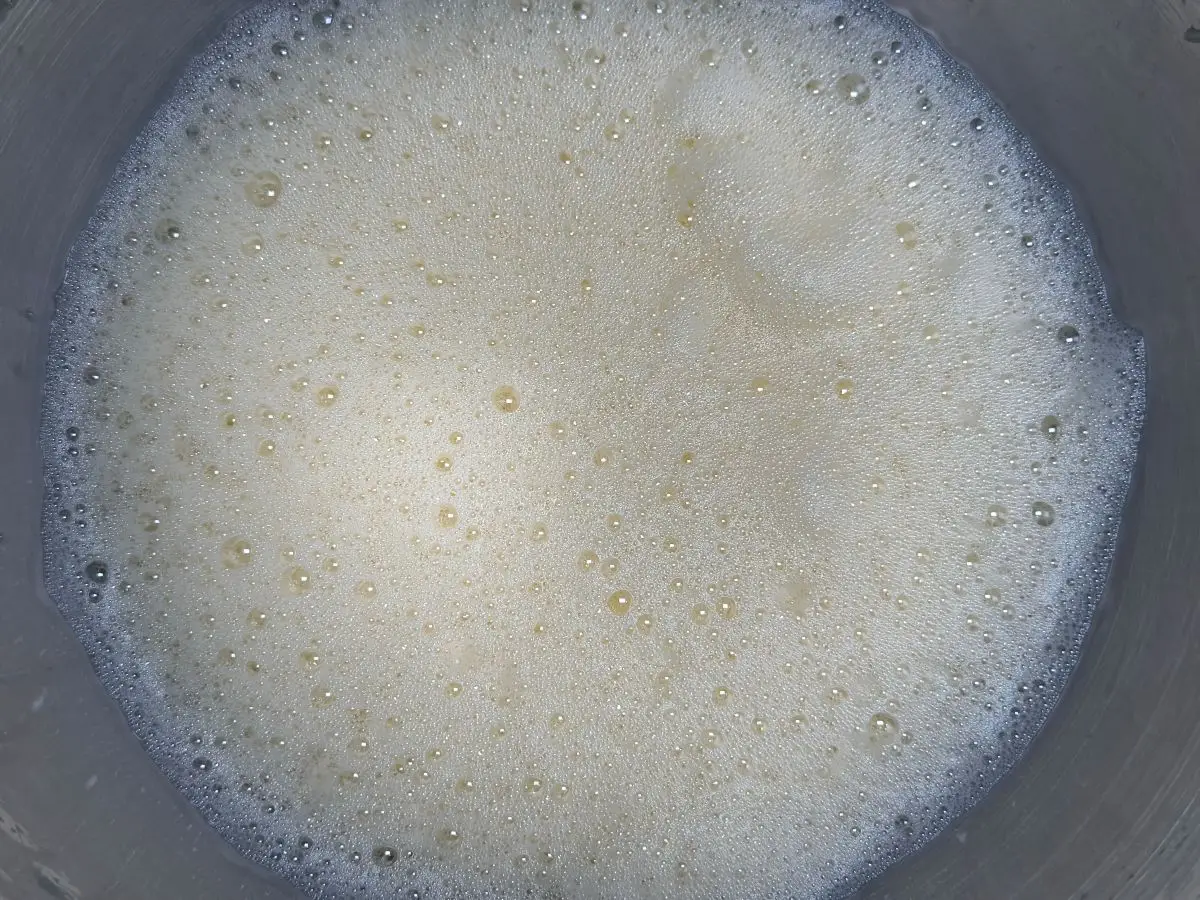
Eggs beaten to a froth
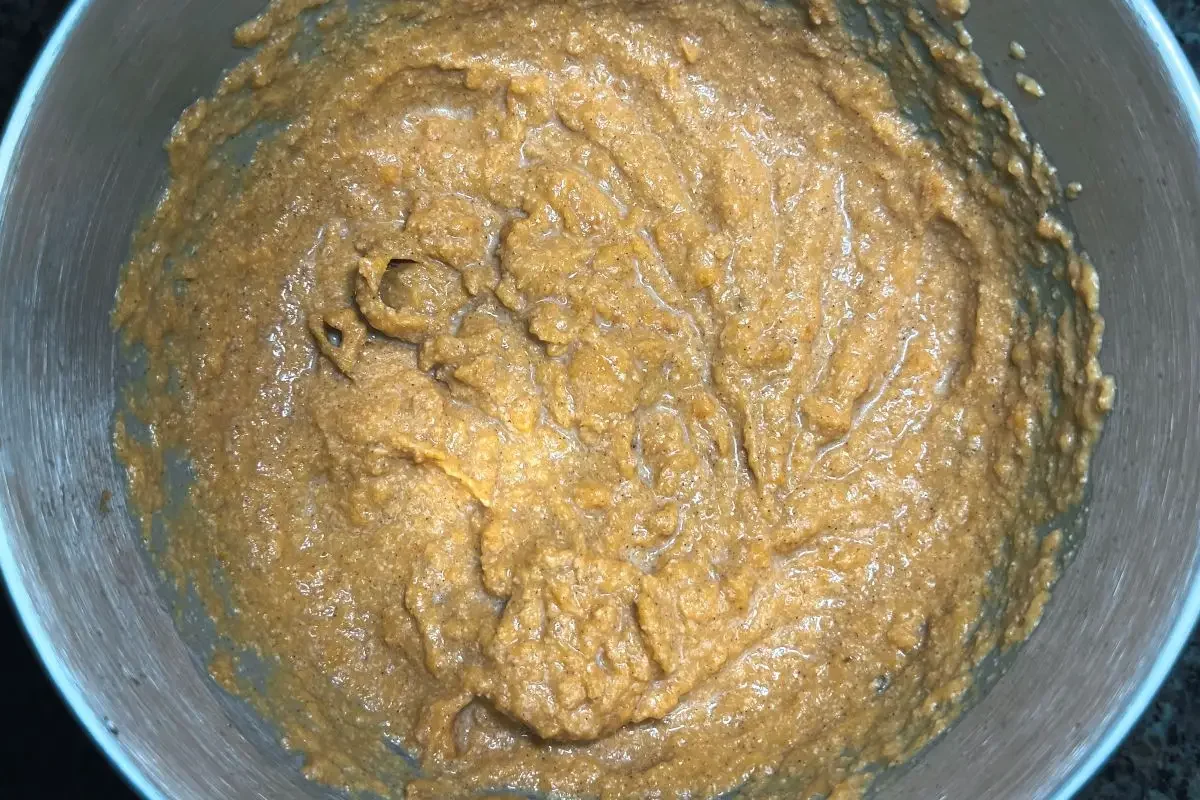
Wet and dry ingredients mixed together
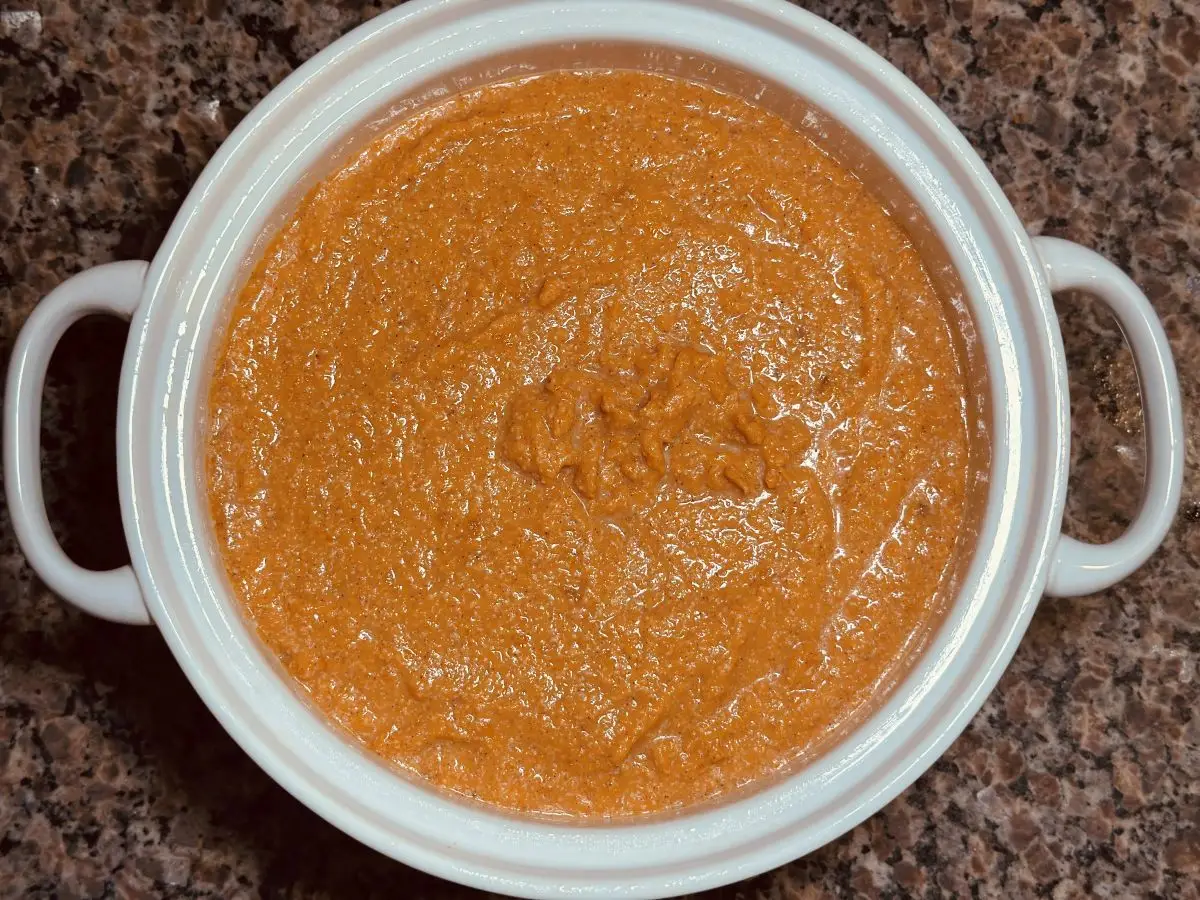
Pour custard batter into a 1-quart baking dish
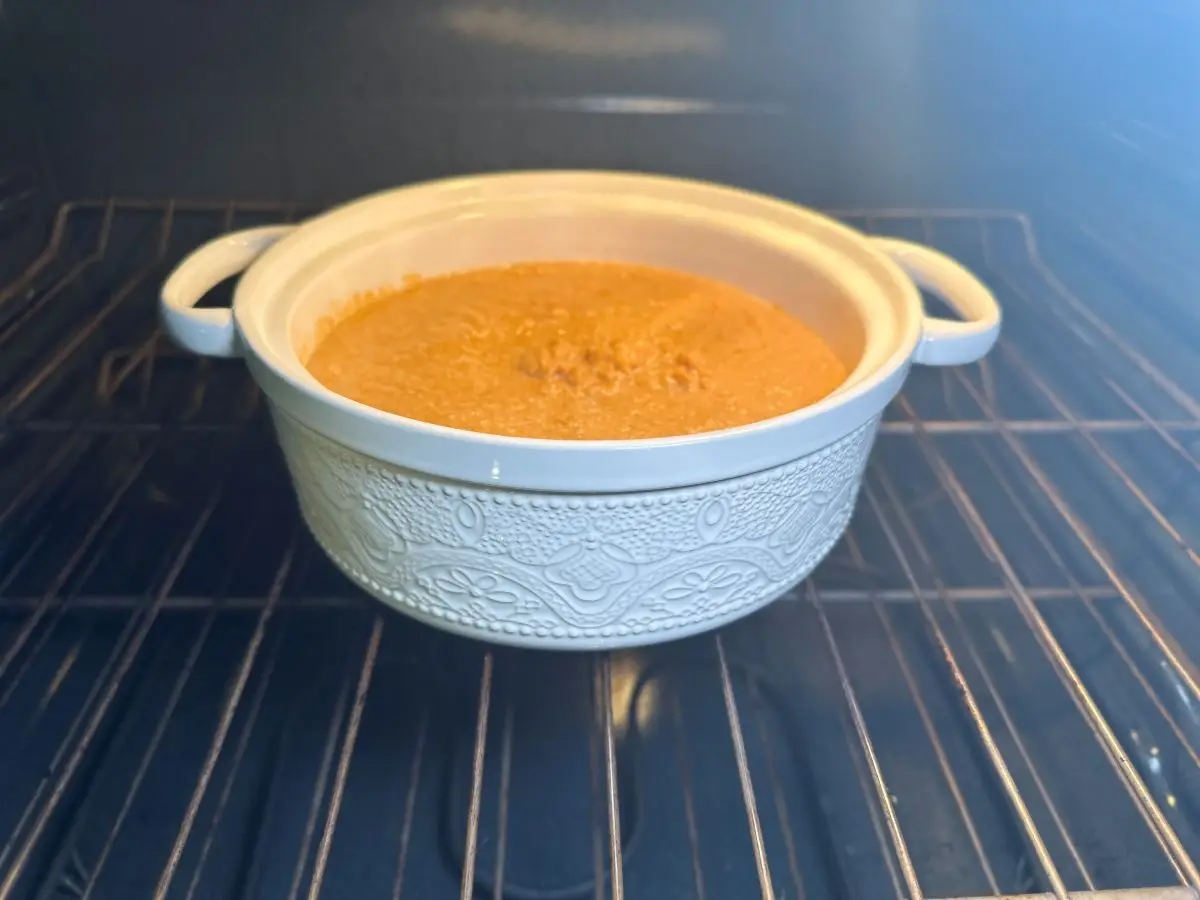
Bake sweet potato custard for 25 minutes
Cook the Puree Down, Then Let It Cool
Cook the mashed sweet potato over medium heat for 15 minutes, stirring so the bottom doesn't scorch. Cooling the puree before mixing protects the eggs, since heat makes egg proteins set. A heavy-bottomed saucepan spreads the heat evenly.
Beat the Eggs Until Frothy Before Mixing
Beaten eggs blend into the sweet potato without streaks of white or yolk. Whisk them in a separate bowl first, then stir them into the cooled puree. Uneven egg means uneven set, and the dish ends up part pudding, part omelet.
Add the Pecans Once the Surface Sets
Scatter the pecans after 15 minutes, when the surface looks mostly set, so they sit on top instead of sinking. Then bake 10 more minutes and watch the first batch, since pecans darken fast at 425°F.
Test With a Knife or a Thermometer
Slide a dinner knife into the center, between pecans, and look for a clean blade. For a second check, use an instant-read thermometer and stay well under 185°F, the point where America's Test Kitchen says egg-based custards can curdle. The center should jiggle slightly without sloshing.
Pull It Before the Edges Crack
Cracks and weeping mean the custard overbaked. According to Dairy Vegetables Online's remedy guide, weeping or curdling happens when egg mixtures cook too fast or too long. A 425°F oven is hot for custard, so check at 20 minutes the first time.
Cool on a Wire Rack Before Serving
Custard keeps cooking from residual heat after it leaves the oven. A wire rack lets air reach the bottom so the custard stops cooking sooner. Cool completely if you plan to chill it.
Recipe Variations, Serving Ideas, & Storage
Sweet Potato Custard Recipe Variations
Tools & Ingredients Worth Having For This Recipe
We use Amazon links for tools that we actually use in our kitchen and make sense for the recipes we share. Shop through the links and you help keep these vintage recipes alive, at no extra cost to you. As an Amazon Associate, I earn from qualifying purchases.
🛒 1-quart round baking dish: The recipe's yield and set time depend on the dish. A 1-quart round dish gives a depth that sets in 25 minutes, and a wider casserole dish would set sooner and need a new bake time.
🛒 Instant-read thermometer: The knife test is the recipe's main doneness cue, but a thermometer gives a second reading without cutting into the custard. Stay well under 185°F, where America's Test Kitchen says egg-based custards can curdle. It also reads the center cleanly when pecans cover the top and block the knife.
🛒 Heavy-bottomed saucepan: The puree cooks for 15 minutes over medium heat, and thick sweet potato sticks and scorches quickly in a thin pot. A heavy base spreads the heat evenly, and a 2-quart size leaves room to stir without slopping the puree over the sides.
🛒 Half sheet pan: A 1-quart dish holds roughly 4 cups of batter, so it sits nearly full. A half sheet pan under the dish catches spills, keeps the oven floor clean, and makes it easy to carry the dish in and out.
🛒 Pure honey: The honey drizzles over the toasted pecans at serving, so a pourable, strained honey coats them evenly without clumping. Clover honey is the variety named in the original headnote, and the flavor stays mild enough for the spices to come through.


Last update on 2026-11-18 at 09:52 / Affiliate links / Images from Amazon Creators API
Frequently Asked Questions
Sweet potato custard bakes in a dish with no pastry, and sweet potato pie bakes in a crust. Wikipedia describes sweet potato pie as a pie shell filled with mashed sweet potatoes, milk, sugar, eggs, and spices. The custard keeps the egg-set filling, drops the crust, and swaps in toasted pecans for the crunch, so you spoon it instead of slicing it.
Sweet potato custard works as the dessert, and sweet potato casserole works as a side, so most Thanksgiving tables have room for both. Our old-fashioned 1940 sweet potato casserole coats sweet potato cubes in a pineapple-brown sugar syrup and tops them with toasted marshmallows, while the custard has no sugar in the base and sets with eggs. Serve the casserole next to the turkey and the custard after dinner.
Canned sweet potatoes can work in sweet potato custard if you drain them well, mash them, and cook the puree down on the stovetop like fresh ones. Syrup-packed cans add sweetness and moisture, so measure the finished puree against the 2 cups in the recipe.
Sweet potato custard tastes mildly sweet and warmly spiced, with cinnamon, nutmeg, and ginger leading. The base gets its sweetness from the sweet potato itself, and the honey drizzle and toasted pecans add the sweeter, crunchier finish.
Maple syrup works in place of honey on sweet potato custard because the topping goes on after baking, so the swap doesn't change how the custard sets. Maple syrup runs thinner than honey and tastes more distinctly of maple, so drizzle it just before serving to keep the pecans crisp. Use the same ⅓ to ½ cup the recipe calls for.
1870 Newspaper Clippings: The Chestertown Poisoning Case
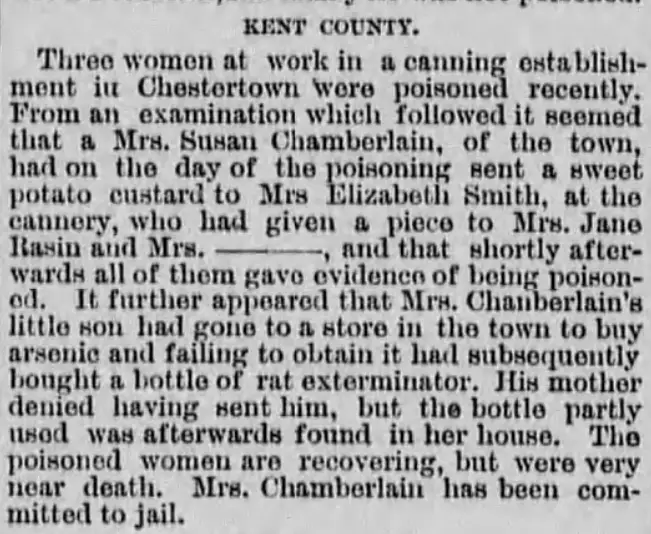
Delaware State Journal October 13, 1870 Sweet Potato Custard attempted murder.
KENT COUNTY.
Three women at work in a canning establishment in Chestertown were poisoned recently.
From an examination which followed it seemed that a Mrs. Susan Chamberlain, of the town, had on the day of the poisoning sent a sweet potato custard to Mrs Elizabeth Smith, at the cannery, who had given a piece to Mrs. Jane Rasin and Mrs. ———, and that shortly afterwards all of them gave evidence of being poisoned.
It further appeared that Mrs. Chamberlain's little son had gone to a store in the town to buy arsenic and failing to obtain it had subsequently bought a bottle of rat exterminator. His mother denied having sent him, but the bottle partly used was afterwards found in her house.
The poisoned women are recovering, but were very near death. Mrs. Chamberlain has been committed to jail.
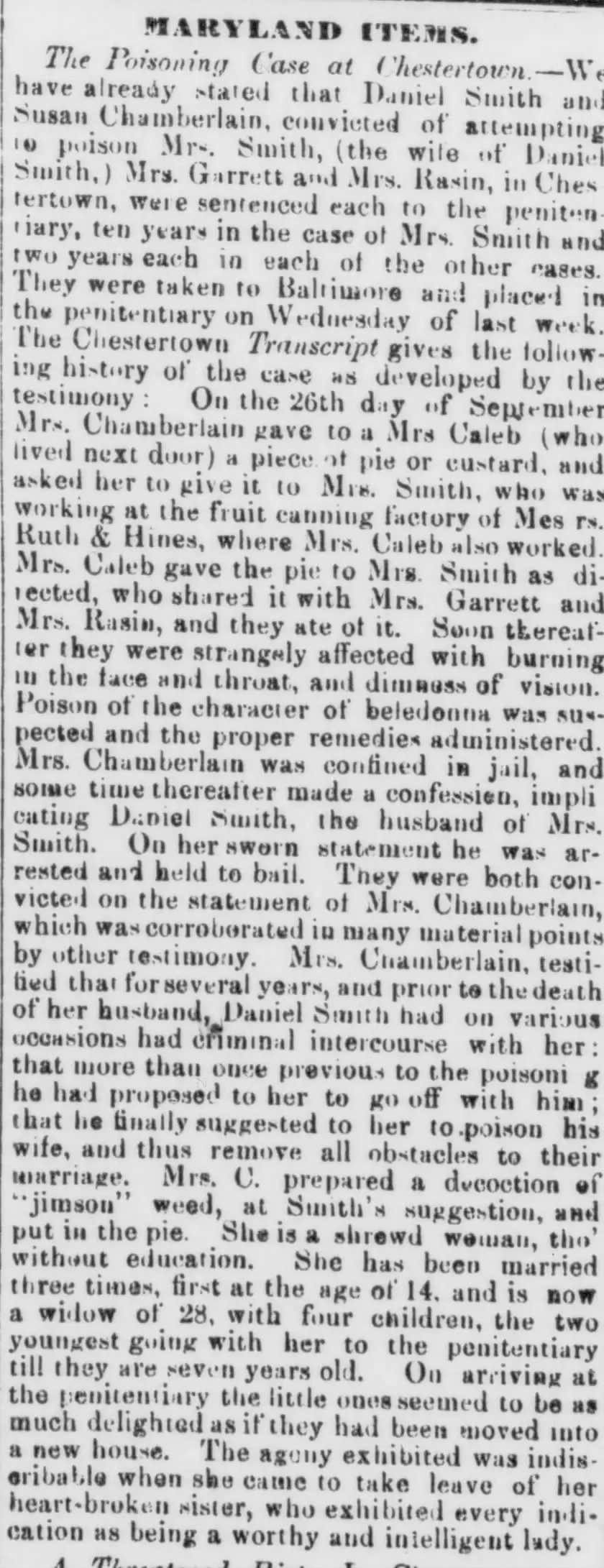
November 16, 1870 Sweet Potato Custard Poisoning.
MARYLAND ITEMS.
The Poisoning Case at Chestertown.—We have already stated that Daniel Smith and Susan Chamberlain, convicted of attempting to poison Mrs. Smith, (the wife of Daniel Smith,) Mrs. Garrett and Mrs. Rasin, in Chestertown, were sentenced each to the penitentiary, ten years in the case of Mrs. Smith and two years each in each of the other cases.
They were taken to Baltimore and placed in the penitentiary on Wednesday of last week. The Chestertown Transcript gives the following history of the case as developed by the testimony:
On the 26th day of September Mrs. Chamberlain gave to a Mrs. Caleb (who lived next door) a piece of pie or custard, and asked her to give it to Mrs. Smith, who was working at the fruit canning factory of Messrs. Ruth & Hines, where Mrs. Caleb also worked.
Mrs. Caleb gave the pie to Mrs. Smith as directed, who shared it with Mrs. Garrett and Mrs. Rasin, and they ate of it. Soon thereafter they were strangely affected with burning in the face and throat, and dimness of vision.
Poison of the character of belladonna was suspected and the proper remedies administered.
Mrs. Chamberlain was confined in jail, and some time thereafter made a confession, implicating Daniel Smith, the husband of Mrs. Smith. On her sworn statement he was arrested and held to bail. They were both convicted on the statement of Mrs. Chamberlain, which was corroborated in many material points by other testimony.
Mrs. Chamberlain testified that for several years, and prior to the death of her husband, Daniel Smith had on various occasions had criminal intercourse with her; that more than once previous to the poisoning he had proposed to her to go off with him; that he finally suggested to her to poison his wife, and thus remove all obstacles to their marriage.
Mrs. C. prepared a decoction of "jimson" weed, at Smith's suggestion, and put in the pie. She is a shrewd woman, tho' without education. She has been married three times, first at the age of 14, and is now a widow of 28, with four children, the two youngest going with her to the penitentiary till they are seven years old.
On arriving at the penitentiary the little ones seemed to be as much delighted as if they had been moved into a new house. The agony exhibited was indescribable when she came to take leave of her heart-broken sister, who exhibited every indication as being a worthy and intelligent lady.
Sweet Potato Custard Deserves a Thanksgiving Comeback
Sweet potato custard has survived "bake brown," a spot in the 1870 headlines, and decades of being the dessert nobody remembers, and a clean knife and a gentle jiggle are all it asks of you now.
Have extra sweet potatoes, or just want more variety? Two more recipes can help. My apple cider sweet potato bread sounds ordinary on paper, but it's one of the quick breads my family asks for most often; everyone loves it. 1970s Orange glazed sweet potatoes are an easy way to dress up a basic root vegetable.

Leave a star rating and tell me in the comments who at your table gets assigned dessert every year, and whether they'll finally get to bring something different.
