

This egg nog recipe traces back to 1906 and the Broome family of Baltimore, Maryland, where whole eggs, heavy cream, and brandy were beaten together into a rich holiday drink for Christmas gatherings. Unlike a cooked custard, this homemade eggnog recipe skips the stove entirely, relying on stiff peaks and a good stir for its signature creamy texture and old-fashioned depth of flavor.
Baltimore's Broome family was serving this egg nog recipe at Christmas parties back in 1906, and it still outshines anything you'll find in the grocery store. Twelve whole eggs, real cream, and a full pint (2 cups) of brandy combine into something far richer than store-bought eggnog, with zero cooking and about ten minutes of hands-on time.
Most homemade eggnog recipes either taste thin because they lean too hard on whole milk, or they scare cooks off entirely because of the risk of salmonella tied to raw eggs; the Broome family's method sidesteps both problems by using pasteurized eggs and a technique that's held up for well over a century.
If you're already breaking out the brandy for this eggnog, keep that bottle handy for Homemade Spiced Mulled Apple Cider or the holiday classic Tom and Jerry.
Baltimore's Brandy Trade Made This Egg Nog Recipe Possible
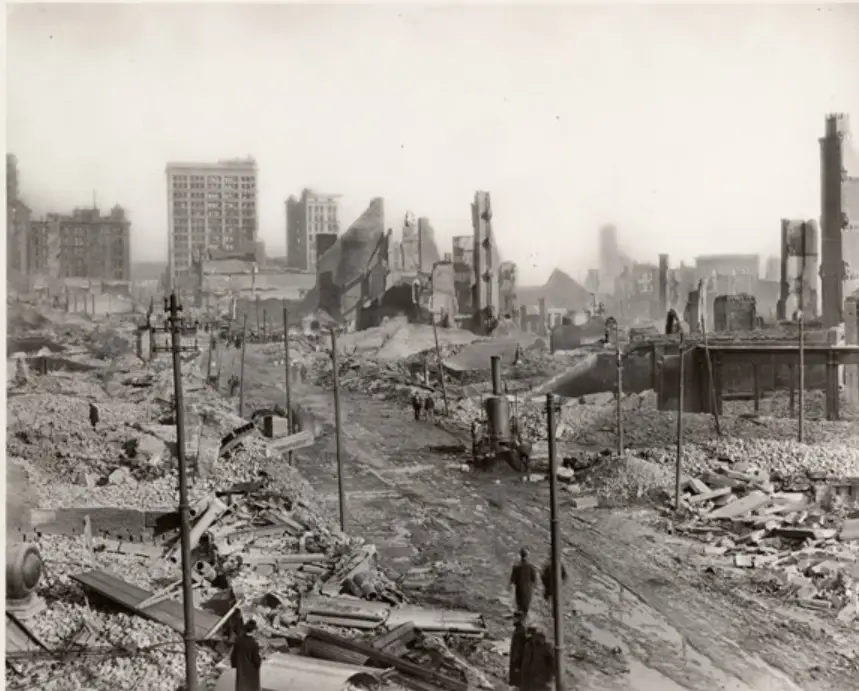
1904, Baltimore Street, facing East
The brandy in the Broome family's 1906 egg nog recipe tells a story most history books skip. While Baltimore was still rebuilding after the Great Baltimore Fire destroyed 1,500 buildings in 1904, the harbor never stopped running, and that meant French brandy kept moving into households that could afford to show they'd recovered.
Fells Point Kept the Brandy Moving
Fells Point had been one of Baltimore's busiest deepwater docks since the 1700s, with a natural depth that made it a magnet for shipping long before 1906. That existing infrastructure meant imported spirits could keep arriving at Baltimore's harbor even while the burned downtown district was still clearing rubble a few blocks away.
German Merchant Networks Shaped the Market
Baltimore's German immigrant community had built deep trading relationships with European ports going back decades, exchanging American cotton and tobacco for European goods through firms like F.W. Brune & Son and the Norddeutscher Lloyd shipping line out of Bremen.
Those established trade routes meant a Baltimore household in 1906 had more than one path to a bottle of imported brandy, which likely kept prices a little more competitive than in cities with fewer trade connections.
The Bottle on the Sideboard Was Part of the Point
In 1906, a family didn't just serve brandy egg nog, they left the bottle out on the sideboard during the Christmas party. The label, the glass, and how much was left in the bottle all quietly told guests whether a household had real access to imported spirits or was making do with something labeled "brandy style."
For a family like the Broomes, choosing French brandy wasn't subtle. It was the whole point.
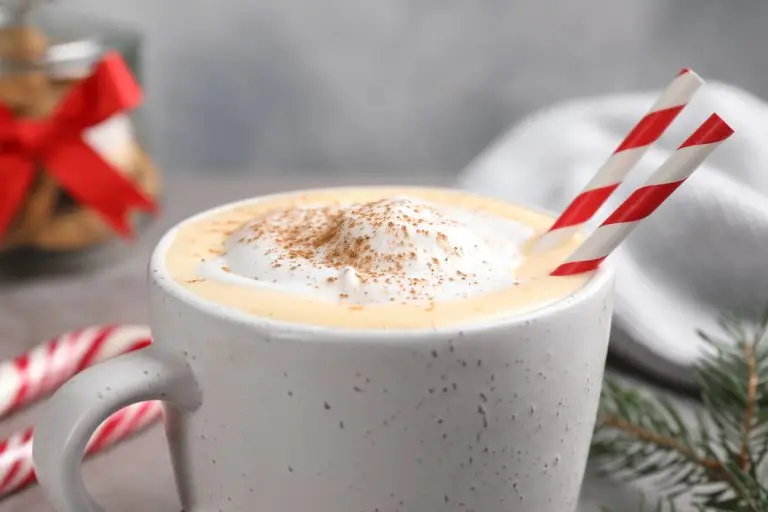
1906 Broome Family Brandy Eggnog Recipe
There are few things as wonderfully festive as a glass of rich, homemade eggnog during the holidays. This cherished family recipe for brandy eggnog, passed down since 1906, is a delightful step back in time.
- Total Time: 10 minutes
- Yield: 12 servings 1x
Ingredients
- 2 cups whole milk
- 2 cups heavy cream
- 12 eggs
- 2 cups granulated sugar
- 2 cups of your best French brandy
- 2 tsp grated nutmeg
Instructions
- Separate the eggs into two bowls: Crack each egg carefully and separate the yolks from the whites, dropping the yolks into one large bowl and the whites into the bowl of a stand mixer or another large bowl. Work with cold eggs straight from the fridge, since cold eggs separate more cleanly and are less likely to break a yolk into the whites. Even a small bit of yolk in your egg whites will stop them from whipping properly later, so take an extra few seconds here if a shell fragment or bit of yolk sneaks in.
- Beat the egg yolks and sugar until pale and smooth: Beat the egg yolks and sugar together until the mixture turns a pale, creamy yellow and thickens slightly, about 2 to 3 minutes with a hand mixer. You’re looking for a texture that leaves a faint ribbon on the surface when you lift the beaters, not a thin, runny liquid. This step dissolves the sugar completely into the yolks, which prevents a grainy texture in your finished eggnog.
- Whisk in the milk, cream, brandy, and nutmeg: Add the whole milk, heavy cream, brandy, and freshly grated nutmeg directly into the egg yolk mixture and whisk until fully combined. The mixture will loosen and turn a warm, pale gold color, smelling strongly of nutmeg and brandy even before it’s chilled. Give it a taste at this stage; if you want a little extra kick, this is the easiest moment to adjust the brandy before the egg whites go in.
- Whip the egg whites to soft peaks: Using an electric hand mixer or the bowl of a stand mixer fitted with a whisk attachment, beat the egg whites on medium-high speed until they form soft peaks, about 3 to 4 minutes. You’ll know you’re there when you lift the whisk and the peak folds gently over at the tip instead of standing straight up or sliding back into the bowl. Stop here rather than pushing to stiff peaks; soft peaks fold into the eggnog mixture far more smoothly and won’t leave little clumps of meringue floating on top.
- Fold the egg whites into the eggnog mixture: Add about a third of the whipped egg whites into the yolk mixture first and stir it in gently to loosen the base, then pour in the rest of the whites. Using a large spoon or rubber spatula, cut down through the center of the bowl, sweep across the bottom, and turn the mixture up and over itself, rotating the bowl as you go. Keep folding just until no streaks of white remain and the eggnog looks uniformly pale and slightly airy; overmixing here will knock out the very air you just worked to whip in, leaving you with a denser drink than you want.
- Prep Time: 10 minutes
- Category: Drinks
- Method: Refrigerated
- Cuisine: English
Pin to Save This 1906 Broome Family Boozy Eggnog Recipe
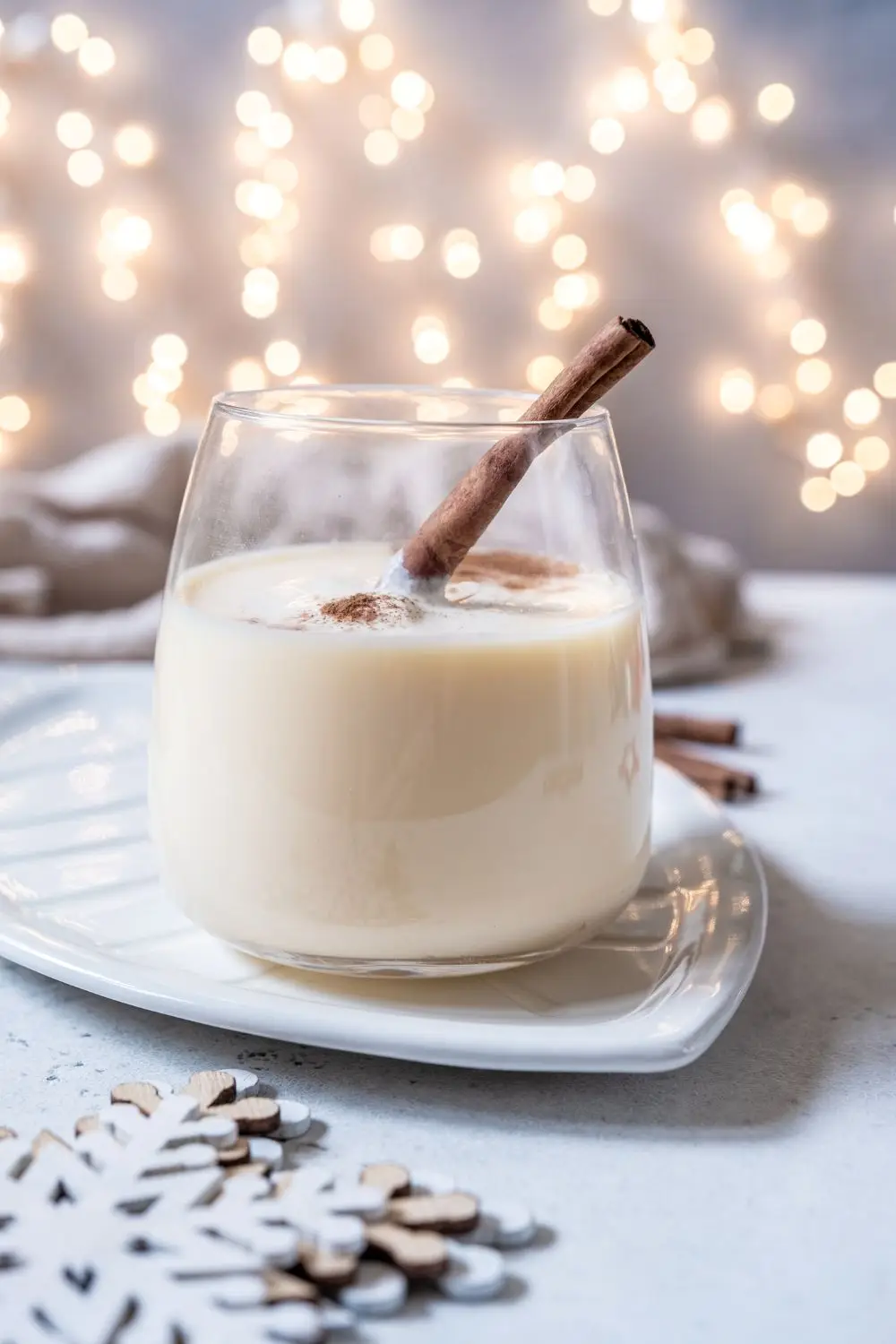
Why This Early 1900s Egg Nog Recipe Still Works Today
This egg nog recipe succeeds because it treats eggs as the backbone of the drink instead of an afterthought, and every step protects that structure.
Separating The Eggs Creates Two Kinds Of Richness
Separating egg yolks from egg whites lets you build richness twice instead of once. The yolks blend with sugar into a thick, pale egg yolk mixture that carries flavor, while the whites get whipped separately into soft peaks that add lightness so the final drink isn't a dense, sludgy eggnog mixture.
Heavy Cream And Whole Milk Balance Each Other
Heavy cream alone would make this eggnog too thick to sip comfortably, and whole milk alone would leave it thin and watery. Combining both gives you a creamy eggnog with body that still pours easily from a pitcher.
Freshly Grated Nutmeg Changes The Whole Flavor
A hint of nutmeg from a whole nutmeg seed tastes noticeably brighter and more aromatic than the ground nutmeg that's been sitting in your spice cabinet for two years. The Broome family's original recipe leaned on fresh spice because that's simply what was available, and it's still the difference between good eggnog and best eggnog recipe territory.
Brandy Does More Than Add An Extra Kick
Brandy's caramel and vanilla notes deepen the whole eggnog ingredients list instead of just adding alcohol for the sake of it. It's part of why this stays a classic eggnog recipe rather than a boozy afterthought poured over vanilla pudding.
How To Make Perfect Egg Nog Every Time
Use The Freshest Eggs You Can Find
Fresh eggs whip to stiffer peaks and taste noticeably cleaner in a raw application like this one. If you can get eggs from a local farm or a grocery store with fast turnover, your finished eggnog will taste brighter.
Whisk The Egg Whites To Soft Peaks, Not Stiff Ones
For this particular eggnog, stop at soft peaks rather than pushing all the way to stiff peaks. Soft peaks fold into the egg mixture more evenly, so you get a silky pour instead of little clumps of meringue floating on top.
Fold, Don't Stir, When Combining The Whites
Use a large bowl and fold the whipped whites in with the back of a spoon or a wide spatula, turning gently rather than beating. This keeps the air in the whites intact so the finished eggnog stays light instead of flat.
Chill The Eggnog Mixture Before Your Christmas Party
Refrigerate the finished eggnog for at least two hours before serving. The flavors round out and the brandy mellows into the cream instead of sitting sharply on top, which matters a lot at a Christmas party where you want your first pour to taste as good as your last.
Adjust The Nutmeg To Your Own Taste
Some families in 1906 leaned heavier on spice than others, and yours can too. Start with the amount listed, taste, and add additional spices in small pinches until it matches what you remember from your own holiday gatherings.
Tools & Ingredients Worth Having For This Recipe
We use Amazon links for tools that we use in our own kitchen and make sense for the recipes we share. If you choose to shop through those links, you help keep these vintage recipes alive and off the endangered list, at no extra cost to you.


Last update on 2026-11-19 at 18:39 / Affiliate links / Images from Amazon Creators API
Recipe Variations, Serving Ideas, & Storage
Recipe Variations
A Toast Worth Repeating Since 1906
That worry about raw eggs and thin, watery homemade eggnog? It disappears the moment you taste how rich this old Broome family recipe turns out.
Did your family ever fight over who got the last glass, or was eggnog always the drink nobody wanted to admit they'd have a third glass of? If this brought back a memory of your own kitchen, leave a rating below, it helps other home cooks find it too.
If you have leftover eggnog, let it rest in the refrigerator overnight, then turn it into eggnog French toast with brioche for Christmas breakfast.
