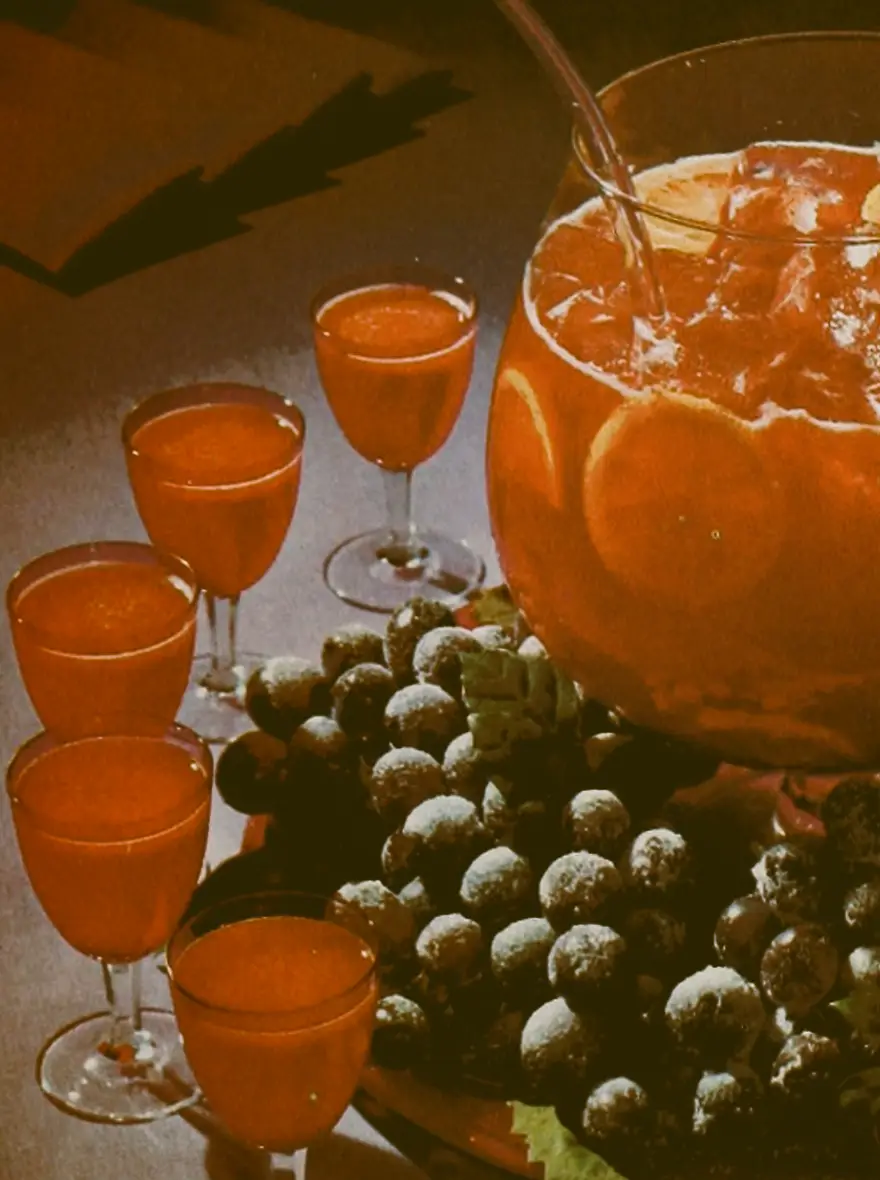
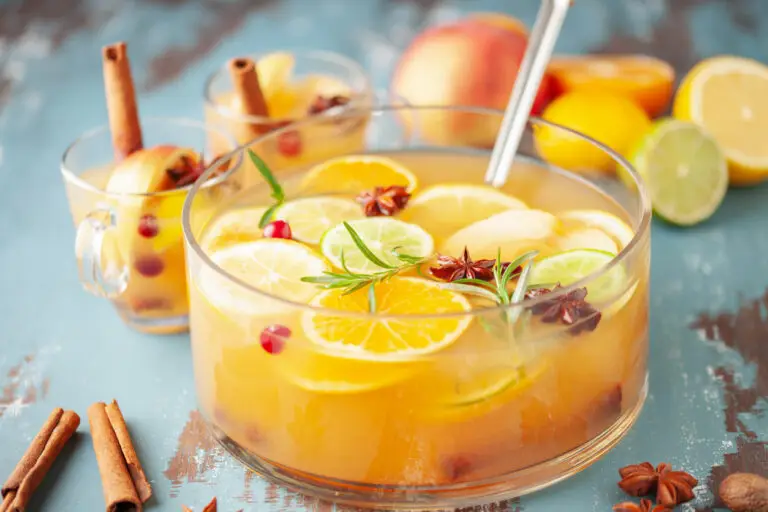
This vintage apple cider punch bowl recipe from 1965 serves 20 guests with just five simple ingredients and delivers a perfect balance of sweet and tangy flavors everyone craves at fall gatherings. The genius of this retro punch lies in its make-ahead convenience, chilling for at least 2 hours before serving so you can actually enjoy your own party.
The jewel-toned color glows in a crystal punch bowl, with maraschino cherries floating like little ornaments. Every sip tastes bright and fruity, balancing the richness of cider with the tang of fresh citrus. This is the kind of punch that made hostesses famous at neighborhood gatherings, the recipe passed along on index cards at church socials and bridge club meetings.
The 1960s Party Scene
In 1965, when this apple cider punch bowl recipe first appeared, entertaining at home reached new heights of sophistication. Punch bowls held pride of place on wedding registries, displayed prominently on sideboards and buffet tables as symbols of gracious hospitality. Social life in the 1960s centered on face-to-face entertaining.
Hostesses in 1965 relied on recipes that could be prepared ahead, freeing them to mingle with guests and enjoy their own parties. The ingredients in this punch reflect the era's embrace of canned convenience foods like apricot nectar, which appeared in countless recipe cards and community cookbooks. These smart solutions gave homemakers more time with family and friends.
Punch bowls graced coffee tables at Tupperware parties, baby showers, and holiday open houses throughout suburban neighborhoods. The ritual of serving punch from a communal bowl created a connection, with guests gathering around to refill their cups and catch up on neighborhood news. This particular combination of apple cider and apricot nectar represents the 1960s fondness for unexpected flavor pairings that felt modern and adventurous.
What Makes This Vintage Punch Recipe Special
Apricot Nectar Creates Depth The apricot nectar is the secret ingredient that sets this vintage punch apart from standard cider recipes. Unlike thin apricot juice, nectar contains pureed fruit that adds body and a subtle sweetness that balances the tartness of the citrus. The natural pectin in apricot nectar lends it a slight viscosity, making it feel more luxurious.
Sweet Cider vs. Apple Juice This recipe specifically calls for sweet cider, not apple juice, and the difference matters. Sweet cider is raw, unfiltered apple juice that retains the natural cloudiness and complex apple flavors that processing removes. It has a richer, more authentic apple taste that grounds the punch in orchard-fresh authenticity. If you can only find apple juice, reduce the amount slightly since it tends to be sweeter than cider.
The Citrus Balance Orange and lemon juice work together to brighten the heavier fruit flavors. The 1.5 cups of orange juice adds sunshine and vitamin C, while the three-quarter cup of lemon juice provides the acidic backbone that keeps the punch from tasting flat or overly sweet. This ratio creates a punch that's refreshing rather than saturated in sweet.
Maraschino Cherry Garnish Those glossy red cherries aren't just decoration, they're a flavor element. As they float in the punch, they release a hint of their sweet almond-scented syrup. Each guest who scoops one into their cup gets a nostalgic treat at the bottom of their glass. This garnish became iconic in the sixties precisely because it added visual appeal and a playful finish.
Make-Ahead Convenience The requirement to refrigerate for at least two hours before serving isn't arbitrary. This chilling time allows all the fruit flavors to marry together, creating a more cohesive taste than simply mixing and serving immediately. The cold temperature also ensures the punch stays refreshing throughout your event without needing constant ice additions that would dilute the flavor.
This classic 1960s punch bowl recipe combines sweet apple cider with citrus juices and apricot nectar for a refreshingly simple party drink. With just 5 ingredients and 2 hours of chilling time, you’ll have an elegant punch that serves 20 guests.
Total Time:2 hours 10 minutes
Yield:20 servings 1x
Email me this recipe
Enter your email and we’ll send the recipe right to you.
Recipe saved! Please check your email for your saved recipe.
Ingredients
UnitsScale
2 cans (12 oz each) apricot nectar, chilled
1-1/2cupsorange juice, freshly squeezed or store-bought
3/4cuplemon juice, freshly squeezed
1-1/2quartssweet apple cider, chilled
20 maraschino cherries
Instructions
Combine the juices: In a large pitcher or punch bowl, combine the chilled apricot nectar, orange juice, and lemon juice.
Blend: Stir gently to blend the citrus flavors.
Add the cider: Pour in the chilled sweet apple cider and stir until all ingredients are thoroughly combined.
Chill the punch: Cover and refrigerate for at least 2 hours to allow flavors to meld and the punch to become well-chilled.
Serve: When ready to serve, pour the punch into individual punch cups. If desired, garnish each serving with one maraschino cherry.
Chill Everything Before Mixing I learned this lesson the hard way when I once tried assembling this punch with room-temperature ingredients. The result was a disappointing, lukewarm punch that required ice, which then diluted all those lovely flavors. Now I always refrigerate my cider, apricot nectar, and fresh-squeezed juices for at least four hours before assembling the punch. When everything starts cold, the two-hour chilling time really allows flavors to marry without sacrificing temperature.
Use Fresh Citrus When Possible Even though the original 1965 recipe likely assumed canned or bottled juices, fresh-squeezed orange and lemon juice make a noticeable difference. The brightness of fresh citrus oils in the juice adds aromatic complexity that bottled juice can't match. If you must use store-bought, choose "not from concentrate" varieties for the closest match to fresh-squeezed flavor.
Adjust Sweetness to Your Preference I've found that apricot nectar varies dramatically in sweetness between brands, with some tasting almost dessert-like while others are more balanced. Taste your punch after mixing and before the final chill; if it seems too sweet, add an extra tablespoon or two of lemon juice to sharpen it. You can also reduce the apricot nectar by half a can and add more apple cider for a less sweet version.
Skip the Ice in the Bowl Adding ice directly to your punch bowl dilutes this carefully balanced recipe as it melts. Instead, serve the punch ice-cold from the refrigerator into individual punch cups, or create decorative ice rings using apple cider so melting ice adds flavor rather than water. For parties longer than two hours, keep a backup pitcher of punch chilled in the refrigerator to refill the bowl.
Recipe Variations, Serving Ideas, and Storage
Recipe Variations
Serving Ideas
Make Ahead & Storage
Recipe Variations
I've experimented with several modifications to this classic punch, and each offers something special while honoring its vintage spirit. For a sparkling version, replace one quart of apple cider with chilled ginger ale or lemon-lime soda added just before serving. This creates the effervescence many modern palates expect from punch while maintaining the recipe's fruit-forward character.
To make a holiday version perfect for Thanksgiving or Christmas, I've added two cinnamon sticks and four whole cloves to the punch during the chilling period, removing them before serving. The warm spices complement the apple and apricot flavors beautifully. For adult gatherings, add one to two cups of light rum, vodka, or bourbon, stirring it in just before serving for a spiked punch that recalls 1960s cocktail party culture.
A tropical twist replaces the apricot nectar with pineapple juice and adds a splash of coconut cream for a punch that evokes tiki bar nostalgia. You can also substitute white grape juice for the apple cider to create a lighter, more delicate punch suitable for spring and summer gatherings.
Serving Ideas
This vintage apple cider punch shines at fall and winter gatherings, particularly Thanksgiving dinners, Christmas open houses, and New Year's Eve parties. The punch's amber color looks stunning in a crystal or pressed glass punch bowl, ideally displayed on a lace doily or silver tray for authentic 1960s presentation. Arrange vintage punch cups around the bowl with a decorative ladle, and watch guests gravitate toward this beautiful centerpiece.
When I serve this at holiday parties, I pair it alongside classic party foods from the era like cheese balls, deviled eggs, cocktail wieners, and finger sandwiches for a fully nostalgic spread. The punch's fruity sweetness pairs wonderfully with savory appetizers, cleansing the palate between bites. For dessert service, this punch complements spice cakes, apple pie, and sugar cookies perfectly.
Consider offering this punch at baby showers, bridal showers, or afternoon tea parties where its non-alcoholic nature and elegant presentation feel perfectly appropriate. The recipe scales beautifully; simply double or triple all ingredients for larger gatherings, mixing in batches if your punch bowl or refrigerator space is limited.
Make Ahead & Storage Instructions
This punch holds up beautifully when made in advance, which was precisely the point in its original 1960s context. You can mix all the ingredients up to 24 hours before serving; simply keep the punch covered and refrigerated until party time. The flavors actually improve slightly with longer chilling as the citrus, apricot, and apple notes have more time to blend.
For transporting to potlucks or parties, mix the punch in a large pitcher with a secure lid rather than your punch bowl. This prevents spills and keeps everything chilled during travel. Transfer to your serving bowl once you arrive, adding any garnishes at that point for the freshest appearance.
Leftover punch should be transferred to a covered pitcher or airtight container and stored in the refrigerator for up to three days. The flavor remains delicious, though the punch may separate slightly; just stir before serving. You can freeze leftovers in ice cube trays and add them to glasses of sparkling water for a refreshing afternoon drink.
Frequently Asked Questions
Can I use apple juice instead of apple cider?
Yes, though apple cider provides more depth of flavor. Apple juice tends to be sweeter and more filtered, so you may want to add an extra tablespoon of lemon juice to maintain the punch's balanced tartness. Fresh apple cider has natural complexity from the blend of apple varieties that makes this vintage recipe special.
Where can I find apricot nectar?
Most grocery stores stock apricot nectar in the juice aisle, typically near other fruit nectars and canned juices. Popular brands include Kern's, Jumex, and Goya. If you have trouble locating it, peach nectar makes an acceptable substitute with a similar texture and sweetness level.
How do I make this punch for a crowd of 50?
Simply multiply all ingredients by 2.5 to serve approximately 50 guests. You'll need 5 cans of apricot nectar, 3¾ cups orange juice, scant 2 cups lemon juice, and 3¾ quarts of apple cider. Mix in batches if necessary and keep backup pitchers chilled for refilling your punch bowl.
Can this punch be made into a hot beverage?
While the original recipe is served cold, you can gently heat the punch in a large pot over medium-low heat for a warm version. Heat until steaming without letting it boil. The warm version works beautifully for cold-weather gatherings, though the apricot flavor becomes more subtle when heated.
What's the best way to garnish this punch?
The recipe calls for maraschino cherries, which were popular garnishes in 1960s punches. You can also float thin apple slices, orange wheels, or fresh cranberries in the punch bowl for a more modern, natural presentation. Some hostesses create decorative ice rings with fruit frozen inside.
Can I make this punch alcoholic?
Absolutely, following 1960s party tradition. Add 1 to 2 cups of light rum or bourbon to the full recipe just before serving. Brandy also pairs beautifully with the apple and apricot flavors. Always label the punch bowl clearly when alcohol is added.
Why does this recipe call for maraschino cherries?
Maraschino cherries were ubiquitous in 1960s party presentations, appearing in everything from cocktails to fruit salads. They added a pop of festive color that looked elegant in crystal punch cups. While optional today, they provide authentic vintage charm and a small sweet bite at the end of each serving.
How long can the punch sit out at room temperature?
For food safety, punch should remain at room temperature for no more than two hours. Keep it chilled by placing your punch bowl over a larger bowl filled with ice, or replenish from a cold pitcher stored in the refrigerator. Smaller batches allow you to maintain proper serving temperature throughout your event.
Can I use frozen juice concentrates?
The recipe works with frozen concentrates when fresh juice is unavailable. Use one 6-ounce can of frozen orange juice concentrate mixed with ¾ cup water to replace the orange juice, and 3 tablespoons of frozen lemonade concentrate mixed with ¼ cup water for the lemon juice.
What punch bowl memories do you carry from your childhood? Was there a special occasion when punch meant the gathering was truly important? If you make this vintage apple cider punch bowl, please leave a rating and review to share your experience with fellow nostalgic cooks!
Melissa is the creator of Recipe Rewind. Self-taught since age seven, she's spent more than 30 years cooking with vintage recipes. Extensive travel broadened her palate, and raising four children taught her how to make from-scratch cooking work on a real schedule and budget. She now cooks in a household spanning five generations, from Silent Generation to Gen Z, so every recipe gets tested against people who remember the original and people who've never seen it before. She researches primary sources, including old cookbooks, church booklets, and period advertisements, before adapting a recipe.