

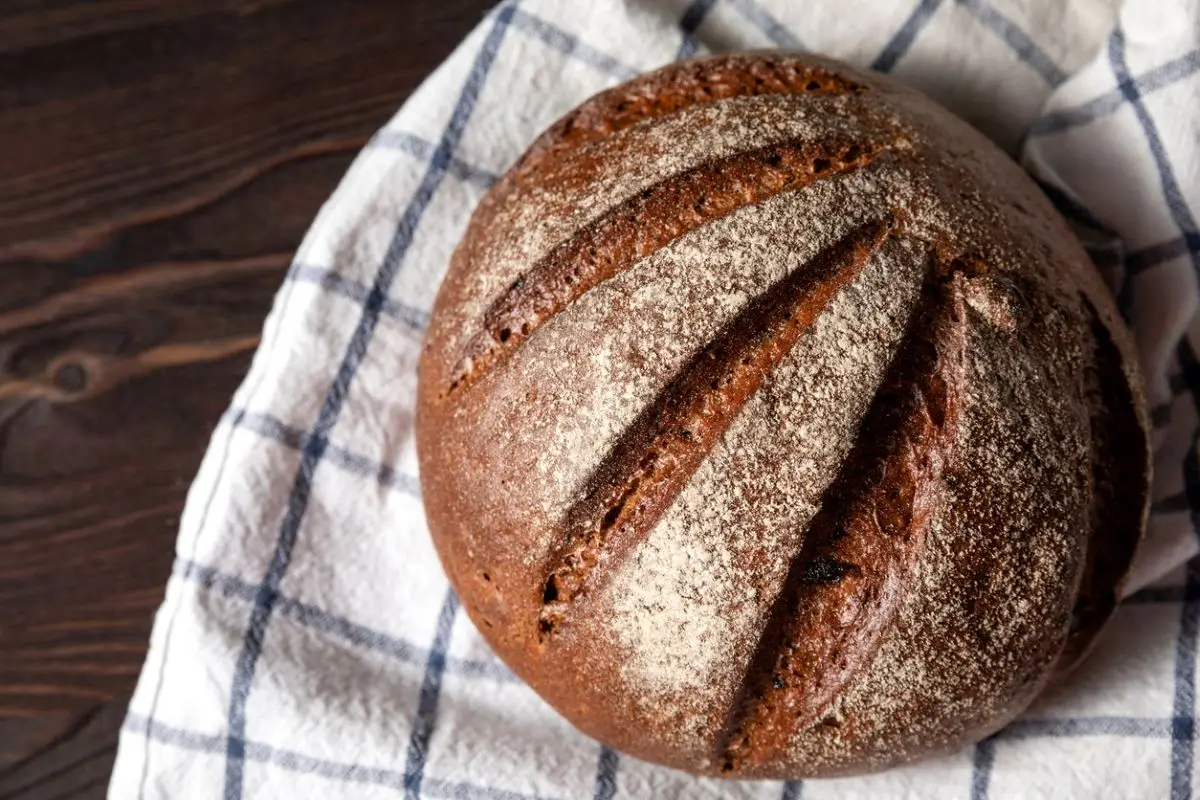
A good Russian rye bread recipe makes a dense, dark loaf, also called black bread, built on rye flour, molasses, and caraway seeds. Active dry yeast replaces the traditional multi-day sourdough starter, and cocoa and dark corn syrup add earthy depth, so the loaf is ready in about three hours.
I tried more than a handful of rye bread recipes over the years, and the results kept coming out mild (almost tasteless) and completely forgettable; nothing close to the deep, earthy flavor real Russian black bread is known for.
The lack of real flavor pushed me to rework the ratios and add caraway, cocoa, and dark corn syrup until the loaf finally tasted like the bread I remembered from German and Eastern European bakeries. Real body, real crust, and real caraway bite were always the standard, not a faint suggestion of any of them, the same standard behind a proper Bauernbrot.
What follows is the method that got there: the traditional Russian technique broken down step by step, plus the one or two details that decide whether a crumb turns out dense in the right way or the wrong way. It's built for a normal afternoon instead of a three-day starter schedule, using active dry yeast instead of Russia's original sourdough tradition.
If you like dark bread, try the Old World dark pumpernickel bread, a two-day loaf with a nearly black crust, or the Mag Aonghus traditional Irish beer bread, a malty 1941 Dublin pub recipe.
Russian Rye Bread Recipe
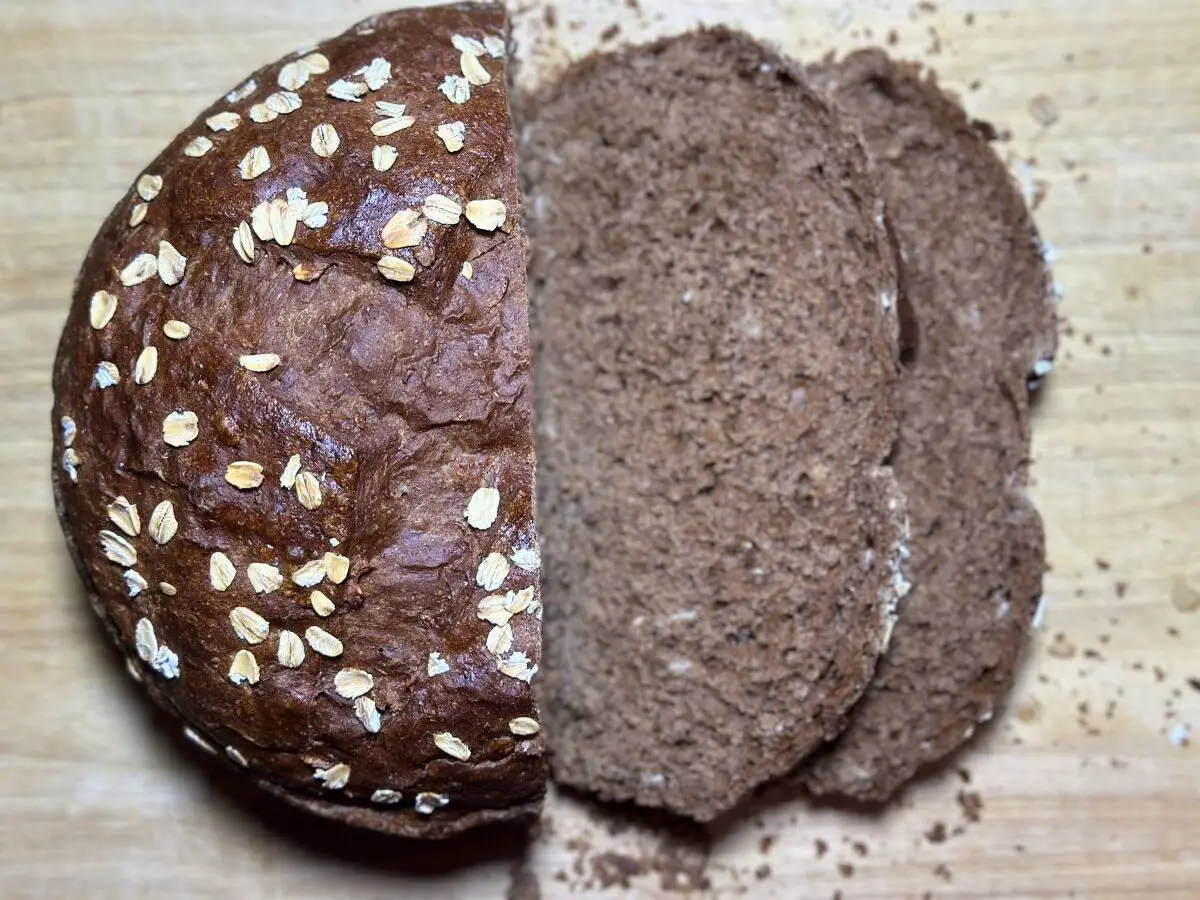
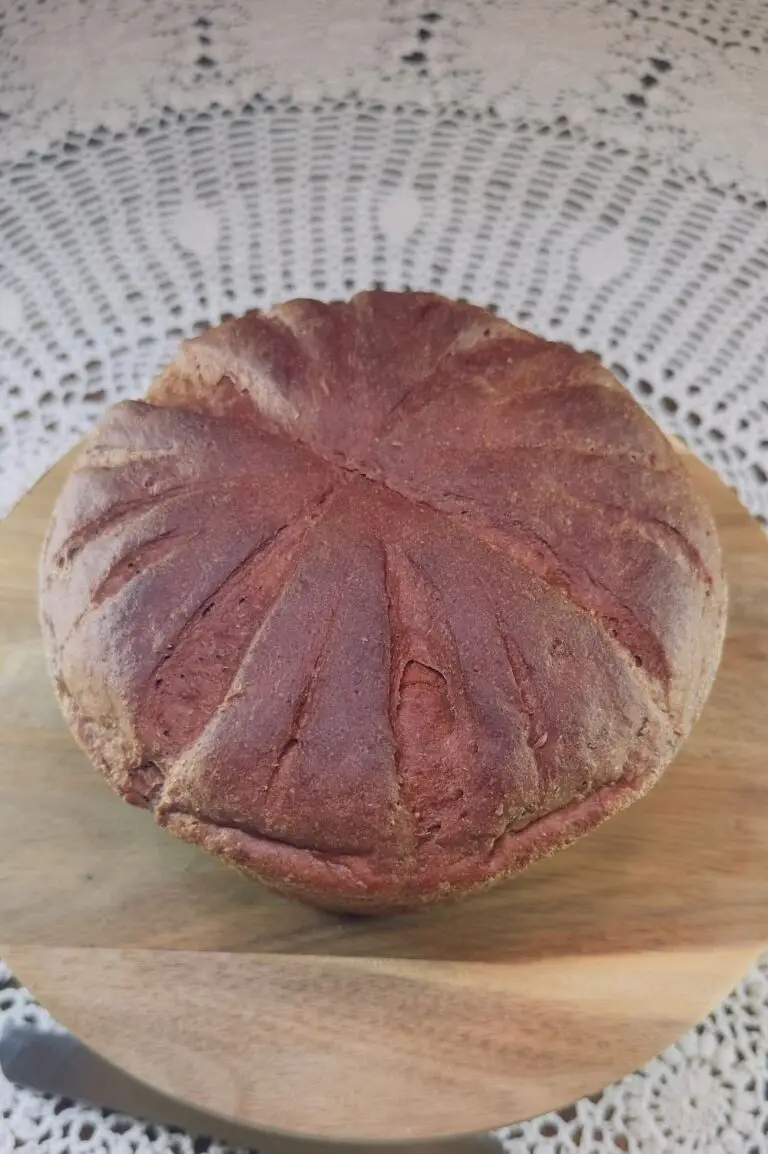
Rooted in the Russian tradition of black bread, the recipe below replaces the original sourdough starter with active dry yeast for a faster route to the same dense, earthy loaf. Cocoa powder, instant coffee, and dark corn syrup recreate the deep color and gentle sweetness that molasses traditionally provided, while caraway and fennel seeds deliver the distinct flavor black bread is known for. The result is a hearty, slightly tangy loaf with a tight, moist crumb, good for sandwiches or served alongside soup.
- Total Time: 2 hours 45 minutes
- Yield: 2 loaves 1x
Ingredients
- 1-1/2 cups water
- 2-1/4 teaspoons active dry yeast
- 2 tablespoons apple cider vinegar
- 2-1/2 cups bread flour
- 1 cup dark rye flour
- 1 teaspoon kosher salt
- 2 tablespoons dark corn syrup
- 1 tablespoon white granulated sugar
- 3 tablespoons unsweetened cocoa powder
- 1 teaspoon instant coffee granules (optional)
- 2-1/2 tablespoons crushed caraway seeds
- 1/4 teaspoon crushed fennel seed (optional)
- 2 tablespoons salted butter, softened
Instructions
- Activate the yeast: combine ½ cup water and sugar in a glass, sprinkle in yeast, let sit 5 to 10 minutes until foamy.
- Mix dry ingredients: combine bread flour, rye flour, salt, cocoa, coffee, caraway, and fennel in a large bowl.
- Build the dough: add remaining water, yeast mixture, vinegar, and dark corn syrup; stir into a shaggy dough.
- Knead: turn onto a floured surface, work in butter, knead 5 to 7 minutes until smooth and elastic.
- First rise: shape into a ball, cover, rise in a warm spot for 1 hour.
- Shape: grease two 9×5 pans or a dutch oven, punch down dough, shape into pan(s).
- Second rise: cover and rise again for 1 hour.
- Bake: preheat oven to 400°F, bake 22 to 25 minutes until crust is dark.
- Cool: remove from pans, cool on a wire rack for 2 hours before slicing.
Pin This Russian Rye Bread Recipe For Later

Back in Village Bakeries, When Rye Was the Only Reliable Grain
Rye Won Where Wheat Failed
Wheat never stood a chance against a Russian winter, so for centuries, rye fed the population that wheat couldn't reach. The Whole Grain Council notes that rye could withstand the short, wet growing seasons across Russia, Poland, and Scandinavia in a way wheat and barley simply couldn't manage, which made it the one grain a farmer could plant with any real confidence that his family would eat that winter.
Wikipedia's entry on rye confirms the same pattern on a broader scale: the grain's tolerance for poor soil and brutal cold let it dominate northern and central Russian farmland for generations, while wheat bread stayed a rare indulgence mostly set aside for the nobility .
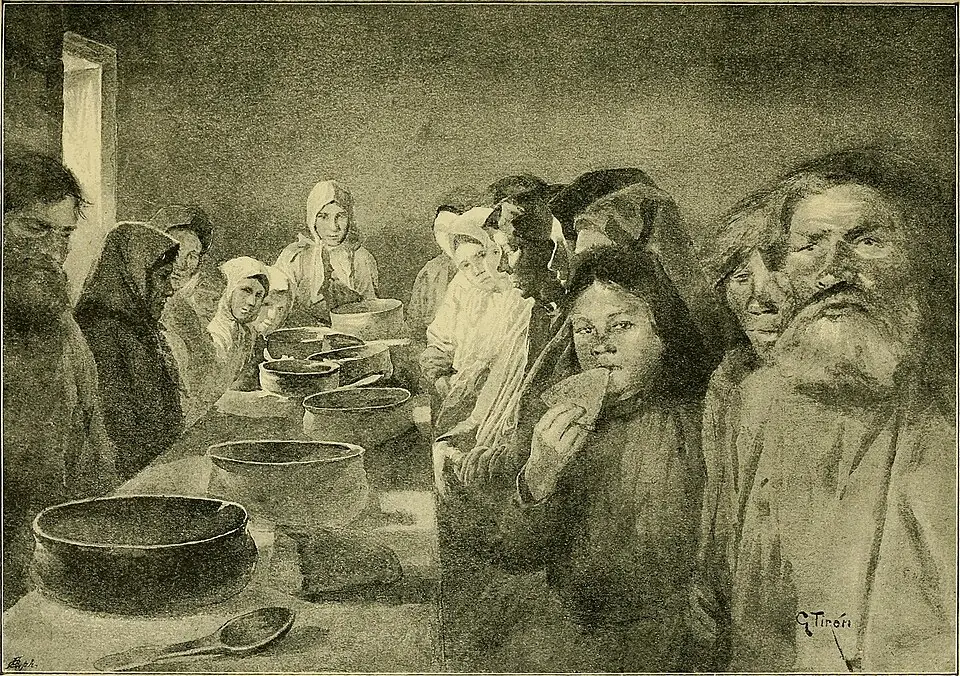
In the Land of Tolstoi; Experience of Famine and Misrule in Russia, by Jonas Stadling, Illustration by Gerda Tiren
The Slow Bake Behind Black Bread
Rye's resilience in the field carries straight through to the way the loaf gets baked. Чёрный хлеб, black bread, takes its deep color and its name from a slow, low bake and a mix of dark rye flour and molasses, a combination that turns something humble into something worth waiting for.
The classic version, known as Borodinsky bread, is a dark sourdough rye loaf sweetened with molasses and finished with coriander and caraway, the kind of loaf you'd want beside a bowl of something warm on a January afternoon.
Bread and Salt, a Trust You Could Taste
Bread, in Russian households, was never just sustenance. Offering a guest bread and salt, khleb-sol, was a small ceremony of trust: a guest would tear a piece from the loaf and dip it in salt, a gesture so central to daily life that it gave Russian the word khlebosolny, meaning hospitable, a custom described in detail here.
The proverb "Хлеб всему голова," bread is the head of everything, often rendered in English as "bread is the staff of life," still holds its place as one of the language's most recognized sayings, according to reference guides on Russian proverbs.
The Ration That Taught a Country to Never Waste a Crumb
Russians learned to revere bread by watching what happened when it ran out. During the Siege of Leningrad, from 1941 to 1944, bakers cut bread with sawdust and cellulose to stretch a flour supply that kept shrinking, and civilians lived on rations as low as 125 grams a day.
A survivor's account of the siege, published by History Workshop, describes what that ration meant in real terms for the people counting every bite. People who lived through the siege remember the weight of a single ration in their palm, which is a fairly good explanation for why a loaf of rye bread still carries so much history baked into it.
What Makes This Rye Bread Recipe Work
Rye Flour Builds a Different Kind of Gluten Network
Rye flour contains less gluten-forming protein than wheat flour, so a rye dough never develops the same elastic, stretchy structure a pure wheat dough does. Blending rye flour with bread flour gives the dough enough structure to trap gas and rise properly, while still keeping the tight, dense crumb that defines real black bread.
Dark Corn Syrup Mimics What Molasses Did Originally
Dark corn syrup adds moisture and sugar that browns under heat through the Maillard reaction, producing the same deep color and slight shine molasses gave traditional loaves. It also keeps the crumb from drying out during the long, hot bake needed to darken the crust properly.
Cocoa and Coffee Deepen Color Without Adding Bitterness
Small amounts of cocoa powder and instant coffee darken the dough through pigment rather than through the long, slow caramelization a fully traditional bake relies on. Used in small measured amounts, neither ingredient adds noticeable bitterness, so the flavor still reads as rye and caraway first.
Caraway Seeds Release Flavor Through the Heat of Baking
Caraway seeds carry essential oils that only fully release their earthy, slightly sweet flavor once they're exposed to prolonged heat. Crushing the seeds before mixing them in exposes more surface area, which is why crushed caraway tastes noticeably stronger in the finished loaf than whole seeds folded in the same way.
Apple Cider Vinegar Balances the Sweetness With Real Tang
The vinegar adds a light acidity that offsets the sugar and dark corn syrup, keeping the loaf from tasting sweet instead of savory. That same acidity also gives the crumb a faint tang closer to a naturally fermented sourdough rye bread, without the multi-day wait.
How to Make Perfect Russian Rye Bread
Keep the Water Lukewarm, Not Hot
Water above about 110°F starts killing active dry yeast, and water that's too cold slows it down to a crawl. Stick to lukewarm water you can comfortably hold your finger in, and the yeast activates reliably every time.
Watch the Dough, Not Just the Clock
Rise times shift with room temperature, so a cold kitchen in winter can add 20 to 30 minutes to both rises. Skip the poke test here. This dough tells you it's ready by size, not by touch. When the ball has visibly doubled, move on.
Knead in Two Rounds: Mixer First, Hands Second
Run the dough hook for 7 to 10 minutes on the first knead. That's long enough to build real structure without babysitting it the whole time. After shaping, you'll knead again by hand for about 5 full minutes, a shorter second round that finishes the job the mixer started.
The dough should feel sticky through both rounds, stickier than a Bauernbrot or a pumpernickel. That's not a mistake and it's not underdeveloped dough. Rye holds more water than those loaves, and if you're fighting the tack trying to get it dry and clean like a wheat dough, you're fighting the wrong battle.
Watch the Second Rise Closely, It Can Move Fast
The second rise can wrap up in as little as 30 minutes, which catches people off guard if they're used to timing rye bread like a standard wheat loaf. Check on it earlier than you think you need to.
This stage can double in a shorter window than the first rise, and overproofed dough at this point costs you the structure you just built. Set a shorter timer than your instinct tells you to, then check by eye every few minutes after that.
Cool in Two Stages: Cast Iron First, Then Wire Rack
Let the loaf sit in the cast iron for no more than 15 minutes after it comes out of the oven. Any longer and the residual heat starts working against you instead of for you.
Move it to a raised wire rack after that and give it a full hour there. The lift off the counter matters. Air needs to move underneath the loaf too, not just around the top, or you're trapping the same steam you just spent an hour letting escape.
Recipe Variations, Serving Ideas, & Storage
Recipe Variations
Tools & Ingredients Worth Having For This Recipe
We use Amazon links for tools that we use in our own kitchen and make sense for the recipes we share. If you choose to shop through those links, you help keep these vintage recipes alive and off the endangered list, at no extra cost to you.


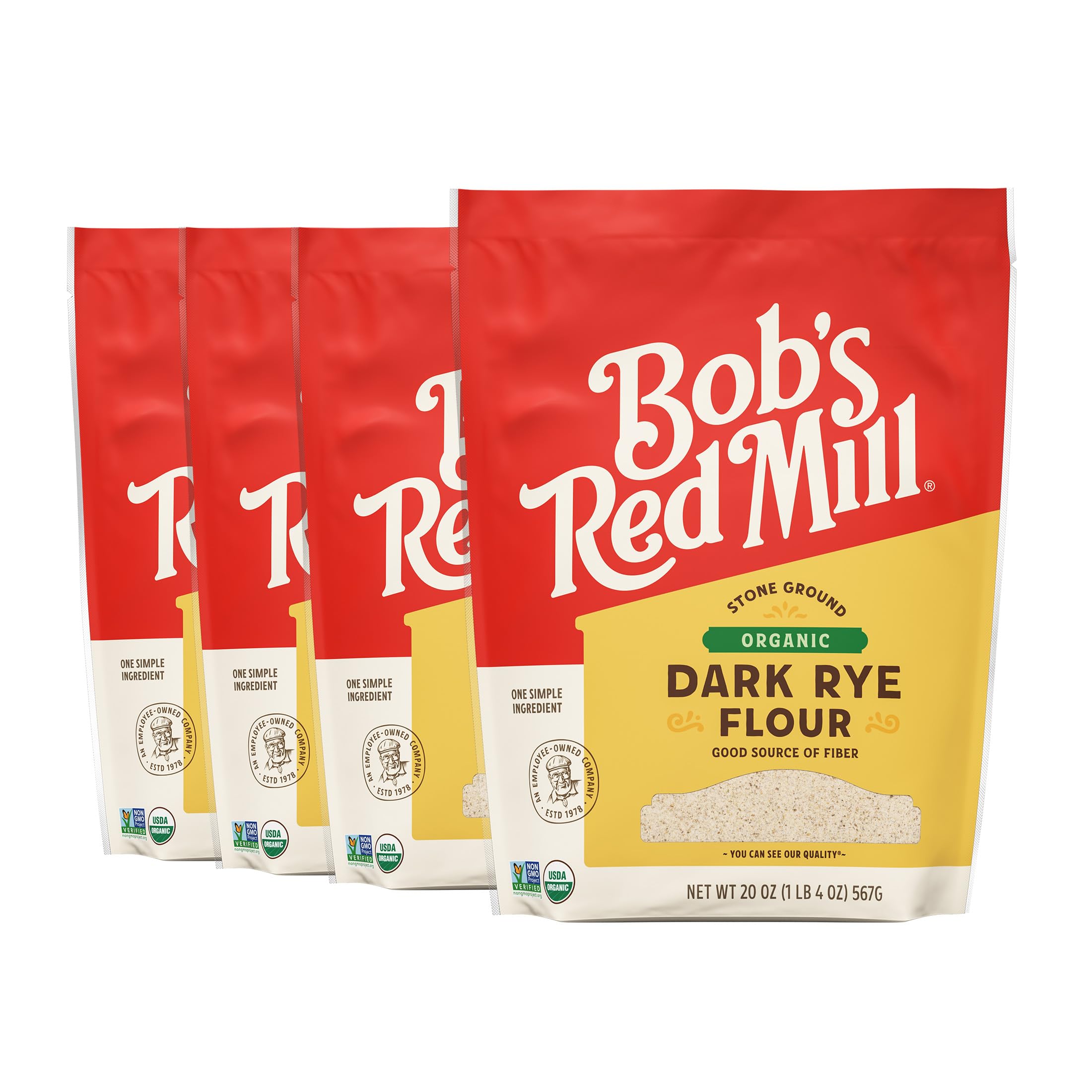

Last update on 2026-11-19 at 17:22 / Affiliate links / Images from Amazon Creators API
Frequently Asked Questions
Rye bread is a broad category made with any proportion of rye flour, ranging from light rye sandwich loaves to dense pumpernickel. Russian rye bread, often called black bread, is a specific dark, dense version made with a high ratio of dark rye flour, molasses or a similar dark sweetener, and a long bake, giving it a deeper color and stronger flavor than most Western rye loaves.
Most rye bread recipes, including this one, bake at 400°F for 22 to 25 minutes, until the crust turns dark and the loaf sounds hollow when tapped on the bottom. Denser loaves or larger single-round shapes sometimes need a few extra minutes, so checking for that hollow sound is more reliable than watching the clock alone.
Russian rye bread is generally considered a healthy bread choice, since rye flour carries more fiber, B vitamins, and minerals like magnesium and potassium than standard white or wheat bread. Research has also linked rye bread to better blood sugar control and lower markers of inflammation compared to wheat bread, though it still contains gluten and isn't suitable for anyone with celiac disease or a gluten intolerance.
The small, dark, curved seeds in Russian rye bread are almost always caraway seeds, prized for their earthy, slightly sweet, anise-like flavor. Some recipes add crushed fennel seed alongside the caraway, and the two look similar enough that they're easy to mix up on sight, though fennel has a milder, more licorice-forward taste.
Fennel seed is the closest substitute for caraway seed in rye bread, since both carry a similar anise-like flavor profile, though fennel leans sweeter and more licorice-forward. Dill seed, anise seed, or coriander seed also work as substitutes and are common in other rye bread traditions, so the loaf still ends up with real flavor even without caraway on hand.
Rye is generally considered less inflammatory than wheat, largely because rye contains less gluten and lacks wheat germ agglutinin, a lectin in wheat linked to inflammatory effects. Clinical research has also linked whole-grain rye consumption to lower levels of inflammatory markers like IL-6 and CRP compared to wheat, though rye still contains gluten and isn't a safe substitute for anyone managing celiac disease.
A Loaf Worth Repeating in Any Kitchen
The pale, forgettable rye bread described at the beginning of this blog post doesn't have to be the outcome in a home kitchen anymore. Once the dough behaves the way it's supposed to and the crust runs properly dark, real Russian black bread flavor shows up without a starter or a trip to a specialty bakery.
Leave a star rating and tell me in the comments how your crumb turned out. Dense, tender, or somewhere in between, I want the full report.
