

This rhubarb cake recipe is a 1965 grand-prize contest winner made with buttermilk, shortening, and cinnamon baked in a single pan. Sugaring the rhubarb before folding it into the batter, rather than layering it raw, keeps the crumb moist instead of soggy, a common failure point in old-fashioned rhubarb cake recipes. Finished with a simple powdered sugar dusting, it is a easy, one-pan rhubarb dessert that feeds a crowd and tastes even better the day after baking.
Local newspaper recipe contests in the 1960s drew thousands of entries each year, judged by panels who chose winners from across the readership and published their names in the paper that everyone on the block read over morning coffee. Mrs. Edmund S. Lepkowski of Scranton, Pennsylvania entered her old fashioned rhubarb cake into the Cakes category, claimed the grand prize, and earned exactly that kind of recognition. You only need one bowl, one pan, and ingredients you probably already have in your kitchen.
Back in the 1965 Kitchen
In 1965, the Beatles' "Help!" was on AM radio, the first U.S. combat troops had landed in Vietnam, and a loaf of bread cost about 21 cents. Homemakers were managing household budgets with precision, and a backyard rhubarb plant was a genuine asset because it returned every spring without costing a dime.
Rhubarb was particularly prized in Midwestern and Northeastern yards precisely because it was indestructible. Plant it once and it came back for decades, which made it one of the most economical spring ingredients a home cook could work with.
Crisco shortening was a fixture in 1960s kitchens, stocked at every A&P and Piggly Wiggly from coast to coast. It was the reliable baking fat that produced predictable results in an era before butter's cultural moment in American home cooking. Church suppers and neighborhood potlucks were still the primary social calendar for many families, and a cake that traveled well, sliced cleanly, and fed fifteen people from a single pan was exactly what those occasions demanded.
That same practical magic shows up in community cookbooks from the decade that followed - Pat Berklund's Easy Iced Pumpkin Cake Squares is another vintage single-pan cake that was a potluck staple, baked from a 1971 Wisconsin hospital auxiliary cookbook with the same humble Crisco-and-a-single-egg DNA.
Recipe contests gave local newspapers a built-in reason to keep readers engaged week after week. Families who did not enter still followed the results, because the winner was likely someone from the next street over, and the winning recipe was something you might actually make. Mrs. Lepkowski's neighbors probably saw her name in that paper and that meant something.
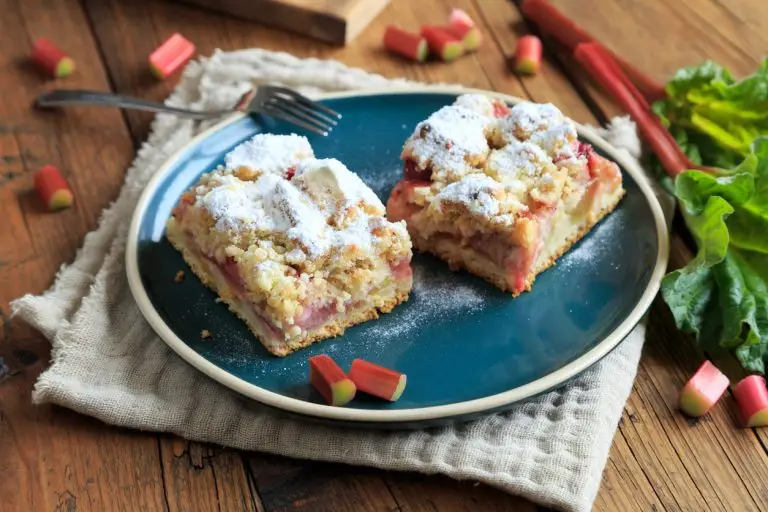
Old Fashioned Rhubarb Cake Recipe
This old fashioned rhubarb cake comes from a 1965 local newspaper recipe contest, where it claimed the grand prize in the Cakes category. Made with buttermilk, shortening, and warm cinnamon in a single pan, it finishes with a simple powdered sugar dusting that lets the rhubarb flavor hold center stage. It is the kind of recipe that travels well, feeds a crowd, and tastes better the next day.
- Total Time: 55 Minutes
- Yield: 12 Servings 1x
Ingredients
- 2 cups fresh rhubarb, cut into 1/2-inch pieces
- 1/2 cup granulated sugar
- 1 cup granulated sugar
- 1/2 cup shortening (such as Crisco), at room temperature
- 1 large egg, at room temperature
- 1 cup buttermilk, at room temperature
- 1 teaspoon pure vanilla extract
- 2 cups all-purpose flour
- 1 teaspoon baking soda, sifted together with flour
- 1 teaspoon ground cinnamon
- 1/2 teaspoon salt
- Powdered sugar, for dusting
Instructions
- Prep the pan and preheat: Preheat your oven to 350°F. Grease a 12×8 inch or 9×13 inch baking pan and set aside.
- Macerate the rhubarb: Combine the rhubarb pieces with 1/2 cup of granulated sugar in a medium bowl. Toss to coat evenly and set aside. This maceration step draws out the rhubarb’s natural juice and softens the pieces so they bake evenly into the cake.
- Cream sugar and shortening: In a large bowl, cream together the 1 cup of granulated sugar and the shortening with a hand mixer or stand mixer on medium speed until light and fluffy, about 2 to 3 minutes.
- Add egg and vanilla: Add the egg and vanilla extract to the creamed mixture and beat until fully combined.
- Sift dry ingredients: In a separate bowl, sift together the flour, baking soda, cinnamon, and salt.
- Alternate wet and dry: Alternate adding the flour mixture and the buttermilk to the creamed mixture, beginning and ending with the flour. Mix on low speed just until each addition is incorporated. Do not overmix.
- Fold in the rhubarb: Fold in the sugared rhubarb, including all of the syrup that has collected in the bowl. Stir gently until the rhubarb is evenly distributed throughout the batter.
- Fill the pan: Pour the batter into the prepared pan and spread it into an even layer.
- Bake: Bake at 350°F for 30 to 35 minutes, or until a toothpick inserted near the center comes out with a few moist crumbs attached. Check at the 28-minute mark.
- Cool completely: Allow the cake to cool completely in the pan on a wire rack before dusting.
- Dust and serve: Dust generously with powdered sugar just before serving.
Pin This Old-Fashioned Rhubarb Cake Recipe
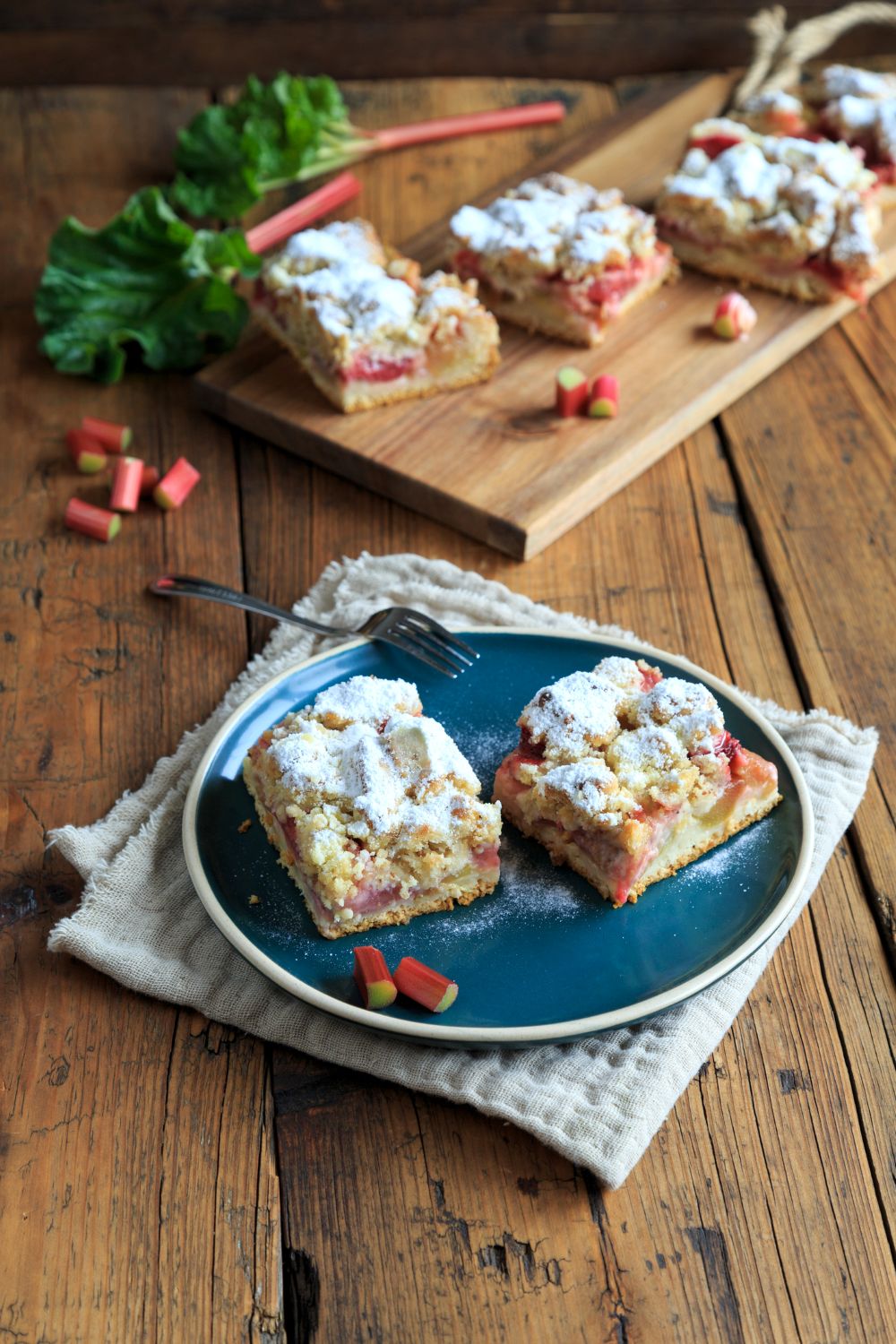
Why This Old Fashioned Rhubarb Cake Recipe Still Works Today
Shortening Builds a Tender, Even Crumb
Most modern rhubarb cake recipes default to butter, but shortening is exactly what makes this 1965 formula structurally distinct. Shortening is 100% fat with no water content, which means it creates a slightly higher rise and a more tender, lofty crumb because there is no steam competing with the leavening.
King Arthur Baking confirms that when shortening is creamed with sugar, it traps air molecules efficiently, which helps produce a lighter texture that a fork slides through more easily than a butter-based cake.
For a single-pan cake 🛒 designed to serve a crowd and hold up for days, that texture advantage matters.
Buttermilk Does the Heavy Lifting
Buttermilk brings two things to this batter: acidity and tenderizing power. The acid reacts with the baking soda to produce carbon dioxide bubbles, which create lift and an open, light crumb. That same acidity breaks down gluten development slightly, which is a significant reason why this cake stays soft at room temperature the next day rather than tightening up the way some cakes do. In a contest-winning recipe, nothing lands by accident.
The Rhubarb Sugar Maceration Step
Tossing the rhubarb with half a cup of sugar before it touches the batter draws out excess liquid through osmosis, which softens the pieces so they bake evenly into the cake rather than staying firm or chewy. It also concentrates the rhubarb flavor and creates a small amount of syrup that carries into the batter. Include every drop of that syrup when you fold in the rhubarb. You earned it.
Why Powdered Sugar Beats Streusel Here
A heavy streusel topping competes with rhubarb's natural acidity in a way that muddies the flavor. The original recipe's choice of powdered sugar as a finish is precise: it adds visual elegance without loading sweetness onto a cake that is already well-balanced. It also keeps the cake lighter in the hand, which matters when you are carrying it to a potluck. If you have been adding crumble topping to your rhubarb bakes and wondering why the flavor profile feels crowded, this is likely the reason.
How to Make Perfect Old Fashioned Rhubarb Cake
Start with Room Temperature Ingredients
Cold buttermilk added to creamed shortening causes the fat to seize and form lumps in the batter. Pull your egg and buttermilk from the refrigerator about 30 minutes before you begin.
This is a small act of planning that produces a batter that comes together smoothly and bakes more evenly from edge to center. Room temperature fat and liquid combine readily, and the difference shows up in the finished crumb.
Sift the Dry Ingredients as Written
The original recipe specifically calls for sifting the baking soda with the flour, and that instruction is worth following exactly.
Sifting 🛒 distributes the leavening evenly so you do not end up with concentrated pockets of baking soda, which can create metallic spots in the finished cake. It takes thirty seconds and saves you from an unfortunate bite in the middle of something that should be excellent.
Stop Mixing When the Flour Disappears
The moment the last flour streak incorporates into the batter, stop. Overmixing activates the gluten in the flour and turns a tender cake into a noticeably tougher one. A slightly rough batter is correct here.
Check the Cake at 28 Minutes
Ovens vary by 25 degrees or more. Insert a toothpick near the center at the 28-minute mark. You are looking for a few moist crumbs, not a clean toothpick. A completely clean toothpick means the cake has gone a few minutes too long and the edges will be dry. Pull it when it looks almost done; the residual heat in the pan will carry it the rest of the way.
Dust the Powdered Sugar After Cooling
Powdered sugar melts into a warm cake and vanishes completely. Wait until the cake is fully cool before dusting. Hold your sifter or sugar shaker 6 to 8 inches above the surface so the sugar falls in a fine, even layer. If you are baking a day ahead, dust the powdered sugar the next day right before it goes to the table.
Tools & Ingredients Worth Having For This Recipe
We use Amazon links for tools that we use in our own kitchen and make sense for the recipes we share. If you choose to shop through those links, you help keep these vintage recipes alive and off the endangered list, at no extra cost to you.
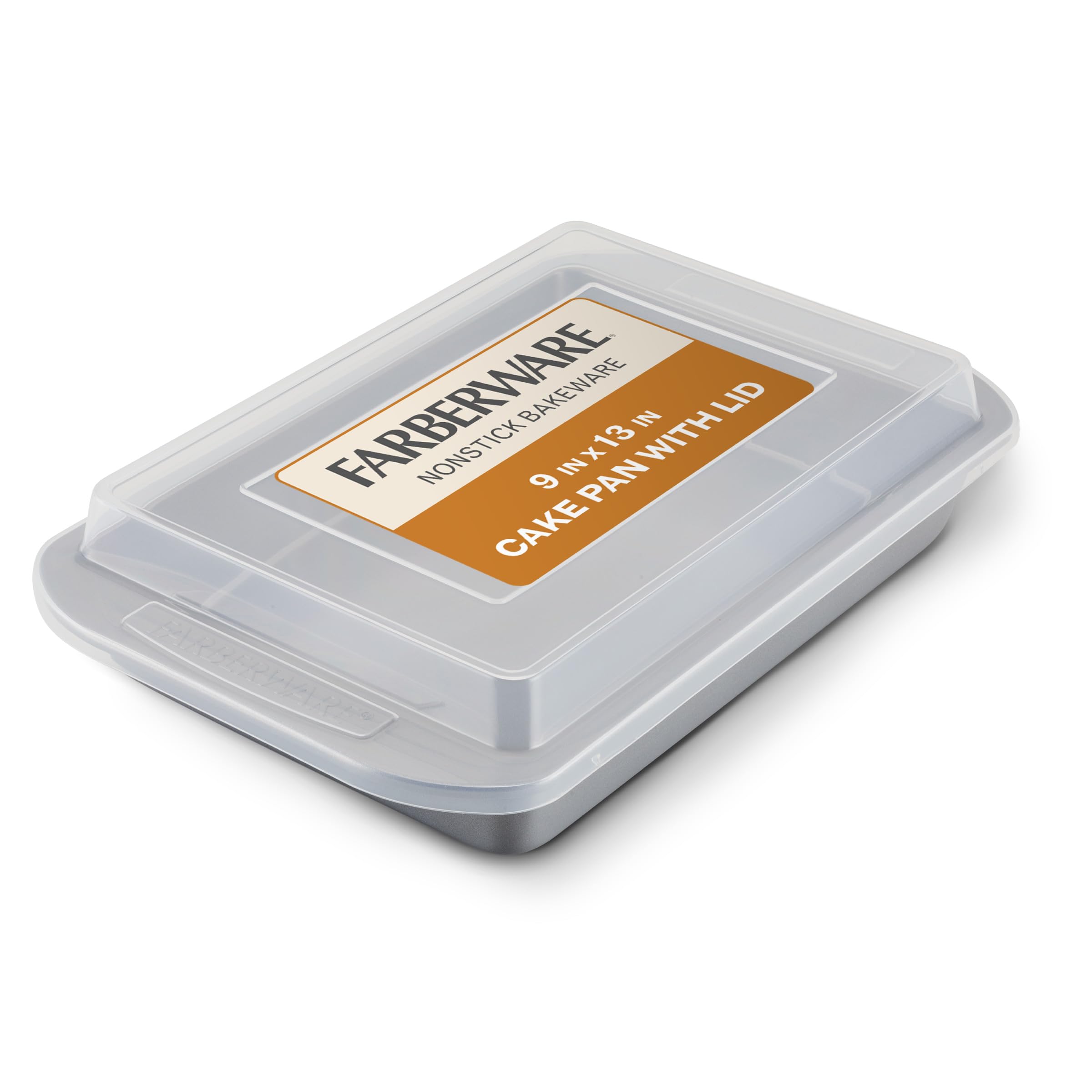

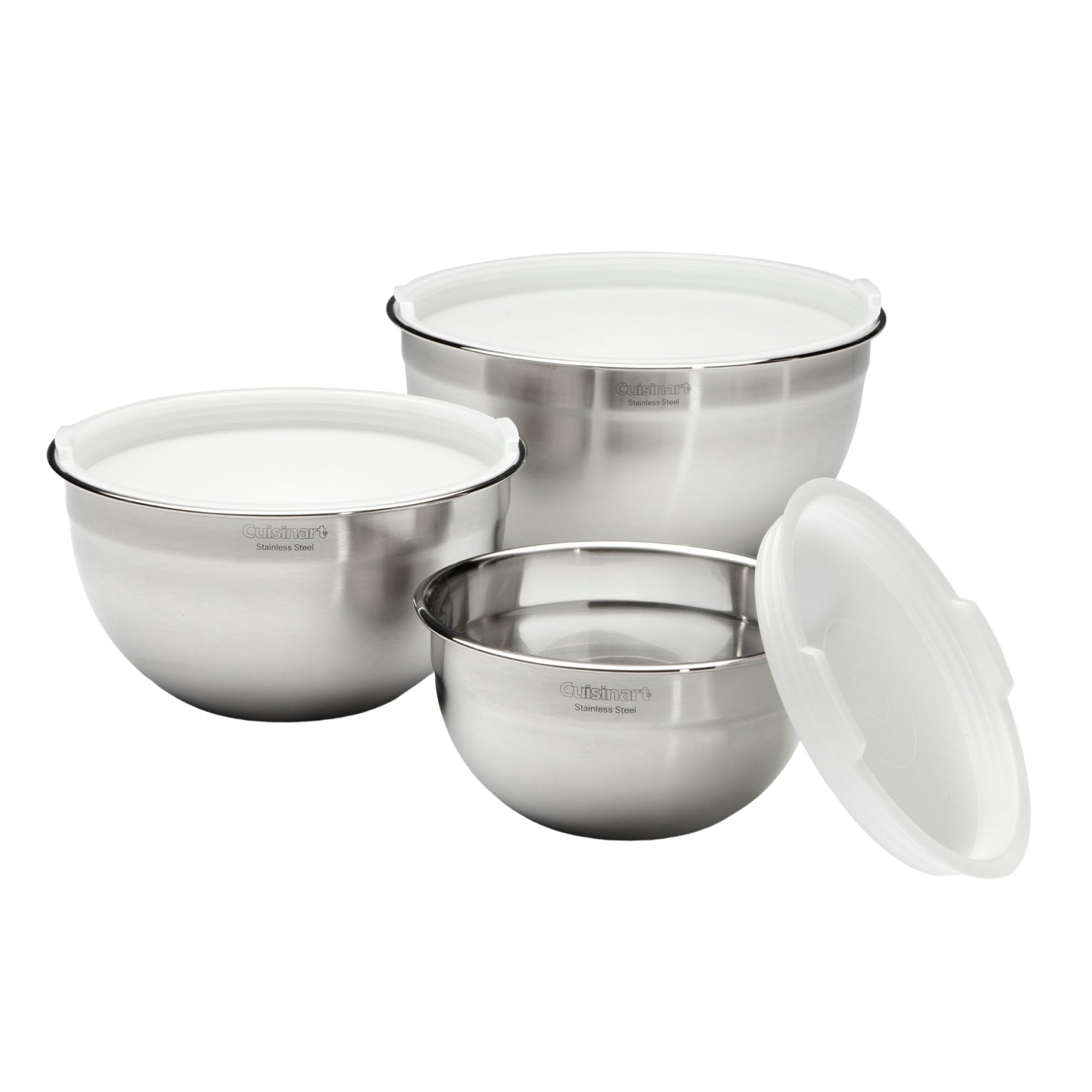


Last update on 2026-11-20 at 03:48 / Affiliate links / Images from Amazon Creators API
Rhubarb Cake Recipe Variations, Serving Ideas, & Storage
Recipe Variations
Frequently Asked Questions
Yes. Thaw the rhubarb completely and drain all excess liquid before measuring your 2 cups. Pat the pieces dry with a paper towel before tossing with sugar. Frozen rhubarb releases more moisture during baking than fresh, so draining thoroughly is the difference between a moist cake and a soggy one.
Shortening is 100% fat with no water content, which means it creates a more tender, evenly lofted crumb without the steam that butter's water produces during baking. It was also the standard baking fat in 1960s kitchens, found in virtually every pantry as Crisco. The result is a lighter texture that slices cleanly and holds together well at room temperature, which is precisely what a contest-winning cake needed to do.
Stir 1 tablespoon of white vinegar or lemon juice into 1 cup of regular whole milk and let it sit for 5 minutes until it curdles slightly. This replicates the acidity and chemical properties of buttermilk and works perfectly in this recipe. Plain yogurt thinned with a splash of milk is another reliable option.
Yes, and the flavors actually deepen slightly overnight as the cinnamon and rhubarb have more time to settle into the crumb. Bake the cake up to 2 days in advance and store it covered at room temperature. Hold off on the powdered sugar until the day you serve it.
The original recipe specifies a 12x8 inch shallow pan, which is less common in modern kitchens. A standard 9x13 inch pan works equally well and is more widely available. The 9x13 version produces a slightly thinner cake with a greater surface area, which means slightly crisper edges, which many people prefer.
Fresh or properly thawed frozen rhubarb gives the best results. Canned rhubarb is typically packed in syrup and carries significantly more moisture and added sweetness than the recipe accounts for. If canned is your only option, drain it thoroughly and reduce the sugar in the rhubarb maceration step to 1/4 cup.
Fresh rhubarb is generally available from April through June in most parts of the United States, with peak availability in May. Farmers markets, grocery stores, and home gardeners are all good sources. Many backyard gardeners have more rhubarb than they can use in May and June, exactly as they did in 1965.
The edges of the cake will begin to pull slightly away from the sides of the pan. Press the center surface gently with a fingertip. It should spring back without leaving an indentation. If it sinks back down, give the cake another 3 to 4 minutes.
Half a cup of chopped walnuts or pecans folded into the batter adds texture and a mild earthiness that pairs well with the cinnamon. Fold them in at the same time as the sugared rhubarb. This is not in the original recipe, but it fits the flavor profile without competing with what the cake already does well.
A Rhubarb Cake Recipe Worth Remembering
A grand prize recipe from 1965 survived because it was built right the first time. Mrs. Lepkowski did not overcomplicate it, and the judges noticed. This is the kind of cake you make once and keep making, because it does exactly what it promises every single time.
Did rhubarb show up in your childhood in some form? Maybe from a grandmother's garden, a neighbor who pressed stalks into your hands every May, or a church potluck table where it appeared in some form you have never quite been able to identify. I would love to hear about it in the comments below.
If you make this Old Fashioned Rhubarb Cake recipe, please leave a rating and a review. Your feedback helps other readers find this recipe and means a great deal.
