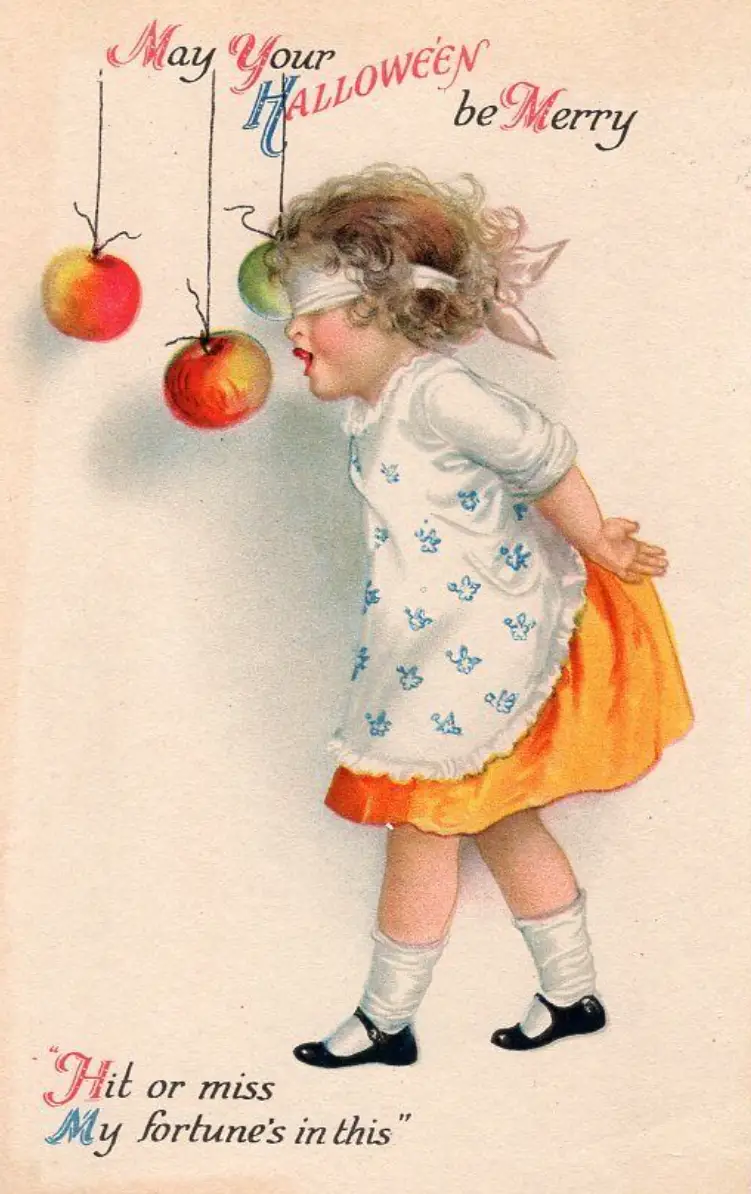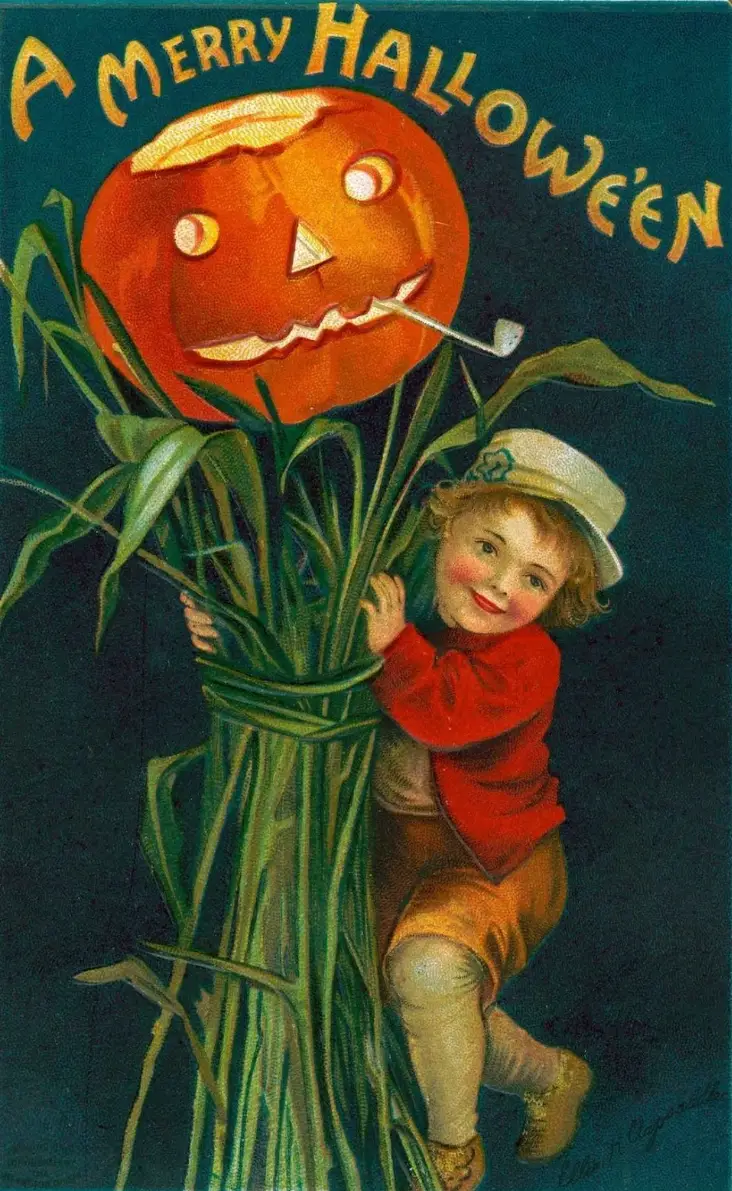

You have probably held one of her postcards without knowing her name. That plump, rosy-cheeked child waving from a Halloween pumpkin patch, or the wide-eyed cherub tucked into a Merry Christmas greeting, most likely came from the pen of one artist working out of a cramped New York City studio more than a century ago. She was, for a while, the most famous commercial artist in America that nobody could pick out of a crowd.
Who was Ellen Clapsaddle? Ellen Hattie Clapsaddle (1865–1934) was an American illustrator who became the most prolific postcard and greeting card artist of her era, credited with more than 3,000 designs for the International Art Publishing Company and her own imprint, the Wolf Company.
Her holiday scenes, especially her Halloween, Christmas, and Valentine's Day postcards, defined the look of the golden age of American postcards and remain some of the most collected vintage postcards in the country.
Here's what that résumé doesn't tell you: this was a shy farm girl who built her own publishing company decades before women could even vote, then watched a war she had nothing to do with take almost all of it away. That's the part worth sitting with.
A Delicate Child With a Steady Hand

Ellen Clapsaddle
Ellen was born on January 8, 1865, in the small farming community of South Columbia in Herkimer County, New York. Her parents, Dennis L. and Harriet Clapsaddle, raised her as their only child, and by most accounts she was a shy, delicate child who spent more time drawing than running around outside.
That description shows up again and again in old newspaper clippings, and it always struck me as a little funny, because this "delicate" girl would go on to build an art empire that outlasted most of the men who tried to compete with her.
Her artistic ability showed up at an early age, and her parents did something unusual for a farming family in the 1870s: they leaned into it. She attended a one-room school through eighth grade, then boarded in Richfield Springs to attend the local Richfield Springs Seminary, an academy built to prepare young ladies for higher education. She graduated in 1882.
There is a detail in her family history that most retrospectives skip past. Ellen was the great-granddaughter of Major Dennis Clapsaddle, who commanded a battalion of the Tryon County militia and was killed at the Battle of Oriskany in 1777, one of the bloodiest ambushes of the entire Revolutionary War, fought in the same Mohawk Valley farmland where her family would work the soil for generations after him.
Clapsaddle's father died on January 5, 1891, and after his death Ellen and her mother moved in with an aunt in Richfield Springs. It was not a glamorous chapter, but it set the stage for what came next: a woman in her late twenties, freshly out of a small seminary, with no formal art training beyond what she had taught herself, about to become the card artist of her era.


From Private Painting Lessons to New York City's Premier Illustrator
Around 1884, after completing her studies, Ellen returned to her parents' home in South Columbia and started building a life as a freelance artist. She gave private painting lessons, painted her own landscapes, and took commissions to paint portraits of families in the more affluent parts of Richfield Springs.
Before she was a "postcard artist," she was simply a working artist, hustling for commissions in a small town, the same way plenty of talented people do today before their big break arrives.
Her break came when she started submitting work to various publishers in New York City. Two of her card designs were accepted by the International Art Publishing Company and became immediate, unexpected bestsellers.
The International Art Publishing Company recognized her potential immediately. Around 1895, they invited her to move to New York City and made her their premier illustrator, the artist whose name (when it appeared at all) meant a card would sell.
Once she was established in the city, her artistic designs started showing up everywhere: advertising, porcelain goods, calendars, paper fans, and trade cards. She had officially become a recognized commercial artist in a field almost entirely run by men, and she had done it without a single powerful family connection to lean on.
That is the part of the story I think gets lost under all the cute Halloween cats and Christmas cherubs. She earned every bit of that reputation with a paintbrush and stubbornness.


The Germany Years and the Birth of the Wolf Company

International Art Publishing Company logo
In 1901, the International Art Publishing Company sponsored a two-year trip to Germany for Ellen and her mother.
Germany was the center of the high-end publishing world at the time, and American companies depended on German engravers to turn artwork into the final products that actually shipped to stores.
Working directly with those engravers let Clapsaddle refine her craft in a way she never could have from a studio in Manhattan.
During this stretch, her designs began appearing on Valentine's Day cards, souvenir postcards, booklets, watercolor prints, calendars, and more trade cards.
Ellen returned to New York before her mother's death in 1905, and what happened next is the single most remarkable fact in her story. Around 1906, she established the Wolf Company, backed by the Wolf brothers, as a subsidiary of the International Art Company.
She became the first and only female souvenir postcard artist of her era to run her own enterprise, and she was the sole artist and designer behind it. In an industry where women were barely hired as full-time illustrators, Ellen Clapsaddle owned the whole operation.
For eight years, the Wolf Company rode a wave of genuine growth potential in the postcard industry. Confidence in the boom and the high return on every print run convinced Ellen and her partners to keep reinvesting in German engraving and publishing firms rather than pulling their money out while things were good. It felt, at the time, like there was no ceiling. History would prove otherwise.
What Made Her the Most Prolific Postcard Artist of Her Time

If you have ever flipped through a box of vintage postcards at an antique mall and felt a jolt of recognition, there is a good chance you were looking at a Clapsaddle.
More than half of the estimated 3,000 designs featured children, often from different races and cultures around the world, drawn with a warmth that avoided the stiff, formal look common in that period. The distinctive style leaned into pure joy: wide grins, chubby cheeks, and holiday scenes that somehow made chaos look cute.
Halloween postcards are some of the most prized work today, full of smiling pumpkins and kids in slightly unsettling costumes that somehow still read as sweet.
The Christmas designs paired children with brand-new inventions like automobiles and early airplanes, which must have felt as futuristic in 1910 as a kid holding a tablet would feel today.
Valentine's Day, St. Patrick's Day, Independence Day, and New Year designs rounded out the catalog, along with Santa Claus scenes that still show up on holiday cards more than a hundred years later.
The single-faced cards, designed purely as postcards or keepsakes rather than folding greeting cards, became Clapsaddle's calling card in the truest sense. Collectors especially chase the signed mechanical cards, the ones with moving parts, since those are rarer and command serious prices today.
World War I and the Total Destruction of Her Life's Work
By 1914, Ellen was back in Germany working with engravers when World War I broke out, and the timing could not have been worse. Nearly every American souvenir postcard publisher, including Clapsaddle's own operation, depended on German manufacturing.
Once the war cut off supplies and communication, those companies were forced out of business almost overnight. Many German factories suffered total destruction from bombing, and almost all of Ellen Clapsaddle's original artwork from that period is believed lost forever.
The human toll was worse than the financial one. Cut off in a country at war, Ellen reportedly ended up "hungry, sick and alone," and one of the Wolf brothers spent his last money traveling to Europe to find her and bring her home. She made it back to the United States in 1915, at fifty-one years old, her health and her livelihood both badly damaged.
News of her safe arrival even made her hometown paper. The Richfield Springs Mercury ran this on July 29, 1915: "People generally will be interested in knowing that the artist, Miss Ellen Clapsaddle, who is a native of this place, has returned from Berlin, where she has spent several years, and has notified her friends of her safe arrival in New York."
It is a small, plain sentence for such a harrowing ordeal, but that is often how these things get recorded: quietly, in a local newspaper, while the bigger story disappears into history.


Her Final Years in New York City
From 1915 on, Ellen split her time between New York City and her second home in Richfield Springs, where she still had deep roots. She spent her winter months in the city and, according to a 1920 newspaper note, moved into the Chase House on Lake Street when she was back upstate.
The 1920 census places her in an apartment at the elegant Prince George Hotel in Manhattan. By 1930, her circumstances had grown noticeably more modest; she was recorded as a lodger on East 30th Street.
In January 1932, Ellen was admitted to the Peabody Home for Aged and Indigent Women on Pelham Parkway in New York City. She died there on January 7, 1934, one day short of her 69th birthday. Her funeral was held back in Richfield Springs, and she was buried beside her parents in Lake View Cemetery, the same small community where a shy, artistic child had once boarded at a local academy and dreamed of something bigger.
It is a hard ending for someone who had shaped so much joy for so many.

Why Clapsaddle Postcards Are Still Popular Today
Here is the twist nobody could have predicted in 1934: Ellen Clapsaddle's work never really left us. Because her postcards were published before 1923, they now live in the public domain, which means her charming, century-old designs regularly reappear on modern Halloween decor, calendars, cookie tins, popcorn tins, and iron-on crafts. Her joyful children keep showing up in gift shops that have no idea who drew them.
Serious postcard collectors know exactly who she is, though. Some private collectors have amassed more than 1,600 original Clapsaddles. Long-time collector Elizabeth Austin created a detailed checklist of her souvenir postcards so other collectors could track down what they were missing, and the late Ellen Budd later expanded that list with even more rare finds.

Prices have climbed steadily in recent years, from cards that sold for pocket change decades ago to signed mechanical cards that now sell for hundreds of dollars.
In 1995, the United States Postal Service chose her 1910 design "Midnight Angel" for a traditional Christmas stamp, putting her artwork back into millions of American mailboxes more than sixty years after her death.
Not bad for a delicate farm kid from Herkimer County who just wanted to draw.
A Legacy Bigger Than One Postcard
Ellen Clapsaddle spent her whole career making other people's mailboxes a little brighter, one grinning pumpkin and one rosy-cheeked cherub at a time. She built something almost nobody expected a woman of her era to build, lost almost everything to a war she never chose, and still left behind a body of work so beloved that people are hunting it down in antique shops right now, tonight, without even knowing her full story.
So the next time you spot an old postcard with a child in a Halloween costume that looks a little too charming for its time, turn it over. There is a decent chance Ellen Clapsaddle's hand is behind that smile, and now you know exactly who she was.