

Here is one of our all-time favorite vintage recipes, hands down. Found tucked inside one of great aunt Hazel's cookbooks from the early 1970s, this traditional Swedish meatballs recipe combines beef, veal, and pork with cream-soaked breadcrumbs and a secret ingredient that deepens the gravy to restaurant quality.
The technique of mixing ground meat twice and adding instant coffee 🛒 creates meatballs that stay impossibly tender while the gravy develops rich, savory notes you won't find in simplified versions. This vintage recipe from the 1970s makes 30 generous meatballs, perfect for feeding a crowd or freezing half for a weeknight dinner that tastes like you spent hours in the kitchen.
The first time I made these with my parents, my dad and I locked eyes mid-bite, both wide-eyed in the kind of disbelief reserved for food that has no business being this good. That moment - forks suspended, silent acknowledgment passing between us - is what great aunt Hazel's worn cookbook pages promised all along.
If creamy, savory sauces over egg noodles are your thing, our Classic 1960s Beef Stroganoff belongs in your rotation right alongside these meatballs.
Back in the 1970s Kitchen
Chafing dishes were the unofficial centerpiece of the American dinner party in the 1970s, and Swedish meatballs were almost always in one of them. Home cooks drove to actual butcher counters to ask for ground veal alongside their beef and pork, because the mix of pork and veal alongside beef was understood to be what made the difference between a good meatball and a great one. Swedish meatballs were a main course, an appetizer, and a hostess flex all at once.
Sweden's southern region, particularly Skåne, is widely credited as the home of the traditional meatball, and the dish arrived in American kitchens through Scandinavian immigrant communities who kept the technique alive through church socials and neighborhood potlucks. By the early 1970s, American cooks had embraced the creamy gravy sauce as their own, though the most devoted versions never strayed far from the original warm spices: nutmeg, ginger, and a touch of allspice.
The difference between authentic Swedish meatballs and the Americanized versions most of us grew up with comes down to technique. The breadcrumb mixture gets soaked in cream, not water. The meat mixture gets beaten, not stirred. The gravy gets built from the brown bits left in the pan, not from a separate pot of powder. These weren't shortcuts designed for weeknights. They were the real thing.
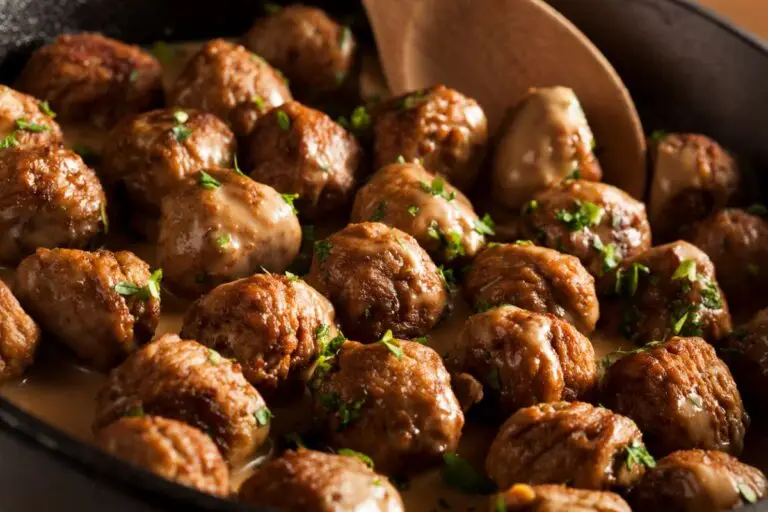
Classic Three Meat Swedish Meatballs Recipe
These tender, creamy Swedish meatballs combine three meats with cream-soaked breadcrumbs and a secret ingredient (instant coffee!) that makes the gravy unforgettable. This vintage 1970s recipe produces 30 restaurant-quality meatballs perfect for entertaining or freezing for easy weeknight dinners.
- Total Time: 65 minutes
- Yield: 30 meatballs 1x
Ingredients
- 3/4 pound lean ground beef
- 1/2 pound ground veal
- 1/4 pound ground pork
- 1-1/2 cups soft bread crumbs
- 1 cup light cream or half & half
- 1/2 cup chopped onion
- 1 large egg
- 1/4 cup finely-chopped fresh parsley
- 1-1/4 teaspoons salt
- Dash of ground ginger
- Dash of black pepper
- Dash of ground nutmeg
- 2-3 tablespoons butter (for browning)
- 2 tablespoons all-purpose flour
- 1/2 cup canned condensed beef broth
- 3/4 cup cold water
- 1/2 teaspoon instant coffee granules
Instructions
- Prepare the meat mixture: Ask your butcher or grocery store meat counter to grind the beef, veal, and pork together twice. If using pre-ground meat, mix it thoroughly by hand for 2-3 minutes first. Transfer to a large mixing bowl.
- Soak the breadcrumbs: In a small bowl, combine the soft bread crumbs with the light cream. Let soak for about 5 minutes until the cream is fully absorbed and the breadcrumbs are very soft.
- Cook the onion: In a large skillet, cook the chopped onion in 1 tablespoon butter over medium heat until tender and translucent, about 5-6 minutes. Set aside to cool slightly.
- Combine ingredients: To the ground meat, add the soaked breadcrumb mixture, cooked onion, egg, parsley, salt, ginger, pepper, and nutmeg. Using an electric hand mixer on medium speed, beat the mixture until fluffy and well combined, about 5 minutes. The mixture should be slightly sticky and hold together well.
- Form meatballs: With dampened hands, shape the mixture into 1½-inch balls (about 30 meatballs total). Place formed meatballs on a plate or baking sheet.
- Brown the meatballs: In the same large skillet, melt 2 tablespoons (or more) butter over medium heat. Working in batches to avoid crowding, brown the meatballs on at least two sides, turning gently. This should take about 6-8 minutes per batch. Remove browned meatballs to a plate and set aside.
- Make the gravy: Using the same skillet with the drippings, stir in the flour, scraping up all the browned bits from the bottom. Cook for 1 minute, stirring constantly. Gradually add the beef broth, cold water, and instant coffee. Heat over medium heat, stirring constantly until the gravy thickens, about 3-4 minutes.
- Simmer the meatballs: Return all the meatballs to the skillet with the gravy. Cover and cook over low heat for about 30 minutes, basting the meatballs with gravy occasionally. The meatballs should reach an internal temperature of 160°F.
- Serve: Transfer to a serving dish and serve hot over buttered egg noodles, mashed potatoes, or wild rice.
Notes
- Meat substitution: If veal is unavailable (or if you prefer not to use it), use 1 pound ground beef and ½ pound ground pork instead.
- Instant coffee: Don’t skip the coffee! It adds depth without making the gravy taste like coffee.
- Prep Time: 20 minutes
- Cook Time: 45 minutes
- Category: Appetizer, Main Dish
- Method: Stovetop
- Cuisine: Scandinavian, Swedish
Pin This Traditional Swedish Meatballs Recipe For Later
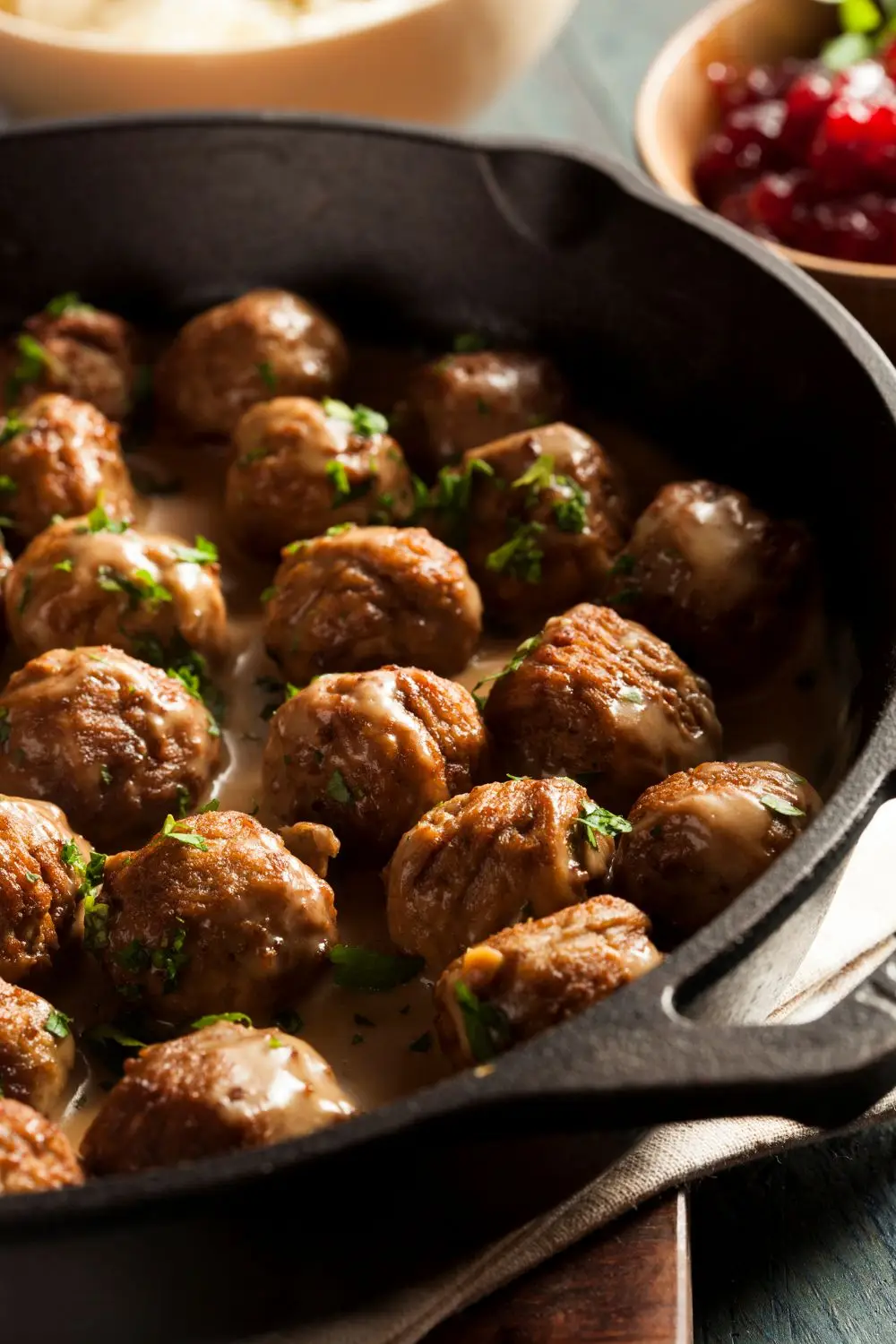
What Makes This the Best Traditional Swedish Meatballs Recipe
Homemade Swedish meatballs earn their reputation when you understand why each choice matters. Every ingredient here is doing a specific job, and swapping them out carelessly changes the entire outcome.
The Three-Meat Blend Is the Foundation
Ground beef brings depth and structure, ground pork adds the fat content that keeps meatballs juicy and tender, and veal contributes a delicate texture that prevents the meat mixture from turning dense or rubbery.
This particular pork blend and beef combination is what separates homemade meatballs from the flavorless ones in a bag. If veal isn't available, one pound of ground beef with a half pound of ground pork is an honest substitute, though the texture won't be quite as silky.
Cream-Soaked Bread Crumbs Do the Heavy Lifting
Soaking your bread crumbs in cream instead of a little water creates a meatball interior that's almost paté-like. The fat in the heavy cream coats the bread crumbs and keeps them from absorbing moisture from the meat as it cooks, which is precisely why these meatballs stay tender instead of drying out.
Panko breadcrumbs can work in a pinch, but soft bread crumbs give you a noticeably finer crumb and a more cohesive breadcrumb mixture throughout.
Warm Spices Create That Unmistakable Flavor
Nutmeg, ginger, and black pepper are what separate these from Italian meatballs. A touch of allspice and ginger in combination with onion powder or a finely cooked yellow onion gives the flavor of the meatballs that distinctly Scandinavian quality.
Don't try to substitute Italian seasoning here. You'll have a fine meatball, but it won't be a Swedish one.
The Pan Drippings Build the Whole Sauce
The flavor in the Swedish meatball sauce lives in those brown bits left in your large skillet after browning. Scraping up every last bit of that fond into your simple roux before adding beef broth is what gives the cream sauce its savory backbone.
A small amount of instant coffee granules deepens the gravy the same way cocoa deepens a chili; you won't taste it, but you'll absolutely notice it's there.
Egg Yolks and the Mixer Are Non-Negotiable
Beating the meatball mixture rather than stirring it develops the proteins that hold everything together without the addition of extra egg yolks or binders.
The mixture should feel slightly sticky after five full minutes with a hand mixer on medium speed. If it's still loose, it needs more time, not more bread crumbs.
How to Make Perfect Homemade Swedish Meatballs
The biggest reason homemade meatballs fall apart is under-mixing, and the second biggest reason is overcrowding the pan. Both are easy to fix.
Double-Grind the Meat If You Can
Ask your butcher to grind the ground beef, ground pork, and veal together twice, or you can do it yourself using a meat grinder attachment 🛒.
Double-grinding creates a more cohesive meat mixture that holds together during browning without needing heavy binders. If you're working with pre-ground meat from the store, compensate by mixing in a large bowl for a full five minutes with a hand mixer.
Brown in Batches for Golden Brown Color
Crowding your large skillet 🛒 is how you get steamed, gray meatballs instead of golden brown ones. Work in batches with a couple of tbsp butter per round, keeping the heat at medium so the butter doesn't burn before the surface has time to caramelize.
You're building flavor in those pan drippings, so don't rush it. Once they're golden brown on at least two sides, they're ready to rest while you finish the remaining butter batches.
Build the Gravy Right in the Pan
Don't wipe out the skillet between the meatballs and the gravy. Reduce to medium-low heat, stir in the flour directly into the drippings to create a simple roux, and cook it for a full minute before adding any liquid. That minute removes the raw flour taste and gives you a smoother sauce. Add the beef broth gradually, stirring constantly, then follow with the cold water and instant coffee. The gravy will thicken in about three to four minutes at medium heat.
Simmer Low and Slow for Tender Meatballs
Return the cooked meatballs to the skillet in a single layer, cover, and let everything simmer on medium-low heat for thirty minutes. You're not trying to cook them through at this stage; they're already mostly done. You're letting them absorb the cream sauce and finish gently so they stay tender instead of tightening up.
Check the internal temperature at 160°F to confirm they're done, basting occasionally with the creamy gravy sauce as they simmer.
Don't Skip the Resting Time
Let the finished meatballs sit off the heat for five minutes before serving. The gravy thickens slightly as it cools and clings to the meatballs better. If you're serving over egg noodles, cook those while the meatballs rest.
If the gravy feels too thick at this point, stir in a little extra beef broth, a tablespoon at a time, over medium-low heat until it reaches the consistency you want.
Recipe Variations, Serving Ideas, & Storage
Recipe Variations
Tools & Ingredients Worth Having For This Traditional Swedish Meatballs Recipe


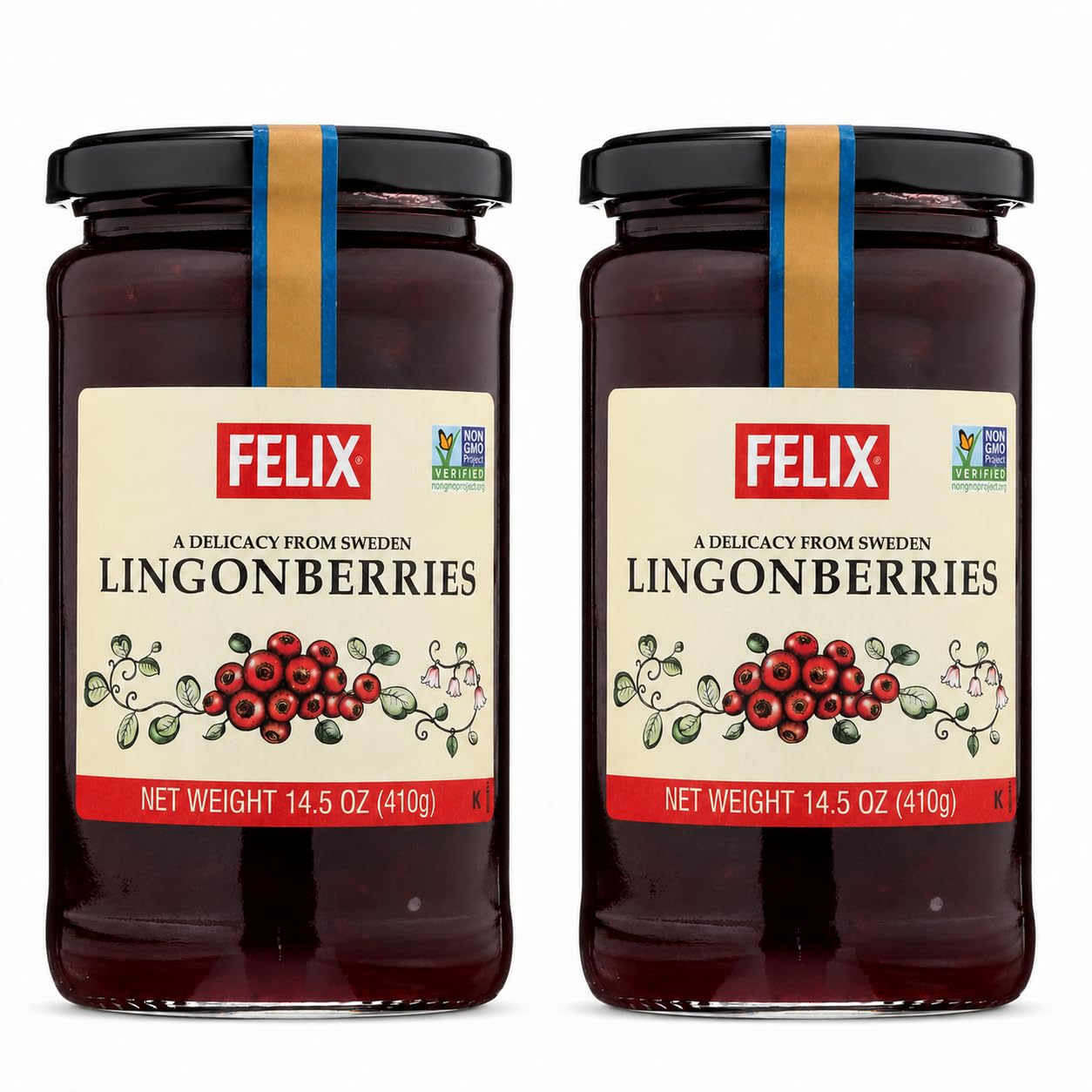

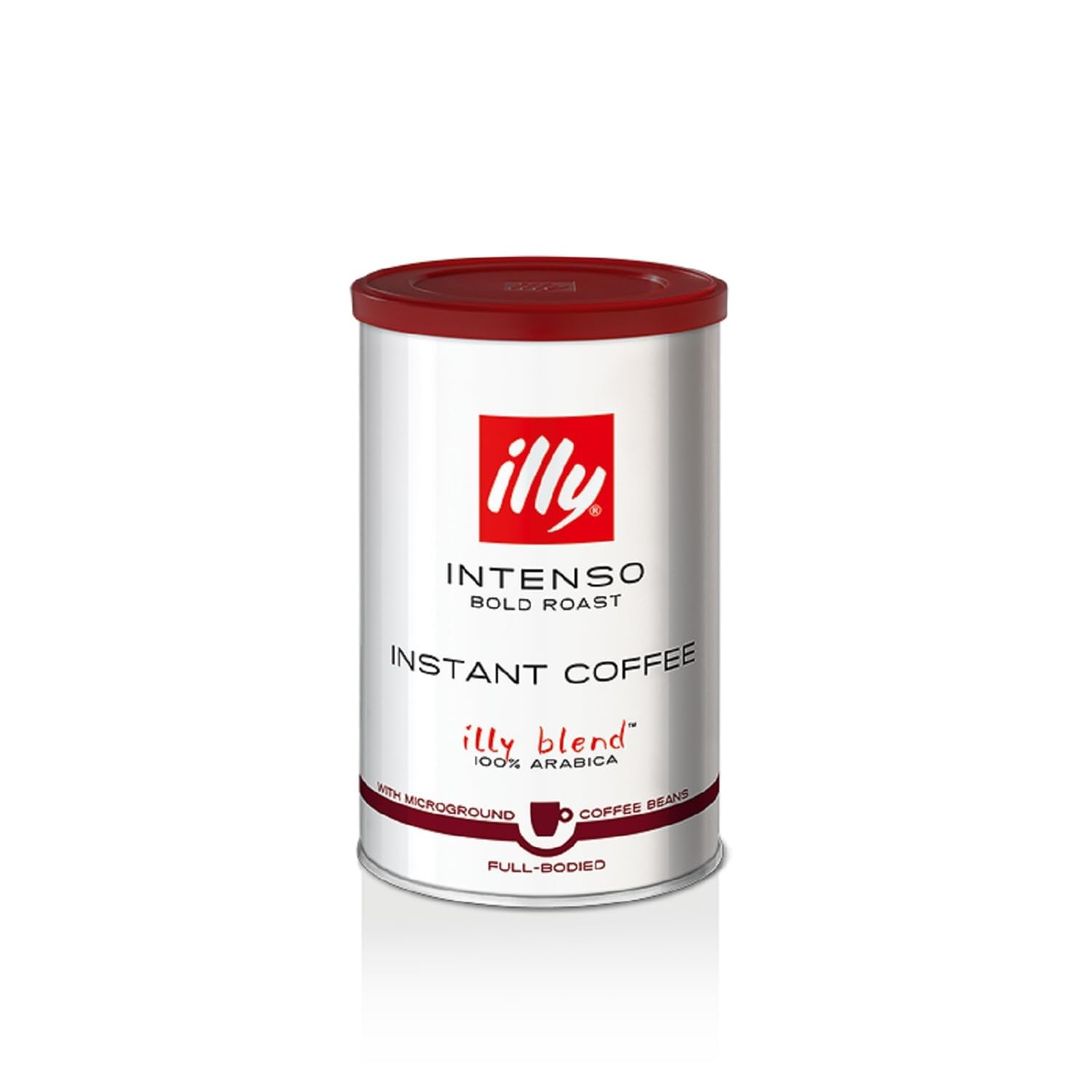
Last update on 2026-11-20 at 13:24 / Affiliate links / Images from Amazon Creators API
Frequently Asked Questions
Yes, these meatballs actually improve when made a day ahead. Brown the meatballs, make the gravy, and combine them in a covered container in the refrigerator overnight. The flavors meld together beautifully. Reheat gently in a covered pot over medium-low heat, stirring occasionally, adding a splash of cream if the gravy has thickened too much.
Meatballs fall apart when the mixture hasn't been mixed enough to develop the proteins that bind everything together. Make sure you're beating the mixture for the full five minutes, and that you've ground the meat twice if possible. The mixture should feel slightly sticky when properly mixed. Also, be gentle when turning them during browning, and make sure your butter isn't too hot.
You can, but the texture will be drier and the flavor less delicate. If you're substituting turkey, increase the cream-soaked breadcrumbs by a quarter cup to compensate for turkey's lean nature. The meatballs won't have quite the same melt-in-your-mouth quality, but they'll still be good.
The instant coffee 🛒 adds depth and amplifies the savory flavors in the beef broth without making the gravy taste like coffee. It's the same principle as adding cocoa powder to chili or espresso to chocolate cake. You won't taste coffee, but you'll notice the gravy tastes richer and more complex. Don't skip it.
After browning and simmering in gravy for 30 minutes as directed, cut one meatball in half to check. It should be uniformly brown throughout with no pink remaining, and an instant-read thermometer should register 160°F in the center. The meatballs should be firm but still tender when pressed.
These freeze nicely for up to three months. Cool completely, transfer to freezer-safe containers with enough gravy to cover the meatballs, and freeze. Thaw overnight in the refrigerator before reheating gently on the stovetop. The gravy may separate slightly when thawed, but whisking as it reheats brings it back together.
Swedish meatballs use cream-soaked breadcrumbs instead of egg-bound breadcrumbs, creating a more delicate texture. They're seasoned with warm spices like nutmeg, allspice, and ginger rather than garlic and herbs. The gravy is cream-based rather than tomato-based, and Swedish meatballs are traditionally smaller. Swedish versions also often use a combination of three meats for complexity.
Traditional Swedish meatballs do include veal for its delicate texture, but you can substitute with all beef and pork. Use one pound of beef and half pound of pork if you can't find veal. The meatballs will be slightly denser but still delicious. Some butchers carry ground veal only by special order, so call ahead if you want to stay authentic.
Double-grinding creates a finer, more uniform texture that helps the meatballs hold together without becoming tough. The proteins break down more completely, creating an almost emulsified consistency. If you're using pre-ground meat, compensate by mixing the meat mixture very thoroughly for at least five minutes.
After browning the meatballs and making the gravy on the stovetop, you can transfer everything to a slow cooker set to low for 2-3 hours. This works well for parties, keeping the meatballs warm and letting the flavors continue to develop. Don't try to cook raw meatballs directly in the slow cooker, as they need the initial browning for flavor and texture.
Your New Permanent Rotation Recipe
Traditional Swedish meatballs made from scratch, with a real three-meat blend and a proper cream gravy, are the kind of dish that earns a permanent spot in your rotation. You'll make these once and understand exactly why they were the first thing to disappear from the sideboard at every dinner party in the 1970s. If you come home with an empty serving dish and two people asking for the recipe, you got it exactly right.
Did your family serve Swedish meatballs at parties, or was there another dish that always stole the table? If you make these classic Swedish meatballs, please leave a rating and review below!
