
Einkorn wheat is the oldest cultivated grain on the planet, with archaeological evidence tracing its domestication to the Fertile Crescent around 8,000 BCE, and this easy einkorn bread recipe puts that ancient grain to work in a deeply flavored, German-style loaf you can bake on any weekend morning.
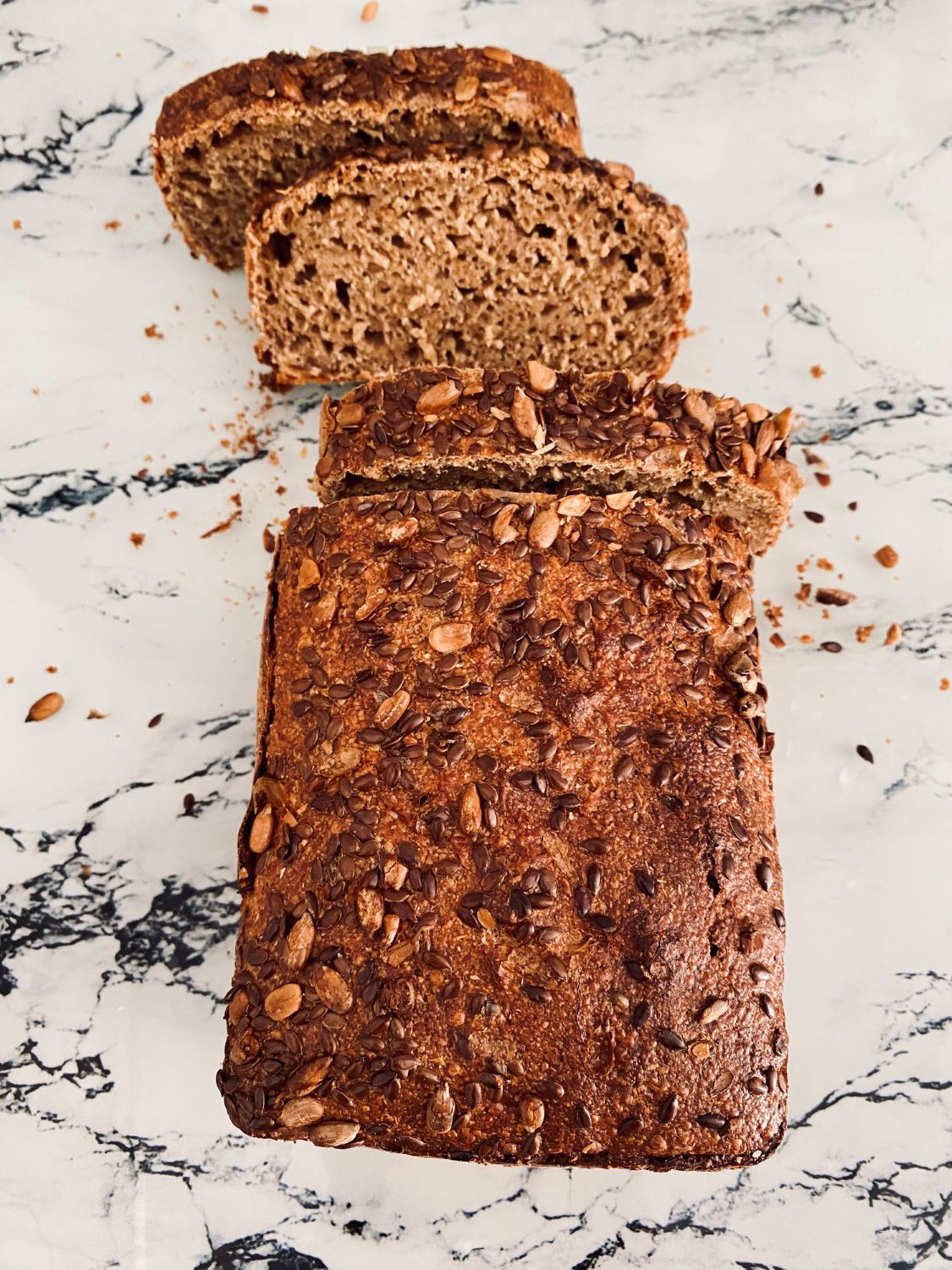
The combination of whole grain einkorn flour, dark rye flour, caraway seeds, and a baker's handful of smart ingredients produces a flavorful loaf with a tight, chewy crumb, a crackled dark crust, and the kind of nutty flavor that store-bought bread has never once come close to.
If you have been searching for a simple recipe that respects what ancient wheat actually is, you just found it.
Why Einkorn Flour Is Different From Modern Wheat
I lived in Germany for 15 years. Bread there is serious business. German bakers weren't building their reputation on fluffy sandwich loaves and enriched white flour. They were working with whole grains, rye, ancient wheats, fermentation, and time. When I came back to the U.S. and started baking again with modern whole wheat flour, something was noticeably missing.
Einkorn wheat isn't a hybrid. It has never been crossed with other grasses to boost yield or gluten strength the way modern wheat varieties have been bred since the mid-20th century. That means einkorn dough behaves differently from the start. It is more sticky, more delicate, and more forgiving of short rise times because of its low gluten content.
If you are making homemade bread with ancient wheat, you already understand something most grocery shoppers don't. Bread should taste like grain, not like the inside of a plastic bag.
Einkorn wheat is nutritionally richer and far easier on digestion for people with gluten sensitivities, though it is not a celiac disease -safe grain.
The German Kitchen That Built This Loaf
In the 1950s and 1960s, German home kitchens were running on coal and gas ovens, post-war efficiency, and an unbroken commitment to dark, whole grain rye bread that predated any food trend by several centuries.
Roggenbrot, the German term for rye bread, was never considered artisan or specialty. It was daily bread. German bakers used dense, acidic, low-gluten doughs precisely because rye flour and ancient wheats behaved that way, and they built systems around those properties rather than fighting them.
Every farmhouse table in Bavaria and the Rhineland had some version of this bread. If you want to go deeper into that tradition, the authentic Bauernbrot German Farmer's Bread on this site uses a 12-hour rye sponge to get that full tangy, fermented depth.
In the same decades that American grocery stores were stocking shelves with pre-sliced enriched white flour bread, German bakeries were still working with whole grain flour, caraway seeds, and slow fermentation schedules that produced loaves designed to last days without going stale.
The rye starches needed time to set after baking. Bakers knew not to cut the bread for hours. That wasn't patience for its own sake. It was applied food science.
This Deutscher Einkorn-Rye Brot is built on those same principles. Ancient grain, practical technique, and simple ingredients that have been doing the job correctly for a very long time.
What Makes This Easy Einkorn Bread Recipe Work
The Psyllium Husk Is Doing the Heavy Lifting
Einkorn's gluten is fragile and different in structure from the high-elasticity gluten in modern bread flour. A standard dough hook attachment and a long knead will do more damage than good here.
Whole psyllium husk fills that gap by acting as a structural binder, trapping gas and providing the chewiness that einkorn's delicate protein network can't fully supply on its own. Based on a total flour weight of approximately 400 grams, a 4% psyllium ratio is the sweet spot for structure without rubbery texture.
Flaxseed Meal Keeps the Crumb From Going Sandy
Einkorn and rye loaves are notoriously prone to a dry, sandy crumb by day two. Flaxseed meal solves that. The fats in flaxseed coat the starch granules in your flour mixture, which creates a softer, more tender crumb and helps the loaf retain moisture.
As a bonus, those same fats and proteins interact with oven heat to deepen the Maillard reaction, giving the crust a darker, more professional color that you can't fake with egg wash.
Molasses Feeds the Yeast and Anchors the Flavor
Dark molasses is rich in sucrose, glucose, and fructose, plus trace minerals like magnesium and potassium that act as yeast nutrients. Your instant yeast consumes those sugars faster and more efficiently than the complex starches in einkorn flour, which means a more vigorous rise from a grain that would otherwise need extra convincing.
Molasses also adds a deep, malty sweetness that pairs with the earthy rye flavor and prevents the loaf from tasting flat.
Dark molasses shows up in more than one corner of old world bread baking for exactly this reason. The Mag Aonghus Traditional Irish Beer Bread on this site uses the same combination of dark molasses and espresso powder to build that deep, malty crumb color in a Guinness-based loaf.
Espresso Powder and Caraway Are the Flavor Architecture
Half a tablespoon of espresso powder is a classic baker's move for dark rustic bread. It deepens the crumb color toward a pumpernickel-like hue and makes the rye taste more savory and complex without making the bread taste like a cup of coffee.
The caraway seeds bring the distinctly German profile that makes this loaf recognizable. Crush them lightly before adding to release the aromatic oils. That step takes 30 seconds and makes a real difference.
Apple Cider Vinegar Stabilizes the Starch
Rye flour contains high levels of amylase, an enzyme that breaks down starch into sugar during baking. Left unchecked, that enzymatic activity produces a gummy, muddy interior that never firms up correctly.
The half teaspoon of apple cider vinegar lowers the pH of the dough, inhibiting those enzymes before they cause damage. It also creates a slightly acidic environment that strengthens einkorn's fragile gluten bonds, helping the dough hold onto gas during the rise.
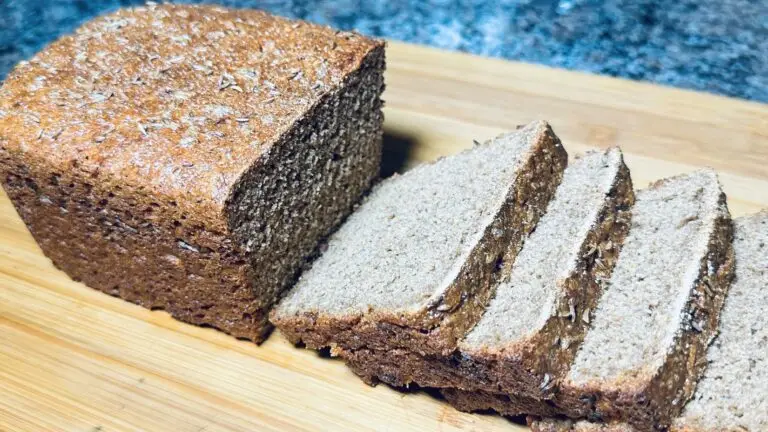
Easy German Einkorn Bread Recipe
Deutscher Einkorn-Rye Brot is a German-inspired homemade bread that combines einkorn wheat, one of the oldest varieties of wheat in human history, with dark rye flour, caraway seeds, flaxseed meal, and espresso powder to produce a deeply flavorful loaf with a chewy crumb and a dark, crackled crust. The recipe uses whole psyllium husk to compensate for einkorn’s low gluten content, a technique borrowed from European bakers who worked with ancient and whole grain flours long before modern bread flour existed. The finished loaf tastes complex and satisfying with a nutty flavor, malty rye depth, and a savory complexity that improves over the full 12-hour cure time.
- Total Time: 3 Hours
- Yield: 12 Slices 1x
Ingredients
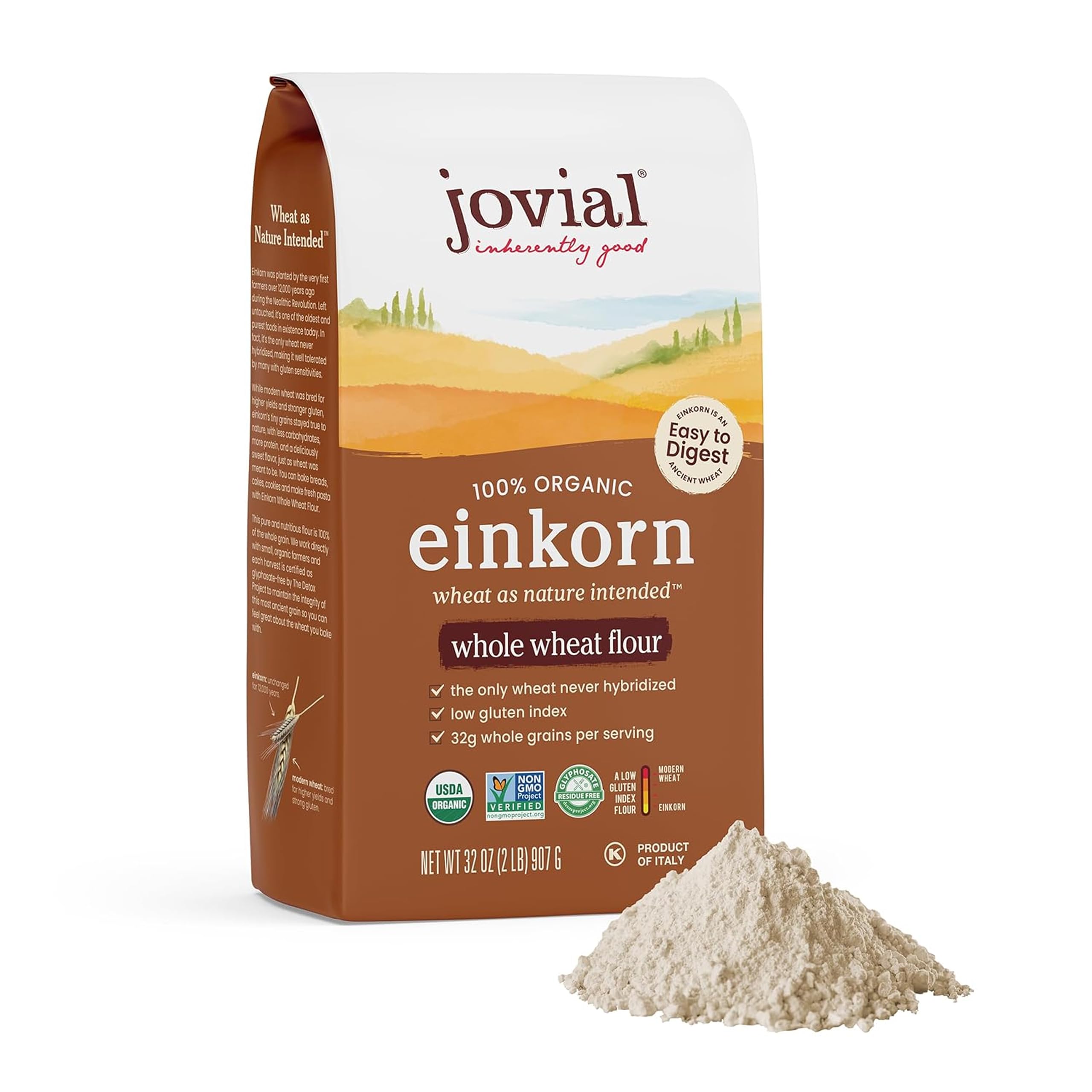
- 2 1/2 cups einkorn wheat flour
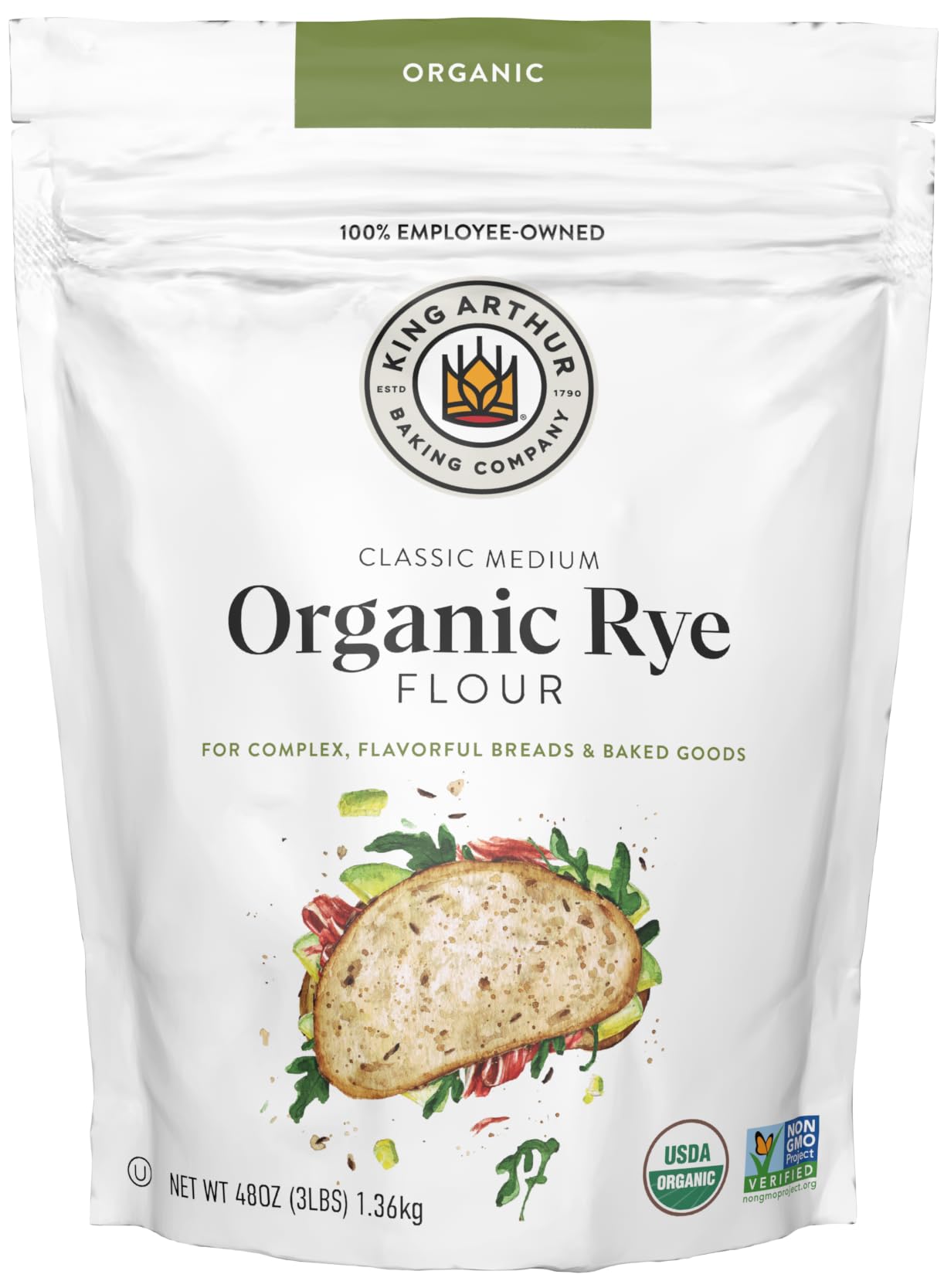
- 1 cup rye flour
- 2 tablespoons flaxseed meal 🛒
- 1 tablespoon whole psyllium husk
- 1 3/4 cups warm water (divided: 1/2 cup for yeast, 1 1/4 cups for psyllium)
- 1 tablespoon dark molasses
- 2 teaspoons instant yeast plus 1 teaspoon white sugar
- 1/2 teaspoon apple cider vinegar
- 1 tablespoon caraway seeds, lightly crushed
- 1/2 tablespoon espresso powder 🛒
- 1 teaspoon sea salt or kosher salt
- 2 tablespoons extra virgin olive oil
- 1 teaspoon cornstarch
- 1/2 cup cold water
Instructions
- Step 1: Activate the yeast
Combine the instant yeast, white sugar, dark molasses, and ½ cup of warm water in a large measuring cup or medium bowl. Stir briefly and let the mixture sit for 5 to 10 minutes. You are looking for a full, domed cap of foam on the surface. That foam tells you the yeast is alive and generating carbon dioxide at the rate you need. A flat, undisturbed surface means the yeast is dead. If that happens, start over with fresh yeast before you invest any more time or ingredients into this loaf. - Step 2: Activate the psyllium husk
In a separate medium bowl, combine the whole psyllium husk, the remaining 1¼ cups of warm water, and the apple cider vinegar. Stir immediately and set aside. The psyllium will begin absorbing water and thickening within about 30 seconds. By the time your yeast is ready, the psyllium mixture will have the consistency of a loose gel. That gel is the structural backbone of your dough, so do not skip this step or combine it with the yeast water. - Step 3: Mix the dough
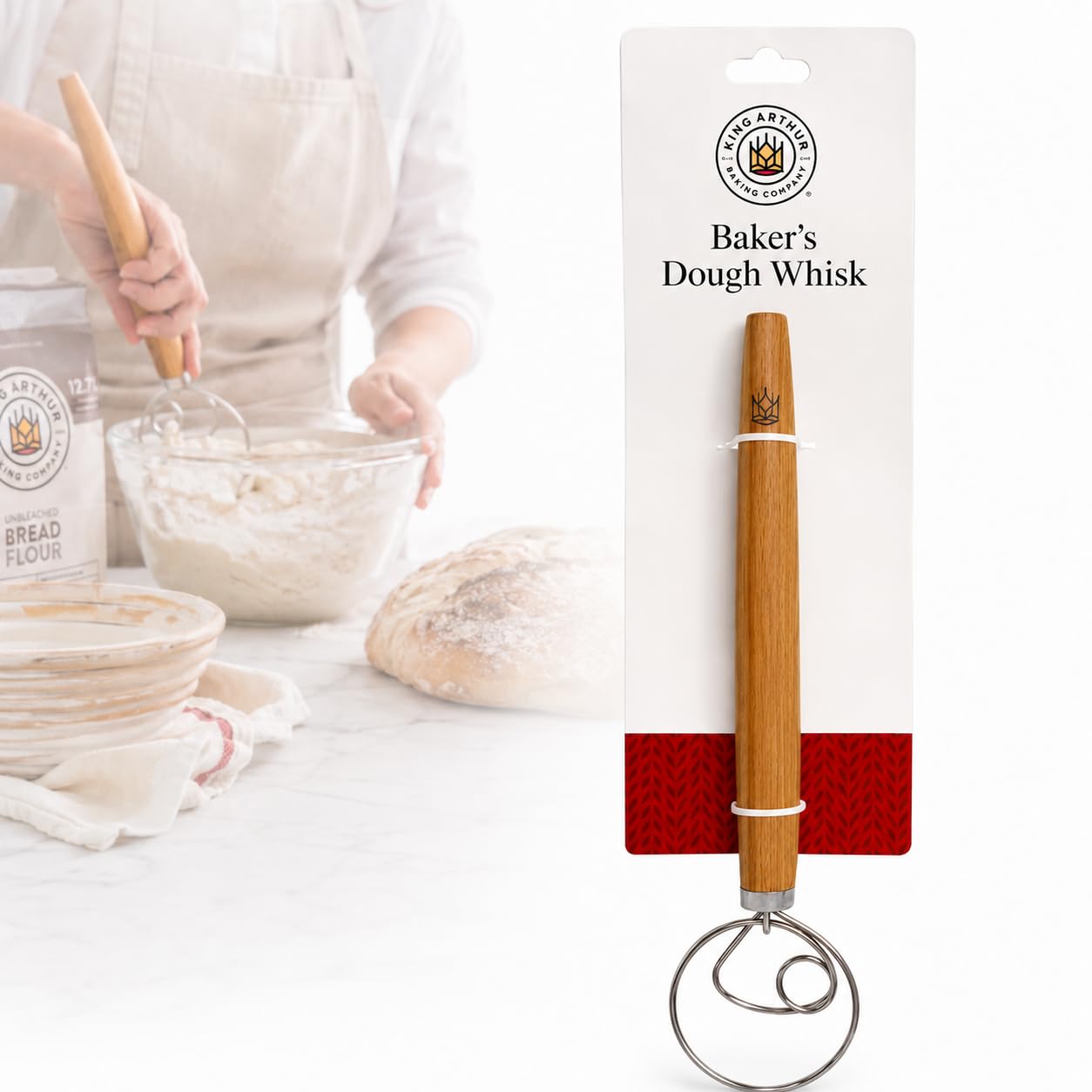
In a large mixing bowl, whisk together the einkorn flour, rye flour, sea salt, flaxseed meal, and espresso powder until the flour mixture is evenly combined. Add the 2 tablespoons of extra virgin olive oil, then pour in the foamy yeast mixture and the psyllium gel. Use a stiff spatula or danish dough whisk 🛒 to mix everything together until no dry flour remains visible. The einkorn dough will be sticky and dense. That is expected. Do not add more flour. Resist the urge. More flour will tighten the crumb and reduce the rise. - Step 4: Rest and fold
Cover the large bowl with a damp towel and let the dough rest for 15 minutes. After the rest, wet your hand with cold water and fold the dough over itself ten times inside the bowl, turning the bowl slightly between each fold. Work your way around the dough in a circle. This is the gluten development step for einkorn, and it is brief by design. More folding does not mean better results with this particular flour. Ten folds, stop, done. - Step 5: First rise
Cover the bowl again with the damp towel and place it in a warm spot, ideally around 75 to 80°F. Let the dough rise for 30 to 40 minutes, or until it has increased in size by approximately 50 percent. Do not wait for it to double. Einkorn dough does not double the way modern bread flour doughs do, and waiting too long will weaken the dough structure before the loaf goes into the pan. - Step 6: Transfer to the loaf pan
Generously grease a 9×5-inch loaf pan 🛒 with butter, making sure to coat the corners and sides thoroughly. Scrape the sticky dough into the pan using a dough scraper or stiff spatula. Smooth the top of the dough with wet fingers until it is roughly even. Sprinkle additional crushed caraway seeds over the top of the loaf. If you are using the optional cornstarch glaze, brush a thin layer over the surface now. The glaze acts as a natural adhesive for the seeds and adds a professional-looking sheen to the finished loaf.
How to make the cornstarch glaze:
Whisk 1 teaspoon of cornstarch into ½ cup of cold water in a small saucepan until fully dissolved. Heat over medium heat, whisking constantly, until the mixture simmers and thickens to a translucent, syrupy consistency, about 1 minute. Remove from heat and let it cool to room temperature before using. Apply a thin brush coat before the bake and a second coat immediately after the loaf comes out of the oven while still hot. The heat will set the glaze into a smooth, glass-like finish. - Step 7: Second rise
Place the loaf pan in your oven set to 100–105°F. Set a glass measuring cup filled with boiling water on the rack below the pan. The steam creates the humid environment that keeps the surface of the dough from drying and cracking during proofing. Let the dough rise for 60 to 90 minutes, until it has increased by 50 to 70 percent above the rim of the pan. Remove the loaf and the water cup from the oven. - Step 8: Bake
Preheat your oven to 400°F. Place a shallow pan filled with about an inch of water on the bottom rack. When the oven is fully preheated, slide the loaf pan onto the center rack. Bake for 15 minutes at 400°F, then reduce the oven temperature to 375°F and remove the steam pan. Continue baking for 25 to 30 more minutes. The top of the loaf should be a deep, dark golden brown. Tap the bottom of the loaf: it should sound hollow. If it sounds dense or dull, give it another 5 minutes and check again. - Step 9: Cool completely before slicing
Remove the loaf from the pan immediately and set it on a wire rack. Do not cut this bread for at least 3 hours. Twelve hours is better. The rye starches inside the loaf continue setting as the bread cools. Cutting into it early produces a gummy, undercooked-looking interior even when the bread is fully baked. A loose damp towel over the cooling loaf prevents the crust from becoming too hard, which is especially helpful if you plan to wait the full 12 hours.
- Prep Time: 15 Minutes
- Rise Time: 2 Hours
- Cook Time: 45 Minutes
- Category: Bread
- Method: Baking
- Cuisine: German
Products I Use to Bake This Easy Einkorn Bread Recipe
Recipe Rewind is an Amazon Associate and earns from qualifying purchases made through our affiliate links. We only recommend kitchen tools and products that coordinate with our vintage recipes and traditional cooking methods. Your purchases help us keep culinary traditions alive.



How to Make Perfect Easy Einkorn Bread
Use Instant Yeast and Don't Skip the Foamy Test
Active dry yeast and instant yeast aren't identical. Instant yeast is more concentrated and does not require blooming, but this recipe calls for activating it in warm water with dark molasses and a teaspoon of white sugar anyway, because the visual confirmation is worth the five minutes. You want foam. A full, domed cap of foam means your yeast is alive and working. A flat surface means your yeast is dead and your loaf will not rise.
Handle Einkorn Dough Gently
Don't knead einkorn dough the way you would a modern bread flour dough. Einkorn's gluten network is fragile, and aggressive kneading breaks down what little structure exists. Instead, use the fold method. After the 15-minute rest, wet your hand and fold the dough over itself ten times in the large mixing bowl. That is the entire gluten development step. It takes less than two minutes and it works.
Watch the Dough, Not the Clock
The first rise is complete when the dough has increased by about 50 percent. For this recipe, that typically takes 30 to 40 minutes in a warm spot, but your kitchen temperature and yeast activity will vary.
Don't wait for the dough to double. Einkorn dough that overproofs loses what little structural integrity it has, and you will not recover it in the oven. A 50 percent increase is your target. Pull it at that mark every time.
A Warm Oven Steam Chamber for the Second Rise
The second rise happens in the bread pan inside a warm oven set to 100–105°F with a glass measuring cup of boiling water on the rack below. The steam keeps the surface of the dough from drying out and cracking during proofing. This step is especially important for einkorn and rye loaves, which have less elasticity than modern wheat doughs and can split along the top irregularly if the surface dries too fast.
Steam Baking and a Two-Temperature Method
Start the bake at 400°F with a shallow pan of water on the bottom rack. That steam burst in the first 15 minutes keeps the surface of the loaf flexible as the interior expands, giving you better oven spring and a more even crust. After 15 minutes, drop the temperature to 375°F and remove the steam pan. The crust will firm and darken over the remaining 25 to 30 minutes. You are looking for a deep, dark golden brown top and a hollow sound when you tap the bottom of the loaf.
Don't Cut the Bread Early
This isn't optional. Rye bread requires a cure time of at least 3 hours after baking, and ideally 12 hours or more. The rye starches continue setting as the loaf cools. If you cut into it while it is still warm, the interior will be gummy and sticky because the starch structure has not finished its work. A damp towel laid loosely over the loaf while it cools on a wire rack helps prevent the crust from becoming too hard before serving.
Recipe Variations, Serving Ideas, & Storage
Recipe Variations
Frequently Asked Questions
Einkorn wheat is the oldest variety of wheat still in cultivation, with a genetic profile that has never been hybridized or selectively bred for high-gluten output the way modern wheat has.
All-purpose flour and modern whole wheat flour come from common wheat, or Triticum aestivum, which has been engineered for yield and high gluten strength since the mid-20th century.
Einkorn's gluten is structurally different and far more fragile, which means einkorn bread recipes require different hydration levels, shorter mixing times, and different rise expectations than recipes built for modern bread flour.
Yep, you can use active dry yeast in place of instant yeast in this easy einkorn bread recipe, but the activation step is slightly different. Active dry yeast has a coarser granule and requires a longer proof time in warm water before it becomes reliably active, typically 10 to 15 minutes instead of 5 to 10 minutes.
Use the same quantity (2 teaspoons or 1 packet) and watch for the foam cap before proceeding. The rise time may also run slightly longer with active dry yeast.
Einkorn dough is always sticky. That is not a problem, it is the flour behaving exactly as it should. Einkorn absorbs water more slowly than modern bread flour, so the dough may appear too wet right after mixing. Do not add more flour. Give the psyllium husk gel time to fully hydrate the flour, which continues during the 15-minute rest and fold step.
Wet hands and a dough scraper are the correct tools for handling this dough, not more flour.
Nah, you do not have to wait a full 12 hours, but you should wait at least 3 hours at a minimum.
Rye flour contains starches that continue setting after the bread comes out of the oven, a process called starch retrogradation. If you cut into the loaf while those starches are still fluid, the interior will appear gummy and undercooked even though the bread is fully baked.
The longer you wait, the cleaner the crumb will be when sliced. Overnight is ideal.
Leaving out the psyllium husk is not recommended for this specific flour blend. Because einkorn and rye both have low gluten content compared to modern bread flour, the psyllium husk is the primary structural binder in the dough. Without it, the loaf is likely to collapse during the second rise or produce a dense, crumbly crumb with poor sliceability.
If you cannot find whole psyllium husks, psyllium husk powder works as a substitute using about 2 to 2.5 tablespoons in place of 1 tablespoon of whole husks.
Einkorn bread is not safe for people with celiac disease. Einkorn does contain gluten, and it will trigger an autoimmune response in anyone with a confirmed celiac diagnosis.
Some people with non-celiac gluten sensitivities report tolerating einkorn better than modern wheat, likely because of structural differences in einkorn's gluten proteins, but that is not the same as celiac safety.
Anyone with a diagnosed wheat allergy or celiac disease should avoid all einkorn products.
Toasting is the best way to revive einkorn rye bread after day one. The dense whole grain crumb responds well to a medium toaster setting, which warms the interior and re-crisps the crust without drying it out.
For slices stored in the freezer, toast directly from frozen on a medium-high setting. The bread does not need to thaw first. Slices stored at room temperature in a bread bag toast in the same time as fresh-baked slices.
Noooo ... The sticky, high-hydration nature of this einkorn dough makes it better suited to a loaf pan than a Dutch oven. A Dutch oven works well for stiffer artisan doughs that can be shaped and scored, but einkorn dough at this hydration level will spread rather than hold a freeform shape.
If you want a rounder, crustier loaf, you can try a well-greased round Dutch oven lined with parchment paper, but expect a flatter profile than you would get from a loaf pan with walls to support the rise.
The tangy aroma in rye bread comes from the combination of the ACV in the dough, the natural fermentation activity of the yeast, and the organic acids that develop in rye flour during baking. This is completely normal and actually desirable.
The sourness balances the malty sweetness of dark molasses and rounds out the deep, earthy whole grain flavor. If the bread smells noticeably off or alcoholic rather than gently tangy, the dough may have overfermented during the first rise.
Yes. Caraway seeds, sunflower seeds, and pumpkin seeds all work well stirred directly into the dough during the mixing step. Add them after combining the dry ingredients and before adding the wet ingredients so they distribute evenly through the flour mixture.
Keep the total add-in quantity to 2 to 3 tablespoons to avoid weighing down the dough and interfering with the rise.
Pin This Easy Einkorn Bread Recipe For Later
Bread Worth Baking Twice
European bakers made loaves like this one every morning before most of us were awake, with simple ingredients, no fancy equipment, and a working knowledge of how grain and time interact.
You just built that same understanding. Once this recipe is in your weekend rotation, a couple of slices toasted with good butter on Saturday morning will start feeling less like cooking and more like habit. That is how skill works. The first loaf teaches you the dough. The second loaf teaches you to trust it.
If you make this easy einkorn bread recipe, please leave a star rating and a review below. Tell me how it turned out, what you served it with, or whether you waited the full 12 hours before cutting in. My money is on no. Happy baking!



0 comments