
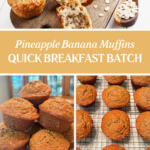
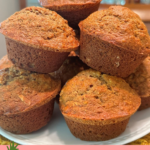
Those overripe bananas on your counter have been waiting for this pineapple banana bread muffins recipe. The combination of whole wheat flour, quick oats, and crushed pineapple creates a tender crumb that holds together beautifully without relying on butter or an electric mixer.
If you've ever pulled a batch of dry, dense muffins out of the oven and stared at them with quiet resentment, this vintage recipe is the answer you've been looking for.
Pineapple Banana Bread Muffins Have Earned A Spot In My Rotation
My bananas were brown and I needed a better idea than watching them rot on the counter. The problem was that every banana bread and muffin recipe in my vintage cookbook collection looked exactly the same: flour, sugar, banana, done. So boring.
Then a 1984 caught my interest with an ingredient list I didn't expect. Pineapple? Wheat germ? Whole wheat flour? I made them that afternoon.
Recipes like this one circulated in community cookbooks and church fundraiser pamphlets throughout the 1970s and 1980s, when home bakers were leaning hard into wholesome, whole-grain baking. Wheat germ was the secret ingredient of that era, the quiet workhorse that nobody put on a label but everyone added to their muffin batter.
This recipe has earned its place in my regular rotation, and if you're a cinnamon person, feel free to be generous. The recipe can take it.
If you need a completely gluten free version of banana muffins, the oat base in this recipe actually makes the transition easier than you'd expect. Head over to the gluten free banana oat muffins recipe for a tested version that keeps all the banana flavor and tender crumb without any wheat flour.
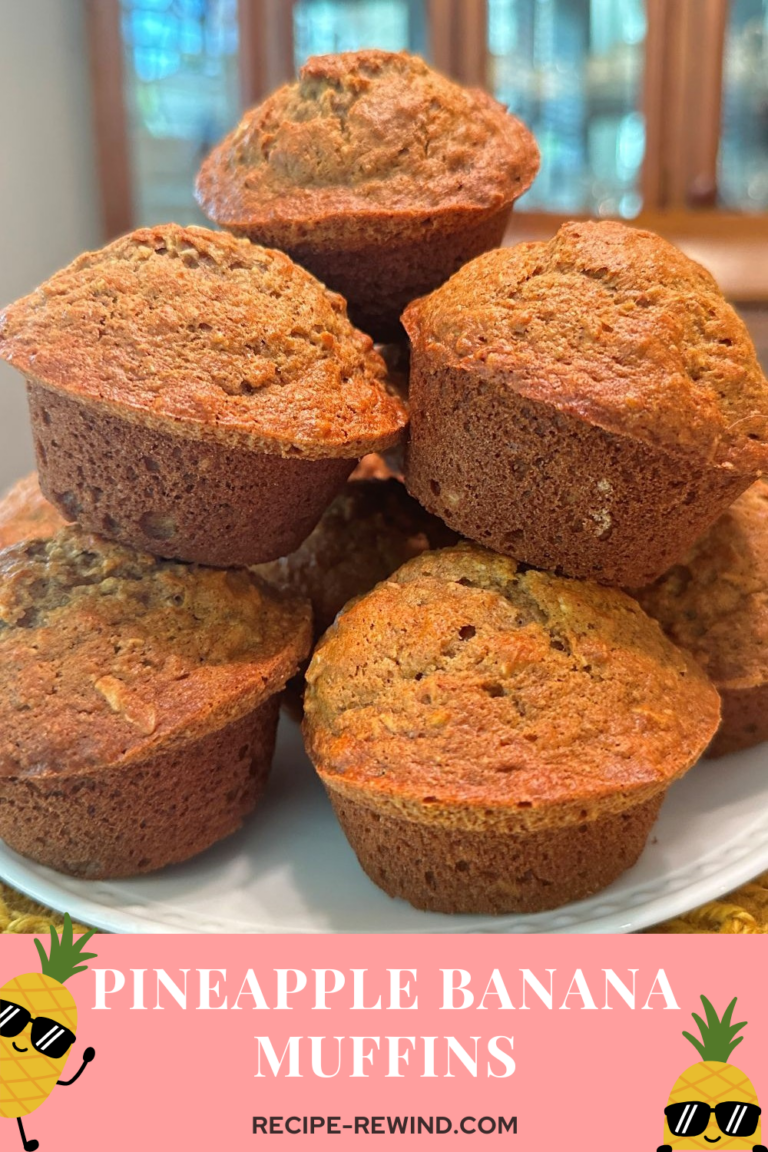
Pineapple Banana Muffins Recipes
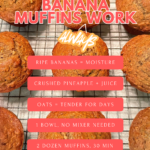
These pineapple banana muffins are a vintage whole-grain muffin recipe popular in community cookbooks of the 1970s and 1980s, when home bakers embraced wheat germ, oats, and whole wheat flour as everyday baking staples. The recipe uses the natural moisture from mashed bananas and undrained crushed pineapple to keep every muffin soft and tender without the need for sour cream, buttermilk, or any special technique. You get two dozen moist muffins from one large bowl and about 10 minutes of hands-on time, which is exactly why this recipe has outlasted a dozen kitchen trends.
- Total Time: 30 Minutes
- Yield: 24 1x
Ingredients
- 1 1/2 cups whole wheat flour
- 1 1/2 cups quick oats, uncooked
- 1 cup all-purpose flour
- 1 cup sugar
- 1/3 cup wheat germ
- 2 teaspoons baking soda
- 1 teaspoon salt
- 2 teaspoons ground cinnamon
- 3 eggs, slightly beaten
- 1 (8-ounce) can crushed pineapple, do not drain
- 2 cups mashed banana (about 4 medium overripe bananas)
- 1/2 cup vegetable oil
Instructions
- Step 1: Get your muffin pans ready first
Lightly grease two standard 12-cup muffin pans with cooking spray, or line them with paper liners. Setting up your muffin tin before you mix anything is the single most important thing you can do for this recipe. The batter comes together fast, and once it’s mixed, you’ll want to move straight to filling and baking without a pause. - Step 2: Combine the dry ingredients
Add the whole wheat flour, quick oats, all-purpose flour, sugar, wheat germ, baking soda, teaspoon salt, and ground cinnamon to a large mixing bowl. Whisk or stir until everything is evenly distributed and you don’t see any clumps of baking soda hiding in the flour mixture. Making sure the leavening is evenly spread is what keeps each muffin rising at the same rate, so don’t skip the stir. - Step 3: Make a well and add the wet ingredients
Push the dry ingredients to the sides of the large bowl to create a well in the center. Add the slightly beaten eggs, the full can of crushed pineapple with its pineapple juice, the mashed bananas, and the vegetable oil directly into that well. You are not mixing yet. Just get all four wet ingredients into that center space together before you touch anything. - Step 4: Stir just until moistened
Using a wooden spoon or spatula, fold the wet ingredients into the dry ingredients with as few strokes as possible. Stop the moment you no longer see dry streaks of flour. The batter will look a little rough and lumpy, and that is exactly what you want. Overmixing muffin batter is the most common reason muffins turn out tough and dense, so trust the lumps and put the spoon down. - Step 5: Fill the muffin cups and bake
Spoon enough batter into each muffin cup to fill it two-thirds full. A large cookie scoop makes this go much faster and keeps the muffin sizes even across both pans. Bake at 350°F for 20 minutes, or until a wooden pick inserted into the center of a muffin comes out clean. If your oven runs a little hot, start checking at the 17-minute mark. At this point, you’ve done all the hard work. - Step 6: Cool before storing
Let the muffins rest in the muffin pans for about 5 minutes before transferring them to a wire rack to cool completely. Pulling them out too soon can cause the bottoms to stick and tear. Once they’re fully cool on the wire rack, they’re ready to eat, store, or freeze.
- Prep Time: 10 Minutes
- Cook Time: 20 Minutes
- Category: Breakfast
- Method: Baking
- Cuisine: American
Pin This Pineapple Banana Bread Muffins Recipe For Later
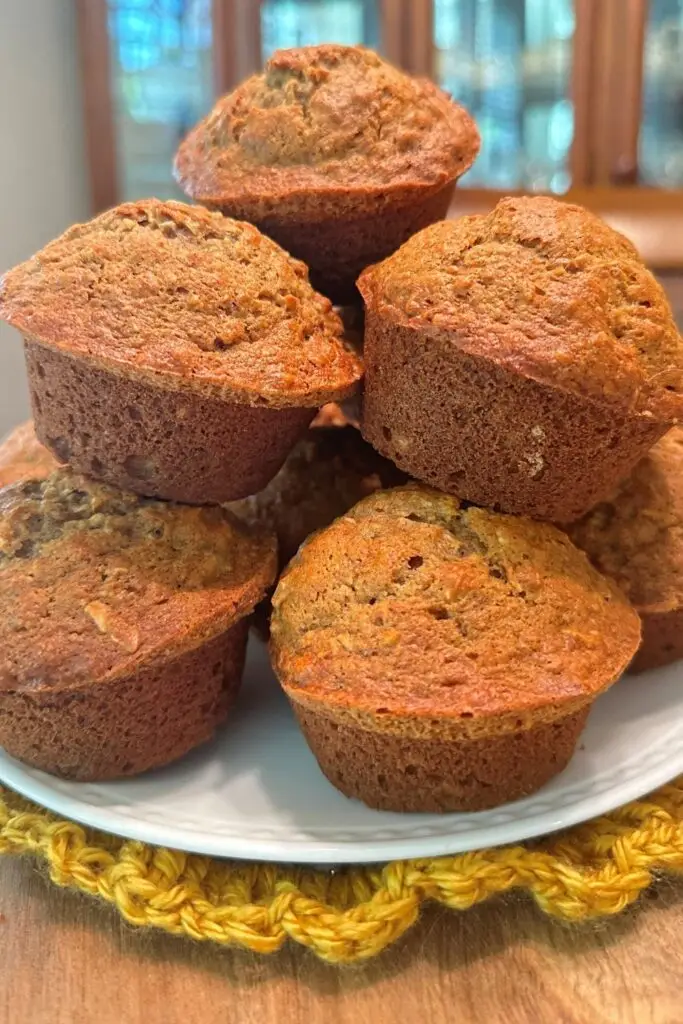
Back in the Day: The Whole-Grain Muffin Era
Somewhere between the Watergate hearings and the debut of the food processor, American home bakers discovered whole grains. The whole-food movement was picking up steam, and cookbooks from community organizations, church groups, and PTA fundraisers were full of recipes that swapped out white flour for whole wheat flour, added oats to everything from bread to cookies, and called for wheat germ as a nutritional boost.
Wheat germ, which had been stripped out of commercial flour for decades, became the badge of a health-conscious home baker.
The banana pineapple muffin showed up in this context as the kind of recipe that was both economical and nourishing. Overripe bananas were too valuable to throw away, canned pineapple was a pantry staple, and the combination of fruit, oats, and whole wheat flour made a muffin that felt like more than just a sweet treat.
These muffins showed up in Sunday school bake sales, church basement potlucks, and school fundraiser tables throughout the late 1970s and early 1980s.
What made them endure is the same thing that makes them work today: the natural moisture from the fruit, the heartiness from the oats, and the fact that the whole recipe fits in one large mixing bowl. No stand mixer required. No complicated technique. Just a reliable formula that turns overripe bananas and a can of pineapple into two dozen moist muffins you'll be proud to share.
What Makes These the Best Pineapple Banana Bread Muffins
Most muffin recipes dry out because they rely too heavily on flour and not enough on moisture. These avoid that problem entirely with a combination of ingredients that work together to keep every bite tender.
Overripe Bananas Do the Heavy Lifting
Mashed bananas that are deeply speckled or fully brown bring two things the recipe needs: natural sweetness and serious moisture. The softer and riper the banana, the more sugar it contains and the more easily it blends into the batter. Two cups of mashed bananas is a substantial amount, and that's intentional. They're not a flavoring here; they're a structural ingredient.
The Crushed Pineapple Stays Undrained for a Reason
The pineapple juice in that 8-ounce can is not an accident and should not be poured down the drain. It adds liquid that keeps the batter from being too stiff, and the natural acidity in pineapple juice reacts with the baking soda to give the muffins extra lift.
Whole Wheat Flour and Oats Add Structure Without Weight
The combination of whole wheat flour and quick oats creates a muffin that holds together without being cakey or airy in the wrong way. Whole wheat flour adds a mild, nutty depth and slightly more protein than all-purpose alone, which keeps the muffin from collapsing. The oats absorb moisture as the muffin bakes, which is part of why these stay soft for days rather than staling within hours.
Wheat Germ Is the Secret the Recipe Doesn't Advertise
One-third cup of wheat germ 🛒 might seem like a small amount, but it adds a toasted, slightly nutty flavor that you'd immediately notice if it were missing. Wheat germ also adds B vitamins and fiber, which matters if you're handing these to someone on a busy morning and calling it breakfast with a clear conscience.
Vegetable Oil Over Butter for Lasting Moisture
Oil-based muffin recipes stay moist longer than butter-based ones because oil remains liquid at room temperature while butter solidifies. These muffins are still excellent on day three, which matters when you're baking two dozen at once and don't plan to eat them all on day one.
How to Make Perfect Pineapple Banana Bread Muffins
The biggest challenge with a great muffin recipe like this one is resisting the urge to fix what doesn't need fixing. Here's what actually matters.
Use Bananas That Are Past Pretty
If your bananas are yellow and firm, put them back on the counter and wait two more days. Overripe bananas with brown or black spotted skin mash more easily, taste sweeter, and add significantly more moisture. Attempting this recipe with underripe bananas will give you a bland, drier muffin that doesn't come close to what this recipe is capable of.
Stir Less Than You Think You Need To
The moment you see the last dry streak of flour disappear, stop. Muffin batter should look rough and slightly lumpy before it goes into the muffin pan. Overworking the batter develops gluten, which makes the texture tough and causes the tops to peak sharply instead of doming gently. You've got one job here: stir until moistened 🛒, and quit while you're ahead.
Don't Crowd the Batter Into the Cups
Fill each muffin cup two-thirds full, not more. Overfilling causes the tops to overflow and merge into one unfortunate muffin situation. If you end up with a little leftover batter, use a small bowl to make a couple of mini muffins or a muffin-top-style cake on a small baking sheet.
Check Your Oven Early
Oven temperatures vary more than most people realize, and vintage recipes were often written for ovens that ran differently than modern ones. Start checking at the 17-minute mark by inserting a wooden pick into the center of one muffin. If it comes out clean with just a few moist crumbs, pull them. A toothpick with wet batter means they need more time; a toothpick with nothing on it usually means they've already peaked and started drying out.
Cool on a Wire Rack for the Best Texture
Leaving muffins in the hot muffin pan after baking continues to cook the bottoms, which can lead to a rubbery edge and a slightly steamed texture. Five minutes in the pan is enough to let them set; after that, move them to a wire rack and let them breathe.
Recipe Variations, Serving Ideas, & Storage
Recipe Variations
Once you've made the original version and have a feel for the batter, there's real room to play.
Tools and Ingredients Worth Having
Recipe Rewind is an Amazon Associate and earns from qualifying purchases made through our affiliate links. We only recommend kitchen tools and products that coordinate with our vintage recipes and traditional cooking methods. Your purchases help us keep culinary traditions alive.
These are the tools that make a real difference for this recipe and any other muffin recipes you'll make going forward.
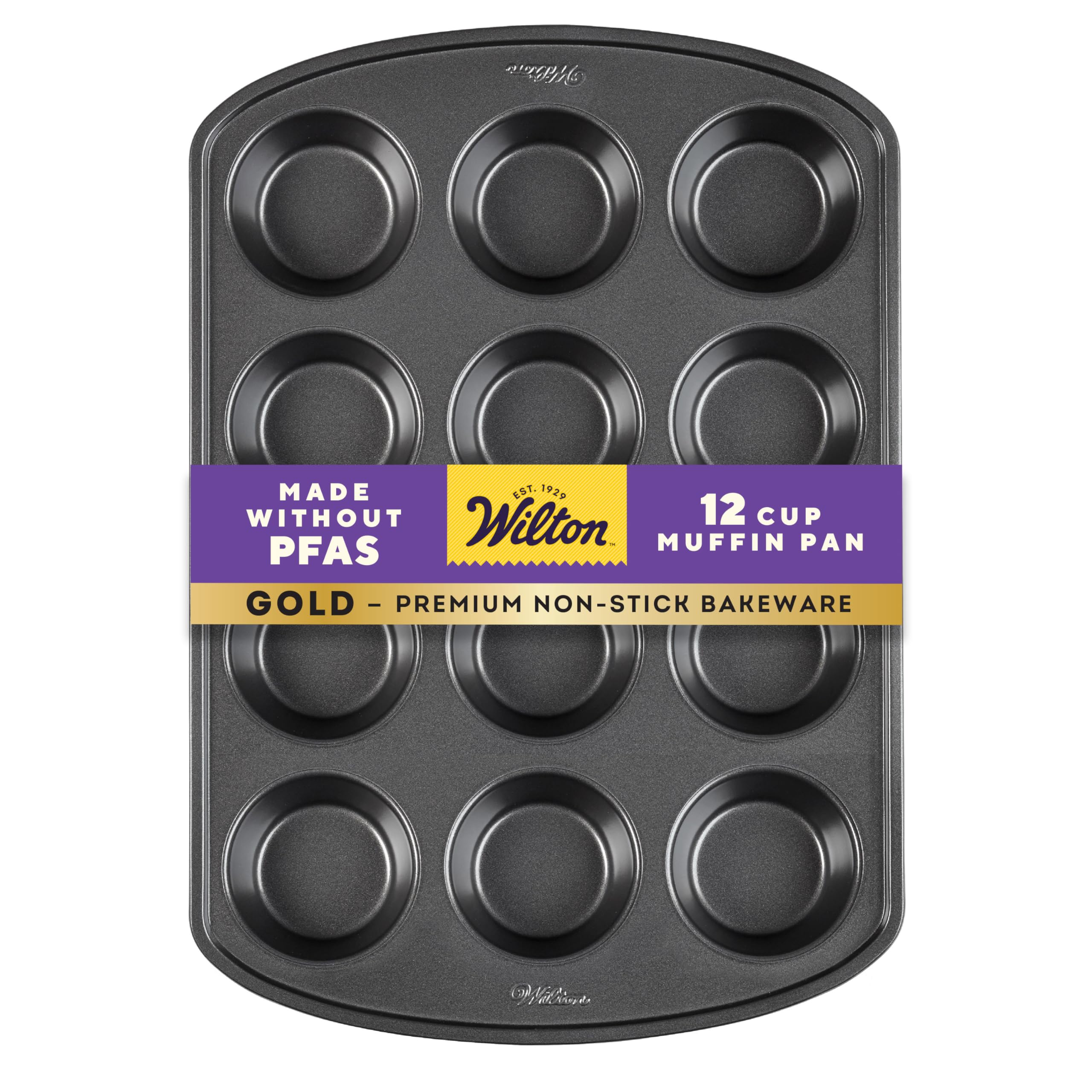
- Standard 12-cup muffin tin — A heavy non-stick muffin pan gives you even browning and easy release. A flimsy pan will give you hot spots and stuck bottoms.
- Large cookie scoop — This is the single most underrated tool for muffin baking. It keeps your muffin cups filled to the same level, which means they bake evenly and all finish at the same time.
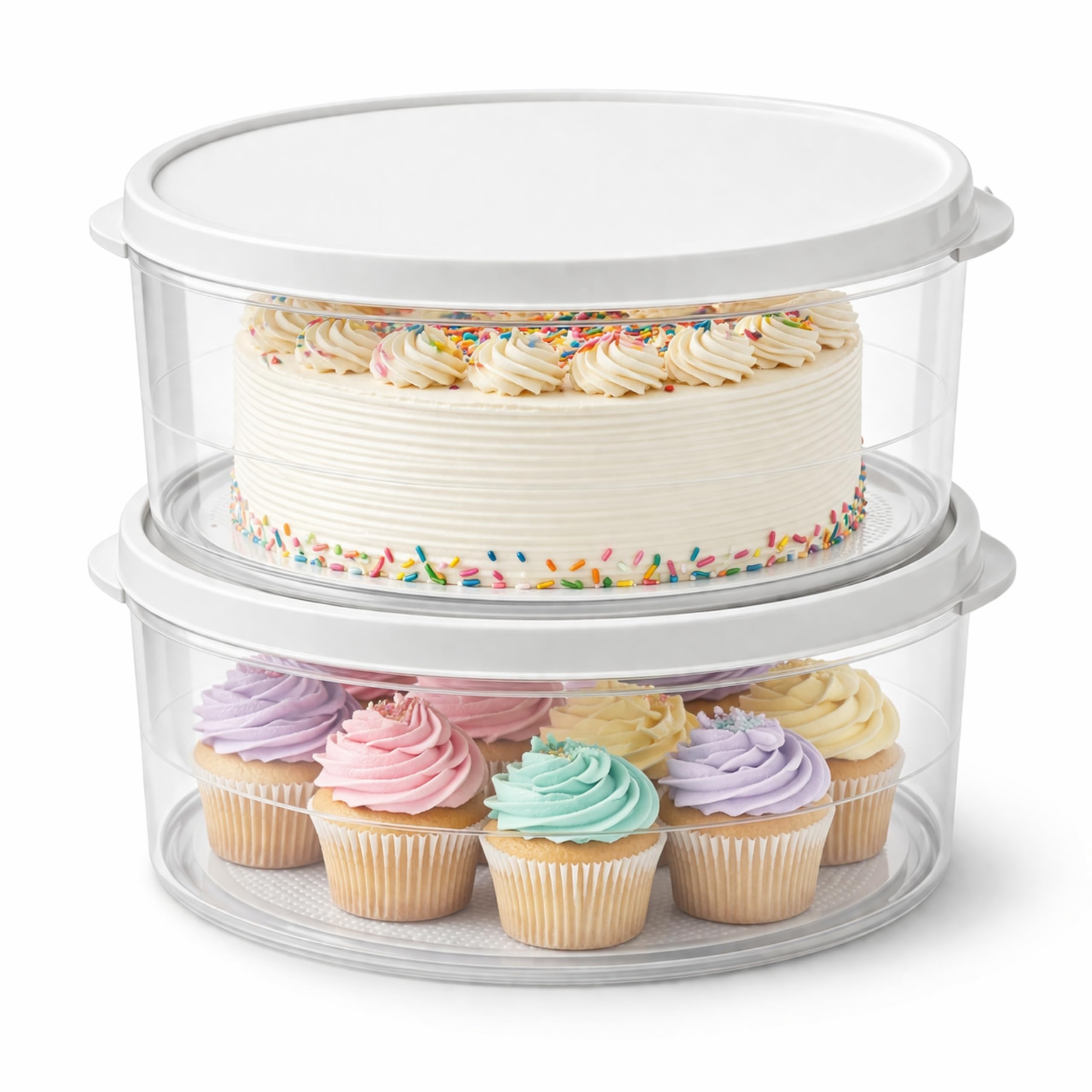
- Airtight container for storage — A wide, flat container with a secure lid is the best way to keep these fresh for three days without squashing the tops.
- Freezer bags, gallon size — Heavy-duty freezer bags are the easiest way to store individually wrapped muffins in the freezer without freezer burn.
- Wooden mixing spoon set — An electric mixer is probably overkill here and could actually hurt the texture. A good wooden spoon is genuinely the right tool for this job.




Frequently Asked Questions
Dense, tough pineapple banana muffins are almost always the result of overmixing the batter. Once the wet ingredients meet the flour mixture, gluten development begins immediately, and every extra stir makes the texture tighter. Stir only until the dry streaks disappear and the batter looks rough.
If the muffins also didn't rise well, check that your baking soda is fresh, since baking soda loses potency after about 6 months in the pantry.
Pineapple banana muffins freeze great up to 3 months. Let them cool completely on a wire rack first, wrap each one individually in plastic wrap, and store them in labeled freezer bags.
Thaw at room temperature overnight. The texture holds up remarkably well, which is one of the best things about an oat-based muffin recipe like this one.
The more overripe the better, truly. Bananas with heavily speckled or mostly brown peels are sweeter, softer, and easier to mash into a smooth consistency. They also add more natural moisture to the batter, which is a significant part of why these muffins stay tender for days.
If all you have are yellow bananas, you can speed up ripening by placing unpeeled bananas on a baking sheet at 300°F for about 15 minutes until the skins blacken and the fruit softens.
Substitute additional all-purpose flour for the whole wheat flour at a 1:1 ratio and the muffins will still bake correctly. The texture will be slightly lighter and the flavor more neutral without the nutty depth that whole wheat flour adds.
If you have whole wheat flour on hand, even half whole wheat and half all-purpose is worth trying before eliminating it entirely.
You can reduce the sugar by up to ¼ cup without significantly affecting the texture. The muffins will be less sweet but still moist, since the sweetness is supplemented by the ripe bananas and the pineapple.
Going below ¾ cup of sugar can affect how well the tops brown, so keep that in mind if you're making a significant reduction.
Insert a toothpick into the center of a muffin near the middle of the pan, since those muffins are usually the last to finish. If it comes out with just a few moist crumbs, they're done. If it comes out with wet batter clinging to it, give the muffins another 2 to 3 minutes and check again. The tops should be golden brown and spring back lightly when you press them.
Yes! The flavor profile of these pineapple banana muffins translates beautifully to a banana bread loaf. Pour the batter into a greased 9x5 inch loaf pan and bake at 350°F for 50 to 60 minutes, checking with a wooden pick at 50 minutes.
The oats and wheat germ give the loaf a heartier, more textured crumb than a standard banana bread recipe, which most people find they prefer after the first slice.
Paper liners make cleanup faster and keep the muffins from sticking, but they're not strictly required. A thorough coat of cooking spray, making sure to cover the inside edges of each muffin cup, works well if you don't have liners on hand.
Silicone muffin pans are another solid option if you bake muffins often and prefer not to use disposable liners.
Stored in an airtight container at room temperature, these muffins stay fresh and moist for up to 3 days. The oats actually help them hold moisture longer than a standard all-flour muffin would.
If you're not planning to eat them within 3 days, freezing them individually is the smarter move and gives you a ready-made quick breakfast whenever you need one.
Make These Pineapple Banana Bread Muffins and Tell Me What You Think
These pineapple banana muffins are the kind of recipe that rewards confidence. Once you've made the original and know how the batter should look and feel, you're already equipped to make it your own.
Add more cinnamon. Try a pinch of nutmeg or cardamom. Fold in chocolate chips or swap the white sugar for brown. Vintage recipes like this one were written by home bakers who adjusted things every single time, and you have every right to do the same.
Leave a rating below and tell me what variations you tried. I genuinely want to know.



0 comments