Vintage 1980s and 1990s Recipes: Microwaves to Potlucks
Recipe Rewind's 1980s to early 2000s recipe collection covers a stretch when dinner got faster and the world got louder. Microwaves moved onto the counter, MTV moved into the living room, and the internet moved into the house. The recipes here include pot pies, potluck pasta salads, and quick comfort food. Every one has been tested in a modern kitchen while the original flavor stays intact.
Scroll to Explore
Vintage 1980s to 2000s Recipes: From Pot Pies to Potluck Pasta
Vintage 1980s to 2000s recipes come from three decades when speed became the main ingredient. The microwave went from curiosity to standard equipment, and the companies that made food followed with recipe booklets written for it. By the end of the period, home cooks were also trading recipes online.
Long before air fryers and meal kits, the weeknight answer was a pot pie with a crust that held up, or a make-ahead casserole that could wait in the fridge until someone got home. Recipe Rewind's recipes from these years cover that range, from breakfast on the griddle to the pasta salad that shows up at every potluck.
The 1980s opened with MTV, which launched on August 1, 1981, and the IBM personal computer eleven days later. The Challenger disaster came in 1986, the Black Monday crash in 1987, and the fall of the Berlin Wall on November 9, 1989. Britannica calls the decade "the decade of decadence."
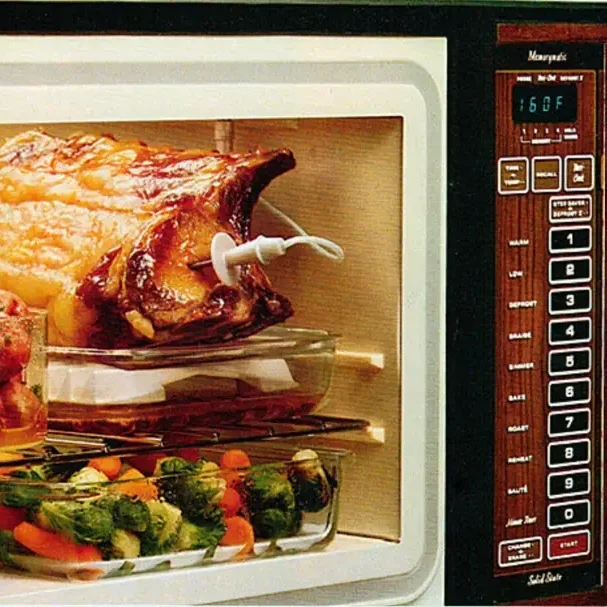
The kitchen changed alongside it. By the mid-1980s, the microwave was all but standard in American homes, and it changed what dinner meant. A baked potato that took 75 minutes in a conventional oven needed just four. The 1990s brought the collapse of the Soviet Union and the founding of Amazon and Google.
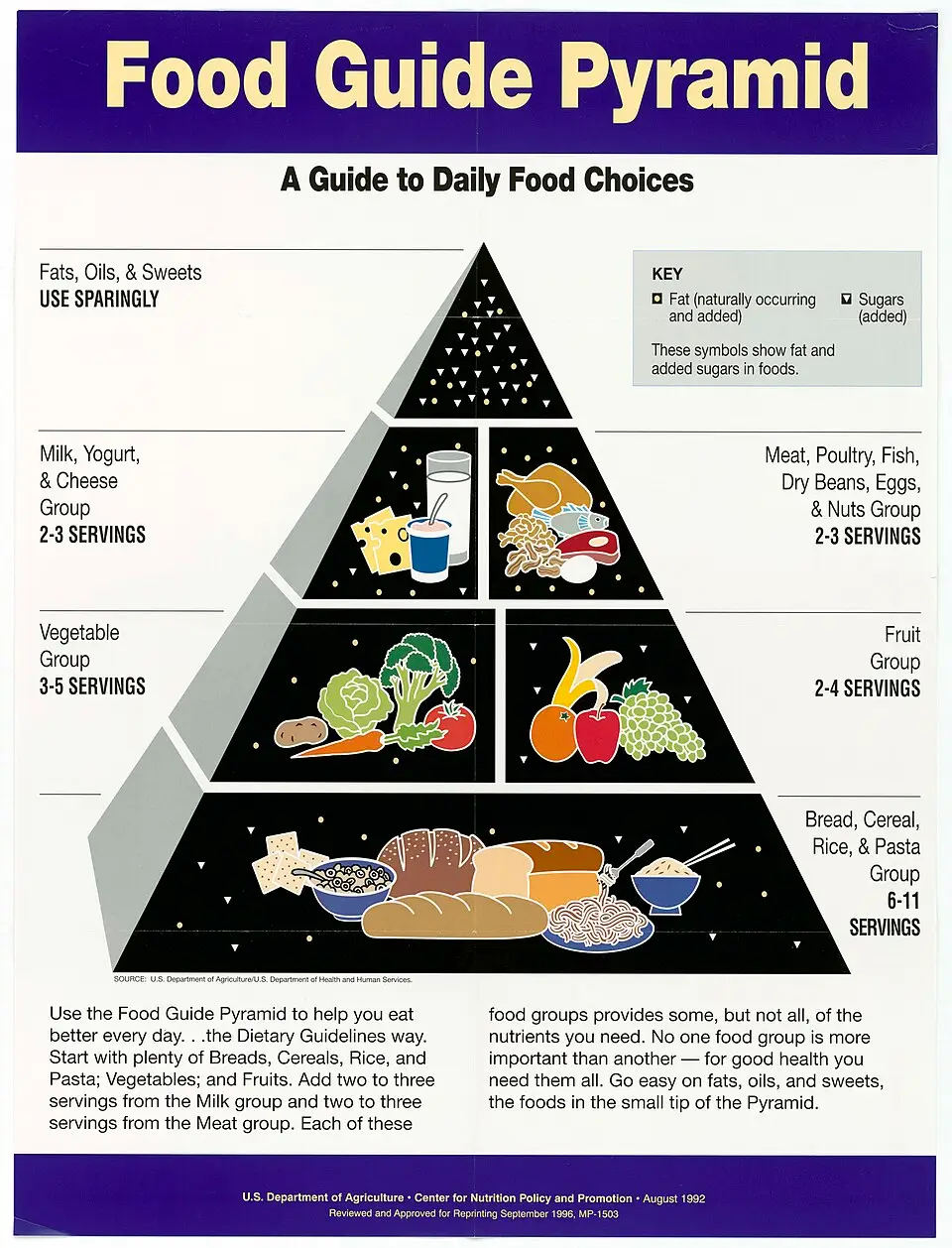
Eating advice shifted too. In 1992, the USDA introduced its Food Guide Pyramid, after pulling the first version in April 1991 when meat and dairy groups objected to their placement. Woolworth's closed its remaining US stores in 1997, taking the five-and-dime lunch counter with it.
The 2000s began with the September 11, 2001 attacks, which led to wars in Afghanistan and Iraq. That same year Apple released the iPod. Home cooks moved online: Chowhound and Allrecipes both launched in 1997. By the early 2000s, the low-carb Atkins diet had swung the old pyramid upside down.
A Kitchen & Culture Timeline
1981
MTV launches on August 1, and IBM releases its first personal computer on August 12.
1986
The space shuttle Challenger exploded 73 seconds after liftoff from Kennedy Space Center on January 28, killing all seven crew members.
1989
The Berlin Wall falls on November 9, ending the physical division of East and West Berlin. The Cold War had defined American politics for more than 40 years.
1991
On December 25, Mikhail Gorbachev resigns as president of the Soviet Union, and the country is formally dissolved the next day.
1992
The USDA introduces the Food Guide Pyramid, with bread, cereal, rice, and pasta at its base
1997
On July 17, Woolworth's announces it will close its remaining 400 five-and-dime stores in the US and refocus on sporting goods.
2001
On September 11, terrorists attack the United States, leading to long wars in Afghanistan and Iraq. Apple releases the iPod later that year.
2003-2005
The Atkins low-carb diet peaks, and bakers and pasta makers see sales drop. Atkins Nutritionals files for bankruptcy in July 2005.
What Life in the 1980s to 2000s Kitchen Looked Like
From a $1,295 Wall Oven to the Kitchen Counter
The first microwave built for the home was Tappan's RL-1, introduced in 1955. It cost $1,295, and customers were confused about how to use it, so Tappan made only 34 units in the first year. Prices fell and familiarity grew, and in 1975 US sales of microwave ovens passed gas ovens for the first time, according to IEEE Spectrum's look at the era's microwave cooking. The article's headline gives the two rules every new owner learned fast: always break the yolks, and don't cook biscuits.
Microwaves gained popularity through the 1970s and became all but standard in American kitchens by the mid-1980s. The food cooked differently than it did on the stovetop or in the oven, so cooks had to relearn timing, texture, and what a microwave can't do. A biscuit that comes out pale and rubbery is the classic example.
That's why vintage microwave recipes need translating before they reach a modern oven. A recipe written for a 1985 countertop microwave leaves out browning, resting time, and the pan size, and Recipe Rewind fills in those blanks.
Lunch counter at the old Woolworth's "five and dime" store. Library of Congress Prints and Photographs Division
A counter lunch of the era often included boxed macaroni and cheese. Kraft's version dates to 1937, and Kraft's first big customer for processed cheese was the US Army, which bought more than 6 million pounds.
The Pyramid, the Backlash, and the Pasta Shell
The USDA's first pyramid never made it out of the gate. In April 1991, the agency withdrew its planned pyramid after meat and dairy groups objected to where their products sat. The 1992 version that replaced it is the one most people remember, with grains at the base.
By the early 2000s, the Atkins and South Beach diets had turned the food pyramid upside down and created winners and losers in the food industry. A bakery owner in Portland, Maine, told the AP that low-carb eating had cost his shop an estimated 40% of its business.
The craze peaked in early 2004, when over 9% of US adults claimed to be on a low-carb diet, according to the NPD Group. That same article reports that the trend was blamed in part for the bankruptcies of pasta maker New World Pasta and Interstate Bakeries, which made Twinkies and Wonder Bread.
That's why a pasta salad from the 1990s, made with a box of shells, tells a story about the pantry. It dates from the years when pasta sat at the base of the pyramid, a few years before it was a villain.