
Before "struggle meal" was a hashtag, 1944 home cooks were turning a head of cabbage and a few tablespoons of bacon drippings into something genuinely worth sitting down for. This scalloped cabbage recipe was showing up on wartime supper tables across America because they were resourceful, filling, and quietly delicious.
Built on a simple white sauce and finished with a crunchy breadcrumb topping, this scalloped cabbage casserole turns one humble head of cabbage into the ultimate comfort food with almost no effort. You probably have every ingredient in your kitchen right now.
Most people overlook cabbage as a side dish, and that is a genuine shame. Tender cabbage, properly cooked, has a mild sweetness that plays beautifully against a rich, savory creamy white sauce. This is one of the best ways to eat it, as far as we are concerned.
If you love the simplicity of this scalloped cabbage casserole, the vintage creamed pearl onions on this site share the same spirit of honest, unfussy cooking, though they bring a slightly more elegant presence to the table.
Back in the 1940s Kitchen
By 1944, the United States had been rationing meat, butter, and canned goods for two years under the War Food Administration's ration book program. Meat, butter, cheese, and canned goods were all controlled, and home cooks were doing remarkable things with vegetables because they had to.
Cabbage was one of the most reliable, affordable crops available, whether from a home victory garden or the corner grocery, and nothing went to waste. A jar of reserved bacon drippings sitting by the stove was as standard as a salt shaker.
In that context, a baked casserole dish that stretched a small amount of fat into a full pan of creamy, satisfying food was not just a good recipe. It was smart, resourceful cooking.
Families gathered around Philco radios in the evenings to listen to war updates, and supper needed to be filling without leaning on rationed staples. Scalloped cabbage casserole fit that brief perfectly: inexpensive, filling, and genuinely delicious.
Does any of this feel familiar? Maybe not the ration books, but the idea of making something satisfying out of simple ingredients is a skill worth having in any decade.
What Makes This Scalloped Cabbage Recipe So Good
The Fat Is Doing Serious Work
Bacon drippings carry a depth of flavor that melted butter simply cannot replicate. When you melt the fat and whisk in the all-purpose flour to build the roux, those savory, smoky notes become the foundation of the entire creamy sauce. Whole milk finishes the sauce with enough richness to coat every strand of cabbage without making the dish feel heavy.
The Cabbage Gets a Head Start
Cooking the finely shredded cabbage in boiling water for three minutes before it goes into the casserole dish is the step that separates a great result from a watery disappointment. That brief blanch softens the cabbage just enough so it finishes cooking evenly in the oven, and draining it thoroughly means your creamy white sauce stays thick and velvety instead of watery. Do not skip the drain. Cabbage holds a surprising amount of liquid.
The Crunchy Breadcrumb Topping Earns Its Place
A quarter cup of bread crumbs might not sound like much, but spread in an even layer over the top of the casserole, they bake into a satisfying crunch that contrasts perfectly with the tender cabbage underneath. If you want a deeply golden brown top, drizzle a small amount of bacon drippings over the bread crumb topping before the dish goes into the oven. The fat helps the crumbs toast evenly and adds that extra layer of savory flavor.
White Sauce Is Easier Than You Think
If the words "white sauce" make you nervous, take a breath. A basic white sauce is just fat, flour, and milk cooked together in the right order. Melt the fat in your pan over medium heat, whisk in the flour and salt until the mixture is smooth and slightly bubbly, then pour in the whole milk sloooowwwwly while whisking. Keep whisking on medium heat until the sauce thickens enough to coat the back of a spoon. That is genuinely all there is to it.
White sauce scorches fast in a thin-bottomed pan! One distracted minute and you've got brown flecks and a slightly burnt flavor running through the whole casserole. A heavy-bottomed saucepan 🛒distributes heat steadily so your roux cooks evenly and your sauce stays silky all the way to the pour.
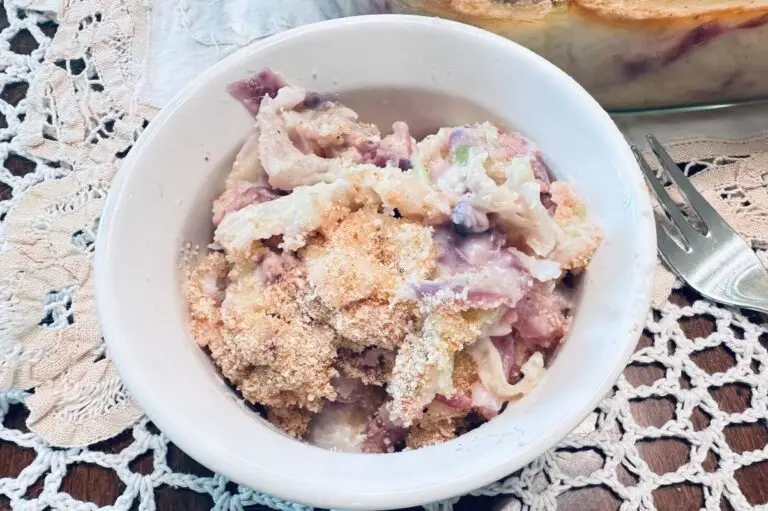
1940s Simple Scalloped Cabbage Recipe
Drawn from a 1944 wartime home cooking tradition, this scalloped cabbage casserole is the original struggle meal done right. It builds a savory creamy white sauce from bacon drippings, all-purpose flour, and whole milk, layers it over blanched, finely shredded tender cabbage in a casserole dish, and bakes under a crunchy breadcrumb topping at 375 degrees Fahrenheit until golden brown. Resourceful, budget-friendly, and deeply satisfying, this vintage side dish takes under 35 minutes from start to finish and tastes like far more than the sum of its humble parts.
- Total Time: 33 Minutes
- Yield: 5 Servings 1x
Ingredients
- 3 tablespoons bacon drippings
- 3 tablespoons flour
- 1-2 teaspoon salt
- 1 cup milk
- 1 quart shredded cabbage
- 1/4 cup bread crumbs
- 1/4 teaspoon cayenne powder (optional)
Instructions
- Preheat Oven: Preheat your oven to 375 degrees F. Lightly grease a casserole dish or baking dish and set aside.
- Build the Roux: In a medium saucepan over medium heat, melt the bacon drippings. Add the flour, salt, and optional cayenne and whisk until smooth and slightly bubbly, about one minute.
- Whisk the Sauce Smooth: Slowly pour in the milk while whisking constantly. Continue cooking over medium heat, whisking frequently, until the sauce thickens enough to coat the back of a spoon, about three to five minutes. Remove from heat.
- Blanch the Cabbage: Bring a large pot of water to a boil. Add the finely shredded cabbage and cook for three minutes. Drain thoroughly in a colander and let sit for a few minutes to release excess liquid.
- Assemble Casserole: Transfer the drained cabbage to the prepared casserole dish in an even layer. Pour the white sauce over the cabbage and stir gently to combine.
- Finish with Bread Crumbs: Sprinkle the bread crumbs evenly over the top. For a deeply golden brown top, drizzle a small amount of additional bacon drippings or melted butter over the bread crumbs.
- Bake: Bake for 20 minutes at 375 degrees F, until the top is golden brown and the sauce is bubbling at the edges. Serve immediately.
Notes
Use salt to taste – add 1 teaspoon, stir, cook for a minute, then taste. Add more if needed.
- Prep Time: 10 Minutes
- Cook Time: 23 Minutes
- Category: Vegetables
- Method: Baking
- Cuisine: American
How to Make Perfect Scalloped Cabbage
Shred Your Cabbage Finely
Coarsely chopped cabbage wedges will not cook evenly in this recipe. Finely shredded cabbage is the goal, roughly the texture of coleslaw. The thinner the shreds, the more evenly they will absorb the creamy sauce during baking, and the more tender the final dish will be.
Build Your White Sauce Over Medium Heat
High heat is the enemy of a smooth white sauce. Stay at medium heat throughout the whole process. If the sauce starts to look lumpy, reduce the heat immediately and whisk more vigorously. A smooth, thickened sauce before it goes over the cabbage means a silky, cohesive casserole coming out of the oven.
Drain the Cabbage Thoroughly
After you cook the cabbage in boiling water for three minutes, drain it well in a colander and let it sit for a minute before you transfer it to your casserole dish. Excess cabbage liquid pooling in the bottom of the baking dish will break down the sauce and thin it out during baking. A few extra seconds of patience here makes a real difference in the final texture.
Watch the Last Five Minutes
A 375-degree oven over twenty minutes will get your breadcrumb topping golden brown, but ovens vary. Start checking at the fifteen-minute mark. You are looking for a deeply golden, fragrant top with the sauce visibly bubbling at the edges of the casserole dish. If the crumbs are browning faster than the sauce is bubbling, tent the dish loosely with foil for the last few minutes.
Recipe Variations, Serving Ideas, & Storage
Recipe Variations
Frequently Asked Questions
Sure thing! Scalloped cabbage casserole can be fully assembled up to one day in advance and stored unbaked in the refrigerator.
Prepare the white sauce and blanch the cabbage, layer them together in your casserole dish, then cover and refrigerate overnight. Add the bread crumb topping just before baking so it stays crunchy and does not absorb moisture from the refrigerator.
A watery scalloped cabbage casserole almost always comes down to not draining the cabbage thoroughly after blanching. Cabbage holds a lot of liquid, and any excess cabbage liquid left in the dish will thin out the white sauce as it bakes.
Let the blanched cabbage sit in a colander for at a few minutes before transferring it to the casserole dish.
I imagine most readers will want to use butter. Using bacon drippings is pretty foreign to our modern food culture.
Melted butter is a perfectly good substitute for bacon drippings in this scalloped cabbage recipe. You will lose the smoky, savory undertone that makes the original so distinctive, but the creamy white sauce will still be rich and flavorful.
Use the same quantity of butter as drippings, one tablespoon for one tablespoon.
Standard green cabbage is the traditional choice for scalloped cabbage casserole, and it works perfectly. I use a mix of green and purple.
Finely shred it to roughly the texture of coleslaw so it cooks evenly and absorbs the creamy sauce well.
Adding cheese to scalloped cabbage is a natural variation that makes the dish even richer.
Stir shredded cheddar cheese or a few slices of American cheese into the warm white sauce before combining it with the drained cabbage. The cheese melts smoothly and adds a savory depth that pairs beautifully with the bread crumb topping.
Scalloped cabbage casserole keeps well in the refrigerator for up to three days stored in a covered dish. Reheat it covered in a 350-degree oven for fifteen to twenty minutes until heated through. The bread crumb topping will soften a bit during storage, but the creamy sauce and tender cabbage hold up well.
Scalloped cabbage casserole is an excellent holiday side dish, particularly alongside roasted pork, baked ham, or turkey. It is affordable, feeds four to five people from a single casserole dish, and can be fully assembled the day before so your oven stays free on the day of your meal.
The golden brown breadcrumb topping also looks impressive on a holiday table with very little effort.
Scalloped cabbage casserole bakes at 375 degrees Fahrenheit for twenty minutes. At that temperature, the white sauce heats through completely, the cabbage finishes cooking to tender, and the bread crumb topping turns golden brown.
If you are baking from refrigerator-cold after making it ahead, add five to ten minutes to the baking time and check that the sauce is bubbling at the edges before pulling it from the oven.
Scalloped cabbage casserole can be frozen, but the texture of the cabbage and creamy sauce changes noticeably after thawing. I honestly don't think I would freeeze it.
The sauce may separate and the cabbage can become softer than ideal. If you need to freeze it, cool the casserole completely, wrap it tightly, and freeze for up to one month. Thaw overnight in the refrigerator and reheat covered in a 350-degree oven.
Pin This 1940s Scalloped Cabbage Recipe For Later
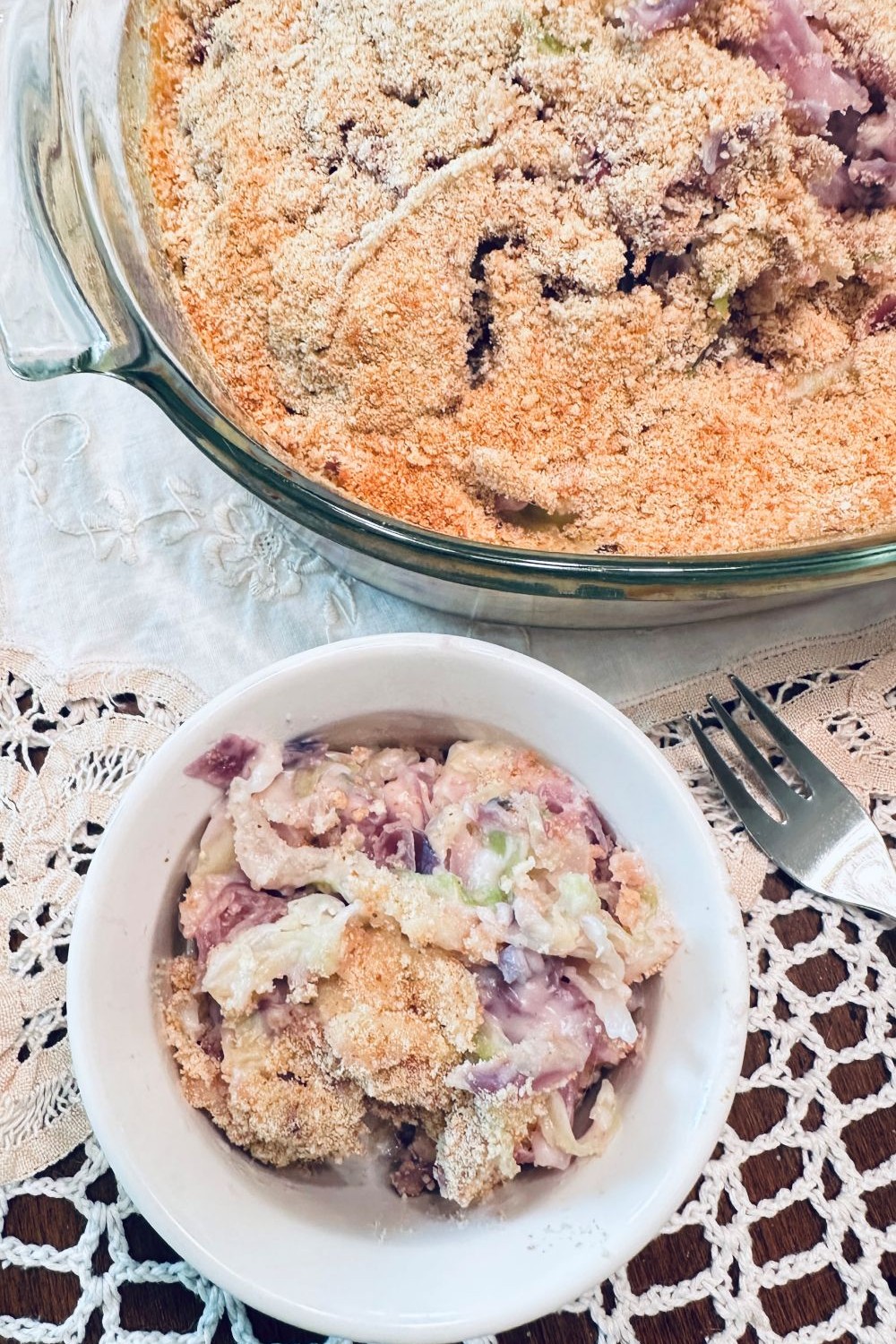
A Side Dish Worth Rediscovering
Cabbage has been unfairly sidelined as a supporting player in home cooking for a long time, and this recipe is a good reminder of what it can actually do when it gets a little care and a good creamy sauce. The 1944 version of this dish asked nothing fancy of the cook and gave a lot back in return. That part has not changed.
If you make this scalloped cabbage recipe, please leave a rating and a review! And if you have a memory of a baked cabbage dish from someone's kitchen growing up, I would genuinely love to hear about it in the comments below.


0 comments