
If you have ever been afraid to attempt homemade quiche Lorraine because it looked too fussy, too French, or too likely to collapse the moment you lifted a slice, you are about to feel very relieved. The classic quiche Lorraine is, at its heart, a savory egg custard poured into a flaky crust, and it has been showing up on American tables since the 1950s when Julia Child introduced French cooking to home cooks who had never even heard of the Lorraine region of France.
The two-temperature baking method in this recipe, starting high at 425°F and then dropping to 300°F, is the original technique, and it is still the most reliable way to get that golden brown top with a silky, just-set center.
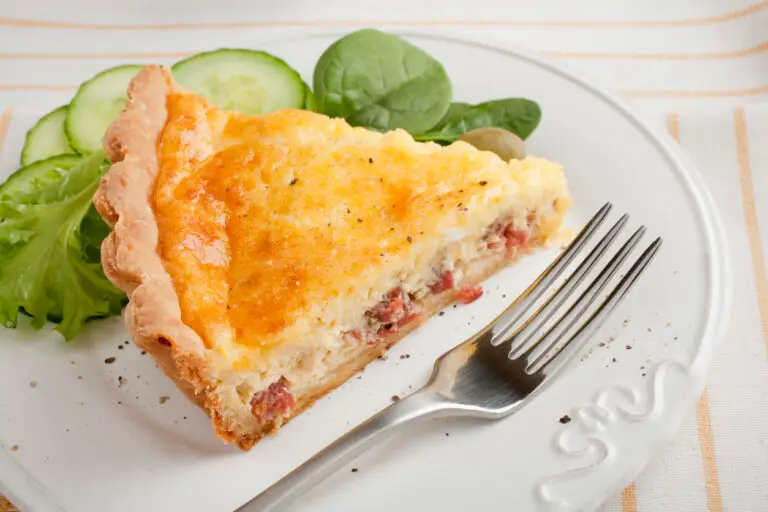
The first time you pull a perfectly set quiche Lorraine out of your own oven, golden brown at the edges, you will genuinely impress yourself. The shortcrust pastry holds its shape cleanly when you slice it, smoky bacon and nutty Gruyère visible in every cut. It looks like something that required more effort than it actually did, and that is exactly the kind of recipe worth keeping.
Back in the Day: When Quiche Was Revolutionary
In the early 1960s, as The Ed Sullivan Show played on Saturday nights and avocado-green appliances were landing in American kitchens for the first time, French cooking started crossing the Atlantic in a big way.
Julia Child's Mastering the Art of French Cooking landed in 1961 and sent home cooks scrambling toward dishes they had previously considered restaurant-only territory. Quiche Lorraine, a savory tart from the Lorraine region of France along the German border, was one of the first French recipes to genuinely land in suburban American homes.
The original quiche Lorraine, documented in French cookbooks as far back as the 16th century, was made with pork lardons and eggs, without any cheese at all. The Gruyère version that Americans came to love is actually an adaptation, and one that turned out to be frankly better for the cheese obsessed.
By the mid-1960s, quiche had become the aspirational centerpiece of cocktail parties and ladies' luncheons across the country, served with a crisp green salad and a glass of white wine while the hosts pretended they had not been stressing about the crust since 8 a.m.
Fun fact: A 1974 book called Real Men Don't Eat Quiche made the dish briefly controversial, but quiche survived the insult unscathed and just kept quietly showing up at every special occasion brunch table and holiday spread, utterly unbothered.
What Makes This Classic Quiche Lorraine Worth Making
The Custard Ratio Is the Whole Game
The magic of a classic quiche Lorraine comes down to the ratio of large eggs to half-and-half. Four whole eggs to two cups of half-and-half produces a creamy egg custard that sets firmly enough to slice cleanly but stays silky, not rubbery.
If you substitute whole milk, the custard will be looser and less rich. If you go full heavy cream, it will be denser. Half-and-half is the sweet spot, and the original recipe knew exactly what it was doing.
Nutty Gruyère Cheese Is the Star of the Show
Swiss cheese is the traditional American swap, but nutty Gruyère cheese is the upgrade that changes everything. Gruyère melts into the egg mixture in a way that creates pockets of savory, slightly caramelized flavor throughout the custard filling, rather than sitting on top as a separate layer. It is a different cheese experience entirely, and once you use it, you will not go back.
Aldi sells a shredded Swiss & Gruyere blend that is perfect for this recipe!
Crispy Bacon Brings the Smoke
The smoky bacon in this recipe is not a garnish. It is structural flavor. Crisply fried and crumbled, it distributes through the quiche filling so that every single bite has that salty, smoky contrast to the rich custard.
If you want to stay closer to the French tradition, pork lardons cut into small cubes and rendered in a pan on medium heat will give you even more depth. Both work. Both are excellent. Choose your adventure.
The Cayenne Is Doing Secret Work
One-eighth teaspoon of cayenne red pepper sounds like nothing, and it is nothing you will actually taste as heat. What it does is brighten the entire flavor profile of the custard filling, making the eggs taste more like eggs and the cheese taste more like cheese.
Vintage recipes used cayenne as a background flavor enhancer in savory dishes all the time, and it is one of those details worth keeping.
Classic Quiche Lorraine Recipe
Classic quiche Lorraine is a traditional French savory tart from the Lorraine region of France, documented in French culinary tradition as early as the 16th century and popularized in American home kitchens in the 1960s through the influence of Julia Child. Made with crispy bacon, nutty Gruyère cheese, finely chopped onion, and a silky custard filling of four eggs and two cups of half-and-half poured into a blind-baked flaky crust, this homemade quiche Lorraine bakes in a two-stage process at 425°F and then 300°F to produce a golden brown top and a just-set, creamy custard center. It is the mother of all quiches, and it is still the best version.
- Total Time: 1 Hour 10 Minutes
- Yield: 6-8 Servings 1x
Ingredients
- pastry for 9-inch one-crust pie
- 8-10 slices bacon, crisply fried and crumbled
- 1 cup shredded Gruyère cheese
- 1/3 cup finely chopped onion
- 4 large eggs
- 2 cups half-and-half
- 3/4 teaspoon salt
- 1/4 teaspoon black pepper
- 1/8 teaspoon cayenne red pepper
Instructions
- Blind bake crust: Heat oven to 375°F. Line the unbaked pie shell with parchment paper and fill with pie weights or dry beans. Blind bake for 15 minutes. Remove parchment paper and pie weights and bake 5 more minutes until the crust is just beginning to turn golden. Remove from oven.
- Increase oven temperature: Increase oven temperature to 425°F.
- Layer fillings: Sprinkle crumbled bacon, shredded Gruyère, and chopped onion evenly across the bottom of the par-baked pie shell.
- Mix custard: In a large bowl, beat eggs slightly. Beat in half-and-half, salt, pepper, and cayenne until combined.
- Add custard to shell: Pour egg mixture over the bacon and cheese in the pie shell. Place pie plate on a baking sheet.
- Initial bake: Bake uncovered at 425°F for 15 minutes.
- Lower oven and finish baking: Reduce oven temperature to 300°F. Continue baking uncovered until a knife inserted halfway between the center and the edge comes out clean, about 30 minutes longer.
- Rest and serve: Remove from oven and let stand 10 minutes before slicing and serving.
- Prep Time: 25 Minutes
- Cook Time: 45 Minutes
- Category: Breakfast, Dinner, Lunch
- Method: Baking
- Cuisine: French
How to Make a Perfect Quiche Lorraine
Blind Bake Your Pie Shell (Do Not Skip This)
The number one cause of a soggy crust is skipping blind baking. Blind baking your pie shell before adding the quiche filling sets the shortcrust pastry so it can hold up against the wet egg mixture without softening.
Line your unbaked homemade pie crust with parchment paper, fill it with pie weights or dry beans, and par bake at 375°F for about 15 minutes. Remove the parchment paper and pie weights, then bake another 5 minutes until the crust is just beginning to turn golden. If you have ever pulled a quiche out of the oven only to find a pale, soft, nearly raw crust underneath a perfectly cooked filling, blind baking is the fix you have been looking for.
Your Pie Plate and Tart Pan Both Work, With One Difference
A standard 9-inch pie plate gives you a deeper, more custardy quiche with higher walls. A tart pan with a removable bottom gives you a shallower quiche with a higher crust-to-filling ratio and a more elegant presentation you can lift out and slice cleanly on a cutting board. Both are excellent choices. The bake time stays roughly the same, though a shallower quiche in a tart pan may reach that clean knife test a few minutes earlier, so start checking around the 25-minute mark in the second baking phase.
The Two-Temperature Method Is Your Best Friend
Starting the quiche at 425°F for 15 minutes sets the top of the custard quickly, sealing the surface so the filling stays light and custardy rather than dense. Dropping to 300°F for the remaining 30 to 45 minutes allows the center to cook through gently without the eggs tightening up or weeping liquid.
Rushing this step by keeping the oven at a higher temperature the whole time is the fastest way to end up with a rubbery, slightly separated custard. Low and slow for the second half is non-negotiable, and your patience will be rewarded.
Use a Baking Sheet Under the Pie Plate
Place your pie dish on a baking sheet before it goes into the oven. If the egg mixture bubbles over slightly or the crust shrinks and lets a little custard escape, the baking sheet catches it before it becomes a smoke situation and a very unhappy oven. This is the kind of quiet tip that seems unnecessary right up until the moment it saves dinner.
The Knife Test Tells You When to Stop
When a knife inserted halfway between the center and the edge comes out clean, the quiche is done. The very center may still have a slight jiggle at that point, and that is correct. Carry-over cooking will set it as the quiche stands. Let it rest at least 10 minutes before cutting, and the filling will hold its shape cleanly when you slice it.
Room Temperature Ingredients Make a Smoother Custard
Cold eggs straight from the refrigerator can cause the custard filling to bake unevenly. Let your large eggs sit at room temperature for about 20 minutes before making the egg mixture. Beat them slightly first, then beat in the half-and-half, salt, pepper, and cayenne in a large bowl before pouring. The smoother the mixture going in, the silkier the custard coming out.
Classic Quiche Lorraine Variations, Serving Ideas, & Storage
Recipe Variations
Frequently Asked Questions
Classic quiche Lorraine is the original version of quiche, made with crispy bacon (or traditional pork lardons), a savory egg custard, and cheese in a flaky crust. A "regular" or cheese quiche typically skips the bacon and focuses entirely on the custard and cheese.
Classic quiche Lorraine is the original version most modern quiches build on, and most other variations start with its custard ratio of eggs and cream or half-and-half.
Shredded Swiss cheese is a great substitute for Gruyère in quiche Lorraine and produces a milder, slightly less complex flavor. Gruyère has a nuttier, more caramelized quality that elevates the custard filling in a way that Swiss cheese does not quite replicate.
If Gruyère is unavailable, Swiss cheese is a perfectly solid alternative that keeps the spirit of the classic recipe intact.
Quiche Lorraine is an excellent make-ahead dish. You can prepare the pie shell and the bacon, cheese, and onion filling separately, refrigerate them both covered overnight, and assemble and bake the next morning.
You can also bake the quiche fully the day before, refrigerate it, and reheat it in a 300°F oven for 15 to 20 minutes before serving. When baking from cold assembled components, increase the second baking phase to about 45 minutes.
A watery quiche Lorraine is almost always caused by one of three things: the crust was not blind baked before filling, the quiche was not baked long enough for the custard to fully set, or the quiche was cut before resting.
Always blind bake the pie shell first, use the knife test to confirm the custard has set before pulling it from the oven, and let it rest at least 10 minutes before cutting to allow the filling to firm up completely.
A standard 9-inch pie plate works perfectly for quiche Lorraine and gives you a deep, custardy result. A 9-inch tart pan with a removable bottom is the French pastry approach and produces a shallower quiche with a more elegant presentation that you can remove from the pan entirely for slicing.
Both work well; the tart pan just requires slightly shorter baking at the lower temperature, so start checking for doneness around the 25-minute mark in the second phase.
Quiche Lorraine freezes well for up to 2 months. Bake and cool the quiche completely before freezing. Wrap it tightly in plastic wrap and then in aluminum foil to prevent freezer burn.
Thaw it overnight in the refrigerator, then reheat in a 325°F oven for 20 to 25 minutes. The texture may be very slightly less silky than freshly baked, but the flavor holds up beautifully.
Traditional quiche Lorraine uses bacon or pork lardons as its defining ingredient, but you can absolutely swap it out. Cooked chicken with dried thyme, crabmeat, or deviled ham mixed with dry bread crumbs are all variations pulled directly from the original recipe. Each produces a genuinely different quiche while keeping the same silky custard base and flaky crust.
Quiche Lorraine is done when the internal temperature of the custard reaches 165°F to 170°F, or when a knife inserted halfway between the center and the edge comes out clean.
The very center of the quiche may still jiggle slightly at this point, which is correct. It will continue to set as it rests. Overbaking drives the internal temperature too high and causes the egg proteins to tighten, which results in a rubbery rather than silky custard.
Of course! A store-bought pie shell is a completely legitimate shortcut for quiche Lorraine, and the custard filling is so flavorful that a pre-made crust absolutely holds its own.
If you use a refrigerated pie crust, still take the time to blind bake it before adding the filling. A soggy crust is the one thing worth preventing regardless of whether you made the pastry yourself or bought it at the store.
Quiche Lorraine pairs beautifully with a simple green salad dressed with a light vinaigrette, which provides acidity to cut through the richness of the savory egg custard. Fruit salad, sliced tomatoes with fresh herbs, or roasted asparagus are also natural companions.
For a brunch spread, serve quiche Lorraine alongside fresh fruit, a light soup, or simple pastries. It can be served warm, at room temperature, or cold, which makes it one of the most practical special occasion dishes in your repertoire.
Pin This Classic Quiche Lorraine Recipe For Later
Some Recipes Never Need a Comeback
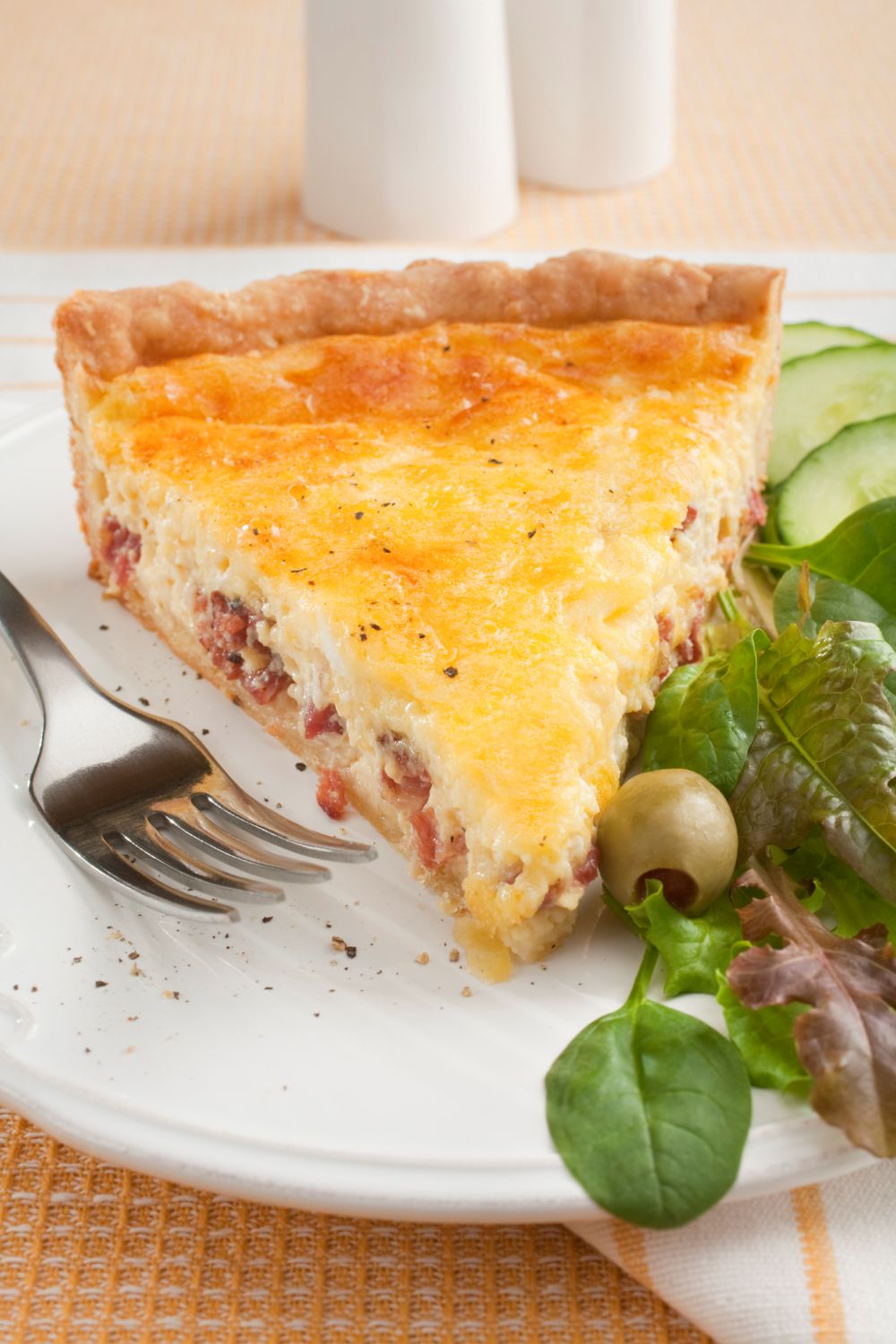
Quiche Lorraine has been a reliable presence on brunch tables and even weeknight dinner plates for decades, and the reason is pretty simple: it works! The custard sets, the crust holds, and the combination of crispy bacon and nutty Gruyère does exactly what it promises. You get a beautiful, satisfying meal that took less effort than it looks like it did, and that is genuinely all you need from a recipe.
Did you grow up eating quiche Lorraine, or is this your first time making it from scratch? Tell me what occasion you are making it for in the comments below. I would love to hear about it.
If you make this classic quiche Lorraine, please leave a rating and a review. It helps other readers find the recipe, and I read every single one.


0 comments