Ingredients
Units
Scale
- 2 1/2 cups einkorn wheat flour
- 1 cup rye flour
- 2 tablespoons flaxseed meal 🛒
- 1 tablespoon whole psyllium husk
- 1 3/4 cups warm water (divided: 1/2 cup for yeast, 1 1/4 cups for psyllium)
- 1 tablespoon dark molasses
- 2 teaspoons instant yeast plus 1 teaspoon white sugar
- 1/2 teaspoon apple cider vinegar
- 1 tablespoon caraway seeds, lightly crushed
- 1/2 tablespoon espresso powder 🛒
- 1 teaspoon sea salt or kosher salt
- 2 tablespoons extra virgin olive oil
- 1 teaspoon cornstarch
- 1/2 cup cold water
Instructions
- Step 1: Activate the yeast
Combine the instant yeast, white sugar, dark molasses, and ½ cup of warm water in a large measuring cup or medium bowl. Stir briefly and let the mixture sit for 5 to 10 minutes. You are looking for a full, domed cap of foam on the surface. That foam tells you the yeast is alive and generating carbon dioxide at the rate you need. A flat, undisturbed surface means the yeast is dead. If that happens, start over with fresh yeast before you invest any more time or ingredients into this loaf. - Step 2: Activate the psyllium husk
In a separate medium bowl, combine the whole psyllium husk, the remaining 1¼ cups of warm water, and the apple cider vinegar. Stir immediately and set aside. The psyllium will begin absorbing water and thickening within about 30 seconds. By the time your yeast is ready, the psyllium mixture will have the consistency of a loose gel. That gel is the structural backbone of your dough, so do not skip this step or combine it with the yeast water. - Step 3: Mix the dough
In a large mixing bowl, whisk together the einkorn flour, rye flour, sea salt, flaxseed meal, and espresso powder until the flour mixture is evenly combined. Add the 2 tablespoons of extra virgin olive oil, then pour in the foamy yeast mixture and the psyllium gel. Use a stiff spatula or danish dough whisk 🛒 to mix everything together until no dry flour remains visible. The einkorn dough will be sticky and dense. That is expected. Do not add more flour. Resist the urge. More flour will tighten the crumb and reduce the rise. - Step 4: Rest and fold
Cover the large bowl with a damp towel and let the dough rest for 15 minutes. After the rest, wet your hand with cold water and fold the dough over itself ten times inside the bowl, turning the bowl slightly between each fold. Work your way around the dough in a circle. This is the gluten development step for einkorn, and it is brief by design. More folding does not mean better results with this particular flour. Ten folds, stop, done. - Step 5: First rise
Cover the bowl again with the damp towel and place it in a warm spot, ideally around 75 to 80°F. Let the dough rise for 30 to 40 minutes, or until it has increased in size by approximately 50 percent. Do not wait for it to double. Einkorn dough does not double the way modern bread flour doughs do, and waiting too long will weaken the dough structure before the loaf goes into the pan. - Step 6: Transfer to the loaf pan
Generously grease a 9×5-inch loaf pan 🛒 with butter, making sure to coat the corners and sides thoroughly. Scrape the sticky dough into the pan using a dough scraper or stiff spatula. Smooth the top of the dough with wet fingers until it is roughly even. Sprinkle additional crushed caraway seeds over the top of the loaf. If you are using the optional cornstarch glaze, brush a thin layer over the surface now. The glaze acts as a natural adhesive for the seeds and adds a professional-looking sheen to the finished loaf.
How to make the cornstarch glaze:
Whisk 1 teaspoon of cornstarch into ½ cup of cold water in a small saucepan until fully dissolved. Heat over medium heat, whisking constantly, until the mixture simmers and thickens to a translucent, syrupy consistency, about 1 minute. Remove from heat and let it cool to room temperature before using. Apply a thin brush coat before the bake and a second coat immediately after the loaf comes out of the oven while still hot. The heat will set the glaze into a smooth, glass-like finish. - Step 7: Second rise
Place the loaf pan in your oven set to 100–105°F. Set a glass measuring cup filled with boiling water on the rack below the pan. The steam creates the humid environment that keeps the surface of the dough from drying and cracking during proofing. Let the dough rise for 60 to 90 minutes, until it has increased by 50 to 70 percent above the rim of the pan. Remove the loaf and the water cup from the oven. - Step 8: Bake
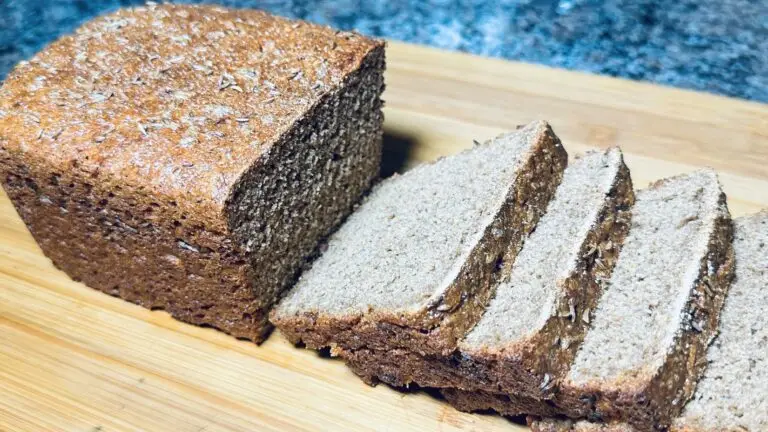
Preheat your oven to 400°F. Place a shallow pan filled with about an inch of water on the bottom rack. When the oven is fully preheated, slide the loaf pan onto the center rack. Bake for 15 minutes at 400°F, then reduce the oven temperature to 375°F and remove the steam pan. Continue baking for 25 to 30 more minutes. The top of the loaf should be a deep, dark golden brown. Tap the bottom of the loaf: it should sound hollow. If it sounds dense or dull, give it another 5 minutes and check again. - Step 9: Cool completely before slicing
Remove the loaf from the pan immediately and set it on a wire rack. Do not cut this bread for at least 3 hours. Twelve hours is better. The rye starches inside the loaf continue setting as the bread cools. Cutting into it early produces a gummy, undercooked-looking interior even when the bread is fully baked. A loose damp towel over the cooling loaf prevents the crust from becoming too hard, which is especially helpful if you plan to wait the full 12 hours.
- Prep Time: 15 Minutes
- Rise Time: 2 Hours
- Cook Time: 45 Minutes
- Category: Bread
- Method: Baking
- Cuisine: German