

A 1984 Southern Living chili spaghetti recipe combines browned ground beef, onion, garlic, and green pepper with tomatoes, kidney beans, and chili spices, then simmers dry spaghetti directly in the pot instead of serving noodles on the side. Southern cooks and Midwestern cooks each claim a version of this dish, and Wisconsin kitchens were folding pasta into chili years before Cincinnati chili became a household name. Ready in about an hour, it feeds a crowd from one Dutch oven.
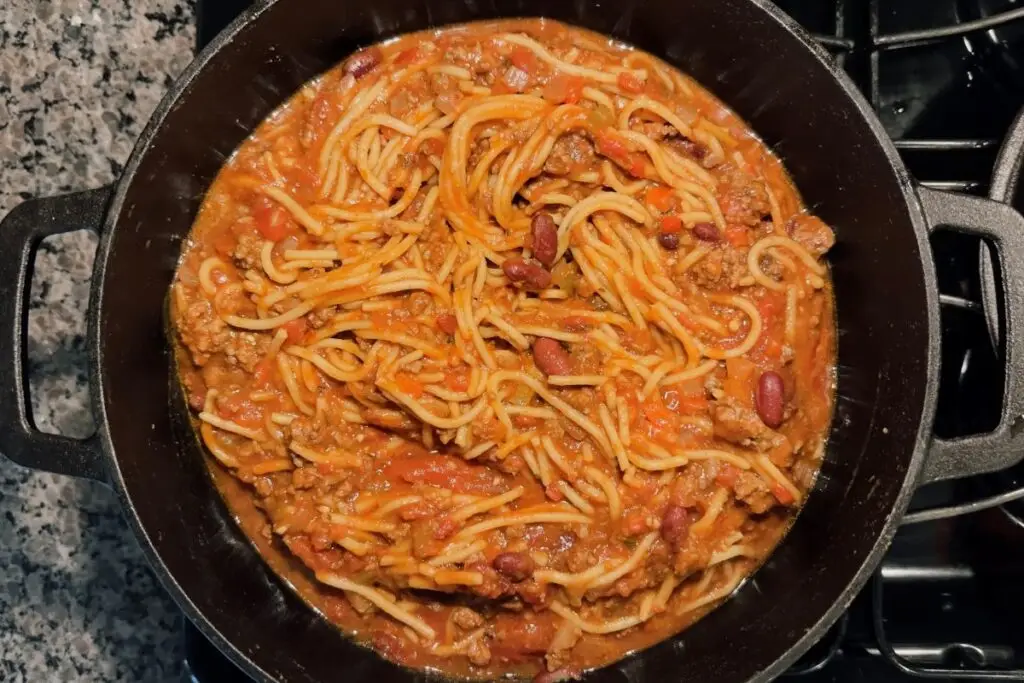
Nobody warned my mom's Indianapolis relatives that spaghetti in a chili pot would ever need defending. Ground beef simmers with tomatoes, chili powder, and kidney beans, and dry spaghetti goes straight into that pot to cook alongside everything else.
This is a genuine one-pot dinner from start to finish, but you can just as easily boil the spaghetti separately and ladle the chili over the top if you'd rather serve it Cincinnati-style.
A chili spaghetti recipe like this one solves the exact problem every Midwestern cook faced in 1984: how to stretch two pounds of beef into twelve servings without a second pan to wash. Down here in Texas, folks would raise an eyebrow at noodles anywhere near a chili bowl, and that regional standoff is part of what makes this recipe worth telling.
My mother learned to make chili with spaghetti stirred right into the pot, and she grew up in Indianapolis, so I never once questioned it growing up. My friends in Wisconsin cooked chili the exact same way, elbow macaroni or spaghetti simmered in with the beans and tomatoes, so I assumed everybody's family did this. Then I moved to Texas, where pasta near a chili pot gets you a look reserved for putting ketchup on brisket.
I've made this 1984 Southern Living version most of my life now, and it comes together easily. The heat is entirely in your hands. Add a shake of red pepper flakes if you like it hotter, stir in extra cumin, or swap in cumin seed for a deeper, earthier note.
f you want to see just how far the Texas side of this debate goes, take a look at Lady Bird Johnson's Pedernales River Chili, a Texas ranch classic built on ground chuck, ground Italian sausage, and two full cans of red kidney beans, with just one can of whole tomatoes and zero pasta.
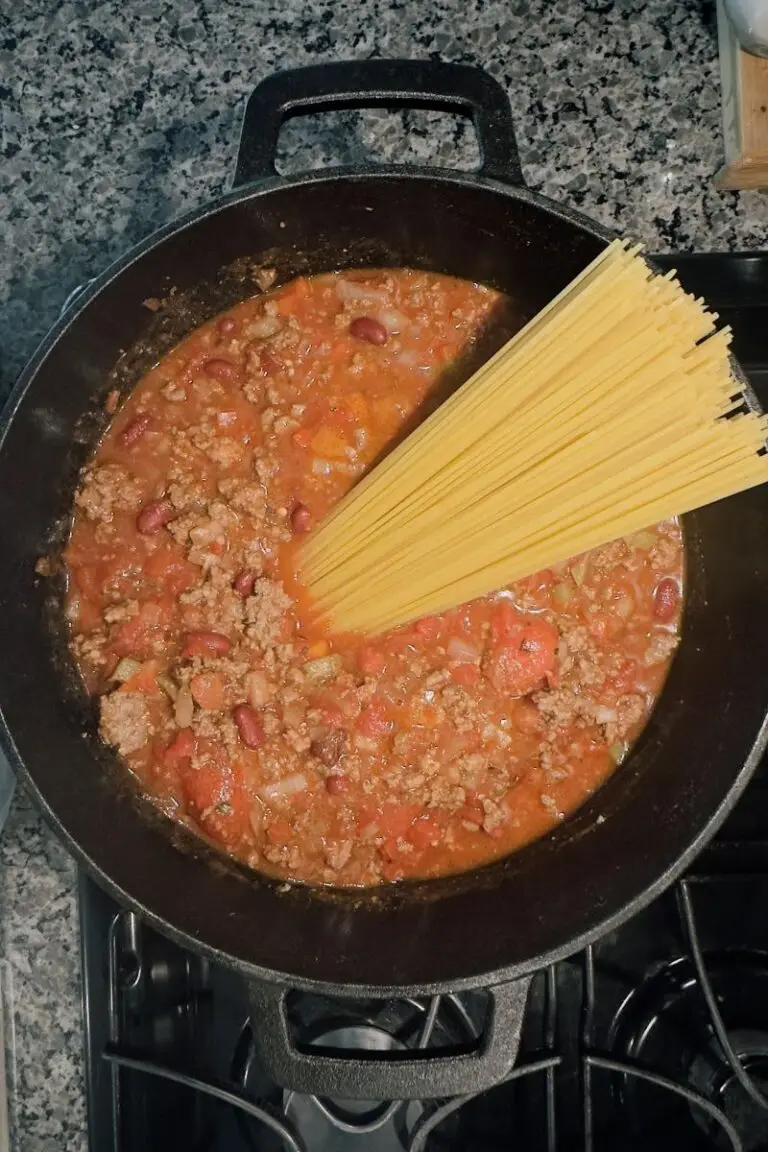
One Pot Midwestern Chili Spaghetti
A hearty, herb-forward chili spaghetti recipe from a 1984 Southern Living publication. Ground beef, onion, garlic, and green pepper simmer with whole tomatoes, tomato sauce, kidney beans, and fresh marjoram and oregano while dry spaghetti cooks directly in the pot, thickening the sauce as it goes. A one-pot Midwestern classic that feeds a crowd.
- Total Time: 1 hour, 5 minutes
- Yield: 12 servings 1x
Ingredients
- 2 pounds ground beef
- 2 medium onions, chopped
- 2 cloves garlic, minced
- 1 green pepper, chopped (or whatever bell pepper color you have on hand)
- 4 (16-ounce) cans whole tomatoes, undrained
- 1 (20-ounce) can tomato sauce
- 1 (15 1/2-ounce) can kidney beans, undrained
- 1 (12-ounce) package spaghetti
- 1/4 cup chopped fresh parsley
- 2 to 3 tablespoons chili powder
- 1 tablespoon minced fresh marjoram (or 1 teaspoon dried whole marjoram, or 1/2 teaspoon dried sage as a substitute)
- 1 tablespoon minced fresh oregano (or 1 teaspoon dried whole oregano)
- 2 teaspoons salt
- 1 teaspoon ground cumin
- 1 teaspoon red pepper
Instructions
- Brown the meat and vegetables: Cook the ground beef, chopped onion, garlic, and bell pepper in a large Dutch oven over medium heat, stirring often to crumble the meat as it browns.
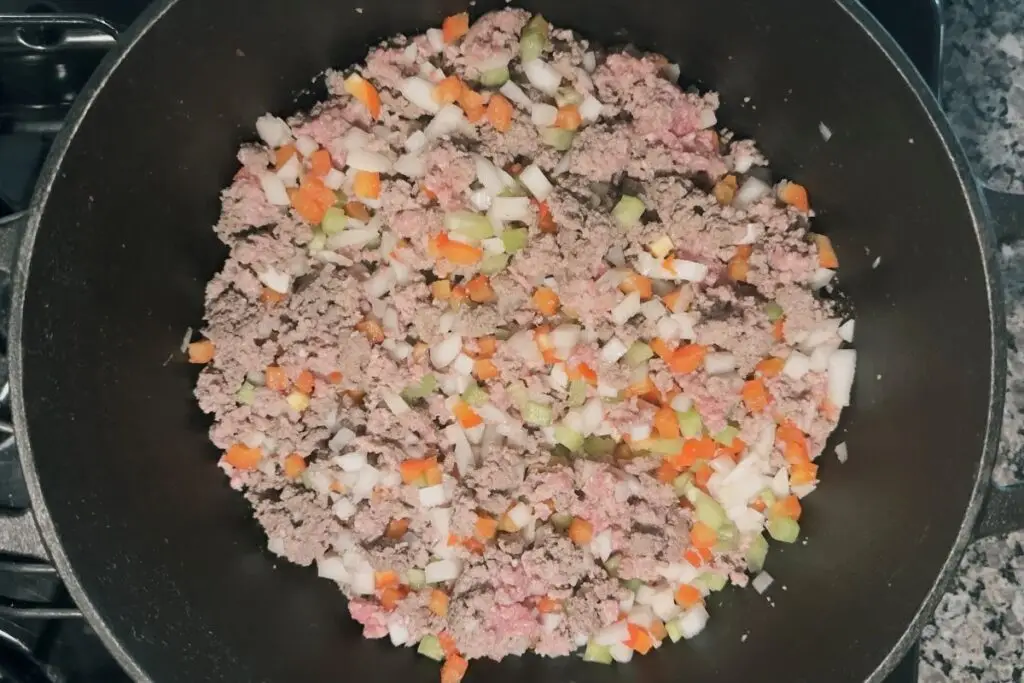

- Drain and reset the pot: Drain or strain the drippings before adding anything else, though there may not be much to pour off if you’re using a leaner ground beef.
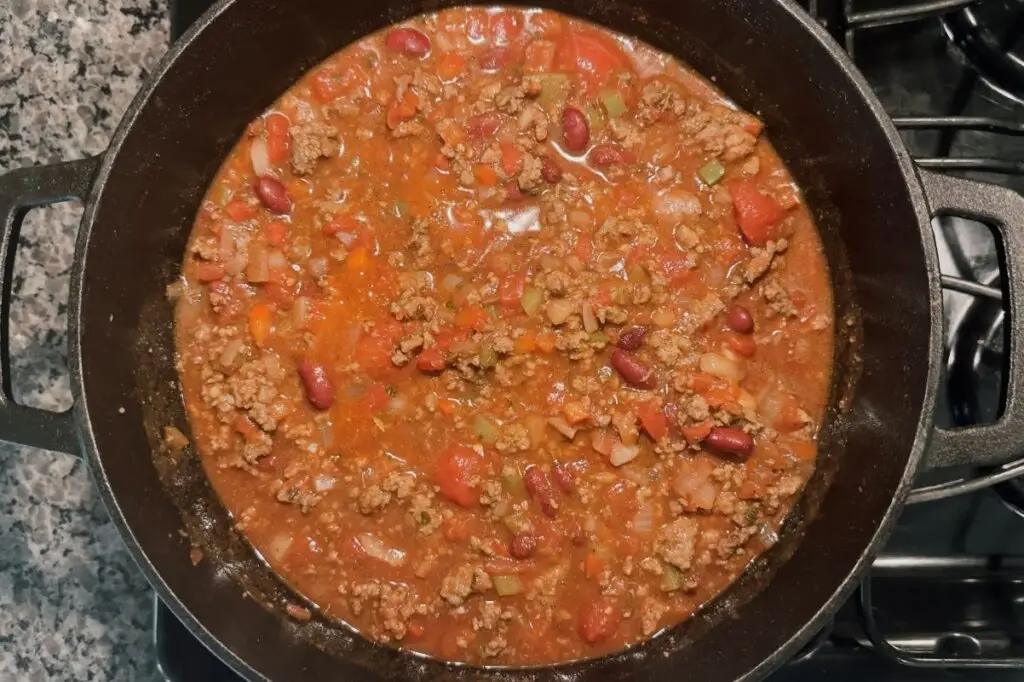
- Build the sauce: Add the tomatoes, tomato sauce, kidney beans, parsley, chili powder, marjoram (or sage), oregano, salt, cumin, and red pepper straight into the pot with the drained meat. Cover, reduce the heat, and simmer for 20 minutes to let the flavors meld together.

- Add the spaghetti: Stand the dry spaghetti upright in the pot, letting it lean into the sauce so it starts to soften. As the noodles go limp over the next few minutes, stir gently to rearrange them down into the chili.
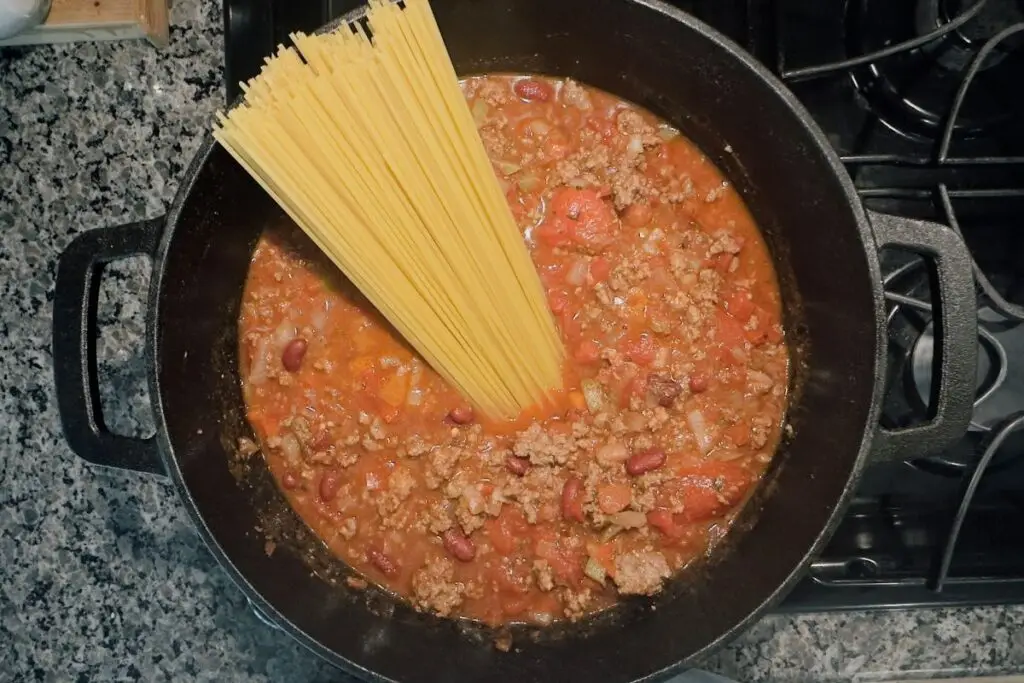
- Simmer low and slow: Simmer for another 15 minutes, or until the noodles reach your desired texture, stirring occasionally so they don’t stick to the bottom of the pot.The sauce should be thick and the noodles tender by the time it’s done. Ladle into individual bowls and serve.
- Prep Time: 20 minutes
- Cook Time: 45 minutes
- Category: Soups & Stews
- Method: Stovetop
- Cuisine: American
Pin This Midwestern Chili Spaghetti Recipe For Later

Back in the Day: Wisconsin, Indiana, and the Cincinnati Chili Rivalry

Ivan Kiradjieff posing in Empress chili in Cincinnati ca. 1925.
Cincinnati Chili Almost Started as a One-Pot Dish Too
Chili with pasta cooked right into the pot is older than most people assume, and Cincinnati doesn't actually own the credit for it. According to a documented history of the Kiradjieff brothers, Macedonian immigrants Tom (Athanas) and John (Ivan) Kiradjieff opened a hot dog stand called the Empress on October 24, 1922, next to a Cincinnati burlesque theater, first serving a Mediterranean-spiced meat sauce as a topping for hot dogs they called "coneys."
Tom later adapted that same sauce into a dish he called "chili spaghetti," and his very first version actually cooked the spaghetti directly in the chili, the same technique this 1984 recipe still uses today.
That method didn't last long in Cincinnati. Customers pushed back, and Tom switched to serving the chili as a topping over separately cooked spaghetti instead, later adding shredded cheese by the same kind of customer request. That shift became the foundation of the now-famous "way" system:
- two-way for spaghetti and chili
- three-way with cheddar cheese
- four-way with onions or beans
- five-way with everything
Wisconsin Beat Cincinnati to the Pot by Nine Years
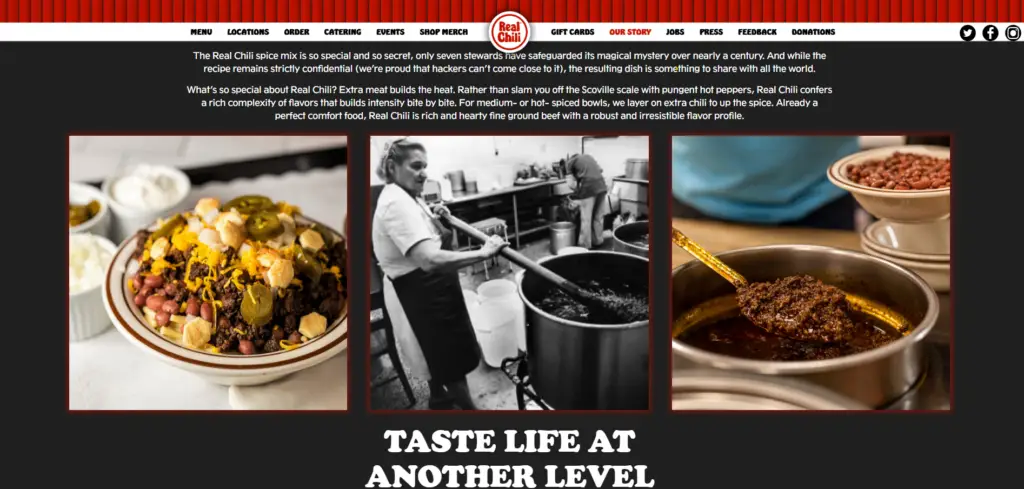
Wisconsin got there first by nine years. Chili John's opened in Green Bay in 1913, already serving a chili similar to a Cincinnati five-way, and Milwaukee Magazine's oral history of the state's chili parlors traces how a former Chili John's employee later opened Real Chili in Milwaukee in 1931 to carry the style forward.
Hoosier Chili May Be the Oldest Claim of All
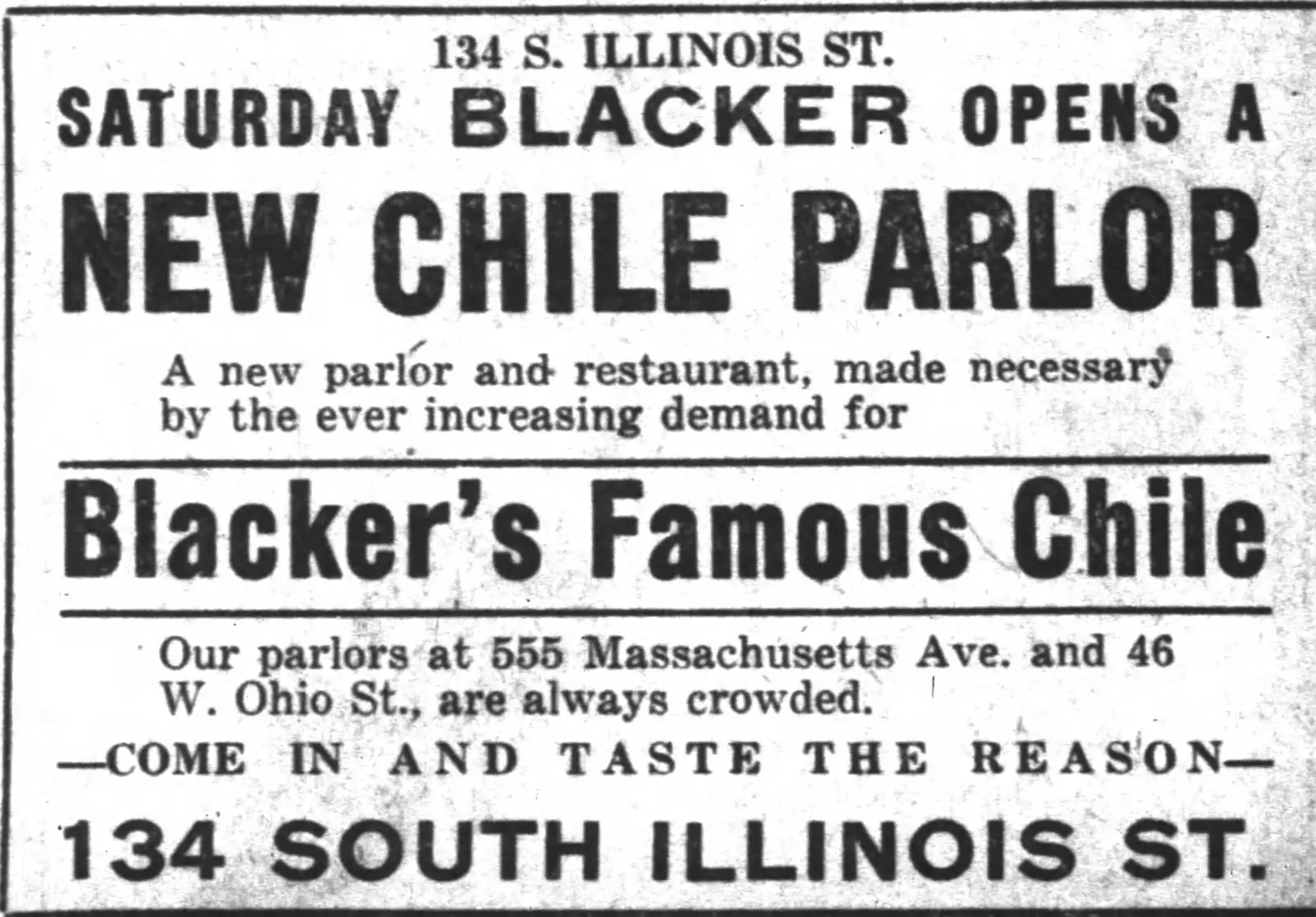
Indianapolis had a thriving "chile parlor" scene well before Cincinnati chili even existed. A 1922 ad in the Indianapolis News announced Blacker's opening a third location, promising crowds so steady at its existing 555 Massachusetts Avenue and 46 West Ohio Street parlors that a new spot at 134 South Illinois Street was "made necessary by the ever increasing demand" for Blacker's Famous Chile.
Either way, that's the tradition my mom grew up with in Indianapolis, and the one this 1984 recipe follows: spaghetti cooked directly in the simmering chili rather than served as a separate bed underneath it, the way Real Chili and other Cincinnati-style restaurants do it today.
Why This Chili Spaghetti Recipe Still Works Today
Dry Spaghetti Thickens the Sauce as It Cooks
Cooking the spaghetti directly in the chili instead of boiling it separately lets the starch release straight into the sauce as the noodles soften. That starch acts as a natural thickener, so the finished chili spaghetti has body without any flour or cornstarch added. It's the same principle behind finishing risotto in its own broth.
A Short Simmer Before the Pasta Melds the Sauce Without Overcooking the Noodles
Twenty minutes on low heat is enough time for the kidney beans to soften into the sauce and for the acidity in the canned tomatoes to mellow out, without leaving the pot on the stove so long that the spaghetti added later turns mushy.
Adding the pasta after that shorter simmer window keeps the noodles at a texture you actually control instead of leaving them to break down for hours.
Fresh Herbs Round Out the Chili Powder
Chili powder alone can taste flat and one-note after a long simmer, since its flavor compounds break down during the simmer. Marjoram and oregano add fresh, slightly peppery top notes that survive the long cook time better than chili powder does on its own. That's what gives this version a rounder, more savory finish than a plain ground-beef chili.
How to Make Perfect Chili Spaghetti
Use a Large Dutch Oven
Choose a 6 to 7 quart Dutch oven with enough surface area for the spaghetti to move freely as it cooks. A crowded, narrow pot traps noodles against each other, and you'll end up with clumps instead of individually coated strands.
Use Whatever Bell Pepper Color You Have
I almost always have half a green pepper and half a red or yellow one leftover in the fridge, so I use whichever combination needs to get used up. The flavor difference is minor since red and yellow peppers just bring a touch more sweetness than green.
Swap in Dried Sage if You're Out of Marjoram
I ran out of marjoram partway through testing and substituted dried sage at half the amount the recipe calls for, since sage has a stronger, more savory punch. It worked well and gave the chili a slightly earthier finish, so don't cancel your cooking plans over one missing herb.
Taste Before Serving and Adjust the Heat
Start at 2 tablespoons of chili powder if you're serving a mixed crowd, then taste the sauce in the last few minutes of simmering. You can always stir in more chili powder or red pepper at that point, but you can't take heat back out once it's in.
Recipe Variations, Serving Ideas, & Storage
Recipe Variations
Tools & Ingredients Worth Having For This Recipe
We don’t run an ad network here. Instead, we quietly use Amazon links for tools that we actually use in our kitchen and make sense for the recipes we share. If you choose to shop through those links, you help keep these vintage recipes alive and off the endangered list, at no extra cost to you.
Cast iron Dutch oven: I reach for my 7-quart cast iron Dutch oven every time I make this, since it holds a steady simmer without me babysitting the heat. A thinner pot I used early on developed hot spots that scorched the sauce along the bottom edge, and cast iron just doesn't do that to me.
Ground beef chopper: Browning two pounds of beef used to mean standing over the pot with a fork, breaking up clumps for what felt like forever. My chopper cuts that time down by half and gives me an even crumble instead of a mix of big chunks and mush.
Silicone spatula: Once the spaghetti starts softening, sauce likes to catch in the corners of my pot, and my silicone spatula is the only thing I trust to scrape it loose without scratching the cast iron. I keep it right on the stove for this recipe specifically.
Garlic press: I never chop garlic by hand, so my press comes out for every recipe that calls for it, including this one. Honestly, it's not even really a shortcut at this point, more just how I get garlic into a pot; if I wanted an actual shortcut, I'd reach for the jarred minced garlic instead.
FoodSaver vacuum sealer: This is my go-to method for freezing my leftovers. I spoon cooled chili spaghetti into vacuum seal bags, run them through my FoodSaver, and stack them flat in the freezer instead of losing shelf space to bulky containers.
Frequently Asked Questions
Chili spaghetti and Cincinnati chili share the same basic idea but differ in technique. Cincinnati chili is typically served with the meat sauce ladled over separately cooked spaghetti, while this style cooks dry noodles directly in the simmering pot so they absorb the sauce as they go.
Elbow macaroni works well in place of spaghetti, and it's actually how many Wisconsin families make this dish. Check for doneness around the ninety-minute mark instead of the full two hours, since smaller pasta shapes cook faster than long spaghetti strands.
Sticking usually happens when the pot is too small or the heat runs a touch high once the spaghetti goes in. A large Dutch oven and a gentle stir every few minutes during that final 15-minute simmer will keep the noodles moving instead of settling to the bottom.
A crock pot works well with one adjustment to the timing. Brown the ground meat and onion mixture on the stovetop first, transfer everything to the crock pot, and add the dry spaghetti only during the last 20 to 30 minutes of cooking on high so it doesn't turn mushy.
Leftover chili spaghetti keeps well in an airtight container in the refrigerator for about four days. Reheating with a bit of tomato sauce or tomato juice helps loosen the noodles back up, since they'll keep absorbing liquid the longer they sit.
A One-Pot Recipe Worth Defending
My mother's Indianapolis kitchen never once questioned whether spaghetti belonged in chili, and neither did my friends in Wisconsin, but Texas taught me fast that this is a genuine regional fault line.
Whichever side of the debate you land on, the payoff here is a thick, herb-flecked pot that feeds a full table from a single Dutch oven. If you make this chili spaghetti recipe tonight, come back and leave a rating and let me know which side of the noodle debate your family falls on.
