I was searching for a new way to use black (ultra Dutch-processed) cocoa powder — something beyond my homemade Hydrox cookies — when a 1927 newspaper clipping caught my eye with a recipe for chocolate cake with black cocoa. Perfect! My mom's birthday was three days away and I had my answer and a reason to try out another vintage recipe.
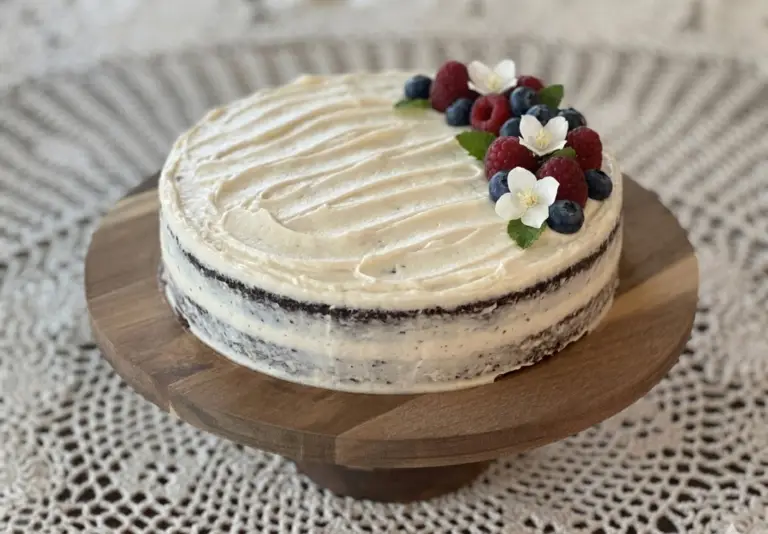
One bowl, thirty minutes in the oven, and you end up with a deeply chocolate, tender cake that needs nothing more than white or chocolate icing to be completely finished.
Click For Quick Navigation
No headings found
Back in the 1927 Kitchen
In 1927, Charles Lindbergh crossed the Atlantic in a single-engine plane, The Jazz Singer became the first talking picture, and American home bakers were publishing all kinds of recipes in their local newspapers. Cocoa had become widely available through brands like Walter Baker and Hershey, replacing the laborious task of grating chocolate bars by hand. The one-bowl method was not a shortcut; it was a sign of a recipe that had been tested and refined until it was exactly right. Does the idea of baking from a single newspaper clipping from nearly 100 years ago feel risky? It shouldn't! This is one that deserves to be remembered.
Why This Black Cocoa Chocolate Cake Still Works Today
Buttermilk Does The Heavy Lifting If you have ever made a chocolate cake that came out pale and dense despite following the recipe, the culprit was probably the milk. Buttermilk brings acidity to the batter, and that acidity does two things: it reacts with the baking soda to create lift, and it reacts with the natural cocoa powder to deepen the chocolate color and flavor. Regular sweet milk does neither. The 1927 baker who wrote this recipe called it "sour milk" because that is what sat on her counter, but full-fat buttermilk from your refrigerator is the same ingredient with a more reliable acidity level and a cleaner, more consistent result.
The Cocoa-to-Flour Ratio Is Doing Serious Work At 3/4 cup cocoa to 1 and 3/4 cups flour, this recipe runs a higher cocoa ratio than most modern single-layer cake recipes. That is intentional. A higher cocoa percentage means more fat (cocoa contains cocoa butter) and more flavor compounds, both of which produce a richer, more deeply chocolate result per bite. Many modern chocolate cake recipes water this ratio down with additional flour for structure; this 1927 recipe trusted the chemistry instead.
Creaming Fat and Sugar First Is Not Just Tradition The instruction to cream the fat and sugar before adding everything else is the one technique step in this recipe that home bakers sometimes skip, but don't be tempted to skip it. Creaming incorporates air into the fat, and those tiny air pockets give the batter lift during baking.
Wax Paper in the Pan Is Not Old-Fashioned — It Is Correct The original recipe specifies lining the pan with waxed paper, and 100 years of baking science has not improved on this instruction. Cocoa-rich batters can stick aggressively, especially in thin layers where there is high surface contact with the pan. Lining with parchment (the modern equivalent) prevents tearing when you lift the cake out and keeps the bottom of the cake intact.
This old fashioned chocolate cake with cocoa and sour milk is adapted from an authentic 1927 newspaper recipe titled “Black Cake.” It comes together in one bowl with no mixer required. The buttermilk reacts with the baking soda to produce a tender, fudgy crumb with deep cocoa flavor. Frost with white or chocolate icing for a completely authentic vintage result.
Total Time:40 Minutes
Yield:10-12 Servings 1x
Ingredients
UnitsScale
1/2cupshortening
1cupgranulated sugar
2 large eggs
1 teaspoon pure vanilla extract
1/8 teaspoon salt
1cupbuttermilk
1/3cupblack cocoa powder
1and 2/3 cups all-purpose flour
1 1/2 teaspoon baking soda
1 teaspoon baking powder
To finish:
White icing or chocolate icing for frosting
Instructions
Bring oven to temp: Preheat your oven to 350°F.
Prepare pan: Line a 9×13 baking pan, or 2 9 inch round pans, or a 9×9 square pan with wax paper or parchment paper. Do not skip this step – the original recipe specifies it, and it is the reason the cake releases cleanly.
Cream fat and sugar: In a large bowl, cream together the shortening and the sugar until light, about 2 minutes by hand or 1 minute with a hand mixer.
Add remaining ingredients: Add the egg, vanilla, salt, buttermilk, cocoa powder, flour, and baking soda all at once to the creamed fat and sugar.
Mix batter: Stir by hand; not with a mixer. The batter will look glossy.
Fill pan: Pour into the prepared pan(s) and spread evenly.
Bake: Bake for 28 to 32 minutes, until the top springs back lightly when pressed and the edges pull away slightly from the sides of the pan. Check at 28 minutes – this cake goes from done to overdone quickly.
Cool before frosting: Cool completely in the pan before frosting with white or chocolate icing.
Cream the Shortening and Sugar Until the Texture Changes Two minutes by hand or one minute with a hand mixer is the target for the creaming step. You are building a fat-sugar base that gives the batter its structure, not just mixing two ingredients together. Stop too early and the batter won't come together properly. You're looking for a mixture that has turned paler and slightly fluffy — a real textural shift from the dense shortening you started with.
Add Everything at Once, Then Stop Once your creamed base is ready, add the eggs, vanilla, salt, buttermilk, black cocoa powder, flour, baking soda, and baking powder all in one addition. Stir by hand with a spatula or a wooden spoon until the batter is uniform and glossy. It will look darker and shinier than any chocolate cake batter you have made from a box or a modern scratch recipe. That appearance is correct.
Set Your Timer for 28 Minutes, Not 30 This cake moves from done to overdone in a flash. Set the timer for 28 minutes and check it there. The top should spring back lightly when you press the center with one finger, and the edges will have pulled away slightly from the sides of the pan. Because black cocoa is deeply dark, color gives you nothing useful as a visual cue. Use the press test and the edge pull exclusively. An instant-read thermometer inserted in the center should read between 200°F and 205°F when the cake is done.
Cool Completely Before Frosting Black cocoa cakes hold heat longer than lighter cakes. The dense, close crumb traps warmth at the center even when the outside feels cool to the touch. Frosting a warm cake means the icing slides, pools at the edges, and never sets cleanly. Give it at least 45 minutes in the pan. An hour is better. If you are using white icing, a completely cool cake also keeps the contrast sharp at the border between the black surface and the white frosting.
The Icing Decision Is Not Arbitrary White icing on a jet-black cake is a visual statement, and the contrast is intentional and striking. A simple powdered sugar glaze, a vanilla buttercream, or a thin white royal icing all work. Chocolate icing, whether a poured ganache or a cooked fudge frosting, deepens the cocoa flavor and suits any occasion that doesn't specifically need to showcase the dark color. The original recipe does not specify, which means this was a baker's preference in 1927, and it can be yours now.
Recipe Variations, Serving Ideas, & Storage
Recipe Variations
Serving Ideas
Make Ahead & Storage
Recipe Variations
Try it with white icing: The original recipe specifies "white or chocolate icing," and the white icing option is worth trying. A simple powdered sugar and milk glaze, or a lightly sweetened whipped cream frosting, lets the deep cocoa flavor stand on its own without competing with additional chocolate. It was a popular combination in the 1920s for a reason.
Add espresso powder to the batter:One teaspoon of instant espresso powder added with the cocoa deepens the chocolate flavor without adding any coffee taste. This is not a vintage technique; its a modern flavor amplifier that works specifically well with natural cocoa powder.
Serving Ideas
This cake is built for casual, unfussy presentation, exactly as it was intended in 1927. Serve it directly from the pan, cut into squares, with a thick layer of simple chocolate buttercream or a loose white powdered sugar icing drizzled over the top. It holds at room temperature well, which made it a natural candidate for potlucks, church socials, and after-school snacks throughout the early 20th century.
For a more dressed-up version, add a small amount of flaky sea salt over the frosted top immediately before serving. The salt contrast makes the cocoa flavor more pronounced and rounds out the sweetness. A dollop of lightly whipped cream on the side keeps things appropriately nostalgic.
This pairs well with black coffee, unsweetened tea, or cold whole milk. If you want to take it a step further, a spoon of Brandied Spiced Whipped Cream over a warm square is completely unreasonable in the best way.
Make Ahead & Storage Instructions
Make-ahead tip:You can prepare the batter up to 30 minutes before baking and hold it at room temperature. Baking soda begins reacting immediately when it contacts acid, so baking within 30 minutes gives you the full benefit of the leavening. Do not mix the batter and refrigerate it overnight.
Room temperature:Wrapped tightly in plastic wrap or stored in an airtight container, this cake keeps at room temperature for up to 3 days. The crumb actually improves on day two — the flavors meld and the texture becomes slightly denser and more fudgy.
Refrigerator:Store frosted cake in the refrigerator for up to 5 days. Bring individual slices to room temperature for 15 minutes before eating — cold cocoa cake loses a noticeable amount of flavor intensity.
Freezer: This cake freezes beautifully unfrosted. Wrap the cooled, unfrosted cake tightly in plastic wrap, then in a layer of aluminum foil, and freeze for up to 3 months. Thaw overnight in the refrigerator, bring to room temperature, and frost fresh.
Frequently Asked Questions
What is black cocoa powder and where do I find it?
Black cocoa is an ultra-dutched cocoa powder that has been heavily alkalized, which strips nearly all of its acidity and produces a dramatically dark color and a smooth, deeply chocolatey flavor without any sharpness or bitterness. It is the cocoa that gives Oreo cookies their near-black color. Most grocery stores do not carry it, but it is widely available online and at specialty baking retailers. King Arthur Baking Company sells a reliable version. Use it one-to-one in place of regular cocoa powder in this recipe for the darkest, most striking result.
What pan size is best for this recipe?
The original recipe specifies a "shallow baking pan," which most closely matches a 9x13-inch pan. This produces a thin, bakery-style sheet cake that is easy to cut into squares. A 9x9-inch pan produces a thicker layer cake with a slightly more substantial crumb. You can also use two 9-inch round pans for a 2-layer, frosted cake.
Can I Make Cupcakes With This Recipe?
This black cocoa cake recipe can easily be made into cupcakes due to its standard batter and forgiving chemistry.
Pan Prep: Line standard 12-cup muffin tins with paper liners. No need for cocoa dusting unless desired for aesthetics.
Batter Division: Yields about 24-28 cupcakes; fill liners ⅔ full (roughly ¼ cup batter each) to allow rise without overflow.
Baking: Reduce time to 18-22 minutes at 350°F; test with a toothpick for clean crumb. Rotate tins midway for even baking.
Can I use oil instead of shortening or butter?
The recipe requires a solid fat for the creaming step. Oil does not cream; it produces a uniformly dense batter without the air incorporation that gives this cake its texture. If you need a substitute, solid coconut oil is the closest oil-based option, but softened butter or shortening produces the best result.
Can this recipe be doubled?
Yes. Double all ingredients and bake in a 9x13-inch pan for a thicker layer, or divide between two 9x13 pans for two standard-thickness cakes. Baking time remains approximately 28 to 32 minutes for the standard thickness; add 8 to 10 minutes for the doubled-in-pan version.
Can I frost this cake with store-bought frosting?
Yes. The original recipe is neutral enough that both white and chocolate store-bought frostings work well. For the most authentic experience, a simple hand-made chocolate buttercream (butter, powdered sugar, cocoa, a splash of milk) or a loose white powdered sugar glaze is worth the five minutes it takes to mix.
How do I know when this cake is done?
The top should spring back lightly when pressed with one finger, and the edges should have just begun to pull away from the sides of the pan. A toothpick inserted in the center should come out with a few moist crumbs but no wet batter. Do not wait for the toothpick to come out completely clean — this cake is meant to be slightly fudgy, and overbaking will dry it out.
Pin This Chocolate Cake With Black Cocoa Recipe For Later
Melissa is the creator of Recipe Rewind, where she preserves culinary history one vintage recipe at a time. With Wisconsin roots and a passion for desserts, she specializes in reviving original recipes like the 1908 Hydrox cookie - honoring the authentic versions before they're overshadowed by modern imitations. Self-taught from age seven with a Bisquick box and her Mamaw's handwritten recipe cards, her culinary passion has grown through international travel and raising four children. Today, she cooks in a truly multi-generational kitchen spanning five generations - from the Silent Generation to Gen Z - where timeless recipes bridge the decades. Melissa adapts vintage recipes for modern home cooks and bakers, believing food connects us all across generations, cultures, and time.




0 comments