
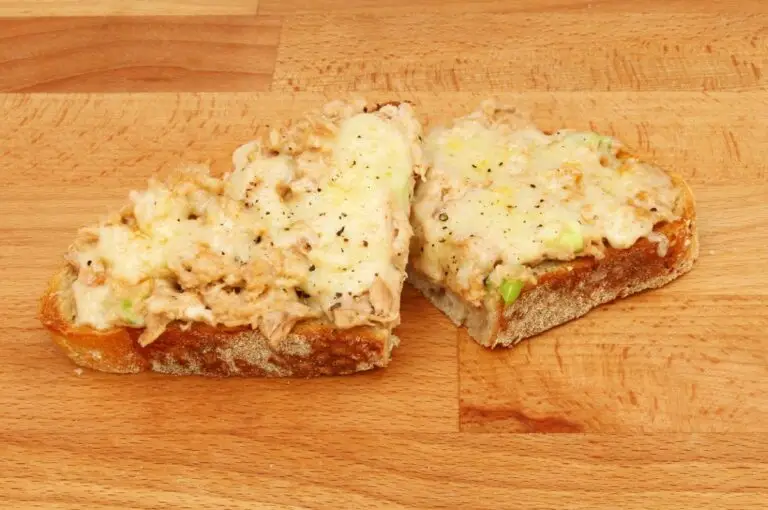
This vintage tuna rarebit recipe turns humble pantry staples into a creamy, cheesy open-faced sandwich in just 15 minutes. The rich cheddar cheese sauce mixed with flaky tuna creates comfort food that actually tastes like something worth making, especially when spooned over toasted rye bread with its distinctive caraway bite.
If you make this with the German Farmer's Bread (Bauernbrot), let us know how it turned out!
The beauty of tuna rarebit is how it transforms a can of tuna into something that feels special enough for company, yet practical enough for a Tuesday night when you're too tired to think. The cheese sauce bubbles and thickens in about five minutes, and the whole thing comes together faster than ordering takeout.
Back in the 1950s Kitchen
When Eisenhower was president and families gathered around console televisions to watch I Love Lucy, tuna rarebit was the kind of recipe homemakers turned to for quick, economical suppers. Canned tuna had become a postwar pantry hero, affordable and shelf-stable in an era before every household had a deep freezer. The cheese sauce technique came straight from traditional Welsh rarebit, but American home cooks made it their own by stretching it with tuna.
This was practical cooking with a touch of sophistication. The double boiler kept the cheese from breaking, and the Worcestershire sauce added that je ne sais quoi that made casseroles and skillet suppers taste restaurant-worthy. Butter cost around 70 cents per pound, and a can of tuna went for about 30 cents, making this a genuinely budget-friendly meal that didn't taste like one.
What Makes This Tuna Rarebit Recipe Work
The Cheese Creates the Foundation
Sharp cheddar cheese is the backbone here, and you want at least 1½ cups of freshly grated cheese for proper body and flavor. Pre-shredded cheese contains anti-caking agents that prevent smooth melting, so take the extra two minutes to grate a block yourself. The cheese melts into the scalded milk to create a sauce that coats the back of a spoon, rich enough to hold its shape on toast without turning into a puddle.
Worcestershire Sauce Adds Depth
One teaspoon of Worcestershire sauce might not sound like much, but it's doing serious work. The fermented anchovies, tamarind, and vinegar create an umami backbone that makes the tuna taste more like tuna, not less. I've made this without it when I ran out once, and the whole dish fell flat, bland in a way that no amount of salt could fix.
The Tomatoes Provide Balance
Fresh tomatoes cut through the richness with acidity and moisture. Dice them small so they integrate into the sauce rather than sitting on top in watery chunks. In the winter when fresh tomatoes taste like nothing, I've used a half cup of drained, diced canned tomatoes with good results. The original recipe calls for 1 to 2 tomatoes, but I stick with one medium tomato for better sauce consistency.
Scalded Milk Prevents Graininess
Heating the milk to scalding (just below boiling, when tiny bubbles form around the edges) helps the cheese melt smoothly without separating into greasy pools. Cold milk added to hot cheese creates temperature shock that leads to grainy, broken sauce. This one step is the difference between creamy and disappointing.
Vintage Tuna Rarebit Recipe
This vintage tuna rarebit recipe features a creamy cheddar cheese sauce studded with flaky tuna and fresh tomatoes, served over toasted rye bread for an easy retro dinner ready in 15 minutes.
- Total Time: 15 minutes
- Yield: 4 servings 1x
Ingredients
- 2 tablespoons butter
- 2 tablespoons all-purpose flour
- 1 medium tomato, diced (about 3/4 cup)
- 1 medium onion, finely chopped
- 1/2 teaspoon salt
- 1 teaspoon Worcestershire sauce
- 1 1/2 cups sharp cheddar cheese, freshly grated
- 1 large egg, beaten
- 1 cup whole milk, scalded
- 1 can (7 oz) tuna, drained and flaked
- 4 slices rye bread, toasted
Instructions
- Make the roux: In a large, heavy skillet over medium-low heat, melt the butter until it foams. Sprinkle in the flour and whisk constantly for 1-2 minutes until the mixture is smooth and just beginning to turn golden. The roux should smell nutty, not raw.
- Add the vegetables: Stir in the diced tomato and chopped onion, breaking up the tomato pieces with your spoon. Add the salt and Worcestershire sauce. Cook for 2-3 minutes, stirring frequently, until the onion softens slightly.
- Incorporate the cheese and egg: Remove the skillet from heat. Add the grated cheddar cheese and beaten egg, stirring quickly to combine. The residual heat will start melting the cheese without scrambling the egg.
- Add the hot milk: Return the skillet to medium-low heat. Slowly pour in the scalded milk while whisking constantly. Continue whisking for 3-4 minutes until the mixture thickens enough to coat the back of a spoon.
- Fold in the tuna: Gently stir in the flaked tuna, taking care not to break it up too much. Let the mixture bubble gently for 1-2 minutes until heated through and slightly thickened.
- Assemble the sandwich: Spoon the hot tuna rarebit generously over toasted rye bread. .
- For a broiled finish: After spooning the tuna mixture onto toast, place the open-faced sandwiches on a baking sheet and broil for 1-2 minutes until the top bubbles and browns in spots. Watch carefully to prevent burning.
Equipment
3 Quart Heavy Bottom Sauce Pan
Buy Now →
KitchenAid Gourmet 4-Sided Stainless Steel Box Grater
Buy Now →- Prep Time: 5 minutes
- Cook Time: 10 minutes
- Category: Sandwiches
- Method: Stovetop, Broiled
- Cuisine: American
How to Make Perfect Tuna Rarebit Recipe
Toast Your Bread Properly
Rye bread is traditional for good reason. The caraway seeds provide an aromatic contrast to the mild tuna and rich cheese sauce. Toast the bread until it's golden and crisp enough to support the weight of the topping without turning soggy, but not so dark that it tastes bitter.
I brush the bread lightly with butter before toasting for extra flavor and a moisture barrier. If you prefer a neutral base, sourdough or a sturdy whole wheat works beautifully.
Control Your Heat
Use medium-low heat when making the cheese sauce, even though it feels painfully slow. High heat will cause the flour to brown before it cooks through, leaving a raw taste, and it will scramble the egg before it has a chance to thicken the sauce.
When you add the scalded milk, whisk constantly for about three minutes until the mixture thickens enough to coat a spoon. Your arm will get a workout, but that's how you know you're doing it right.
Don't Overmix the Tuna
Stir the flaked tuna into the cheese sauce just until it's evenly distributed. Aggressive stirring breaks the tuna into mush and releases extra moisture that thins the sauce. I've learned this the hard way after turning a perfectly good batch into fishy cheese soup. The tuna should stay in recognizable flakes that provide textural contrast to the smooth sauce.
Let the Mixture Bubble
After you've added all the ingredients, let the mixture come to a gentle bubble. This final simmer melds the flavors together and ensures the egg is fully cooked. You'll see the sauce thicken visibly in the last minute or two. If it looks too thick, add a tablespoon of milk. If it's too thin, let it bubble for another minute or two.
Serve Immediately
Tuna rarebit waits for no one. The cheese sauce thickens as it cools, and what was perfect spooning consistency five minutes ago becomes cement-like if you let it sit. Have your toast ready, your table set, and everyone sitting down before you start plating. This is not a make-ahead-and-reheat situation.
Tuna Rarebit Recipe Variations, Serving Ideas, & Storage
Recipe Variations
Frequently Asked Questions
Tuna rarebit is a vintage 1950s recipe that combines a creamy cheddar cheese sauce with canned tuna, served over toasted bread. It's an American adaptation of Welsh rarebit, which is essentially beer-spiked cheese sauce on toast. The tuna version became popular in postwar America as an economical way to stretch a can of tuna into a satisfying meal.
Sharp cheddar provides the best flavor, but you can substitute Gruyère for a more sophisticated taste or American cheese for a milder, kid-friendly version. Avoid mozzarella or other low-moisture cheeses as they don't create the same creamy sauce consistency. A combination of half sharp cheddar and half Monterey Jack works well if you find straight cheddar too strong.
The original 1954 recipe calls for a double boiler to prevent the cheese from breaking, but a heavy-bottomed skillet over medium-low heat works just as well with careful attention. The key is controlling the temperature so the cheese melts gradually rather than seizing up. If you're nervous about scorching, you can absolutely use a double boiler for the same results with less hands-on monitoring.
Yes, you can omit the egg if needed. The sauce won't be quite as thick and rich, but it will still work. Add an extra tablespoon of flour to compensate for the lost thickening power, and cook the mixture an extra minute or two to reach the right consistency. The egg adds richness and helps emulsify the sauce, but it's not structurally essential.
Rye bread with caraway seeds is traditional because its slightly spicy, aromatic flavor contrasts beautifully with the mild tuna and rich cheese. Sourdough, pumpernickel, or thick-cut whole wheat also work well. Whatever bread you choose should be sturdy enough to support a generous portion of sauce without dissolving into mush.
Grainy cheese sauce usually means the heat was too high, causing the proteins to seize and separate. Use medium-low heat and be patient. Another culprit is using pre-shredded cheese with anti-caking additives that prevent smooth melting. Always grate block cheese yourself for the silkiest sauce.
The original 1950s method was to spread buttered toast with the raw tuna-cheese mixture and broil it. This works, but you need to watch it closely because the broiler can burn the top before the mixture cooks through. The stovetop method gives you more control and consistently better results, but the broiled version has nostalgic charm.
Toast the bread until it's quite crisp and golden, not just lightly warmed. Brushing it lightly with melted butter before toasting creates a moisture barrier. Serve immediately after spooning on the hot mixture rather than letting it sit. The bread will soften slightly as it absorbs the sauce, but proper toasting buys you enough time to eat before things get mushy.
You can, but you'll lose the vintage character of the dish. If using fresh tuna, poach or grill it first, then flake it into chunks. The texture will be meatier and firmer than canned tuna, which might actually be an improvement depending on your preference. You'll need about 1 cup of cooked, flaked fresh tuna to replace a 7-ounce can.
Tuna rarebit provides good protein from the tuna, cheese, and egg, plus calcium from the dairy. At 385 calories per serving with 22 grams of fat, it's a moderately rich meal best balanced with vegetables. The sodium is fairly high at 720mg per serving, mostly from the cheese and Worcestershire sauce. You can lighten it by using reduced-fat cheese and milk, though the texture won't be quite as luxurious.
Final Thoughts
This vintage tuna rarebit recipe proves that the best comfort food doesn't need to be complicated. Rich, creamy, and satisfying in a way that feels both nostalgic and completely relevant, it's the kind of meal that makes weeknight cooking feel less like a chore and more like taking care of yourself. The cheese sauce bubbles away in less time than it takes to scroll through delivery apps, and you probably have everything you need already sitting in your pantry and fridge.
Did your family have a go-to quick dinner in the 1950s or 60s that involved canned tuna or cheese sauce? The comment section is made for these stories.
If you make this vintage tuna rarebit recipe, please leave a rating and review! Your feedback helps other readers and helps me know which recipes you want to see more of.


0 comments