
Most people chasing the newest food trend have never understood why a cold, creamy, layered salad built the night before consistently outperforms every complicated dish on the table. The classic 7 layer salad has been proving that point since the 1950s, when it became a fixture at church suppers across the American South and never left.
Crispy bacon, sharp cheddar cheese, hard-boiled eggs, and sweet peas stacked in a large glass bowl — it's the kind of recipe that feeds a crowd, travels well, and comes home empty every single time.
If you're building out a full potluck table, our 1993 Creamy Crab Salad with Pasta Shells is another make-ahead crowd-pleaser that comes together in just 15 minutes of hands-on prep.
Back in the Day: The 1950s Potluck Kitchen
By the mid-1950s, community cookbooks printed by church auxiliaries and women's clubs were the primary way recipes traveled across American neighborhoods. The seven-layer pea salad, as it was originally known, appeared regularly in these spiral-bound volumes from churches across Tennessee, Alabama, and Mississippi, where potluck culture ran deep and feeding a crowd was practically a civic skill.
At the time, a dish that could be assembled the night before was more than convenient; it was genuinely practical. Home refrigerators had become standard by 1950, and cooks were learning to use overnight chilling as a technique rather than just storage.
The pea layer, the creamy dressing spread across the top of the cheese, the tightly sealed bowl waiting in the fridge: all of it was designed around the reality of feeding a group without losing your entire Saturday morning to the kitchen.
The salad traveled north and west through Midwestern church basements and family reunion circuits through the 1960s and 1970s, picking up variations along the way. Miracle Whip stepped in where mayonnaise left off. Bell peppers swapped in for green pepper.
By the 1980s, it had landed in Junior League cookbooks and community collections from coast to coast. Did your family have a version of this on the table? There's a decent chance someone in your circle still makes it, and an even better chance they guard the dressing recipe.
Classic 7-Layer Salad Recipe
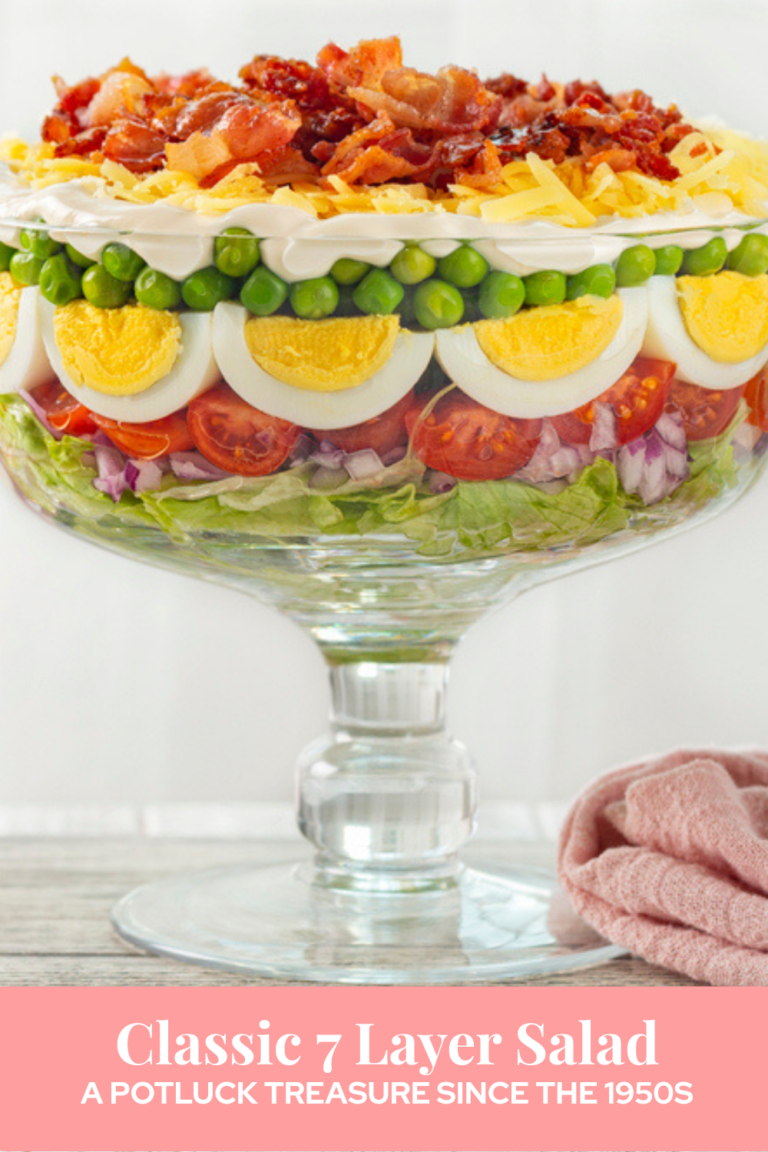
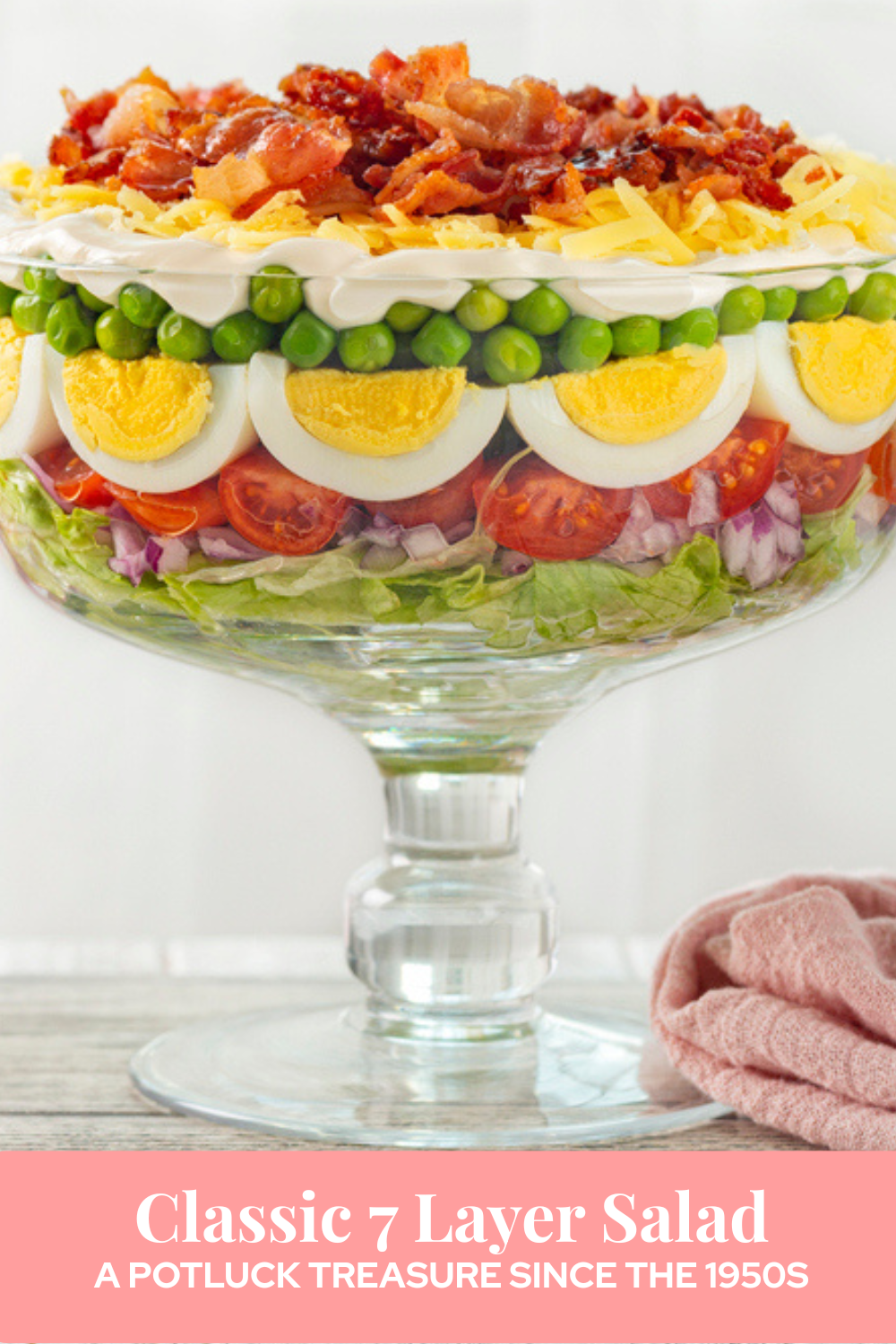
The classic 7 layer salad traces its roots to Southern church potluck culture of the 1950s, where it appeared regularly in community cookbooks under the name “seven-layer pea salad.” Crisp iceberg lettuce forms the base, topped with sweet frozen peas, sliced hard-boiled eggs, red bell pepper, red onion, sharp cheddar cheese, and a sealed mayonnaise dressing layer, finished with crumbled crispy bacon. Built entirely the night before, it’s a make-ahead layered salad designed for large gatherings, with a creamy dressing that seals the layers during overnight chilling so the whole salad arrives at the table vivid, cold, and completely undisturbed.
- Total Time: 8 Hours, 40 Minutes
- Yield: 12 Servings 1x
Ingredients
- 1 large head iceberg lettuce, cored and roughly chopped
- 1/2 medium red onion, sliced
- 1 red pepper, chopped
- 5-6 hard-boiled eggs, peeled and sliced
- 1 1/2 cups frozen peas
- 1 cup sharp cheddar cheese, shredded
- 1/2-1 pound bacon, cooked crispy and crumbled
- 1 cup mayonnaise
- 1-2 tablespoons sugar
- 1-2 teaspoons white vinegar
- 1/4 teaspoon garlic powder
- 1/2 cup grated parmesan cheese
- Salt and pepper to taste
Instructions
- Step 1: Prep your station and cook your components
Hard boil the eggs and cook the bacon before you do anything else. For the eggs, place them in a single layer in a saucepan, cover with cold water by one inch, and bring to a full boil. Remove from heat, cover, and let sit for 10 to 12 minutes. Transfer immediately to an ice bath to stop cooking, then peel and slice.
For the bacon: cook in a skillet over medium heat until genuinely crispy, not just cooked through. Drain on a paper towel and let it cool completely before crumbling. - Step 2: Dry your lettuce completely
Rinse the iceberg lettuce, then spin it thoroughly in a salad spinner. Spread the leaves on paper towels for 5 minutes and blot to release any remaining surface moisture, then chop into bite-sized pieces. You want the lettuce fully dry before it goes into the bowl. - Step 3: Mix the dressing
Combine the mayonnaise, grated Parmesan, sugar, vinegar, and garlic powder in a small bowl. Whisk until smooth. Taste and adjust salt and black pepper to your preference. The dressing should be thick enough to hold its shape when you spread it; if it seems thin, refrigerate it for 15 minutes before using. - Step 4: Build the layers in order
Set your large clear glass bowl or trifle dish on a flat, stable surface. Add each layer in this order, using a light hand so you don’t pack the layers down too firmly:
+ Chopped iceberg lettuce, lightly salted
+ Chopped red bell pepper
+ Frozen peas, added straight from the bag
+ Sliced hard-boiled eggs
+ Thinly sliced red onion (or green onions)
+ Shredded sharp cheddar cheese
Take a moment after the cheese layer to look at the bowl from the side. You want to see distinct, even stripes of color from the outside of the glass. If the layers are mixing together, you’re adding too much at once. Go slower on your next attempt and the visual payoff is significant. - Step 5: Seal with the dressing, then add the bacon
Spoon the creamy dressing over the top of the cheese layer and spread it evenly all the way to the edges of the bowl using the back of a large spoon or an offset spatula. Full edge-to-edge coverage is important; any exposed cheese or vegetable below will lose color and texture overnight. Once the dressing is spread, scatter the crumbled crispy bacon evenly across the top. Press the bacon gently into the dressing surface so it doesn’t shift during refrigeration. - Step 6: Cover and refrigerate overnight
If your trifle bowl has a lid, great! Otherwise, stretch plastic wrap tightly across the top of the bowl, pressing it directly against the surface of the bacon so there’s minimal air contact. Refrigerate for at least 8 hours; overnight gives you the best results.
- Prep Time: 25 Minutes
- Chill Time: 8 Hours
- Cook Time: 15 Minutes
- Category: Lunch, Salads
- Method: Refrigerated
- Cuisine: American
Pin This Classic 7 Layer Salad Recipe For Later
What Makes This Classic 7 Layer Salad Worth Making
Crisp Iceberg Lettuce
Romaine lettuce and spring mix have their moment, but for a layered salad recipe that holds overnight, crisp iceberg lettuce is the structural choice you want. Iceberg contains less water per leaf than romaine, which means the base layer stays firm instead of collapsing into the creamy dressing above it. You'll get clean, distinct veggie layers when you cut into it the next day, rather than a soggy mess that's been sitting in its own liquid since Tuesday night.
The Mayonnaise Dressing Does Something Specific
The creamy dressing in a classic 7 layer salad serves as a seal, not just a topping. Spreading it evenly over the top layer of cheddar cheese creates a barrier that slows the oxidation of the vegetables underneath, which is part of why the whole salad looks so vivid and fresh when you pull it out the next day.
Using full-fat mayonnaise keeps the dressing thick enough to hold that seal. If you swap in a lighter version, the dressing loosens and runs into the layers, which changes both the texture and the presentation.
Frozen Peas, Never Canned
The pea layer is one of the main ingredients that can quietly ruin the whole thing if you use the wrong version. Canned peas are soft and waterlogged, and they'll seep moisture into every layer around them overnight.
Frozen peas thaw to a firm, bright texture that holds its shape and adds a clean sweetness against the savory flavors of the bacon and dressing. Add them directly from frozen; they'll thaw completely during the overnight chill and won't warm up the layers around them in the process.
Why Crispy Bacon and Not Bacon Bits
Pre-packaged bacon bits stay shelf-stable partly because they've been processed to resist moisture absorption, which also means they don't develop the same savory, rendered depth as real bacon cooked crispy.
Crispy bacon crumbled fresh onto the top layer keeps its texture better than you'd expect overnight, and the flavor difference is significant enough that people will notice. Cook your bacon until it's genuinely crisp, drain it on a paper towel, and crumble it just before you add it to the bowl.
Sharp Cheddar Cheese
Mild cheddar cheese disappears flavor-wise against the richness of the mayonnaise dressing and the saltiness of the bacon. Sharp cheddar holds its own. The aged, slightly tangy bite of sharp cheddar creates contrast with the sweet peas and the creamy dressing layer, and it's what keeps each forkful interesting rather than one-note.
Freshly shredded cheddar also melts slightly into the dressing overnight, creating a soft, savory layer that you won't get from pre-shredded bags coated in anti-caking starch.
How to Make a Perfect Classic 7 Layer Salad
Recipe Rewind is an Amazon Associate and earns from qualifying purchases made through our affiliate links. We only recommend kitchen tools and products that coordinate with our vintage recipes and traditional cooking methods. Your purchases help us keep culinary traditions alive.
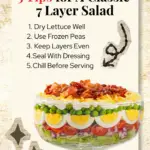
Wet Lettuce Will Ruin The Whole Thing
Excess water on chopped lettuce is the single most common reason a layered salad turns watery at the bottom of the bowl before it's even served.
After rinsing, spin the iceberg thoroughly in a salad spinner, then spread the chopped pieces on a clean kitchen towel for a few minutes to release any remaining surface moisture.
If you've ever had a seven-layer salad that seemed fine when assembled but turned into a soggy pool by the time it hit the dinner table, wet lettuce was the villain.
Worrying about whether your lettuce is dry enough is a completely reasonable concern. A salad spinner with a solid locking lid 🛒 removes the guesswork entirely; it extracts water that towel-patting alone won't catch, which is the difference between crisp iceberg lettuce that holds overnight and a watery base you'll be embarrassed to serve.
Build in a Clear Glass Bowl
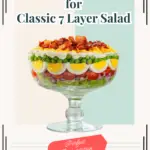
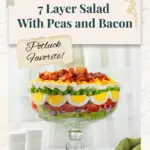
The visual impact of a classic 7 layer salad depends entirely on being able to see the layers from the outside. A trifle bowl or a large glass bowl with straight sides gives you full visibility of every stripe: the green pea layer, the pale egg layer, the golden cheddar, the white dressing. A trifle dish with a footed base also makes it easier to carry to the table and set down without tipping.
If you're making a 7 layer salad for a big gathering and you don't already own a trifle bowl, a large glass serving bowl with straight, deep sides is worth having. A deep glass trifle bowl 🛒 lets you stack the full recipe without the layers compressing, and the straight sides show every stripe of color so clearly that people stop before they've even served themselves to take a photo.
Soak the Red Onion First
Raw red onion has sharp, sulfurous compounds that mellow considerably with a short soak in cold water. Slice your red onion thinly, submerge it in cold water for 10 minutes, then drain and pat dry before layering. You get all the color and gentle bite of red onion without the kind of heat that lingers hours after the meal and still announces itself the next morning. Green onions work as a milder swap if your crowd is sensitive to onion flavor entirely.
The Dressing Layer Goes on Last Before the Bacon
Spreading the creamy dressing directly over the top of the cheese layer, all the way to the edges of the bowl, seals the salad. You want full coverage with no gaps, because any exposed vegetable surface will lose color and texture overnight.
Use the back of a spoon or an offset spatula to push the dressing to the very edges of the glass bowl. Then add your crispy bacon on top of the dressing layer, cover the whole salad with plastic wrap pressed directly against the bacon surface, and refrigerate.
Getting the dressing spread evenly to the edges of a round bowl without disturbing the layers underneath is genuinely easier with an offset spatula. An offset spatula set 🛒 gives you the right angle to spread dressing flush to the bowl's edge without dragging the cheddar layer underneath; it's one of those small tools that solves a specific problem you didn't know had a name.
Chill Overnight for Best Results
You can serve a classic 7 layer salad after 2 to 3 hours of chilling, but the next-day version is genuinely better. Overnight refrigeration softens the vegetables slightly, allows the flavors to blend through the layers, and firms up the dressing into a cohesive top layer that holds its shape when you scoop.
If you're making this for a church potluck or a family gathering, assemble it the night before and your morning will be completely free. That's the whole point of this recipe, and it works exactly as intended.
Recipe Variations, Serving Ideas, & Storage
Recipe Variations
Tools and Ingredients Worth Having
You don't need specialty equipment to pull off a beautiful seven-layer salad, but a few smart tools make the job faster and the presentation sharper.
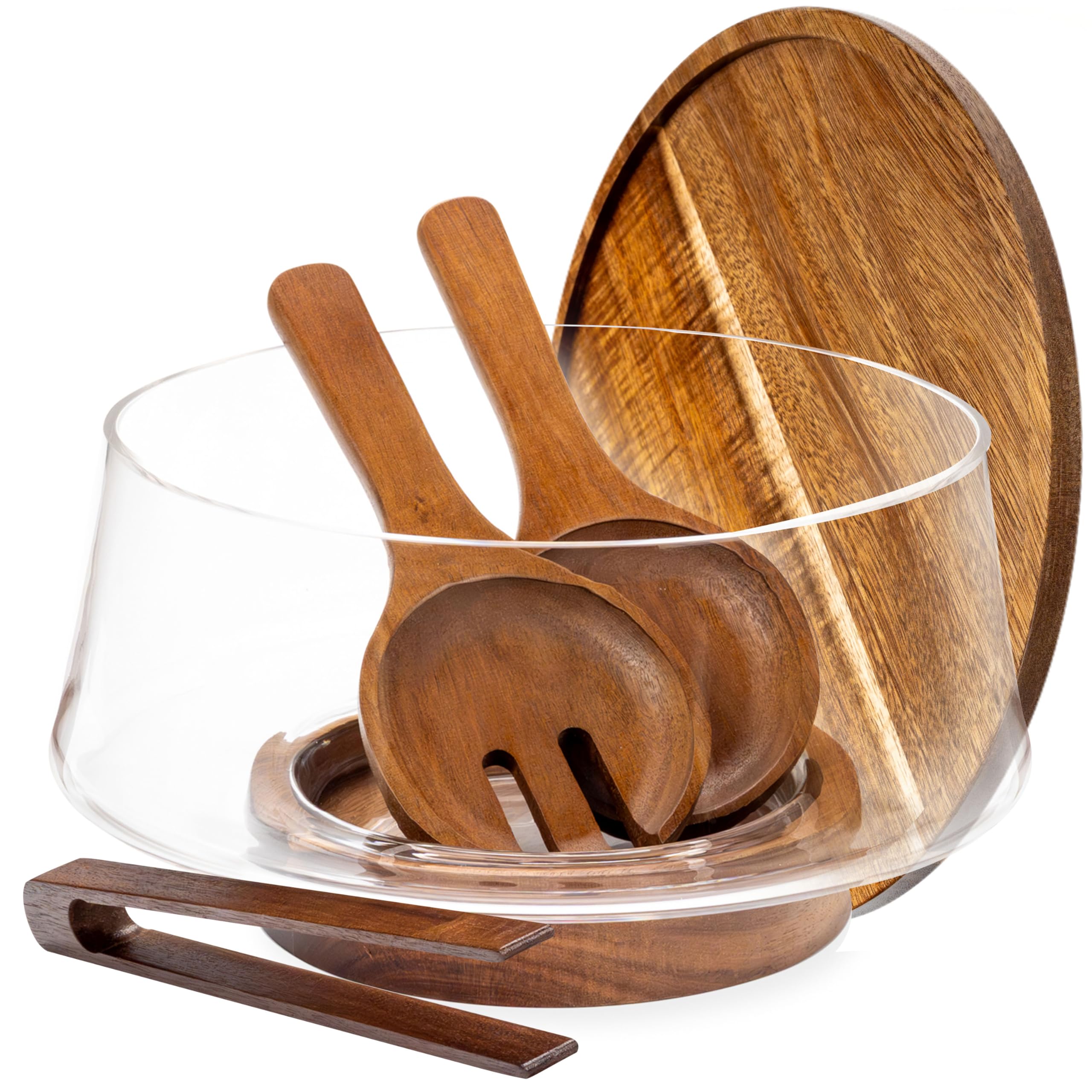
Clear Glass Trifle Bowl or Straight-Sided Glass Bowl
This is the one piece of equipment that actually matters. A clear glass bowl shows off every single layer, turning a simple salad into a centerpiece worth photographing. Look for one that holds at least 3 quarts so you have room to build those gorgeous stripes without cramming.
Salad Spinner
Wet lettuce is the enemy of a crisp base layer. A good salad spinner gets your iceberg bone-dry in seconds, which means no watery puddles at the bottom of your bowl after an hour in the fridge. It's worth the cabinet space.
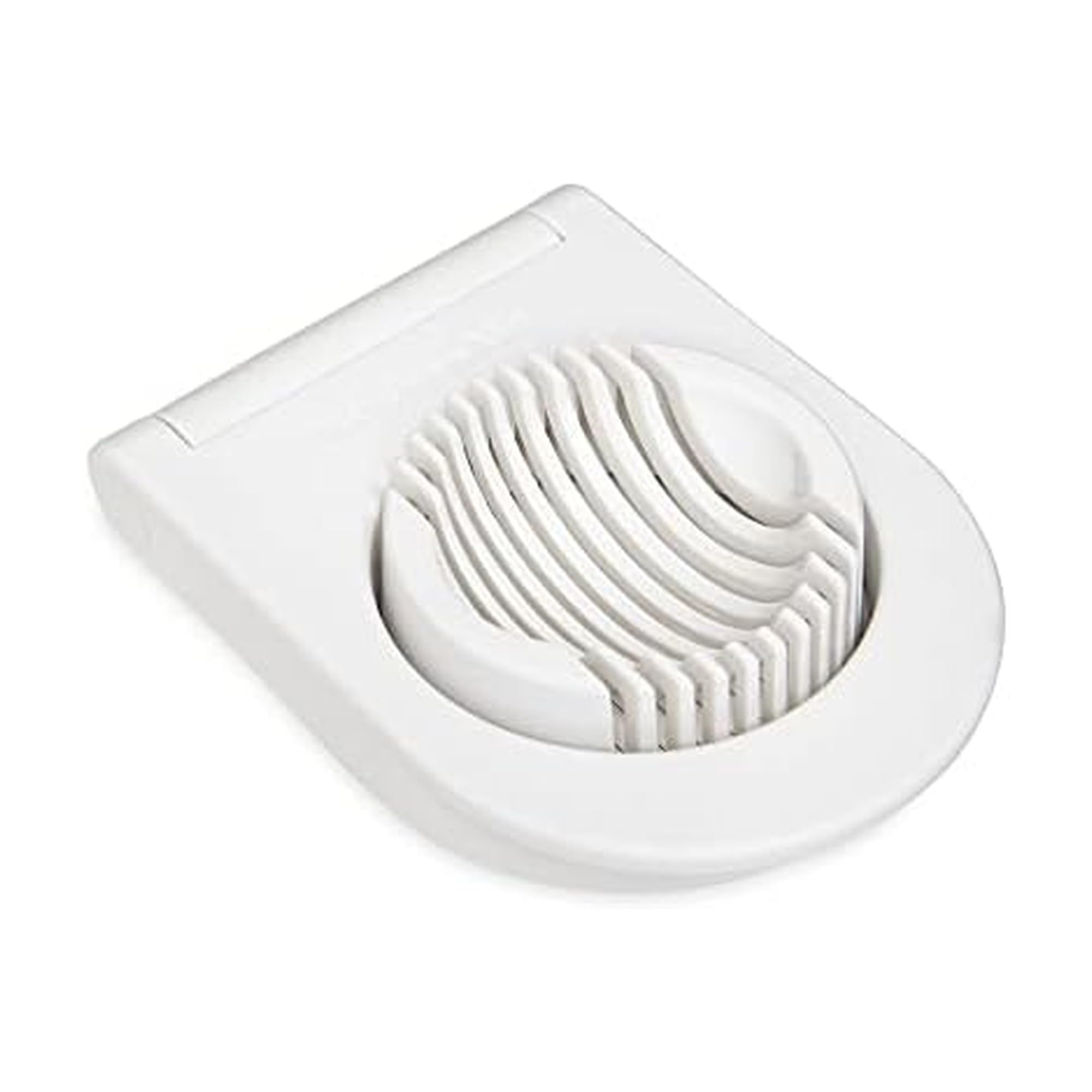
Egg Slicer
If you're slicing six hard-boiled eggs by hand, you'll end up with uneven chunks and yolk crumbles all over the cutting board. An egg slicer gives you perfectly uniform rounds in one press, and it takes up about as much room as a spatula.
Offset Spatula or Rubber Spatula
Spreading that mayo-parmesan dressing evenly all the way to the edges of the bowl is how you seal in freshness and keep the layers from getting soggy. An offset spatula makes it easy to smooth the top without dragging lettuce or peas along with it.




Frequently Asked Questions
The classic seven layers are: iceberg lettuce, red pepper, frozen peas, sliced hard-boiled eggs, red onion, shredded sharp cheddar cheese, and a creamy mayo-parmesan dressing — finished with a crown of crispy crumbled bacon on top.
Every layer pulls its weight, from the crunchy base to that rich, tangy dressing draped over it all. Remember that you are free to make it your own, so be sure to add ingredients you enjoy!
This is one of the rare salads that actually improves overnight. You can assemble it up to 24 hours ahead; just seal it tightly with plastic wrap and refrigerate. The flavors meld, the dressing settles into the layers, and it's perfectly chilled and ready to serve when your guests arrive.
Traditionally, a 7-layer salad is served straight from the bowl without tossing, and that's the whole charm of it. Guests scoop down through the layers, getting a little of everything in each serving. If you prefer it mixed, toss it right before serving, but you'll lose that gorgeous striped presentation.
A clear glass bowl or trifle dish is the gold standard. The whole point of this showstopper is showing off those beautiful, colorful layers: the emerald peas, golden eggs, and snowy dressing. A large straight-sided glass bowl gives everyone at the table the full effect before the first scoop is even taken.
Yes! You can swap the mayo for Greek yogurt or a sour cream blend for a lighter, tangier dressing. Some cooks use half mayo and half sour cream to keep the richness while cutting the heaviness. The dressing still needs to be thick enough to seal the layers, so don't go too thin.
Frozen peas added straight from the bag thaw perfectly in the fridge during the chill time, holding their shape and bright green color far better than canned peas ever could. They also add a subtle natural sweetness that balances the salty bacon and sharp cheddar beautifully. It's one of those old tricks that actually has a reason behind it.
A fully assembled 7-layer salad keeps well for up to 2 days in the fridge, tightly covered. After that, the lettuce starts to break down and the dressing can become watery. For best texture and presentation, plan to serve it within 24 hours of assembling it.
The seven-layer salad was born in the American South in the 1950s, originally called "seven-layer pea salad" in a nod to the sweet peas that anchored every version. It quickly became a church social and family reunion staple before spreading into Midwestern kitchens, where it earned its place as a beloved potluck classic.
Ham is the most natural swap, diced or crumbled, because it gives you the same salty, savory punch without the frying. Turkey bacon works too if you want a lighter option. For a vegetarian version, smoked paprika-roasted chickpeas or sunflower seeds add crunch and a hint of smokiness without the meat.
The biggest key is dry lettuce. Spin or pat it thoroughly before it goes in the bowl, because any moisture will water down the whole base. Spreading the dressing all the way to the edges of the bowl acts as a moisture seal, keeping the layers crisp until you're ready to serve.
The Classic 7 Layer Salad Bowl Always Comes Home Empty
There's a reason this dish has survived the test of time: seven decades of food trends, diet swings, and the entire rise and fall of the gelatin salad era. The classic 7 layer salad solves a real problem: it feeds a crowd, it looks impressive in a big glass bowl at the center of the table, and you make it the night before so your day-of prep is exactly zero. That's not a small thing.
If you come home with an empty trifle bowl and two people asking when you're bringing it again, you've officially joined the club. It keeps getting made because it keeps earning its spot.
If you make this classic 7 layer salad, please leave a rating and review! I'd love to know how yours turned out, whether you kept it traditional or made it your own.



0 comments