

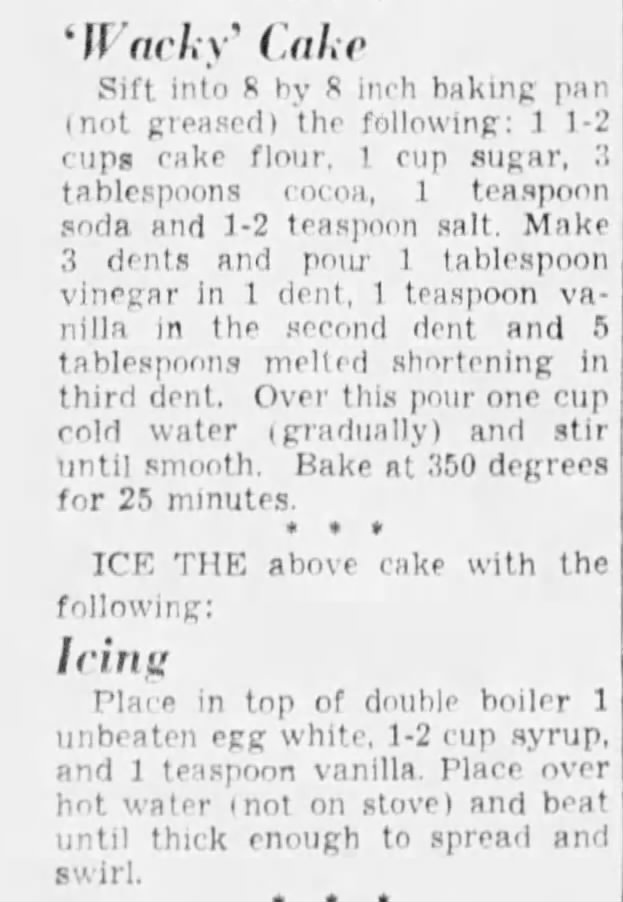
The batter looks wrong. There is genuinely no way that dry cocoa sifted into an ungreased pan, poked with three wells, and doused with cold water makes a cake worth eating. That is exactly what the women of Emmanuel Church in Springfield, Massachusetts thought in May 1940 when someone presented this eggless wacky cake recipe at a meeting. According to the Springfield Evening Union, most of them laughed. Every single one of them left wanting the recipe.
You will have the same experience. The technique is odd. The result is better than it has any right to be.
I found this recipe in the May 1940 edition of the Springfield Evening Union while researching the origin of wacky cake, and it predates most versions food historians point to as originals. What interested me was the editorial framing: the reporter described it as "an overnight sensation" spreading through the neighborhood house by house after one church meeting. That is recipe-as-gossip. That is how food moves when it actually works.
Back in the 1940 Springfield Kitchen
In May 1940, Europe was already at war. France would fall to Germany within weeks of this recipe running in the Springfield Evening Union. Back in Massachusetts, women were gathering in church halls, trading household hints from magazine programs while Lucky Strike sponsored the radio hour and families crowded around their Philco consoles for the evening news.
The Great Depression had only recently lifted, and the memory of scarcity was fresh in every kitchen. Eggs, butter, and milk had been in short supply for a decade, and home bakers had quietly been developing recipes that worked without them out of pure necessity.
A chocolate depression cake that skipped the eggs and the butter was not necessarily a novelty; it was more of a practical tool for any home cook who remembered what it felt like to make do. Butter was still freely available in May 1940, with World War II rationing still two years away, but the reflex toward resourcefulness had not left yet.
The wacky cake recipe, also known in some circles as cockeyed cake or war cake, was exactly the kind of trick that traveled fast. High school home economics classes were teaching similar resourceful techniques during this period, and depression era cake recipes became part of the permanent back pocket of a generation of home bakers who valued what they could make from common ingredients with no spare time to waste. Great aunts and church hall regulars carried these vintage recipes forward not because times stayed hard, but because the cakes were genuinely good.
Eighty-five years later, this easy chocolate cake still makes people do a double-take when you tell them what is in it. The church hall ladies who laughed at the suggestion in 1940 were the same women who sent it across the neighborhood by nightfall. That is not a bad track record for a cake that starts by looking like a mistake.

Why This 1940 Wacky Cake Recipe Actually Works
The Science Behind the Three Wells
Most cake recipes mix everything together in a bowl so the leavening activates gradually and evenly throughout the batter. Wacky cake does something different: the baking soda sits dry in the pan, and the vinegar goes into its own separate well. When you pour the cold water over everything and stir, the acid (vinegar) and base (baking soda) react on contact, creating carbon dioxide bubbles that lift the crumb from the inside. Keeping them separated until the last possible moment gives the reaction maximum lift rather than dissipating it before the batter goes into the oven.
What "Melted Fat" Means in 1940
The original Springfield recipe calls for five tablespoons of "melted fat," which in 1940 meant lard or vegetable shortening in most Massachusetts home kitchens. The 1948 Betty Harvey version printed in the same newspaper names melted shortening specifically. What both share is the use of a neutral, liquid fat that coats the flour proteins without activating gluten development the way creamed butter does. The crumb stays tender and moist for days without the toughness you sometimes get from over-mixed butter cakes.
Dutch-process Cocoa or Natural Cocoa? The Choice is Yours
The 1940 recipe calls for three tablespoons of unsweetened cocoa, which sounds modest. It works because there is no competing dairy fat in the batter — no milk, no butter — so the cocoa flavor comes through clean and direct. Dutch-process cocoa gives you a noticeably rounder, less acidic result. Natural cocoa (the standard supermarket kind) produces a sharper flavor but still works fine. The recipe worked in 1940 with whatever cocoa was in the pantry, and it will work the same way in yours.
No Bowl, No Mixer, No Grease (And Why)
In 1940, a church member presenting household hints was solving real problems: fewer dishes, shorter cleanup time, no batter lost to bowl scraping. Every decision in this recipe was made to make life easier for a home cook working without much equipment or time. The "no grease" instruction is not a quirk — it is chemistry. The thin batter grips the uncoated pan walls as it rises, which helps the cake hold its structure as the crumb sets. A greased pan lets the batter slide rather than climb, and the edges pull away before the center is done.
If the ungreased cake pan instruction gave you pause, you are not alone ... and it turns out Wacky Cake is not the only vintage recipe that insists on it. The science is the same: thin batter needs bare pan walls to climb as it rises, which is how the structure sets evenly from edge to center. This classic 1950s lemon sponge cake uses the same ungreased-pan technique with completely different results: bright, citrusy, and just as surprising for how little effort it asks of you.
Products I Use to Make Chocolate Wacky Cake
Recipe Rewind is an Amazon Associate and earns from qualifying purchases made through our affiliate links. We only recommend kitchen tools and products that coordinate with our vintage recipes and traditional cooking methods. Your purchases help us keep culinary traditions alive.


1940 Wacky Cake Recipe
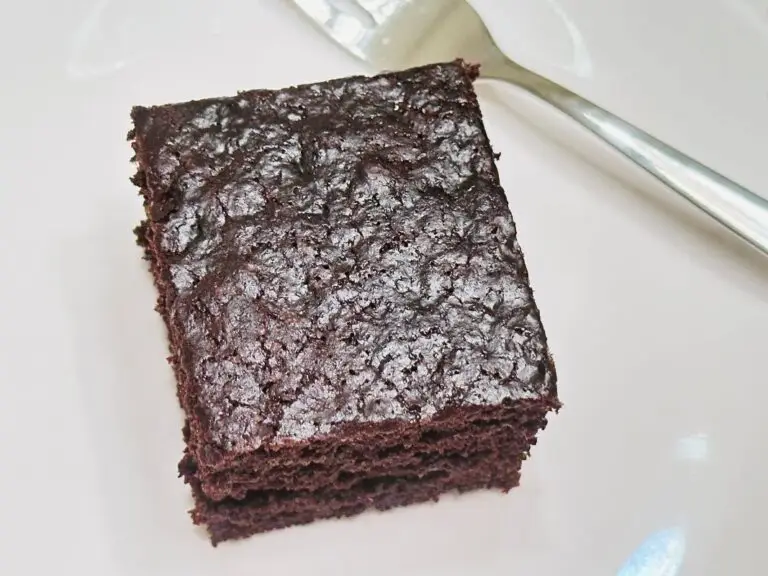
This 1940 eggless wacky cake, sourced from the Springfield Evening Union, is one of the earliest documented versions of the Depression-era classic. Made in one ungreased pan with eight pantry staples – no eggs, no butter, no bowl needed. The crumb is moist and chocolatey, with a delicate texture that surprises people who expect something dense. It has been creating converts since before World War II.
- Total Time: 50 Minutes
- Yield: 9 Squares 1x
Ingredients
- 1 1/2 cups all-purpose flour
- 1 cup granulated sugar
- 3 tablespoons unsweetened cocoa powder
- 1 teaspoon baking soda
- 1/2 teaspoon salt
- 1 tablespoon white vinegar
- 5 tablespoons neutral vegetable oil or melted shortening
- 1 teaspoon pure vanilla extract
- 1 cup cold water
Instructions
- Preheat oven: Preheat your oven to 350°F. Do not grease the 8×8 pan.
- Sift dry ingredients: Sift the flour, sugar, cocoa powder, baking soda, and salt directly into an ungreased 8×8 inch baking pan. Stir with a fork until the dry ingredients are evenly combined.
- Smooth and level: Smooth the dry mixture into an even layer across the bottom of the pan.
- Make three wells: Using your finger or the back of a spoon, press three wells into the dry ingredients.
- Add vinegar: Pour 1 tablespoon white vinegar into the first well.
- Add oil: Pour 5 tablespoons vegetable oil (or melted shortening) into the second well.
- Add vanilla: Pour 1 teaspoon vanilla extract into the third well.
- Pour water over batter: Gradually pour 1 cup cold water over the entire surface.
- Mix batter: Stir immediately with a fork until the batter is smooth. Work quickly – the baking soda and vinegar react on contact, and you want that lift in the oven, not in the pan.
- Bake: Bake for 34 to 40 minutes, until the center springs back when gently pressed and a toothpick inserted in the center comes out with a few dry crumbs.
- Let cool: Cool in the pan before slicing.
- Prep Time: 10 Minutes
- Cook Time: 34 - 40 Minutes
- Category: Dessert
- Method: Baking
- Cuisine: American
How to Make a Perfect Wacky Cake
Use the Right Cake Pan
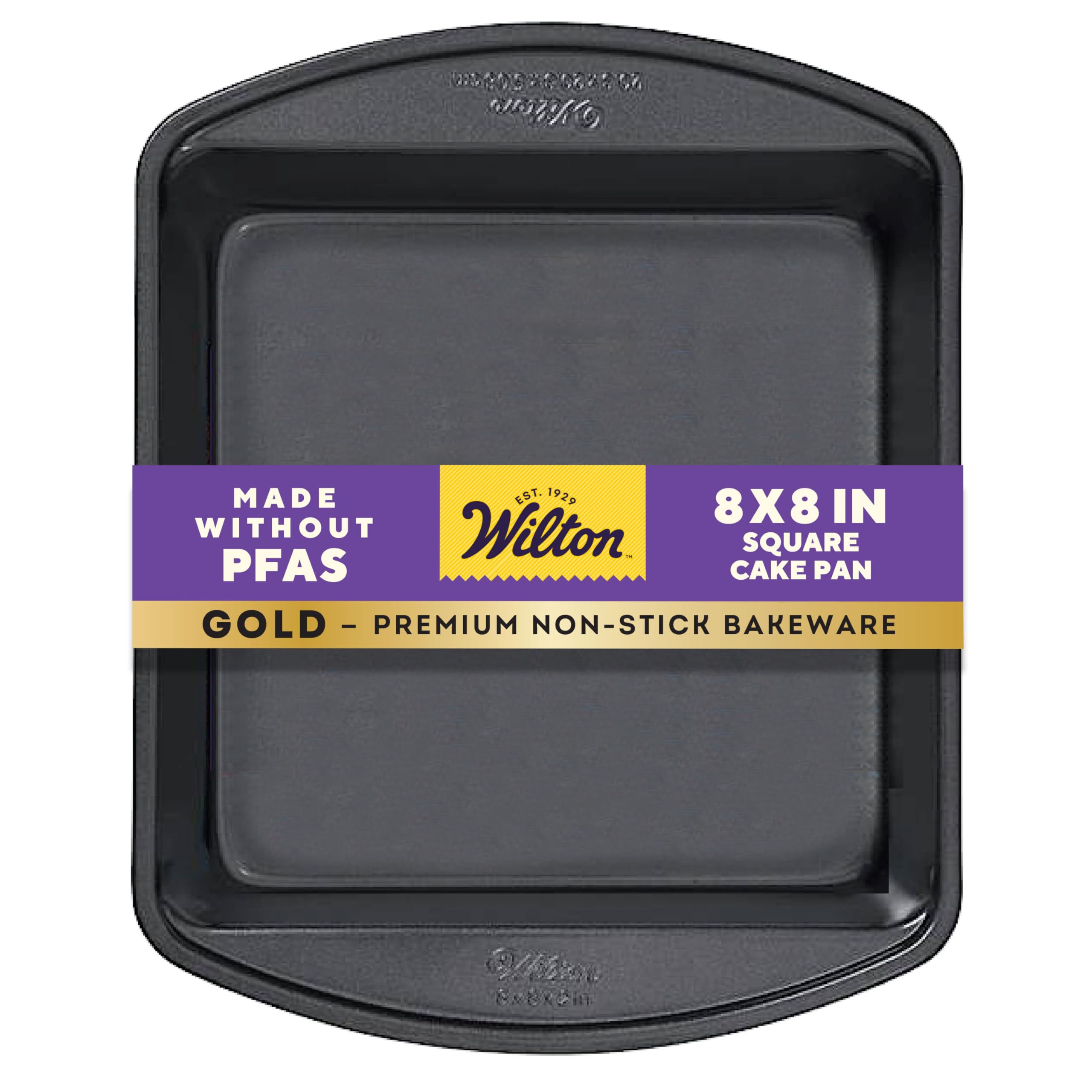
The 1940 recipe doesn't specify a pan size, but the 1948 Betty Harvey companion version confirms an 8x8 inch ungreased pan. This is not arbitrary: too large a pan spreads the thin batter into a layer that dries out before the center sets. Too small and the center stays wet. Uneven heat in a dark nonstick pan pushes the outer edges to done while the middle stays underbaked. Light-colored aluminum distributes heat the way cast iron did in 1940 kitchens, steadily and without hot spots. A heavy-gauge 8x8 aluminum baking pan is the one tool that ensures this cake comes out even from corner to corner — and it is the right choice for any single-layer vintage cake recipe you make.
Sift. Actually Sift.
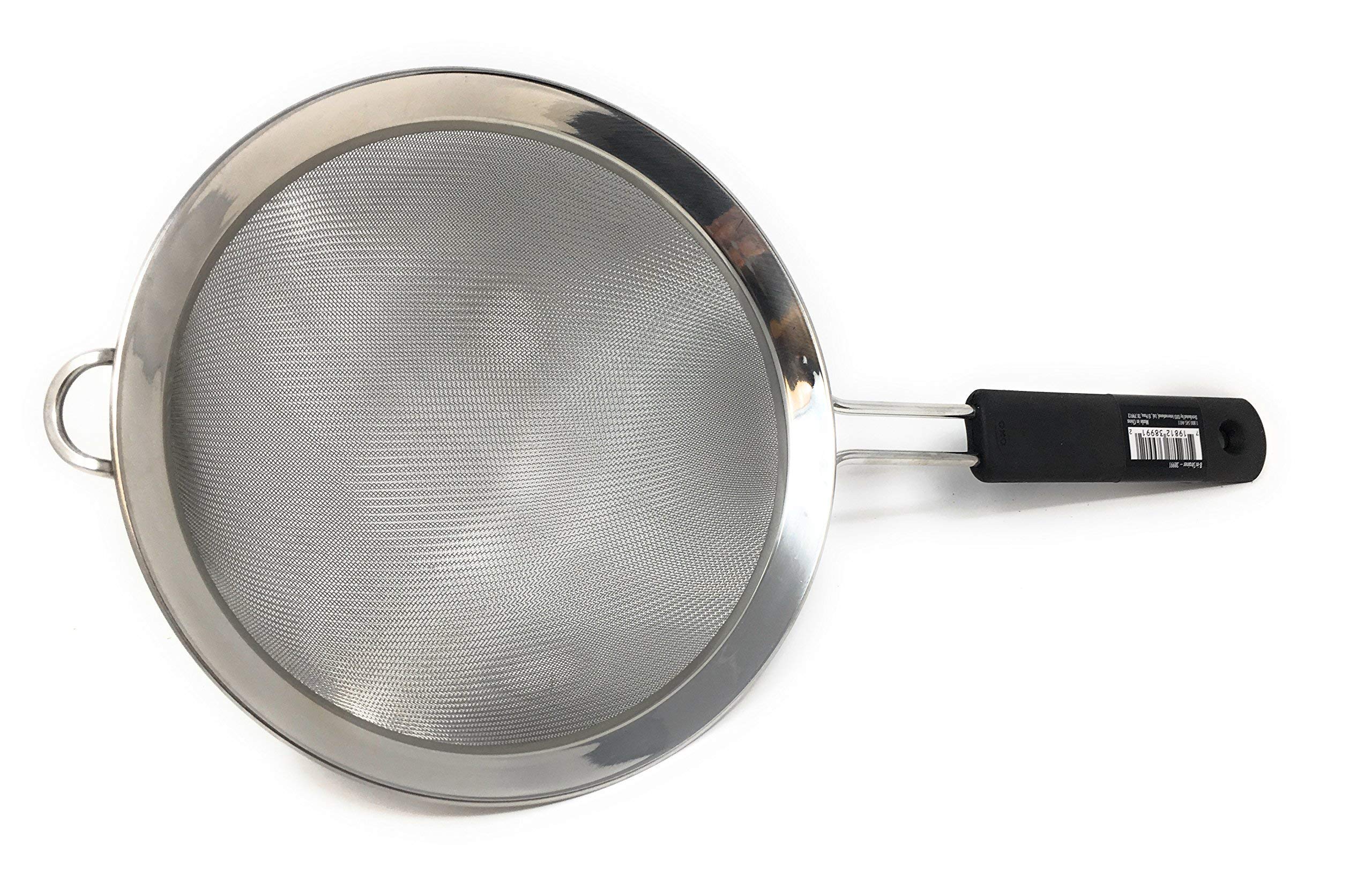
The dry ingredients in this recipe need to be evenly combined before the liquid touches them. Lumps of undissolved cocoa or clumped baking soda mean uneven leavening and bitter pockets in the finished cake. Sifting was standard practice in 1940, and it still matters here. You can whisk with a fork instead, but it takes longer to break up cocoa clusters. A fine mesh stainless sifter takes under a minute for this job and delivers a noticeably finer, more uniform crumb — and it earns its drawer space for any recipe that calls for sifted flour.
Time Your Mix After the Wells
Once the three wells are poured, add the cold water gradually and stir immediately. The vinegar and baking soda reaction begins on contact. The longer you wait after adding the water, the more leavening power dissipates in the pan before the batter goes into the oven. Mix until the batter is smooth — not a stroke more — and move it straight to the preheated oven. This is the one step in this recipe where speed matters.
The 34-to-40-Minute Window
The 1940 recipe gives a notably wide baking range. In 1940, home oven temperatures were less calibrated than modern ovens, and home cooks knew to check by feel rather than clock. Start checking at 32 minutes by pressing the center gently with a finger — it should spring back. A toothpick inserted in the center should come out with a few dry crumbs, not wet batter. Pull the cake slightly early rather than late. This crumb dries out faster from overbaking than most, and there is no egg protein to keep it moist once the structure over-sets. I set my timer for 34 minutes and a toothpick came out perfectly clean.
Wacky Cake Recipe Variations, Serving Ideas, & Storage
Recipe Variations
Frequently Asked Questions
The method. Dry ingredients go into an ungreased pan, three wells hold the wet ingredients separately, and cold water brings everything together. There is no bowl, no mixer, no eggs. In 1940, watching someone make this at a women's program meeting was apparently enough to produce genuine laughter - and then genuine converts.
Yes. The 1940 original uses plain flour, and all-purpose flour produces a good result. Cake flour creates a marginally more tender crumb, but the recipe does not require it and was not written for it.
Vinegar is the acid that activates the baking soda. When the two meet in liquid, they produce carbon dioxide bubbles that leaven the cake without eggs. It is clean chemistry that Depression-era home cooks figured out from necessity.
Yes. White vinegar is traditional and flavorless, but apple cider vinegar works without affecting the final taste.
It is lighter, with a more delicate crumb and a less intense cocoa flavor than a modern layer cake. People expecting a dense fudge-style cake are sometimes caught off guard. People who grew up eating it usually consider it the better version.
Double all ingredients and bake in an ungreased 9x13 pan at 350°F for 38 to 45 minutes, checking early with the springback test.
Press the center gently — it should spring back. A toothpick should come out with a few dry crumbs. The 1940 recipe specifies 34 to 40 minutes; start checking at 32.
As written, yes. No eggs, no milk, no butter. Confirm your cocoa and vanilla are vegan-certified if that matters for your needs.
Yes. The cooked egg-white icing in the 1948 companion recipe firms up overnight and holds well. Ganache also sets cleanly at room temperature and holds its texture through the next day.
Pin This Vintage Wacky Cake Recipe For Later
86 Years. One Pan. Your Move.
This recipe spent 86 years in a newspaper archive. Now it is in your kitchen, exactly the way it was presented at Emmanuel Church in Springfield in 1940. Did your family make a version of this cake growing up? Did you call it Wacky Cake, Crazy Cake, or something else entirely? Leave a comment and a rating below.
Update from my own kitchen: I made this with black ultra dutched processed cocoa, and honestly, I wasn't prepared for how good it turned out. We kept the cake in a covered Rubbermaid TakeAlong (nothing fancy) and it sat on the counter for five days before we finally finished it. Still moist on the last slice! If you've ever had a homemade chocolate cake turn into a dry brick by day two, this one is going to surprise you. I will definitely keep this versatile recipe in rotation. Hope you like it just as much as we did!