

Pan dulce from a Mexican bakery hits differently than almost any other bread, and conchas are the reason most people walk in the door. A traditional conchas recipe built on bread flour, whole milk, butter, and a hand-scored sugar paste topping produces the popular Mexican sweet bread that has anchored panadería cases across cities in Mexico and the United States for generations.
Once you understand how the dough is supposed to feel and why the topping behaves the way it does, making conchas at home goes from intimidating to genuinely satisfying.
Most home bakers who struggle with a concha recipe are fighting the dough instead of trusting it. Enriched doughs are sticky by nature, and adding extra cups of flour to fix that stickiness is exactly what produces a dense, dry final product instead of the light, pillowy crumb you are after.
Back in the Day: Pan Dulce and the Panadería Tradition
Pan dulce in Mexico is a daily ritual, and the panadería is where that ritual lives. Mexican bakeries have operated as neighborhood anchors since the 19th century, when European baking influences merged with local ingredients and tastes to create a distinctly Mexican bread culture. By the mid-20th century, panadería cases were stacked with dozens of shapes and flavors, and the concha sat at the top as the most recognized and most loved of all of them.
The concha gets its name from its topping, which is scored to look like the ridged surface of a conch shell. In Mexico City and across the country, bakers have been pressing that pattern by hand or with metal stamps for generations. The bread itself is an enriched dough, meaning fat, eggs, and sugar are worked into the base, which gives it a richer, softer crumb than a lean bread like a baguette or sourdough loaves. That richness is the whole point. Conchas are a morning bread, meant to be eaten fresh and warm alongside a cup of coffee or a mug of hot chocolate.
Mexican bakeries in cities like Los Angeles carried that tradition into the United States as Mexican communities built new roots, and places like Comadre Panadería in Los Angeles have kept that standard alive with intention. What makes the concha endure across every decade and every geography is that the process has barely changed. The same enriched dough, the same sugar paste, the same shell scoring. Tradition held on purpose.
Try This Traditional Conchas Recipe for Cinco de Mayo
Conchas are one of the most recognizable and genuinely beloved foods in Mexican food culture, which makes them a natural addition to any Cinco de Mayo spread. A batch of twelve fills the kitchen with the smell of warm vanilla and butter while they bake, and they disappear fast once they hit the table.
For a festive presentation, divide the sugar paste topping into three portions and tint two of them with food coloring in red and green alongside the classic white, then arrange the baked conchas on a large tray by color.
Serve them warm alongside a pot of homemade Mexican hot chocolate for the most traditional Mexican morning pairing you can put on a table. The rich, spiced chocolate against the sweet vanilla bread is the same combination found at panaderías across Mexico, and it works just as well in a home kitchen on a holiday morning.
What Makes a Traditional Conchas Recipe Work
Bread Flour Over All-Purpose Flour
Bread flour has a higher protein content than all-purpose flour, typically around 12–14%, which develops stronger gluten when the dough is kneaded. That gluten structure is what traps the gas produced by yeast, giving conchas their open, airy crumb rather than a tight, dense one.
All-purpose flour will produce a workable dough, but the texture of the final product will be noticeably softer and less structured. If you have access to bread flour, use it.
Room Temperature Butter and Eggs
Cold butter does not incorporate into enriched dough. It breaks into chunks and creates an uneven texture in the crumb. Cold eggs can slow yeast activity and affect how the dough comes together.
Pull both from the refrigerator at least one hour before you start. If you forget, place the eggs in a bowl of warm water for 10 minutes and leave the butter out cut into small pieces so it softens faster.
Vanilla Bean Paste in the Sugar Paste Topping
Vanilla extract works fine in the topping, but vanilla bean paste adds visible specks and a deeper, more complex vanilla flavor that makes a difference in the finished concha. The topping is simple enough that quality ingredients show. If you have vanilla bean paste on hand, use it here.
The Sugar Paste Consistency
The sugar paste topping should feel like firm but pliable clay. If it crumbles when you try to flatten it, the shortening did not fully incorporate. Work it with your hands until it smooths out. If it is too soft or greasy to hold its shape, refrigerate it for 10 minutes before flattening. Getting the topping to the right consistency is genuinely the fun part of the whole process.
Whole Milk Over Other Dairy
Whole milk adds fat and richness to the dough that lower-fat milks do not replicate well. The fat content contributes to the soft, tender crumb that makes a good concha worth eating. Warm the milk to around 110°F before adding it to the yeast. Too hot and you risk killing the yeast before it activates. Too cold and the dough will take much longer to come together.
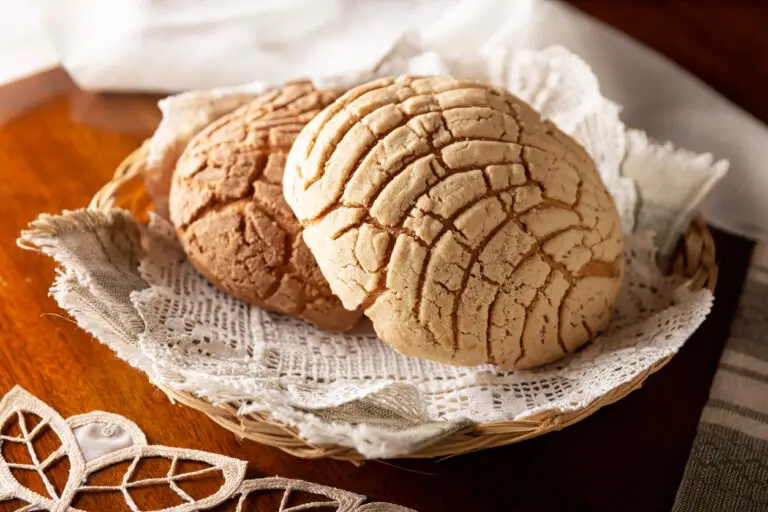
Traditional Conchas Recipe
Soft Mexican sweet bread with a crunchy vanilla sugar topping. This traditional conchas recipe creates bakery-style pan dulce with a tender, buttery crumb and the distinctive shell pattern. Perfect for Sunday breakfast with hot chocolate or coffee.
- Total Time: 3 hours 20 minutes
- Yield: 12 conchas 1x
Ingredients
- 4 cups bread flour, plus extra for kneading
- 1 tablespoon instant yeast
- 3/4 cup warm whole milk (110°F)
- 1/2 cup sugar
- 3 eggs, room temperature
- 8 tablespoons room temperature butter (1 stick)
- 2 tablespoons vanilla extract
- 1 1/2 cups all-purpose flour
- 2 cups powdered sugar
- 1 1/2 cups vegetable shortening
- Red food coloring and cocoa powder (optional)
Instructions
- Combine dough ingredients: In a large mixing bowl or stand mixer, slowly incorporate bread flour, yeast, warm milk, and sugar until combined.
- Add butter, eggs, and vanilla: Add room temperature butter one tablespoon at a time, then eggs, then vanilla. Mix until fully incorporated.
- Knead in mixer: Knead in mixer for 7 minutes on medium speed (or by hand for 15-20 minutes). Add warm milk if dough is too tough. The dough should be soft and slightly sticky but pull away from bowl sides.
- Knead by hand: Knead by hand for another 15-20 minutes until elastic and smooth. The dough should pass the windowpane test.
- First rise: Place dough in a buttered bowl, cover, and let rest in a warm dark place for 2 hours until doubled in size.
- Make the topping: While dough rises, make the topping: combine all topping ingredients until smooth. Divide topping into 12 equal portions and roll into balls. Set aside.
- Divide and shape dough: Remove air from risen dough and divide into 12 equal pieces. Roll each into a smooth ball.
- Prepare dough balls: Place dough balls on a parchment-lined baking sheet. Lightly grease the top of each ball with butter or shortening.
- Apply topping discs: Flatten each topping ball between your palms or using plastic wrap (like making tortillas) into a thin disc. Place on top of each dough ball and press gently.
- Score the shells: Use a concha cutter or knife to score the shell pattern designs on each topping.
- Second rise: Cover and let rest again for 30 minutes in a warm place.
- Bring Oven to Temp: Preheat oven to 325°F.
- Bake: Bake for 18-20 minutes or until bottoms are golden brown. The tops will remain light colored.
- Cool and serve: Remove from oven and let cool on a wire rack for at least 15 minutes before serving.
Equipment

KitchenAid 9x13in Nonstick Aluminized Steel Baking Sheet
Buy Now →
Stainless Steel Concha Cutter Made in Mexico
Buy Now →
Cuisinart 5.5 Quart Stand Mixer
Buy Now →- Prep Time: 30 minutes
- Cook Time: 20 minutes
- Category: Bread, Breakfast
- Method: Baked
- Cuisine: Mexican
How to Make This Traditional Conchas Recipe at Home
Do Not Add Extra Flour When the Dough Feels Sticky
Sticky dough is correct dough in an enriched bread recipe. The butter and eggs create a soft, tacky texture that is supposed to cling slightly to your hands and the sides of the bowl. Adding extra cups of flour to fix that stickiness produces a stiff dough that bakes up dense and dry.
Trust the process. If the dough is sticking to the dough hook but slowly pulling away from the bowl sides, it is doing exactly what it should.
Give the First Rise Enough Time
Two hours in a warm place is the target for the first rise, and cutting it short will cost you in the final crumb. The dough should be clearly doubled before you move on to shaping. A warm area like an oven with just the light on, or a spot near a warm appliance, works well. Cooler kitchens will need more time. Check the dough rather than watching the clock.
Grease the Top of Each Dough Ball Before Adding the Topping
Skipping this step is the most common reason the sugar paste cracks off during baking. A thin layer of softened butter or shortening on top of each ball of dough acts as an adhesive, helping the topping disc cling through the 2nd rise and the full bake. It takes about 30 seconds and makes a real difference in whether your conchas come out of the oven looking the way they should.
Score the Topping With Confidence
Whether you are using a concha cutter or a sharp knife, press through the topping firmly enough that the pattern is visible and clean. A hesitant score will bake out and disappear. You are cutting through the sugar paste, not into the concha dough ball beneath it. One smooth, confident motion with a sharp knife works better than multiple passes, which can drag the topping out of position.
Watch the Bottoms, Not the Tops
Conchas are done when the bottoms are golden brown, which typically happens at 15–18 minutes at 325°F. The tops will stay pale throughout the bake, and that is correct.
Lift one concha slightly at the edge of the parchment paper to check the bottom color. If it lifts cleanly and the bottom is golden, pull the tray. Overbaking dries them out quickly, and a dry concha is a sad concha.
Recipe Variations, Serving Ideas, and Storage
Recipe Variations
Frequently Asked Questions
You can, but the texture won't be quite as light and fluffy. Bread flour has more protein, which creates better structure. If you only have all-purpose, the conchas will still work but they'll be slightly denser.
This can happen when you forget to grease the tops of the dough balls before adding the topping paste. The light coating of butter or shortening acts like glue, keeping the topping in place as the dough rises and bakes.
For the first rise, the dough should be visibly doubled in size, which takes about 2 hours in a warm place. Press one finger gently about half an inch into the dough. If the indentation stays, the dough is ready. If it springs back immediately, it needs more time.
For the 2nd rise after shaping, the conchas should look noticeably puffed and slightly pillowy before going into the oven.
Sure! Conchas can be made without a stand mixer; it just takes longer. Knead the dough by hand for 15–20 minutes until it is smooth, elastic, and passes the windowpane test, meaning a small piece stretches thin without tearing.
Enriched doughs like conchas are stickier and take more effort to knead than lean breads, so plan for extra time and resist the urge to add more flour.
Active dry yeast works fine, but you need to activate it first in the warm milk for about 5 minutes until it gets foamy. Then proceed with the recipe as written.
Usually this means too much flour was added, the dough wasn't kneaded long enough, or the yeast was old and didn't rise properly.
Make sure your yeast is fresh and that you're measuring flour correctly (spooning it into the cup, not scooping).
Traditional conchas are vanilla or chocolate, but don't be afraid to experiment with cinnamon, almond extract, or even matcha powder. Just replace a tablespoon or two of the topping flour with your flavoring.
They're best the same day, but they'll stay soft for 2-3 days in an airtight container. After that, they start to dry out. Freezing is the best option if you want to keep them longer.
Room temperature, which means soft enough to press your finger into easily but not melted. This usually takes about an hour out of the fridge, or you can cut it into small pieces to speed it up.
Yes, you can make the topping paste and refrigerate it for up to a week. Let it come to room temperature before trying to flatten it onto the dough balls, or it will be too hard to work with.
Pin This Traditional Conchas Mexican Sweet Bread Recipe For Later

Happy Baking, and Then Some
Conchas are a bread that rewards patience. The first rise takes time. Getting the topping consistency right takes a batch or two. Scoring the shell pattern with enough confidence to hold through the bake is a skill that builds with repetition.
None of that is a reason to wait. It is a reason to start now so that by the next time you make them, you already know what the dough is supposed to feel like and exactly how firm to press the concha cutter.
If you make this traditional conchas recipe, please leave a rating and review so other readers can find it. And drop a comment letting me know: is this your first time making pan dulce from scratch, or do you have a family concha recipe you grew up eating? I would love to hear how yours turn out.
0 comments