

Creamed pearl onions have earned their place at the holiday table not because they are trendy, but because a batch of sweet little onions wrapped in a silky, butter-enriched cream sauce is genuinely hard to argue with.
Dating back to Depression-era home cooking, this version uses evaporated milk, a shelf-stable pantry workhorse that American home cooks adopted en masse by the early 1930s, to build a sauce that is richer and more stable than one made with regular milk. You will have it on the table in about 30 minutes, and at least one person at dinner will ask you for the recipe.
If you love the simplicity of this creamed pearl onions recipe, the simple scalloped cabbage recipe on this site share the same energy of honest, unfussy cooking, though it isn't quite as elegant of a dish.
Back in the 1930s Kitchen
By 1933, the United States was deep in the Great Depression. Families listened to President Roosevelt's Fireside Chats on the radio, and home economists working for companies like the Carnation Milk Company published recipe pamphlets encouraging thrifty, resourceful cooking. Evaporated milk had been commercially available since the 1890s, but its moment came during the 1930s when refrigeration was still limited, food budgets were stretched thin, and anything shelf-stable was a genuine asset.
Creamed vegetables became a regular fixture at the American dinner table during this era. A simple white sauce made from butter, flour, and evaporated milk could elevate almost any vegetable from humble to worthy of company. Pearl onions, sometimes called baby onions or oignon grelots in French culinary tradition, were a natural fit because their small size and mild sweetness held up beautifully in a gentle cream sauce without turning sharp or falling apart.
The dish traveled from weeknight kitchens to holiday meals because it behaved. You could make the sauce ahead, keep it warm, and fold in the onions at the last minute while everything else competed for oven space. That practical elegance is exactly why this classic dish is still on tables nearly a century later.
What Makes These Creamed Pearl Onions So Good
The Magic of Evaporated Milk
Evaporated milk contains about 60 percent less water than fresh whole milk, which means the proteins and sugars are more concentrated. When you build a roux-based sauce with it, you get a creamier, more stable result than regular milk can produce, and the sauce holds its texture through reheating without breaking. Heavy cream creates a richer sauce, but it can feel heavy over a long meal. Evaporated milk lands in the sweet spot: rich enough to taste luxurious, light enough that the onions remain the star.
Why Pearl Onions Are Worth the Extra Step
Fresh pearl onions, white pearl onions in particular, are bred to stay small and sweet. Regular onions, even small ones, develop a sharper, more aggressive flavor as they cook low and slow. Sweet pearl onions stay mild and almost buttery, which is precisely what you want inside a delicate cream sauce. The peeling step is the one that gives people pause, but the ice bath method removes that barrier completely (more on that below in the tips section).
The Roux Is the Foundation
A well-cooked roux, butter and flour stirred together over medium heat for about a minute until it smells faintly nutty, is the invisible structure that keeps this sauce smooth. Rushing this step or skipping it means you will taste raw flour in the finished dish. Cook it long enough to lose the raw smell but stop before it takes on color. That one minute of stirring with a wooden spoon is the difference between a cream sauce that tastes professional and one that tastes like something went sideways.
A Bay Leaf Changes Everything
One bay leaf slipped into the sauce while it simmers is a small thing that makes a noticeable difference. Bay leaves contain volatile oils that add a faint herbal, almost floral depth that keeps a cream sauce from tasting flat. Pull it out before serving. If you have ever wondered why a restaurant sauce tastes more complex than a homemade one, bay leaves (along with good butter) are often the answer.
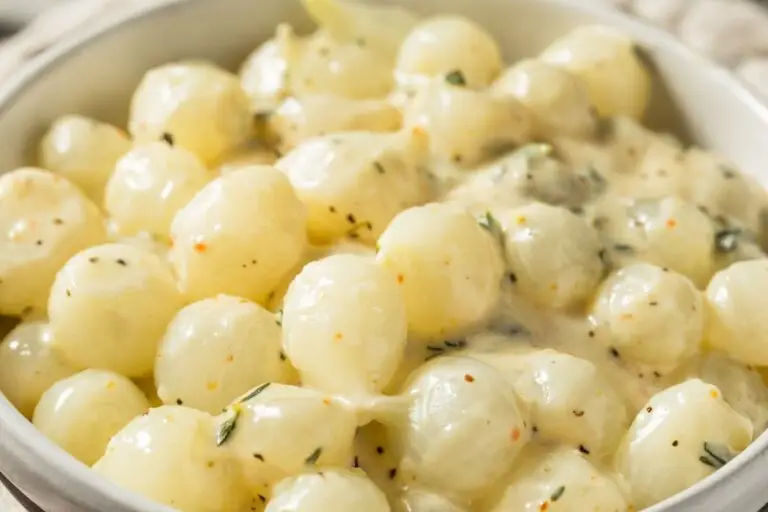
Creamed Pearl Onions With Evaporated Milk Recipe
A 1930s classic that proves the best dishes often come from a place of careful resourcefulness and pantry wisdom.
- Total Time: 30 minutes
- Yield: 5 servings 1x
Ingredients
- 3 cups small white pearl onions
- 1 1/2 tablespoons butter
- 2 tablespoons flour
- 1/2 teaspoon salt
- Pepper to taste
- 1 cup boiling water
- 1 cup evaporated milk
Instructions
- Step 1: Prepare the Onions
Remove the outer dry skin from pearl onions carefully. In a 2-quart pot, bring 2 quarts of salted water to a rolling boil. Add peeled onions and cook in the open kettle until just tender (8-12 minutes), but still retaining their shape completely. Drain thoroughly, reserving 1 cup of the cooking water. - Step 2: Make the Roux
In a saucepan, melt butter over medium heat. Once melted and foaming, whisk in flour to create a smooth paste. Cook for exactly one minute while stirring constantly, until the mixture smells nutty and looks pale gold. - Step 3: Create the Sauce
Whisk in the reserved cooking water gradually, stirring constantly to prevent lumps. Once fully incorporated, slowly add the evaporated milk while continuing to whisk. Cook over medium heat, stirring frequently, until the sauce thickens enough to coat the back of a spoon (about 5 minutes). - Step 4: Season and Combine
Taste the sauce and season with salt and pepper to your preference. Gently fold in the drained onions. Let everything warm through over low heat for 1-2 minutes, stirring gently. - Step 5: Serve
Turn the creamed onions into a hot serving dish. Serve immediately alongside ham, lamb, or as a standalone vegetable side dish.

- Prep Time: 15 minutes
- Cook Time: 15 minutes
- Category: Side Dishes, Vegetables
- Method: Stovetop
- Cuisine: American
Nutrition
- Serving Size: 3/4 cup
- Calories: 213
- Sugar: 3g
- Sodium: 280mg
- Fat: 43.7g
- Saturated Fat: 26.2g
- Carbohydrates: 9.1g
- Fiber: 0.1g
- Protein: 4.3g
- Cholesterol: 131mg
How to Make Perfect Creamed Pearl Onions
The Blanch-and-Peel Trick
If the idea of peeling fresh pearl onions sounds like something you would rather skip, fair enough. But after making this recipe a few times, the method becomes second nature and takes about five minutes.
Score a shallow X into the root end of each unpeeled onion with a paring knife. Drop them into a large pot of boiling water for 60 to 90 seconds, then use a slotted spoon to transfer them immediately into a bowl of ice water. After a couple of minutes in the ice bath, the skins slip off with almost no effort at all. The cold water stops the cooking so the onions stay firm for the next step.
Don't Skip the Salted Boiling Water
Once your fresh onions are peeled, cook them in generously salted boiling water. The salt seasons them from the inside out during those 5 to 7 minutes of simmering. Under-seasoned onions inside a beautifully seasoned sauce produce a dish that somehow tastes incomplete. Season the water like you would pasta water, and reserve a cup of that liquid before you drain them. It carries onion flavor and a little starch that will work in your favor when you build the sauce.
Add Liquid Gradually, Always
The most common reason a cream sauce breaks or turns grainy is temperature shock. If you pour cold evaporated milk into a screaming-hot roux all at once, the proteins seize and you end up with a lumpy situation that no amount of whisking will fully rescue.
Add your reserved cooking water first, a steady stream while you whisk constantly, then follow with the evaporated milk the same way. Keep the heat at medium, not high heat, and give the sauce your full attention for those few minutes. If yours does start to look a little grainy, pull it off the heat and whisk in a tablespoon of cold water. Worst case, we call it rustic and move on.
Watch the Onions After They Go In
Fold the peeled onions into the finished sauce gently, using a wooden spoon or a wide spatula rather than a whisk. Pearl onions hold their shape beautifully up to a point, but too much stirring over heat nudges them toward mushy. Warm everything through over low heat for just a couple of minutes. When the sauce clings lightly to the onions and the onions still look like little pearls, you are done.
Top Tip: Make It Ahead Without Drama
The sauce and the onions can be prepared separately up to one day in advance and stored in an airtight container in the refrigerator. Reheat the sauce gently over low heat with a splash of evaporated milk to loosen it, fold in the onions, and let everything come to temperature together. Holiday meal coordination just got significantly easier.
Recipe Variations, Serving Ideas, and Storage
Recipe Variations
Frequently Asked Questions
Yes, though the sauce won't be quite as silky. Use 1 cup of heavy cream mixed with ½ cup whole milk to mimic evaporated milk's consistency. The sauce may need slightly more cooking time to thicken, and it won't have quite the same subtle caramelized sweetness that evaporated milk brings.
Pearl onions are a specific variety bred to stay small and sweet—typically staying the size of a marble. Regular small onions (like small yellow onions) become stronger-tasting as they cook and won't achieve that melt-in-your-mouth texture that defines this dish. Pearl onions truly are the only choice here.
Blanch unpeeled onions in boiling water for 2-3 minutes, then plunge them immediately into ice water. The skins slip off easily once cooled. This method works far better than trying to peel raw onions and adds only 5 minutes to your total prep time.
Absolutely. Prepare the sauce up to 1 day ahead and store it in the refrigerator. Cook and drain the onions separately, then combine them gently just before serving. Reheat the sauce gently and fold in the onions at the last moment for the best texture.
Curdling happens when the sauce gets too hot too quickly or when cold evaporated milk hits a very hot roux. Always add liquid gradually while whisking constantly, and keep the heat at medium (not high). If separation happens, remove from heat and whisk in 1-2 tablespoons of cold milk or water to cool it down and re-emulsify.
No. Evaporated milk is unsweetened milk with 60% water removed—perfect for savory dishes. Condensed milk is evaporated milk with 40% sugar added, making it unsuitable for this recipe. Always check the label carefully.
Perfectly cooked pearl onions are tender throughout but still hold their shape completely. Cut one in half; it should be soft enough to cut easily but not falling apart. They should taste mild and slightly sweet, never harsh or still crunchy.
Frozen pearl onions work beautifully in this recipe and are often easier to find than fresh. Thaw them completely first, drain well, and reduce the boiling time to 4-5 minutes since they're partially cooked already. The results are virtually identical to fresh.
Baked or glazed ham, roasted lamb, and turkey are classic pairings. Creamed pearl onions also work wonderfully with roasted chicken, beef tenderloin, or even as a vegetable side for a lighter meal. Serve alongside mashed potatoes, egg noodles, or fresh bread.
While this violates the original spirit of the recipe, you can certainly add 3-4 slices of crumbled cooked bacon or 2 tablespoons of grated Parmesan to the finished sauce. However, try this classic version first—you might find you love it exactly as intended, with nothing competing for attention with the delicate onion flavor.
Pin This Vintage Creamed Pearl Onions Recipe For Later

A Dish That Keeps Showing Up
Some recipes fade because something better came along. Creamed pearl onions never faded because nothing better came along. A bowl of tender little onions in a warm, buttery sauce made from a handful of pantry ingredients still does exactly what it did in a 1930s kitchen: it makes a modest vegetable taste like someone genuinely cared about the meal.
Have you made creamed pearl onions before? Is this a dish that showed up at your family's holiday table, or are you making it for the first time? Tell me in the comments, and if you make this recipe, please leave a rating and review. It helps other home cooks find their way to the good stuff.
0 comments