

In Midwestern school cafeterias from the 1960s through the '80s (and maybe today! I'm not sure), the lunch ladies called it goulash. You might know it as Minnesota goulash. In New England, it went by American chop suey. In the South and West, that same pot of ground beef, macaroni, and slow-simmered tomato sauce carried the name slumgullion. This old-fashioned slumgullion recipe, from a 1962 cookbook clipping, is exactly why it survived every decade and every regional renaming since.
One pound of ground beef, a box of elbow macaroni, a real hour on the stove, and what comes out of that casserole dish tastes far better than its ingredient list has any right to suggest. The slow simmer is where the work actually happens, and it is doing a lot more than you might expect.
If you're in the mood for an Italian flavor, this vintage 1950s Lasagnette Casserole is very similarly made.
Back in the 1962 Kitchen
In 1962, a pound of ground chuck cost around 40 cents. Families were watching The Andy Griffith Show and The Dick Van Dyke Show after dinner, and a dish that fed six people from a single skillet and a box of pasta was not a budget compromise. It was just a regular weekday.
Slumgullion had started as what historians charitably call desperation cooking or a struggle meal. On homesteads and in mining camps, it was whatever had not spoiled yet, cooked together in a single pot without pretense. The 1960s version was a dignified evolution of that same practical instinct. Postwar prosperity had put ground beef within reach of most American households, and the family dinner table had become its own kind of ritual. A simmering pot of slumgullion was the answer to a table of six on a Wednesday night when nobody had time or money for anything more elaborate.
Here is what survived across every regional name the dish collected on its way across the country. The slow simmer. The tomatoes breaking down into a sauce that coats every piece of macaroni. The finish in a casserole dish that lets the pasta absorb the last of that sauce rather than float in it. Call it slumgullion, goulash, or American chop suey. The pot does not care what you call it.

What Makes This Old-Fashioned Slumgullion Recipe So Good
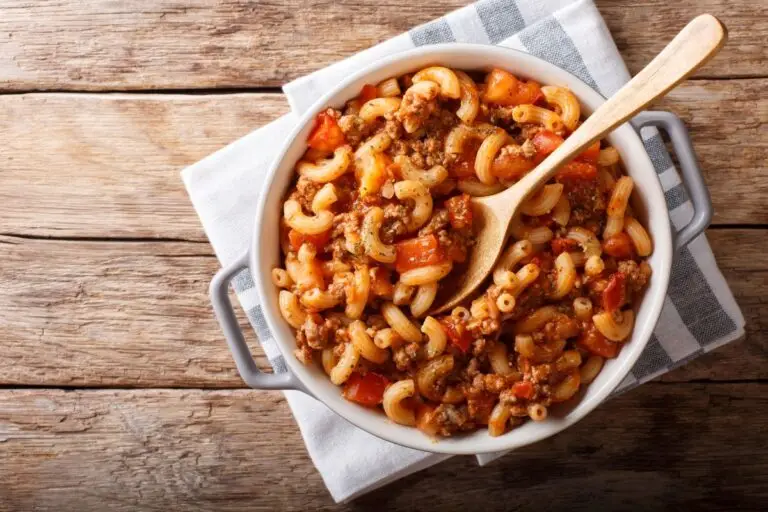
Easy 1960s Ground Beef Slumgullion Recipe
This old-fashioned slumgullion recipe from 1962 is the same dish that Midwesterners call Minnesota goulash and New Englanders call American chop suey. Ground beef and elbow macaroni cooked in a slow-simmered tomato sauce with onion, green pepper, and garlic, then finished in a casserole dish until the pasta absorbs the sauce completely. Simple pantry ingredients, a genuine hour on the stove, and a dinner that feeds six people without anyone noticing the cost. This is pure, unfussy American comfort food from an era that had no word for “weeknight dinner prep” because this was just what Tuesday looked like.
- Total Time: 1 Hour 30 Minutes
- Yield: 6 1x
Ingredients
- 1 large package (2 cups / 8 ounces) elbow macaroni
- 1 large onion, chopped
- 1 green pepper, chopped
- 1/4 cup salad oil or olive oil
- 1 clove garlic, crushed
- 1 pound ground round or ground chuck
- 1 #2 can (28 ounces) whole peeled tomatoes
- 1/4 to 1/2 teaspoon chili powder
- 1 teaspoon salt
Instructions
- Bring a large pot of salted water to a boil. Cook the elbow macaroni according to package directions, but pull it 2 minutes before the minimum cook time. It should be slightly underdone with a firm center. Drain and set aside.
- Heat the oil in a large Dutch oven or deep skillet over medium heat until shimmering. Add the chopped onion and green pepper. Cook, stirring occasionally, until the onion is fully golden brown, 8 to 10 minutes. Do not rush this step.
- Add the crushed garlic and ground beef. Cook, breaking the beef into small, uniform pieces with a spoon or meat chopper, until the beef is completely separated and slightly browned, about 6 to 8 minutes.
- Add the tomatoes with their juice. Break up the whole tomatoes with your spoon. Reduce the heat to medium-low and simmer uncovered, stirring occasionally, for approximately 1 hour or until the tomatoes have cooked down into a thick sauce. The sauce is ready when a spoon drawn through it leaves a trail that holds briefly before filling back in.
- Preheat the oven to 350°F while the sauce finishes simmering.
- Combine the sauce and drained macaroni. Season with the chili powder and salt, starting with the smaller amounts and adjusting to taste.
- Transfer the mixture to a 2-quart casserole dish. Cover and bake at 350°F until the macaroni is as done as you prefer, about 15 to 20 minutes.
- Serve hot directly from the casserole dish.

Notes
-
Beef fat: Ground chuck (80/20) produces a richer sauce. If using 90/10 or leaner beef, add 1 tablespoon of olive oil with the beef to compensate for the missing fat.
- Prep Time: 15 Minutes
- Cook Time: 1 Hour 15 Minutes
- Category: Dinner, Lunch
- Method: Baking, Stovetop
- Cuisine: American
How to Make Perfect Slumgullion Every Time
Recipe Variations, Serving Ideas, & Storage
Recipe Variations
Frequently Asked Questions
Slumgullion is an American ground beef and macaroni casserole simmered in a tomato sauce seasoned with onion, green pepper, garlic, and chili powder. It is the same dish that goes by American goulash or Minnesota goulash in the Midwest and American chop suey in New England. The name itself traces back to 1849 Gold Rush mining camps in California, where it described the muddy slurry left after ore washing. By the early 20th century it meant any weak, thrown-together stew. By the 1960s, the recipe had become a legitimate American comfort food staple.
They are the same dish with different regional names. Midwesterners, particularly in Minnesota and Ohio, call it goulash or American goulash. In New England it is American chop suey. In the South and West, slumgullion is the more common name. The core recipe is consistent across all three: ground beef, elbow macaroni, canned tomatoes, and aromatics.
No. Hungarian goulash is a rich, paprika-heavy stew with chunks of beef, root vegetables, and no pasta. American slumgullion uses ground beef, elbow macaroni, and a tomato-based sauce. The dishes share a name lineage but almost nothing else. Hungarian immigrants brought the word "goulash" to the Midwest, where American cooks applied it to this entirely different dish.
A #2 can is a vintage sizing standard equivalent to approximately 2.5 cups or 20 ounces of whole peeled tomatoes. A standard 28-ounce can of whole peeled or diced tomatoes is a close, workable substitute and gives you a slightly saucier final dish. A 14.5-ounce can is too small for this recipe and will produce a dry finished casserole.
Yes. Combine the sauce and macaroni in the pot, season with chili powder and salt, and serve directly from the stovetop. You lose the textural contrast the oven finish creates and the slight absorption that happens in the casserole, but the flavor is comparable. This is the version most weeknight cooks make, and it is still a good dinner.
Yes, with one adjustment. Ground turkey is leaner than ground chuck and produces a lighter-tasting sauce with less fat. Add a tablespoon of olive oil to the pan when browning the turkey to compensate for the missing fat. The finished dish will be less rich but still works well with the tomato sauce and seasonings.
The sauce is ready when a spoon drawn through it leaves a clean trail that holds for a moment before filling back in. The volume should be visibly reduced from when you started, and the whole tomatoes should have broken down completely. This typically takes 45 minutes to one hour of uncovered simmering over medium-low heat. Do not rush it by turning up the heat. Higher heat reduces the volume but also scorches the bottom.
At the original quarter to half teaspoon of chili powder for a six-serving batch, this dish is barely spicy. The chili powder acts as background warmth rather than a heat source. If you want noticeable heat, increase to a full teaspoon and add a pinch of cayenne with the tomatoes. Even at double the original amount, this is a warm, savory dish rather than a hot one.
Overnight, the pasta continues to absorb the tomato sauce, which concentrates the flavor in the macaroni itself rather than leaving it pooled in the bowl around the pasta. The fat from the beef also redistributes as the dish cools and reheats, and the seasoning integrates more fully. This is the same reason many stews and braises taste better reheated.
Regional naming patterns in mid-20th-century American cooking were largely shaped by immigrant communities and local food culture. In Minnesota, Ohio, and other Midwestern states with significant Hungarian immigrant populations, the word "goulash" attached itself to this dish, even though the dish itself bears almost no resemblance to actual Hungarian goulash. In New England, "chop suey" was already a familiar restaurant term and got repurposed. In the South and West, "slumgullion" carried the association with hearty, unpretentious cooking that suited the dish. By the time food media started standardizing recipe names in the late 20th century, all three names had decades of regional loyalty behind them.
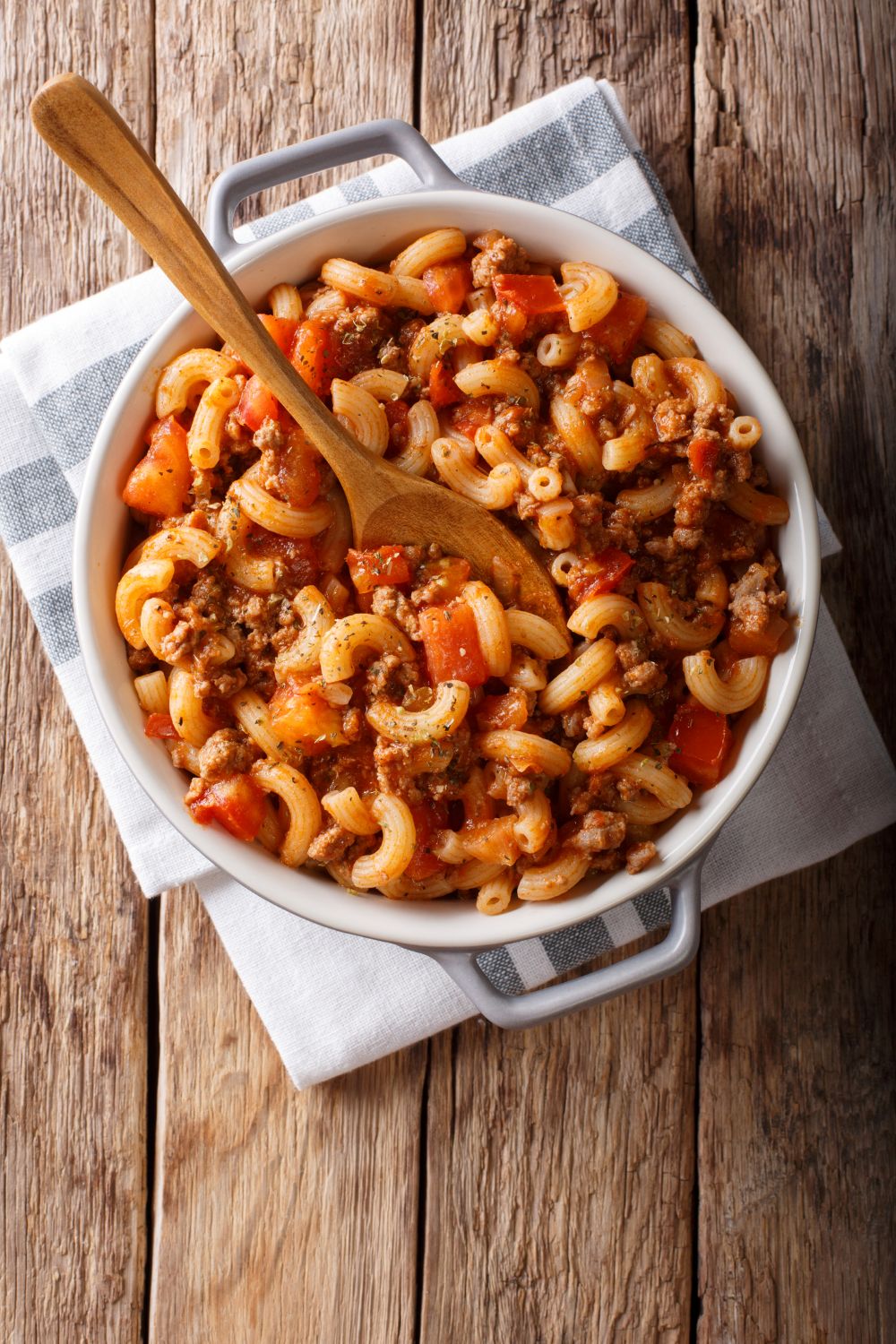
Pin This 1960s Slumgullion Recipe For Later
Leave a Comment
Ground Beef Slumgullion is a testament to the creativity and resourcefulness of home cooks in the 1960s. Whether you're revisiting a childhood favorite or discovering it for the first time, this dish is sure to please. For more vintage recipes and cooking inspiration, visit our homepage and dive into a world of culinary nostalgia.
Did your family call this goulash, or did you know it as slumgullion? There is something genuinely interesting about a dish that crossed the entire country, kept its recipe almost exactly intact, and picked up a new name at every state line. Leave a comment below and tell me what it was called at your kitchen table.
If you made this recipe, a star rating helps more readers find this post. I read every comment, every time.
0 comments