
Authentic Mexican red rice gets its deep tomato color and fluffy, separate grains from a technique many home cooks skip over: a hot water soak before the rice ever touches the oil. Diana Kennedy documented this method in her 1979 cookbook The Cuisines of Mexico, where she called arroz rojo the most popular "dry soup" in all of Mexico and was direct about the fact that the color comes from tomatoes, not saffron, and that calling it Spanish rice is simply wrong.
My suegra has been making arroz a la mexicana her whole life, and when I finally read Kennedy's description of the method, I realized she and my mother-in-law had been doing the exact same thing all along.
Diana Kennedy's 1979 Arroz Rojo Still Stands
Diana Kennedy spent decades traveling through Mexico, cooking in home kitchens, and writing down what she found before it disappeared into shortcuts. She published The Cuisines of Mexico in 1972, with an updated edition in 1979, and her arroz a la mexicana recipe reads like it was written in someone's kitchen rather than tested in a studio.
The recipe has no cumin, no chili powder, no shortcuts. It relies on technique and a handful of simple ingredients, and it produces rice that tastes like the version you get in a home in Michoacán or Jalisco, not a Tex-Mex restaurant in the United States.
From Multi-Cultural Kitchens
My mother-in-law taught me this recipe about four years ago. She didn't measure much. She eyeballed the oil, knew the color of the rice by sight, and blended her tomatoes fresh.
Sopa de arroz, she calls it, and in her house, it shows up alongside almost every main dish, from carne asada to chile rellenos. When I brought it into my own kitchen, I had to slow down and pay closer attention to the rice-to-liquid ratio than she does, because I don't yet have the years of muscle memory she's built. That's what I'm documenting here: what she does, and what I've learned by trying to replicate it.
Make Authentic Mexican Red Rice Your Cinco de Mayo Table
Authentic Mexican red rice is one of the most fitting sides you can put on a Cinco de Mayo table. It's festive without being fussy, and it scales up easily if you're feeding a crowd. Double the recipe in a larger skillet and it feeds 10 to 12 people as a side.
For a full spread, serve it alongside a side of refried beans, warm tortillas, guacamole, and whatever main dish you're centering the meal around: carne asada, baja fish tacos, or enchiladas all work well. Don't forget dessert! A tres leches cake is the perfect fit after a plate like this.
The rice holds its texture for about 30 minutes after cooking if you keep the lid on and the heat on the lowest setting, which makes it a practical choice when you're juggling multiple hot meals at once.
What Makes This Authentic Mexican Red Rice Work
The Hot Water Soak
Soaking the dry long grain rice in very hot water for 10 minutes before cooking is the step that separates this recipe from other versions of arroz rojo. The soak loosens surface starch from each grain, and when you drain and rinse the rice in cold water, that excess starch goes with it.
Less surface starch means the grains fry more evenly in the oil and stay separate throughout cooking. Skipping this step is one of the most common reasons home cooks end up with mushy rice, even when they follow every other instruction correctly.
Frying in the Right Fat
The original recipe calls for safflower oil, melted chicken fat, or melted lard, and all three work differently. Safflower oil is neutral and widely available. Chicken fat gives the rice a deeper, rounder flavor that plain vegetable oil cannot replicate. Lard sits somewhere between the two, adding richness without a strong animal flavor.
Whichever fat you use, the pan needs to be genuinely hot before the rice goes in. If the oil is not hot enough, the rice steams in the fat rather than frying, and you lose the light golden crust on each grain that makes the texture work.
The Two-Stage Liquid Addition
Kennedy's method adds liquid in two stages rather than one. The blended tomato mixture goes in first and cooks down completely into the fried rice, about 8 minutes, before the chicken broth is added.
This two-stage process means the rice absorbs the concentrated tomato flavor directly before it ever touches the broth, which is why the color and flavor go all the way through each grain rather than sitting on the surface. Pouring broth and tomatoes in together at once, the way many American recipes do, produces a diluted result by comparison.
The Towel Under the Lid
Once the broth is absorbed and air holes appear on the surface of the rice, Kennedy calls for placing a clean kitchen towel over the rice before putting the lid on. The towel absorbs the steam that would otherwise drip back down onto the rice and create soggy patches on the surface.
It is a traditional technique used in Mexican home cooking for generations, and it is the reason the top layer of the rice comes out as fluffy as the bottom layer. A paper towel works if you do not have a thin kitchen towel that fits your pan.
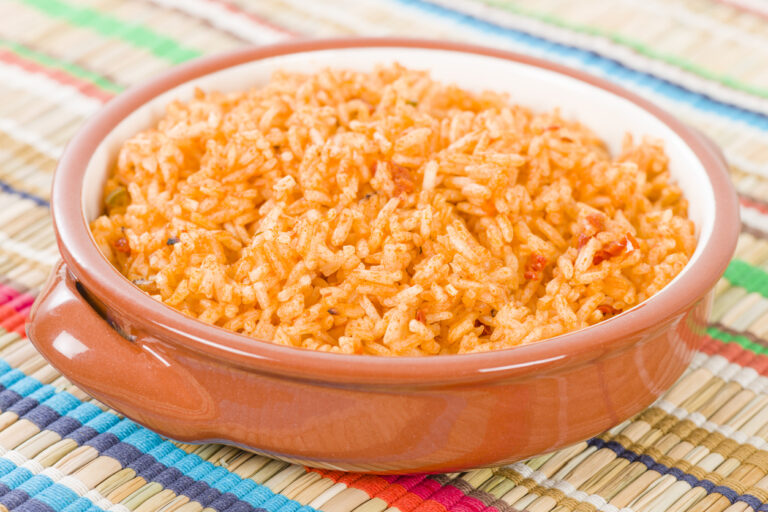
Authentic Mexican Red Rice Recipe
Arroz rojo is the traditional Mexican red rice served as a staple side dish in home kitchens throughout Mexico, including the Jalisco region where this version originates. Long grain rice is toasted dry in oil over medium heat until golden brown before being cooked in a blended mixture of fresh roma tomatoes, white onion, and garlic with chicken broth and Knorr chicken bouillon. The toasting step is the technique that sets authentic Mexican red rice apart from the pale, mushy versions found in other adaptations; it creates fluffy, deeply flavored grains with a rich tomato color that holds up through cooking and reheating.
- Total Time: 35 Minutes
- Yield: 4-6 Servings 1x
Ingredients
- 1 1/2 cups unconverted long grain rice
- 1 cup finely chopped unskinned tomatoes
- 2 tablespoons finely chopped white onion
- 1 garlic clove, peeled and roughly chopped
- 1/3 cup safflower oil, melted chicken fat, or melted lard
- 3 1/2 cups light chicken broth (see note)
- 1/3 cup carrot rounds (optional)
- 1/2 cup fresh peas or diced zucchini (optional)
- 1/2 cup chopped giblets (optional)
- Sea salt to taste
Instructions
- Soak and rinse rice: Put the rice into a bowl and cover with very hot water. Stir and leave to soak for about 10 minutes. Drain, rinse in cold water, and drain again.
- Blend tomato mixture: Put the tomatoes, onion, and garlic into a blender jar and blend until smooth. Set aside.
- Toast rice in oil: Heat the oil in a heavy pan. Give the rice a final shake and stir it into the hot fat. Fry over fairly high heat until the rice begins to turn a light golden color.
- Cook with tomato purée: Strain off any excess oil. Stir in the blended tomato purée and fry, scraping the bottom of the pan to prevent sticking, until the purée has been fully absorbed, about 8 minutes.
- Add broth and vegetables: Stir in the broth, vegetables, and giblets if using. Add salt to taste. Cook over fairly high heat, uncovered, until all the broth has been absorbed and air holes appear on the surface of the rice.
- Steam with towel and lid: Cover the surface of the rice with a clean kitchen towel, then place the lid on top. Continue cooking over very low heat for about 5 minutes longer.
- Rest and finish cooking: Remove from heat and set aside in a warm place for about 15 minutes so the rice absorbs the remaining moisture from the steam and swells fully. Check by digging gently to the bottom and testing a grain. If the rice is still damp, cook for a few minutes longer. If the top grains are not quite soft, sprinkle with a little hot broth, cover, and cook a few minutes more.
- Fluff and serve: Before serving, turn the rice over carefully from the bottom so the flavored juices are distributed evenly.
Notes
Chicken Broth Note: To make 3½ cups of light chicken broth using Knorr Tomato with Chicken Flavor Bouillon Cubes, dissolve 2 cubes in 3½ cups of hot water and stir until fully dissolved before adding to the recipe.
- Prep Time: 10 Minutes
- Cook Time: 25 Minutes
- Category: Side Dishes
- Method: Stovetop
- Cuisine: Mexican
How to Make Perfect Authentic Mexican Red Rice
Soak First, Then Drain Completely
Put the long grain rice in a bowl, cover it with very hot water, stir once, and leave it for 10 minutes. Then drain it, rinse it thoroughly in cold water, and drain it again. The rice needs to be as dry as possible before it goes into the hot oil. Any extra water still clinging to the grains will cause the oil to spit and will slow down the frying. Spread the drained rice on a clean kitchen towel and pat it gently if you want to speed up the drying.
Watch the Color, Not the Clock
Fry the soaked, drained rice in hot fat over fairly high heat and watch the color carefully. You are looking for a light golden color, not deep brown. Kennedy specifies light golden, and that is the right target. Deep browning means the exterior of the grains is overcooked and the rice will taste bitter underneath the tomato flavor. The frying stage takes about 5 to 8 minutes depending on your pan and heat source. Stir regularly so the grains on the bottom do not color faster than the ones on top.
Strain Off the Excess Oil
After the rice is golden, strain off any excess oil before adding the blended tomato mixture. Too much oil left in the pan makes the final rice greasy and prevents the tomato purée from absorbing cleanly into the grains. A fine mesh strainer held over the pan works well for this. You only need a thin coating of fat remaining in the pan to continue cooking.
Cook Uncovered Until Air Holes Appear
After the chicken broth goes in, cook the rice uncovered over fairly high heat until all the liquid has been absorbed and small air holes appear across the surface. Those air holes are your signal that the moisture has worked its way through the rice and the grains are nearly done. Do not stir the rice during this stage. Stirring breaks the grains and releases starch, which undoes everything the soak and fry accomplished.
Rest It Fully Before Serving
After the low-heat covered cooking is done, remove the pan from the heat and leave it in a warm place for a full 15 minutes. The rice is still cooking during this rest from the residual steam. Check by digging gently to the bottom with a fork and testing a grain. If it still feels damp or undercooked, put the lid back on for a few more minutes. If the top grains are not quite soft, add a small splash of hot broth, cover, and give it another few minutes before checking again.
Recipe Variations, Serving Ideas, & Storage
Recipe Variations
Frequently Asked Questions
Arroz a la mexicana, also called arroz rojo or Mexican red rice, is one of the most widely made rice dishes in Mexican home cooking, where it belongs to a category called sopa seca, meaning "dry soup."
The name refers to dishes where a liquid, whether broth or tomato purée, is cooked completely into the base ingredient until no excess liquid remains. Diana Kennedy documented this recipe in her 1979 cookbook The Cuisines of Mexico, calling arroz rojo the most ubiquitous rice dish in the country, and her method of soaking, frying, and simmering the rice in a fresh tomato purée is the technique that gives every grain its deep color and tender, separate texture.
Soaking long grain rice in very hot water for 10 minutes before cooking removes excess surface starch from the grains. When that starch is rinsed away, the rice fries more evenly in the oil and the grains stay separate throughout cooking rather than clumping together. Skipping the soak is one of the most consistent reasons home cooks end up with sticky or mushy arroz rojo even when they follow the rest of the recipe correctly.
The original 1979 Diana Kennedy recipe calls for 3½ cups of light chicken broth for 1½ cups of long grain rice, which is a higher ratio than many American adaptations use.
The additional liquid accounts for the uncovered high-heat cooking stage, where a significant amount of broth evaporates before the rice is covered to finish. The rice is not absorbing all of that liquid at a slow simmer the way it would in a standard rice cooker method, so the higher broth quantity is accurate and intentional.
Arroz rojo and Spanish rice are frequently treated as the same dish on restaurant menus in the United States, but they are not. Authentic arroz a la mexicana uses blended fresh tomatoes, a hot water soak, and a two-stage liquid process where the tomato purée is cooked into the rice before the broth is added.
Spanish rice, in its traditional European form, is a different dish entirely with different spices and preparation. The "Spanish rice" label became common in the United States as a catch-all term for any tomato-colored rice served alongside Mexican food.
Yes, and this is the way many Mexican home cooks make it. Dissolve 2 Knorr Tomato with Chicken Flavor Bouillon Cubes in 3½ cups of hot water and stir until fully dissolved before adding to the rice.
The Knorr Tomato with Chicken Flavor Bouillon Cubes combine both chicken and tomato flavor in one cube, which adds a second layer of tomato depth to the rice beyond what the blended fresh tomatoes provide.
Placing a clean kitchen towel over the rice before covering with the lid is a traditional technique in Mexican home cooking. The towel absorbs the steam that would otherwise condense on the lid and drip back down onto the surface of the rice, which creates soggy patches on top while the bottom layer stays drier.
The towel allows the rice to finish cooking in dry steam, which is what produces an evenly fluffy texture from the bottom of the pan to the top.
Pale arroz rojo is almost always the result of too little tomato purée being absorbed before the broth was added, or the tomato purée being added before the excess oil was strained off.
When the pan still holds too much oil, the tomato mixture fries in the fat rather than being absorbed into the grains.
Make sure to strain off the excess oil after frying the rice, then cook the blended tomato purée all the way down into the rice, about 8 minutes, before adding any broth.
The stovetop method in the original 1979 Kennedy recipe is built around technique steps, including the hot soak, the open high-heat cooking stage, and the towel-and-lid finish, that do not translate directly into an Instant Pot without changing the recipe.
You can approximate arroz rojo in an Instant Pot using the sauté function for the frying and tomato absorption stages, then pressure cooking on high for 3 minutes with a 10-minute natural release. The texture will be softer and the result will not be identical to the original stovetop method.
The arroz a la mexicana recipe as written is naturally gluten-free. The ingredients are long grain rice, fresh tomatoes, onion, garlic, oil, chicken broth, and sea salt.
Always check the label on your specific Knorr Tomato with Chicken Flavor Bouillon Cubes to confirm gluten-free status, as product formulations can vary and labels are the most reliable source for current ingredient information.
Arroz a la mexicana pairs well with almost any Mexican main dish and is a natural fit for a Cinco de Mayo table. It works alongside refried beans, carne asada, chicken tinga, chile rellenos, and enchiladas.
Kennedy also suggests serving it with a fried egg on top or with pickled chiles on the side, both of which are traditional pairings in Mexican home kitchens.
Pin This Authentic Mexican Red Rice For Later
A Traditional Recipe Worth Coming Back To
Arroz a la mexicana is one of those dishes that looks simple until you try to make it and realize how many small decisions matter. The soak, the heat, the two-stage liquid addition, the towel under the lid. Each step exists for a reason, and Kennedy wrote them all down in 1979 so home cooks like us would not have to guess.
My first batch was flat and pale and I was frustrated. My third was better. The one I made the week I finally understood the soak-then-fry sequence was the first one that tasted like what comes out of my suegra's kitchen. It took me a few tries, and it might take you a few too.
Does your family make arroz rojo? I would genuinely love to know if your version looks different from this one and what your household does differently. Drop it in the comments below.
If you make this authentic Mexican red rice, please leave a rating and review. It helps other readers find the recipe and it means a lot to know how it turned out in your kitchen.


0 comments