

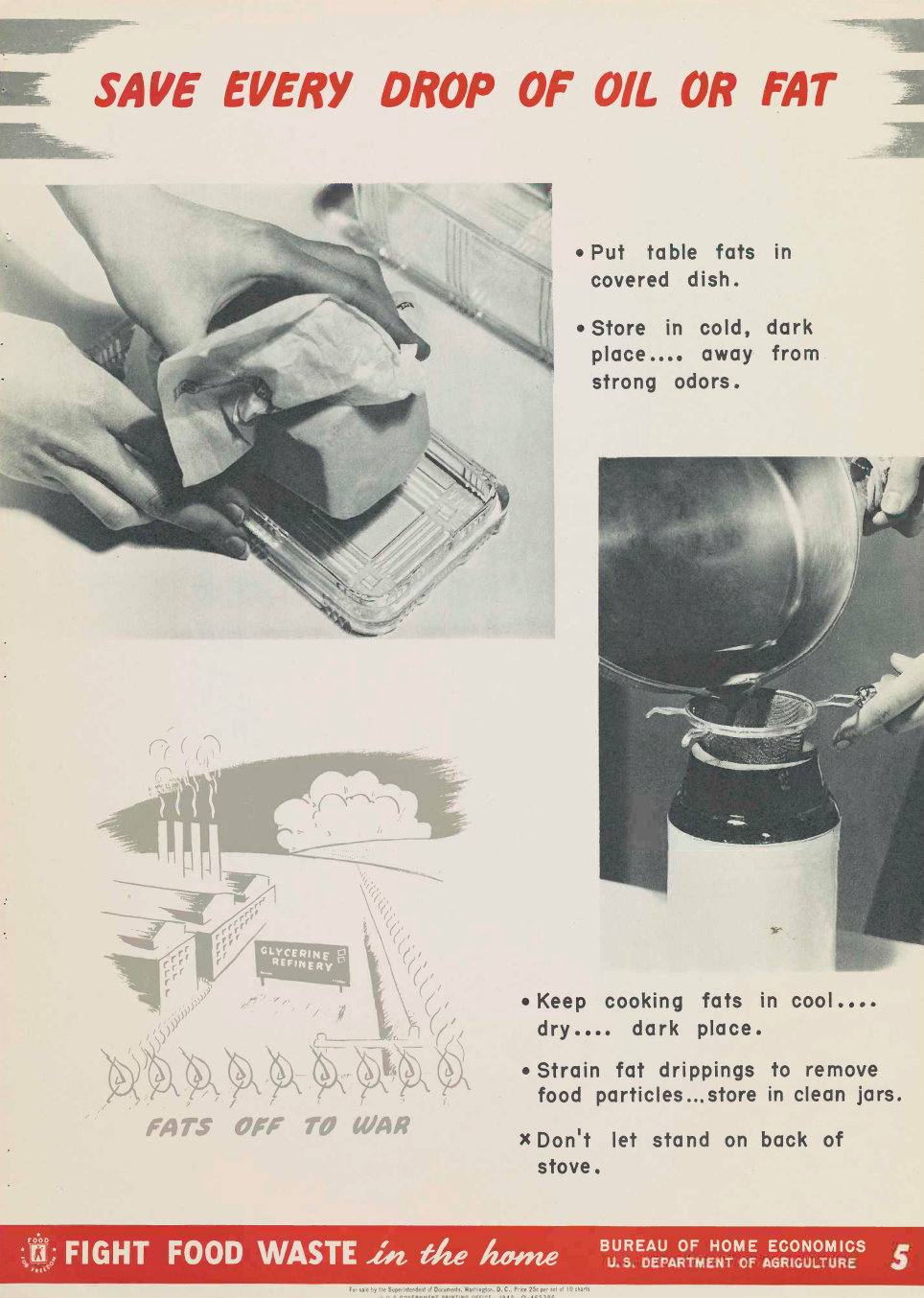
In 1944, while the U.S. government was paying households 4 cents per pound to turn in their saved bacon fat for the war effort, a wartime newspaper printed this old fashioned spice cake recipe and listed bacon drippings where the butter should be, with complete confidence. The recipe ran alongside practical guidance explaining how cooking and baking with drippings was a genuine home front skill worth mastering. That confidence was earned. Bake it once and you will see exactly why.
You probably have questions. Bacon fat in a cake, really? Yes. The smokiness softens under the spice blend and the corn syrup, and what you get on the other side is a cake with more personality than anything produced by a standard butter-and-sugar base. It is the kind of recipe that makes you wonder what else the 1940s figured out that we stopped paying attention to.
Back in the 1944 Kitchen
In 1944, my dad was seven years old, ration books lived in kitchen drawers right next to the handwritten recipes, and a jar of saved bacon drippings on the counter was as ordinary as the salt shaker sitting next to it.
Starting December 1943, the government was offering two ration points and four cents per pound of fat that households turned in at participating butchers, so saving every last drop was genuinely practical. The home cooks reading this recipe column in their local newspaper wanted comfort food on the table, and they were figuring out how to get it with what a rationed kitchen actually contained. The resourcefulness behind this cake feels less like a history lesson and more like common sense that quietly went out of fashion.
What Makes This Old Fashioned Spice Cake Recipe So Good
The Fat That Does More Than You Expect
Rendered bacon drippings are not a neutral fat, and that is entirely the point. It carries a smokiness and a savory depth that amplifies the spice mixture in a way that vegetable shortening simply cannot match. When you cream the drippings with sugar, the fat goes silky and pale, and the finished cake has a richness that most modern versions built on butter and white sugar simply do not produce. The warm spices are bold enough to carry the whole thing forward without the bacon flavor taking over.
Why Dark Corn Syrup Belongs Here
Most vintage spice cake recipes rely on brown sugar alone for their caramel depth. Here, dark corn syrup contributes two-thirds of a cup against just one-third cup of white sugar, and it earns that ratio. Corn syrup is a humectant, meaning it holds moisture inside the crumb, which is why this cake stays tender longer than a sugar-only version would. The slightly bitter, molasses-like edge of the dark variety also ties the four warm spices together in a way that is genuinely hard to replicate with anything else.
The Spice Mixture That Makes This Interesting
The spice mixture in this recipe is specific on purpose: equal parts mace, cloves, and nutmeg at one-quarter teaspoon each, then a full teaspoon of cinnamon to anchor it all. Mace is the dried outer covering of the nutmeg seed, and it adds a faintly floral, peppery sharpness that keeps the other spices from reading as flat. Together, the four create a layered warmth that builds gradually rather than hitting all at once. If you have never cooked with mace, this is a very good place to start.
Why Sifted Cake Flour Matters Here
The original recipe calls for sifted cake flour, and this is worth respecting if you want the crumb this cake is capable of producing. Lower protein content in cake flour means less gluten development during mixing, which produces a finer, more delicate texture in the finished square. Sift the flour into a medium bowl after measuring. If all-purpose flour is what you have, substitute seven-eighths of a cup plus two tablespoons of cornstarch per cup, then sift the flour mixture twice before using.
Old Fashioned Wartime Spice Cake Recipe
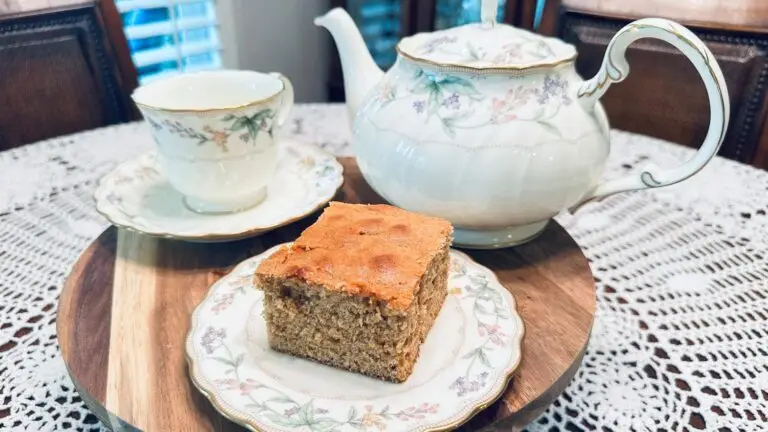
This old fashioned spice cake recipe was printed in a 1944 wartime American newspaper alongside practical guidance on baking with rendered bacon drippings as a substitute for rationed butter. The recipe uses one-third cup of bacon drippings, two-thirds cup of dark corn syrup, sifted cake flour, and a four-spice blend of cinnamon, mace, nutmeg, and cloves, producing a dense, warmly spiced cake with a molasses-like depth that butter alone cannot produce. It bakes in a square pan at 375 degrees F for approximately 25 minutes and is traditionally finished with fluffy white frosting.
- Total Time: 40 Minutes
- Yield: 9 Squares 1x
Ingredients
- 1/3 cup rendered bacon drippings, at room temperature
- 1/3 cup granulated sugar
- 2/3 cup dark corn syrup
- 2 large eggs
- 1/3 cup whole milk
- 1-3/4 cups cake flour, sifted
- 1-1/2 teaspoons baking powder
- 1/4 teaspoon salt
- 1/4 teaspoon ground mace
- 1/4 teaspoon ground cloves
- 1/4 teaspoon ground nutmeg
- 1 teaspoon ground cinnamon
- 1 teaspoon vanilla extract
Instructions
- Preheat your oven to 375°F. Lightly oil an 8×8 inch square pan. Line the square pan with parchment paper if you prefer easy removal.
- In a large bowl, beat the bacon drippings and granulated sugar together with an electric mixer or hand mixer on medium speed for 3 minutes, until the mixture is noticeably lighter in color and fluffy.
- With the mixer running on low speed, add the dark corn syrup in a slow, steady stream. Beat until fully combined, stopping once to scrape down the bowl. Add the eggs and beat until the cake batter is smooth.
- In a separate bowl, sift together the cake flour, baking powder, and salt. In a small bowl, combine the spice mixture: mace, cloves, nutmeg, and cinnamon. Whisk the spice mixture into the flour mixture until evenly distributed.
- Add the flour mixture to the wet ingredients in three additions, alternating with the milk in two additions. Begin and end with the flour mixture. Stir the vanilla extract into the batter with the final flour addition. Mix on low speed only until each addition just disappears.
- Pour batter into the prepared pan and smooth the top.
- Bake at 375°F for 25 minutes, or until a toothpick inserted in the center comes out with a few moist crumbs. Begin checking at the 20-minute mark.
- Cool in the pan for 10 minutes, then transfer to a wire rack to cool completely before frosting.
How to Make a Perfect Old Fashioned Spice Cake With Bacon Drippings
Start With Room Temperature Fat
Cold bacon drippings will not cream properly, and a cake made with cold fat will tell on you immediately. Pull the drippings from the fridge 20 to 30 minutes before you start and let them soften until they feel pliable, roughly the same consistency as softened butter. Beat the drippings and sugar with an electric mixer or hand mixer on medium speed for a full three minutes. You are looking for a mixture that turns noticeably lighter in color and almost fluffy. If it still looks dense and greasy, give it another minute. Your patience here is what makes the crumb work.
Add the Corn Syrup on Low Speed
Pouring two-thirds of a cup of dark corn syrup into your creamed fat all at once is a fast way to undo the work you just did. Add it with the mixer on low speed in a slow, steady stream, stopping once to scrape down the large bowl. The cake batter may look slightly curdled before the eggs go in, and that is completely normal. Keep going and it will smooth out before you add the dry ingredients.
Use a Separate Bowl for the Dry Ingredients
Sift the flour, baking powder, salt, and spice mixture together in a separate bowl before they go near the wet ingredients. This ensures even distribution throughout the flour mixture, which means no pockets of baking powder and no surprise hits of clove in one bite. It takes two extra minutes and it genuinely matters.
Alternate the Dry and Wet Additions
Add the flour mixture to the wet ingredients in three additions, alternating with the milk in two additions, beginning and ending with the flour. Mix on low speed only until each addition just disappears into the batter. Stir the vanilla extract in with the last flour addition and stop the mixer the moment the batter looks smooth. Overmixing after the dry ingredients go in builds gluten, and the crumb will be noticeably tougher for it.
Start Checking the Cake at 20 Minutes
The original recipe calls for 25 minutes at 375°F in an 8x8 square pan, and that is accurate in a well-calibrated oven (a phrase that describes roughly half the ovens currently in service). Start checking at 20 minutes. A toothpick inserted in the center should come out with a few moist crumbs clinging to it. A fully clean toothpick usually means you are a minute or two past the ideal point, and a dry crumb is the main way to lose what makes this cake special. Let it cool in the pan for 10 minutes, then move it to a wire rack before frosting.
Recipe Variations, Serving Ideas, & Storage
Recipe Variations
Frequently Asked Questions
Yes - Bacon grease and bacon drippings are the same ingredient. Both refer to the rendered fat left in the pan after cooking bacon. For the cleanest flavor, strain the fat through a fine mesh sieve into a clean jar before storing, which removes any browned bits. Measure one-third cup of the strained, room-temperature fat as directed in this old fashioned spice cake recipe.
Cake flour produces the best crumb in this vintage recipe because its lower protein content limits gluten development during mixing, giving you a finer, more delicate texture. If all-purpose flour is what you have, substitute seven-eighths of a cup of all-purpose flour plus two tablespoons of cornstarch for each cup of cake flour. Sift the flour mixture twice before using, and expect a slightly denser result.
An old fashioned spice cake made with bacon drippings has a subtle savory depth in the background rather than a pronounced bacon flavor. The cinnamon, mace, nutmeg, cloves, and vanilla extract are assertive enough to carry the cake forward completely, and the smokiness from the fat functions as an undertone that deepens the warm spices. If your drippings are very strongly flavored, blend them half-and-half with lard for a milder result.
Unsalted butter replaces the bacon drippings in this easy spice cake recipe at a 1:1 ratio. The crumb will be slightly lighter and the flavor more conventional, but the warm spices and dark corn syrup will still produce a genuinely good cake. The subtle smoky undertone that makes the wartime version distinctive will be absent, but butter is a solid substitute if that is what your kitchen has.
Dark corn syrup was a practical wartime pantry staple that helped stretch a rationed sugar supply while also contributing moisture to the finished cake. As a humectant, it attracts and holds moisture inside the crumb, which keeps this old fashioned spice cake recipe tender longer than a white sugar-only version would stay. The dark variety also has a slightly bitter, molasses-like flavor that reinforces the spice mixture in a way that is genuinely hard to replicate with granulated sugar alone.
Mace and nutmeg come from the same plant, but they are different spices with different flavor profiles. Mace is the dried outer covering of the nutmeg seed and has a faintly floral, slightly peppery sharpness that ground nutmeg alone does not replicate. The original recipe calls for both, and using both is what gives this old fashioned spice cake recipe its layered, complex flavor. Ground mace is available in most grocery store spice aisles. Additional nutmeg will work as a substitute, though the result will be slightly less nuanced.
Pin This Old Fashioned Spice Cake Recipe For Later

Taste Test Results From Our Multi-generational Kitchen
The strategy for this one was simple: nobody at the table knew what was different about the cake until after they had already eaten it.
The tasting went well enough that I ate two squares, and I am choosing not to apologize for that.
When I finally told everyone the cake was made with bacon drippings instead of butter, the table responded with a collective "ohhhhhh" that landed somewhere between impressed and mildly betrayed. Once you know the bacon drippings are in there, the subtle smokiness snaps into focus immediately, and you find yourself going back over every bite you just took in a slightly different light. That is the exact kind of reveal this recipe was made for.
I did not make the fluffy white frosting the original recipe calls for, so we tested the cake plain. My dad, who is Silent Generation and holds strong opinions about dessert, did not let that pass without comment. He pointed out, calmly and correctly, that a sweet vanilla or cream cheese frosting against the smoky, spiced crumb would make a genuinely compelling contrast. He is not wrong. He is also kind of a sweets connoisseur, which makes that endorsement count for something.
Make the frosting. I will be making it next time.
The unfrosted cake also passes what I am now calling the breakfast test. A square with a strong cup of coffee in the morning is one of the better ideas this recipe has quietly given me, and I did not expect that from a 1944 wartime cake.
From the Ration Book to Your Recipe Box
The home cooks who made this cake in 1944 were not making do. They were making something genuinely good with exactly what the kitchen offered, and this old fashioned spice cake is the proof they pulled it off.
If you bake it, leave a rating and a note below, especially if someone at the table asked why it tasted so unusually rich. That question is half the fun of this one.
Did you save drippings specifically for this recipe, or did you find a substitute that worked? Tell me in the comments. And if you have a wartime recipe of your own that deserves more attention, I would absolutely love to see it.
0 comments