Recipe Rewind, Vintage Recipes Worth Remembering
  • Main Course
    • Beef Recipes
    • Breakfast Recipes
    • Casserole Recipes
    • Lunch
    • Pasta Recipes
    • Poultry Recipes
    • Soups + Stews
  • Sides + More
    • Appetizers
    • Drinks + Cocktails
    • Potato Recipes
    • Salads
    • Sandwiches
    • Side Dishes
    • Snacks
    • Vegetable Recipes
  • Bread Recipes
    • Yeast Bread Recipes
    • Quick Bread Recipes
  • Sweet Treats
    • Cakes + Cupcakes
    • Cookies
    • Confections & Sweet Treats
    • Pie Recipes
  • Holidays
    • Fall + Halloween
    • Thanksgiving
    • Winter + Christmas
    • Cinco de Mayo
    • Mother's Day Recipes
    • Summer Holiday Recipes
  • Kitchen Tips
  • Shop Vintage Inspired
  • About Us

Vintage 1960s and 1970s Recipes: Fondue to Crock-Pots

Recipe Rewind's 1960s and 1970s recipe collection covers two decades of kitchens that kept changing their minds: Bake-Off cakes, molded gelatin salads, and Julia Child's French cooking on public television, followed by slow cookers, boxed dinner mixes, and quiche at every brunch. Every recipe here has been tested in a modern kitchen while the original flavor stays intact.


Scroll to Explore

Vintage 1960s and 1970s Recipes: From Fondue Pots to Slow Cookers

Vintage 1960s and 1970s recipes come from two decades that cooked very differently. The 1960s rewarded ambition, with French techniques on TV, contest cakes in ring-shaped pans, and hosts who wanted dinner to double as entertainment. The 1970s rewarded speed. More women worked outside the home, beef prices climbed, and the pantry filled with products built to save time.

Long before anyone posted a plate before taking a bite, home cooks were clipping contest winners off the back of a flour bag and pouring dip mix into sour cream for a party. Recipe Rewind's 1960s and 1970s recipes follow both impulses: the project dishes worth a Saturday and the shortcuts worth a Tuesday.

December 15, 2025

1970s Spiced Carrot Cupcakes with Cream Cheese Frosting

November 8, 2025

Easy Classic 1976 Watergate Salad Recipe

November 5, 2025

Chestnut Sausage Stuffing: A 1960s Thanksgiving Classic

November 2, 2025

Vintage 1965 Apple Cider Punch Bowl Recipe

October 30, 2025

Turkey Giblet Gravy Recipe From a 1901 Buffalo Newspaper, Made the 1970s Way

October 29, 2025

This Corn Casserole Recipe with Jiffy Mix Came From the Back of a 1950 Box and Still Steals Thanksgiving

October 29, 2025

1970 Orange Glazed Sweet Potatoes

October 28, 2025

Vintage 1970 Budget-Friendly Mushroom Wild Rice Recipe

October 3, 2025

The Candied Almonds Recipe American Kitchens Made While Apollo 8 Orbited the Moon

October 2, 2025

 Batch Baking Pumpkin Bread: Easy 3-Loaf Recipe from the 1970s

September 14, 2025

This 1977 Roasted Pumpkin Seeds Recipe Turned Halloween Guts Into a Whole Family Tradition

September 7, 2025

Easy Iced Pumpkin Cake Squares

Page [tcb_pagination_current_page] of [tcb_pagination_total_pages]

First

Previous

Next

Last

Life & Food in the 1960s & 1970s

Before the Crock-Pot sat on every counter, the American home cook's guide to French food was a 734-page book. Mastering the Art of French Cooking by Julia Child, Simone Beck, and Louisette Bertholle arrived in 1961 and was written for American kitchens and American supermarkets. Its success led to Child's TV show The French Chef.

Dinner parties changed shape too. Fondue sets became a prominent entertaining trend in the 1960s, with a shared pot of melted cheese turning the meal into the activity. California dip, a mix of sour cream and dry onion soup mix, shows up in a Lipton promotional booklet from roughly 1958 to 1960. It's still the easiest party food ever to survive a potluck.

The 1970s shifted the math. In the early part of the decade, rising beef prices led General Mills to launch Hamburger Helper in 1971, a boxed mix that stretched a pound of ground beef into a meal for five. The same year, Rival introduced the Crock-Pot, and it was marketed directly to women who were working outside the home.

A Kitchen & Culture Timeline

1961

The Berlin Wall goes up, and Kennedy's Bay of Pigs invasion fails. Mastering the Art of French Cooking is published. 

1963

Martin Luther King Jr. delivers the "I Have a Dream" speech. JFK is assassinated in Dallas on November 22. The French Chef show debuts on February 11.

1964

The Beatles appear on The Ed Sullivan Show, and President Johnson signs the Civil Rights Act. 

1967

The Summer of Love becomes a defining moment of the counterculture, as Vietnam War opposition grows.

1969

Neil Armstrong and Buzz Aldrin walk on the Moon on July 20. Woodstock draws thousands the same year.

1970

Twenty million Americans join the first Earth Day on April 22. Volume 2 of Mastering the Art of French Cooking is published.

1971

Rival unveils the Crock-Pot at the National Housewares Show in Chicago. General Mills launches Hamburger Helper amid rising beef prices.

1977

Star Wars opens on May 25 and becomes the highest-grossing film to that point.

What Life in the 1960s & 1970s Kitchen Looked Like

A Pot of Cheese in the Middle of the Table

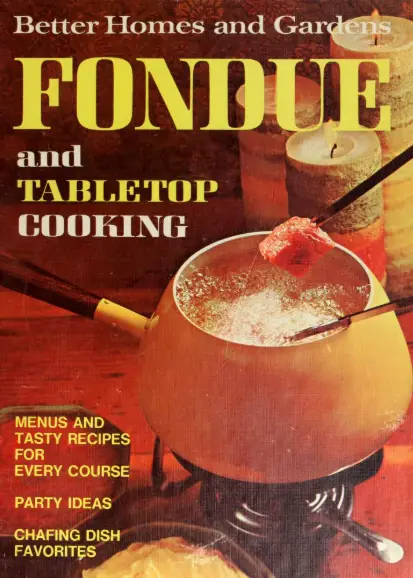
Fondue hosts in the 1960s weren't serving dinner so much as handing guests a long fork and a job. The dish had gone from Swiss and French import to restaurant trend by the mid-1950s, with fondue restaurants opening in New York and other cities. By the 1960s, home fondue sets, complete with a pot for a flame and a fork for every guest, had become all the rage.

Kitchenware stores sold "fondue party kits," and American housewares maker Dansk produced popular models. Home cooks took cues from Julia Child's The French Chef and cooked from the recipe books packed in with their new pots. The communal pot suited a decade of dinner parties where the entertainment was part of the menu.

Grocery stores caught up in the 1970s, when Gruyère, Emmenthaler, Appenzeller, and Neufchâtel became more common in American groceries. Americans stretched the idea further, dipping meats for fondue bourguignonne, vegetables into cheese, and fruit into chocolate. The Smithsonian's pot came from a staff member whose family gathered after Friday night high school football games in the early 1970s, around 20 people sharing a fondue pot. The fad faded in the 1970s and returned in the 1990s and again after 2010.

Two Million Crock-Pots in a Year

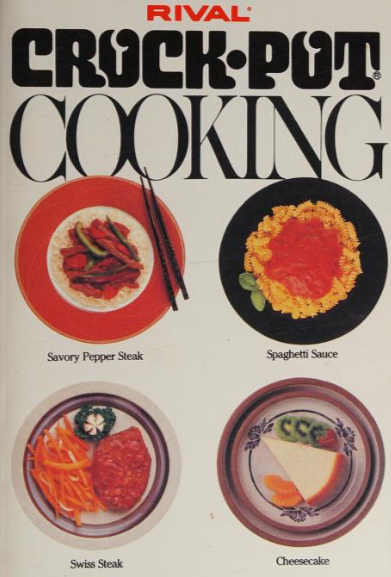
The Crock-Pot started life as the Naxon Beanery, patented by Irving Naxon in 1940. Naxon built it around cholent, a Jewish stew of meat and beans that cooks slowly on Fridays for the Sabbath. It never caught on, and in 1970 Rival Manufacturing of Kansas City bought it almost as an afterthought. Rival's president later said "we almost forgot about it."

A test-kitchen employee named Marilyn Neill realized it could cook far more than beans. The renamed Crock-Pot debuted at the 1971 National Housewares Show in Chicago, dressed in avocado and harvest gold, with a price of $25. Ads told women they could "cook all day while the cook's away." Sales hit $2 million in the first year and reached $93 million four years later.

The timing connects to the decade's two pressures. More women were working outside the home, and an oil crisis had Americans watching their energy use. Rival's home economists answered the question "What does it cost to run all day?" with 4 cents, far less than an oven.

Rival's test kitchen produced the recipe booklet in every box, and the early recipe names tell you the era. They included "Busy Woman's Roast Chicken" (chicken, carrots, and a package of stuffing mix) and "Male Chauvinist Chili." Smithsonian curator Paula Johnson notes the Crock-Pot mostly served middle-class women who could afford it, and that it sometimes raised expectations rather than lowering the workload.

The Cake Whose Secret Ingredient Was Discontinued

Ella Helfrich of Houston took second place at the Pillsbury Bake-Off in San Francisco in 1966, winning $5,000. First prize went to Mari Petrelli's Golden Gate Snack Bread. Helfrich's Tunnel of Fudge cake outlived it. Pillsbury received more than 200,000 letters asking for the recipe and where to buy the pan.

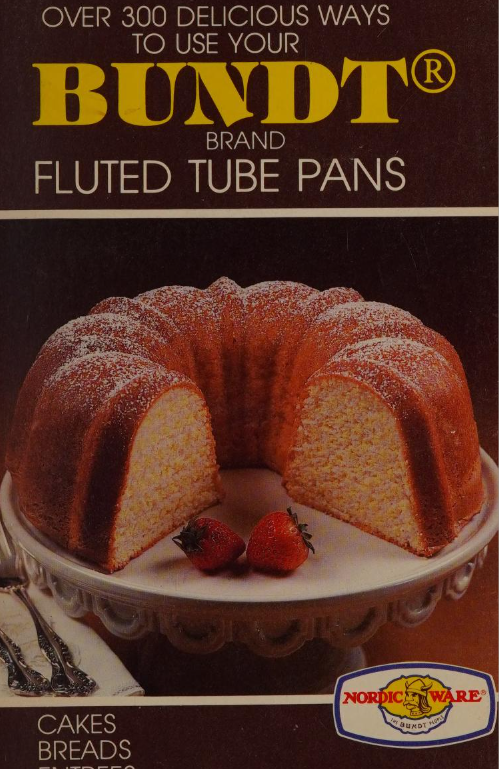
The pan was the Bundt, which H. David Dalquist of Nordic Ware had created in 1950 after Minneapolis Hadassah members asked for a lightweight alternative to a cast-iron bundkuchen mold. It had sold slowly for 16 years. After the Bake-Off, Dalquist ran his factory around the clock, eventually making 30,000 pans a day. The cake was easy and impressive, a combination that appealed to women who were going back to school and starting careers.

The original recipe depended on a Pillsbury Double Dutch Fudge Frosting Mix stirred into the batter, which created the gooey tunnel as it baked. Pillsbury later discontinued the mix, in the 1980s according to some sources. Bakers complained, and Pillsbury issued a revised recipe that substitutes powdered sugar and cocoa and adds a glaze. Pillsbury says the cake won't work without the full amount of nuts. It remains the most-requested recipe in Bake-Off history.

Recipe Rewind - Vintage Recipes Worth Remembering

Copyright 2026 Recipe Rewind - Privacy Policy

>