
Pulled directly from a 1958 Good Housekeeping Cook Book, this franks and beans casserole has been feeding crowds at backyard cookouts, church socials, and summer potlucks & picnics for nearly 70 years. You need about ten minutes of prep, five ingredients, and one casserole dish. From there, the oven takes over completely, and the whole family gets fed without a single moment of culinary stress.
Have you ever set a dish on the buffet table and watched it disappear before you even made it through the greeting line? That is exactly what happens with classic franks and beans. People go back for seconds, and the ones who missed it on the first pass look genuinely disappointed.
In the 1950s, Good Housekeeping Cook Books sat on the kitchen shelf of nearly every American home, their pages soft from years of regular, confident use. A pork-n-beans casserole like this one showed up wherever a crowd was expected, because it stretched across an entire buffet table and satisfied the kind of hunger that only fresh air and outdoor games can produce. That slow, savory bubble from the oven still smells exactly like summertime.
If you are building a full cookout spread, do not forget the drinks. A big pitcher of vintage circus pink lemonade on the table next to this casserole is the kind of detail that makes a backyard gathering feel genuinely thought-through. The 1955 recipe uses crushed fresh raspberries and maraschino cherry juice, and it looks as good as it tastes. Nobody will be reaching for a soda when that pitcher is in sight.
Back in the 1958 Kitchen
In 1958, President Eisenhower was in the White House, Elvis Presley was the undisputed sound of the summer, and American families were settling into postwar suburban life with a confidence that came with a new home, a station wagon in the driveway, and a neighborhood full of kids playing outside until the streetlights came on. Backyard cookouts were the social event of the season, and the buffet table was where everyone showed off their best dish.
Hot dogs had been a beloved American staple since the late 19th century, and baked beans were their natural companion at every outdoor gathering from the Northeast to the South. Good Housekeeping captured this pairing at its cultural peak and formalized it into a casserole designed to serve from a buffet table alongside a green salad, dinner rolls, and a row of relish dishes. Convenience was everything in the 1958 kitchen, and a dish that combined two beloved American staples into one baking pan with zero fuss was practically a public service.
What makes this particular recipe stand out, even compared to the many modern versions that have appeared since, is its restraint. No brown sugar, no extra fillers, no layering of techniques. Just a clean, savory sauce built from pantry staples and a generous helping of hot dogs. The simplicity is not a limitation. It is the entire point.
What Makes This Franks and Beans Casserole So Good
Every ingredient in this recipe earns its place. Nothing is there for decoration, and nothing is doing the same job as something else.
Pork-n-Beans
Canned baked beans with pork bring a deep, molasses-forward sweetness that forms the backbone of the entire casserole. Unlike plain navy beans or chili beans, the "with pork" variety already carries a savory, smoky undercurrent from the cured pork. That built-in richness means you are not building flavor from scratch, which gives you a significant head start with almost no extra effort.
The Ketchup and Yellow Mustard Combination
Ketchup adds concentrated tomato sweetness and a gentle acidity that keeps the beans from tasting flat. Yellow mustard brings a sharp, vinegary tang that cuts through the richness and brightens every bite. Together, they create the sweet, tangy, savory balance that makes classic franks and beans so satisfying. Next time you make this, try swapping half the ketchup for a good smoky bbq sauce if you want a richer, more barbecue-forward profile.
The Worcestershire Sauce
A small amount of Worcestershire sauce punches well above its weight in this recipe. It adds a layer of umami depth that keeps the sauce tasting complex rather than one-dimensional. Include it and you will notice the difference immediately. Skip it and the casserole will still taste good, but something will feel slightly missing.
The Hot Dogs
The original 1958 recipe arranges whole hot dogs in the casserole, which was the classic presentation for a buffet table setting. For easier serving and more even distribution throughout the dish, sliced hot dogs are a completely practical modern adaptation.
Whether you use a quality beef frank, a classic pork-and-beef blend, or an all-beef hot dog, they soften slightly in the oven while absorbing the sweet and savory sauce around them. With 2.5 pounds in the pan, every serving gets generous coverage.
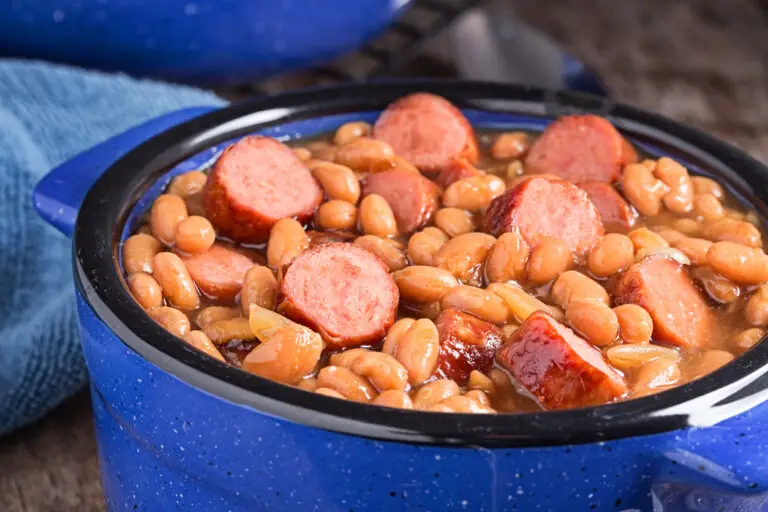
Classic Franks and Beans Casserole Recipe
Sourced from a 1958 Good Housekeeping Cook Book, this franks and beans casserole combines canned baked beans with pork, ketchup, minced onion, yellow mustard, and Worcestershire sauce, then bakes at 350°F with hot dogs until richly sauced and bubbling. A cornerstone of American postwar cookout cooking, it requires fewer than ten minutes of prep and produces a crowd-feeding baked beans casserole that travels beautifully to summer potlucks, neighborhood gatherings, and church socials.
- Total Time: 40 Minutes
- Yield: 12-15 Servings 1x
Ingredients
- 3 - 28 oz cans baked beans with pork
- 3/4 cup ketchup
- 3/4 cup minced onion
- 1 1/2 tablespoons yellow mustard
- 3/4 teaspoon Worcestershire sauce
- 2 1/2 pounds hot dogs
Instructions
- Preheat the Oven: Preheat the oven to 350°F.
- Mix Ingredients: In a large mixing bowl, combine baked beans, ketchup, minced onion, yellow mustard, and Worcestershire sauce. Stir until evenly combined.
- Assemble the Casserole: Add the hot dogs to the bean mixture and stir to incorporate. For easier serving, cut hot dogs into 1-inch pieces before adding. For classic buffet presentation, leave them whole.
- Prepare Casserole Dish: Transfer the mixture to a large roasting pan or casserole dish.
- Bake: Bake uncovered for 25 to 30 minutes, or until the casserole is hot and actively bubbling around the edges.
- Serve: Serve directly from the pan.
- Prep Time: 10 Minutes
- Cook Time: 30 Minutes
- Category: Casseroles, Side Dish
- Method: Baking
- Cuisine: American
Tips for a Perfect Franks and Beans Casserole
You genuinely cannot ruin this recipe if you follow a few simple principles. It was designed to be forgiving.
Keep the Sauce Exactly as Written First
The 1958 formula uses ketchup, yellow mustard, minced onion, and Worcestershire, and that is a complete sauce. If you want to experiment, change one element at a time on your next batch so you can actually taste the difference. Adding a dash of hot sauce works beautifully for heat lovers, but throw in too many extras at once and you will lose track of what's working.
Raw Onion vs. Sautéed Onion
The original recipe stirs raw minced onion directly into the beans before baking. This works well because the onion cooks through during the 30 minutes in the oven and essentially melts into the sauce. If you prefer a sweeter, milder onion flavor, you can saute onion briefly over medium heat in a bit of butter before adding it to the bean mixture. Both approaches are correct. They just produce slightly different results, and knowing that gives you flexibility.
Use the Right Pan Size
A large roasting pan or a 9x13-inch casserole dish works perfectly for this recipe. You want enough surface area so the bean mixture heats evenly from the edges inward. If the beans are piled more than two inches deep, the center will take longer to heat through than the outer edges, which leads to uneven results.
Watch the Clock at 25 Minutes
This recipe bakes at 350°F for 25 to 30 minutes. Set a timer for 25 minutes and check for active bubbling around the edges. When the sauce is visibly bubbling and the hot dogs are plump and heated through, the casserole is ready. Overbaking dries out the beans and toughens the hot dogs, and there is no rescuing either of those outcomes. Pull it out as soon as it is done.
A Note on Vintage Can Sizes
The original recipe specifies "No. 3 cans," a standard large-size designation from the 1958 American grocery market. The modern equivalent is a large 28-oz can of baked beans with pork, which is readily available at any grocery store. Three of those cans produce a hearty casserole that serves 10 to 12 as a main dish or 15 to 18 as a potluck side dish alongside other plates.
Recipe Variations, Serving Ideas, & Storage
Recipe Variations
The original 1958 recipe is genuinely excellent as written, and it deserves at least one faithful test run before you start adjusting things. That said, the base is flexible enough to work with several changes if you want to make it your own.
Frequently Asked Questions
Franks and beans casserole works beautifully in a slow cooker. Combine all the ingredients, set the slow cooker on low for four to five hours or high for two to three hours, and the result is a deeply flavored dish ready to serve directly from the insert. This method is especially practical for potlucks and outdoor events where oven access is limited.
Franks and beans casserole can absolutely be assembled the day before. Combine all the ingredients in your casserole dish, cover tightly with foil, and refrigerate overnight. Bake the next day as directed, adding approximately five extra minutes to the baking time to account for the cold start from the refrigerator.
The original 1958 recipe is designed for a large crowd and works best in a large roasting pan. If you are scaling to three 28-oz cans of baked beans, a 9x13-inch casserole dish handles the recipe well. The dish should be large enough that the bean mixture is not more than two inches deep, which ensures even heating throughout.
Sliced hot dogs work perfectly in this recipe and are actually easier to serve from a casserole or buffet dish than whole ones. Cut them into one-inch pieces before stirring them into the bean mixture. The original 1958 recipe arranges whole hot dogs for a classic buffet presentation, but sliced hot dogs distribute more evenly and make every serving consistent.
Adding brown sugar to franks and beans casserole is a popular and well-tested variation. Stir one to two tablespoons of brown sugar into the bean mixture before baking for a caramelized sweetness that deepens the overall flavor. The original 1958 Good Housekeeping recipe does not include brown sugar, so start with a small amount and taste the mixture before committing.
Any hot dog variety works in this franks and beans casserole, from classic pork-and-beef franks to all-beef hot dogs. A higher quality frank will produce a more flavorful result, since the hot dogs absorb the bean sauce as they bake and contribute their own character to the dish. Smoked sausage or kielbasa makes an excellent substitute if you want a richer, smokier overall flavor.
My eldest daughter couldn't eat the name brand hot dogs (O.M.) without being sick, so I always made this recipe with natural casing hot dogs.
Franks and beans casserole keeps well in the refrigerator for up to four days when stored in an airtight container. The beans will thicken as they cool, so stir in a small splash of water when reheating to restore the sauce to its original consistency.
Franks and beans casserole freezes well for up to two months. Allow the casserole to cool completely before transferring to freezer-safe airtight containers. Thaw overnight in the refrigerator, then reheat on the stovetop over medium heat or in a 350°F oven covered with foil for about 15 minutes.
Made with three large 28-oz cans of baked beans and 2.5 pounds of hot dogs, this franks and beans casserole serves 10 to 12 people as a main dish or about 15 as a hearty side dish at a potluck or buffet. The recipe scales easily: cut all ingredients in half for a smaller gathering, or use the larger vintage No. 3 cans (approximately 46 oz each) for a truly crowd-sized batch.
Pin This Classic Franks and Beans Casserole Recipe For Later
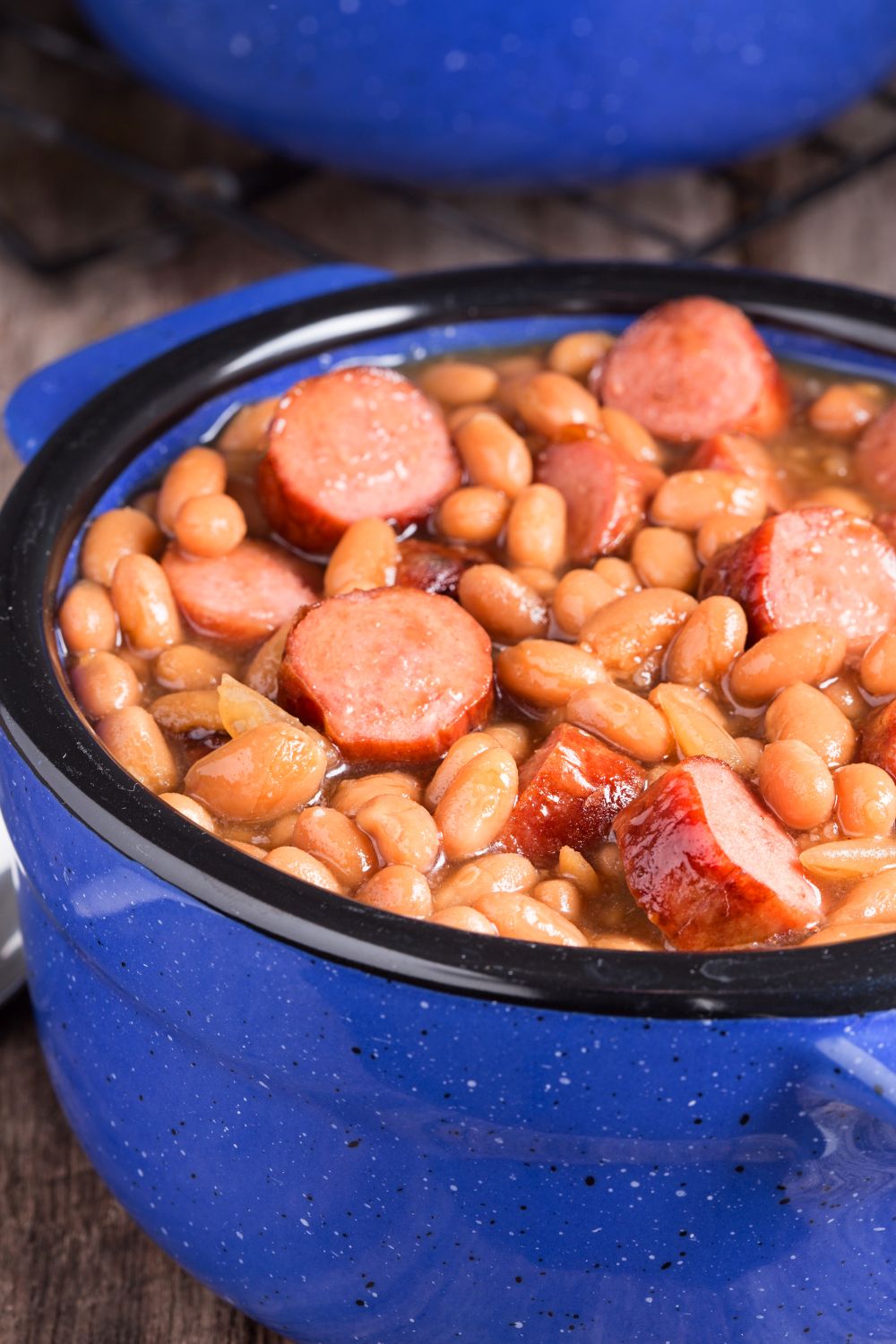
A Summer Classic Worth Saving
If you have been wondering what to bring to the next cookout, you now have a documented answer from 1958. Set this franks and beans casserole on the buffet table next to the green salad and the crusty bread, and watch it empty before you have had a chance to fill your own plate.
If you make this franks and beans casserole, please leave a rating and a review below! Did your family have a version of this growing up, with a secret addition that made theirs the one everyone requested? I want to know every detail.


0 comments