

Irish lamb stew with Guinness cooks lamb shoulder to fork-tender in about 2.5 hours using stovetop simmering or 6 hours in a slow cooker. The Guinness serves a dual purpose: its acidity breaks down tough connective tissue in the lamb shoulder while adding malty depth to the broth. Split peas dissolve completely during cooking, thickening the liquid without the pasty texture you get from flour-based roux. This isn't complicated cooking. It's controlled heat applied long enough for chemistry to do its job.
The smell of lamb simmering in Guinness filled Irish pub kitchens long before slow cookers existed. That malty, slightly bitter aroma mixing with caramelized onions and fresh thyme signaled a meal substantial enough to fuel farmers through cold, damp afternoons. The bubbling pot on the stove required attention, but that's exactly what made the stew taste right.
Irish Kitchens in the 18th Century
Irish stew emerged from rural necessity during the 17th and 18th centuries when shepherds and farming families needed to stretch tough cuts of mutton into filling meals. Most Irish cottages had a single cooking vessel hanging over a peat fire, so one-pot meals became the standard rather than the exception. Families used what they raised themselves: lamb or mutton from their own flocks, potatoes and onions from their gardens, and water from the well.
The original Irish stew contained exactly three ingredients: mutton, potatoes, and onions. That's it. No carrots, no fancy herbs, no beer. Just those three staples simmered slowly until the meat fell apart and the potatoes thickened the liquid into something resembling gravy. The simplicity wasn't a choice but a reflection of what ordinary Irish families could access.
By the 1800s, when Guinness became widely available beyond Dublin, pub cooks started adding it to their stews. The stout's acidity broke down tough muscle fibers faster than plain water, and the malty flavor gave the broth complexity that plain stock couldn't match. This pub-style version became what most people now think of as "traditional" Irish stew, even though it's actually a later evolution of the original shepherd's meal.
The same Guinness that transformed pub stews also made its way into Irish bread baking. Mag Aonghus Traditional Irish Beer Bread uses that same malty stout to create a quick, yeast-free loaf that pairs perfectly with the rich lamb gravy.
What Makes This Irish Lamb Stew Work
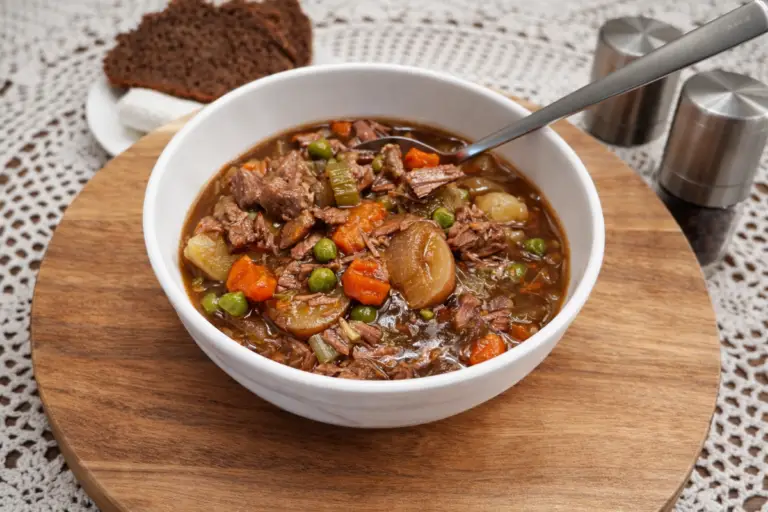
Traditional Irish Lamb Stew with Guinness
This traditional Irish lamb stew simmers lamb shoulder with Guinness stout, creating fork-tender meat in a rich, malty broth. The stovetop method gives you complete control over texture and seasoning, while split peas naturally thicken the gravy without heavy flour roux.
- Total Time: 2 hours 50 minutes
- Yield: 6 servings 1x
Ingredients
- 2 to 2 1/2 pounds lamb shoulder, cut into 1 1/2-inch cubes
- 2 tablespoons olive oil or vegetable oil
- 1/2 large yellow onion, diced
- 1/8 cup dried split peas
- 11.2 ounces Guinness Stout (1 bottle)
- 1 cup plus 2-3 tablespoons beef broth, divided
- 4 sprigs fresh thyme
- 2 large carrots, sliced into 1/2-inch rounds
- 3 stalks celery, sliced
- 1 pound baby potatoes (such as Spudlings), halved
- 1 cup fresh or frozen peas
- 2 tablespoons cornstarch
- Salt and black pepper to taste
Instructions
Stovetop Method:
- Pat lamb cubes dry with paper towels. Season generously with salt and black pepper on all sides.
- Heat oil in a large Dutch oven or heavy-bottomed pot over medium-high heat. When oil shimmers, add lamb in a single layer (work in batches if necessary to avoid crowding). Sear 3-4 minutes per side until deeply browned. Transfer to a plate and set aside.
- Reduce heat to medium. Add diced onion to the pot and cook 3-4 minutes, scraping the bottom to release browned bits, until onion softens and turns translucent.
- Return seared lamb to the pot. Add split peas, Guinness stout, 1 cup beef broth, and thyme sprigs. Stir to combine, scraping up any remaining browned bits from the bottom.
- Bring to a full boil, then immediately reduce heat to low. Cover and maintain a gentle simmer for 90 minutes. Check occasionally and adjust heat if needed to prevent hard boiling.
- After 90 minutes, add potatoes and carrots. Stir gently, cover, and simmer 30 minutes more.
Add celery and continue simmering covered for 15 minutes. - In a small bowl, whisk cornstarch with 2-3 tablespoons cold beef broth until completely smooth. Pour into stew and stir thoroughly.
- Add fresh or frozen peas. Simmer uncovered 10 minutes, stirring occasionally, until gravy thickens and peas are heated through.
- Remove thyme sprigs. Taste and adjust salt and pepper. Serve hot with Irish soda bread.
Slow Cooker Method:
- Pat lamb cubes dry and season with salt and pepper. Heat oil in a large skillet over medium-high heat. Sear lamb on all sides until browned, 3-4 minutes per side. Transfer to a 6-quart slow cooker.
- Add split peas, thyme, diced onion, Guinness, and 1 cup beef broth to slow cooker. Stir to combine. Cover and cook on LOW for 4 hours.
- Add potatoes, carrots, celery, and fresh or frozen peas. Stir gently. Cover and cook on LOW for 2 hours more.
- In a small bowl, whisk cornstarch with 2-3 tablespoons cold beef broth until smooth. Pour into slow cooker and stir thoroughly.
- Cover and cook on LOW for 30-40 minutes more until gravy thickens. Remove thyme sprigs, adjust seasoning, and serve.
Equipment

Lodge 7.5 Quart Enameled Cast Iron Dutch Oven
Buy Now →
Crock-Pot 6 Quart Cook & Carry Programmable Slow Cooker
Buy Now →Notes
- Lamb shoulder works for this recipe because of its marbling and connective tissue. Leg of lamb is too lean and dries out.
- Don’t skip searing the lamb. Those caramelized bits create half the stew’s flavor.
- Split peas dissolve completely. You won’t see them in the final dish.
- For thicker stew, use 3 tablespoons cornstarch. For thinner, use 1 tablespoon.
- Guinness can be substituted with another stout. Don’t use lighter beers.
- Prep Time: 20 minutes
- Cook Time: 2 hours 30 minutes
- Category: Soups & Stews
- Method: Stovetop
- Cuisine: Irish
How to Make Perfect Irish Lamb Stew
Recipe Variations, Serving Ideas, & Storage
Recipe Variations
Frequently Asked Questions
Yes. Substitute equal parts beef broth and add 1 tablespoon balsamic vinegar to replicate the stout's acidity. The vinegar helps tenderize lamb, though you lose the malty depth. Expect to add 30 minutes to the cooking time since you're missing the enzymatic action from the roasted barley in Guinness.
Lamb shoulder. It contains enough intramuscular fat and connective tissue to stay moist during extended cooking. Leg of lamb is too lean and becomes dry and stringy. Lamb neck works if you can find it, though it requires slightly longer cooking time and more trimming.
Test a piece with a fork after 90 minutes. Properly cooked lamb pulls apart with gentle pressure but doesn't fall into shreds. If the fork meets resistance, cook another 15-20 minutes and test again. The transition from tough to tender happens fairly quickly once you hit the right temperature.
You either didn't cook the cornstarch slurry long enough or you skipped the split peas. After adding cornstarch, simmer uncovered for a full 30 minutes to activate its thickening power. The split peas also contribute thickening as they dissolve completely during cooking.
Yes. Sear lamb using sauté function. Add all ingredients except vegetables and cornstarch. Pressure cook high for 25 minutes with natural release. Add vegetables and pressure cook 5 more minutes with quick release. Stir in cornstarch slurry and simmer on sauté for 10 minutes.
Waxy potatoes like Yukon Gold, red potatoes, or baby potatoes. They hold their shape during extended simmering. Russet potatoes break down and disappear into the broth, which over-thickens it. Cut larger potatoes into 1½-inch chunks if you're not using baby potatoes.
Leave some fat on the lamb shoulder. The marbling keeps meat moist during cooking and adds flavor to broth. Trim only external fat caps thicker than ¼ inch. The fat renders during cooking and contributes to mouthfeel.
Soak lamb chunks in milk for 30 minutes before patting dry and searing. Milk enzymes neutralize compounds that create gamey taste. Rinse and dry thoroughly before cooking. Alternatively, increase Guinness to 1½ bottles for more pronounced malty flavor that masks gaminess.
Yes. Use a 7-8 quart Dutch oven to accommodate the volume. Brown lamb in 3-4 batches to avoid crowding. Cooking time stays the same because you're still achieving the same internal temperature in the meat, just in larger quantity.

Irish lamb stew with Guinness works because the technique aligns with how lamb shoulder responds to heat and acidity over time. The Guinness breaks down collagen. The gentle simmer keeps muscle fibers tender. The split peas thicken without masking flavor. The staged vegetables hit proper doneness simultaneously. Each step has a specific function based on reliable food science principles.
The stovetop method requires more attention than slow cooker but gives you complete control over texture and seasoning. You can monitor the simmer, adjust timing based on what you observe, and taste throughout the process. That control means better results if you're willing to check the pot periodically.
How do you usually serve Irish stew? Do you stick with traditional soda bread, or have you found pairings that work better for your table? If you make this Irish lamb stew with Guinness, leave a rating and review.
0 comments