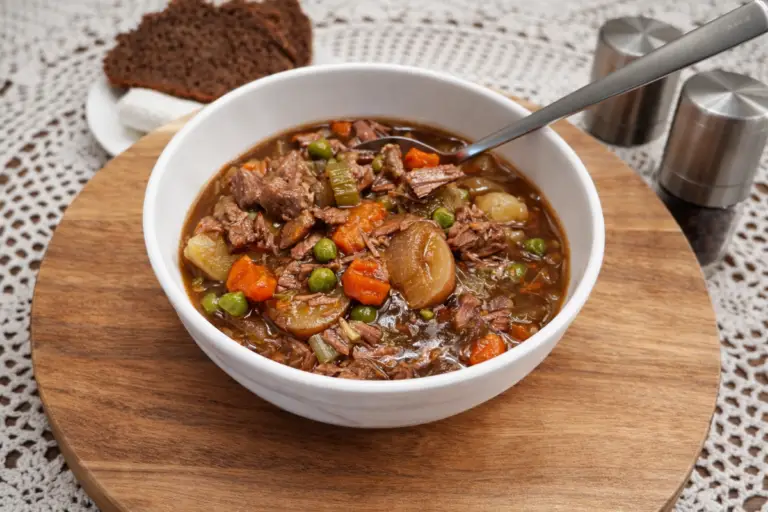
Ingredients
Units Scale
- 2 to 2 1/2 pounds lamb shoulder, cut into 1 1/2-inch cubes
- 2 tablespoons olive oil or vegetable oil
- 1/2 large yellow onion, diced
- 1/8 cup dried split peas
- 11.2 ounces Guinness Stout (1 bottle)
- 1 cup plus 2-3 tablespoons beef broth, divided
- 4 sprigs fresh thyme
- 2 large carrots, sliced into 1/2-inch rounds
- 3 stalks celery, sliced
- 1 pound baby potatoes (such as Spudlings), halved
- 1 cup fresh or frozen peas
- 2 tablespoons cornstarch
- Salt and black pepper to taste
Instructions
Stovetop Method:
- Season the lamb: Pat lamb cubes dry with paper towels. Season generously with salt and black pepper on all sides.
- Sear the lamb: Heat oil in a large Dutch oven or heavy-bottomed pot over medium-high heat. When oil shimmers, add lamb in a single layer (work in batches if necessary to avoid crowding). Sear 3-4 minutes per side until deeply browned. Transfer to a plate and set aside.
- Soften the onion: Reduce heat to medium. Add diced onion to the pot and cook 3-4 minutes, scraping the bottom to release browned bits, until onion softens and turns translucent.
- Build the stew: Return seared lamb to the pot. Add split peas, Guinness stout, 1 cup beef broth, and thyme sprigs. Stir to combine, scraping up any remaining browned bits from the bottom.
- Simmer the stew: Bring to a full boil, then immediately reduce heat to low. Cover and maintain a gentle simmer for 90 minutes. Check occasionally and adjust heat if needed to prevent hard boiling.
- Add root vegetables: After 90 minutes, add potatoes and carrots. Stir gently, cover, and simmer 30 minutes more.
- Add celery: Add celery and continue simmering covered for 15 minutes.
- Thicken the gravy: In a small bowl, whisk cornstarch with 2-3 tablespoons cold beef broth until completely smooth. Pour into stew and stir thoroughly.
- Add peas: Add fresh or frozen peas. Simmer uncovered 10 minutes, stirring occasionally, until gravy thickens and peas are heated through.
- Season and serve: Remove thyme sprigs. Taste and adjust salt and pepper. Serve hot with Irish soda bread.
Slow Cooker Method:
- Sear the lamb: Pat lamb cubes dry and season with salt and pepper. Heat oil in a large skillet over medium-high heat. Sear lamb on all sides until browned, 3-4 minutes per side. Transfer to a 6-quart slow cooker.
- Start slow cooker: Add split peas, thyme, diced onion, Guinness, and 1 cup beef broth to slow cooker. Stir to combine. Cover and cook on LOW for 4 hours.
- Add vegetables: Add potatoes, carrots, celery, and fresh or frozen peas. Stir gently. Cover and cook on LOW for 2 hours more.
- Thicken the gravy: In a small bowl, whisk cornstarch with 2-3 tablespoons cold beef broth until smooth. Pour into slow cooker and stir thoroughly.
- Finish and serve: Cover and cook on LOW for 30-40 minutes more until gravy thickens. Remove thyme sprigs, adjust seasoning, and serve.
Notes
- Lamb shoulder works for this recipe because of its marbling and connective tissue. Leg of lamb is too lean and dries out.
- Don’t skip searing the lamb. Those caramelized bits create half the stew’s flavor.
- Split peas dissolve completely. You won’t see them in the final dish.
- For thicker stew, use 3 tablespoons cornstarch. For thinner, use 1 tablespoon.
- Guinness can be substituted with another stout. Don’t use lighter beers.
- Prep Time: 20 minutes
- Cook Time: 2 hours 30 minutes
- Category: Soups & Stews
- Method: Stovetop
- Cuisine: Irish