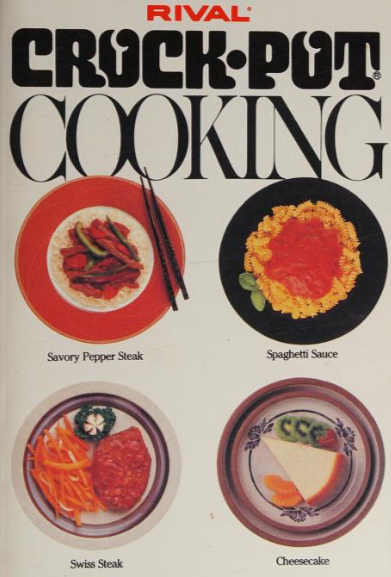
The Crock-Pot started life as the Naxon Beanery, patented by Irving Naxon in 1940. Naxon built it around cholent, a Jewish stew of meat and beans that cooks slowly on Fridays for the Sabbath. It never caught on, and in 1970 Rival Manufacturing of Kansas City bought it almost as an afterthought. Rival's president later said "we almost forgot about it."
A test-kitchen employee named Marilyn Neill realized it could cook far more than beans. The renamed Crock-Pot debuted at the 1971 National Housewares Show in Chicago, dressed in avocado and harvest gold, with a price of $25. Ads told women they could "cook all day while the cook's away." Sales hit $2 million in the first year and reached $93 million four years later.
The timing connects to the decade's two pressures. More women were working outside the home, and an oil crisis had Americans watching their energy use. Rival's home economists answered the question "What does it cost to run all day?" with 4 cents, far less than an oven.
Rival's test kitchen produced the recipe booklet in every box, and the early recipe names tell you the era. They included "Busy Woman's Roast Chicken" (chicken, carrots, and a package of stuffing mix) and "Male Chauvinist Chili." Smithsonian curator Paula Johnson notes the Crock-Pot mostly served middle-class women who could afford it, and that it sometimes raised expectations rather than lowering the workload.