

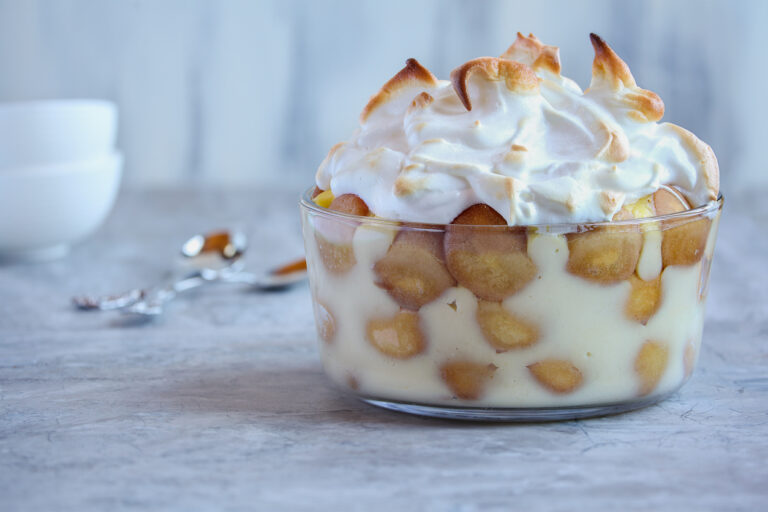
In 1976, when America was throwing itself a Bicentennial birthday party, this banana pudding with meringue was showing up at every potluck and family reunion in the South. Made from scratch, never from a box. The custard comes together in about ten minutes of stirring, and the meringue bakes into soft, golden peaks that stay tall without weeping overnight. If you've ever wondered why your grandmother's version tasted so much better than anything you've made since, this is why.
The secret is in the custard method. Unlike modern recipes that rely on instant pudding mix, this vintage approach cooks egg yolks with milk, sugar, and cornstarch on the stovetop until it thickens to coat the back of a spoon. The result is smooth, rich vanilla pudding with a depth of flavor no box can replicate.
I've made banana pudding dozens of ways over the years (it's Sully's favorite!), and this 1970s method consistently produces the most reliable results. The meringue topping browns beautifully, the bananas stay protected from browning when layered properly, and the vanilla wafers soften to that perfect tender texture without turning to mush. Every element works together in a way that reminds you why this dessert has survived generations.
Back in the 1976 Kitchen
While Elton John and Kiki Dee's "Don't Go Breaking My Heart" played on AM radio, families gathered around avocado-green kitchen tables for Sunday dinners that often ended with banana pudding. This was the year of America's Bicentennial celebration, and kitchens across the country were filled with casserole dishes and desserts made for sharing.
Banana pudding held its place as the go-to potluck dessert for a practical reason: it traveled well, served a crowd, and used ingredients that didn't require a special trip to the store. Most households already had eggs, milk, sugar, and vanilla wafers in the pantry. The meringue topping meant no need for expensive heavy cream or fancy decorations. This was food designed to be made by home cooks who didn't have time for complicated techniques but still wanted to serve something special.
This recipe appeared in community cookbooks and passed from neighbor to neighbor at church potlucks and PTA meetings. The method stayed consistent because it worked reliably every single time.
Why This Old Fashioned Banana Pudding With Meringue Works
Old Fashioned 1970s Banana Pudding With Meringue Recipe
This vintage banana pudding from 1976 layers silky homemade vanilla custard with Nilla wafers and fresh bananas, topped with golden-brown meringue toasted to perfection. Made completely from scratch with no instant pudding mix, this Southern classic delivers authentic vanilla flavor and creamy texture in under an hour.
- Total Time: 55 Minutes
- Yield: 6 Servings 1x
Ingredients
- 1/3 cup granulated sugar
- 2 tablespoons cornstarch
- 2 egg yolks
- 1 3/4 cups milk
- 1/8 teaspoon vanilla extract
- About 30 vanilla wafers
- 4 bananas, sliced 1/4-inch thick
- 2 egg whites
- 2 tablespoons granulated sugar
- 1/4 teaspoon vanilla extract
Instructions
Make the Vanilla Custard:
- In a medium saucepan, whisk together ⅓ cup sugar and cornstarch until no lumps remain.
- Beat the egg yolks with the milk in a separate bowl, then pour into the saucepan with the sugar mixture.
- Cook over medium heat, stirring constantly with a whisk, for 10-12 minutes until the mixture thickens enough to coat the back of a spoon.
- Remove from heat and stir in 1/12 teaspoon vanilla extract. Let cool for 10 minutes.
Layer the Pudding:
- In a 1-quart baking dish, arrange about half of the vanilla wafers to cover the bottom.
- Layer half of the banana slices over the wafers.
- Pour half of the vanilla custard over the bananas, spreading gently to cover.
- Repeat with remaining wafers, bananas, and custard.
Make the Meringue:
- Preheat oven to broil, positioning rack about 6 inches from heating element.
- In a clean, grease-free bowl, beat egg whites with an electric mixer on high speed until soft peaks form, about 2-3 minutes.
- Gradually add 2 tablespoons sugar, 1 teaspoon at a time, beating continuously.
- Add ¼ teaspoon vanilla and continue beating until stiff peaks form and the meringue looks glossy.
Finish and Serve:
- Spread meringue over the pudding, making sure it touches the edges of the dish all around to seal.
- Use the back of a spoon to create peaks and swirls in the meringue.
- Broil for 2-3 minutes, rotating once, until meringue is golden brown. Watch carefully to prevent burning.
- Let cool for 15 minutes, then refrigerate for at least 2 hours before serving.
Notes
- The custard should thicken noticeably while cooking. If it remains thin after 12 minutes, continue cooking and stirring until it coats the back of a spoon.
- Room temperature egg whites beat to greater volume than cold eggs. Separate eggs while cold, then let whites sit at room temperature for 15-20 minutes.
- Any grease or fat in your mixing bowl will prevent egg whites from reaching stiff peaks. Make sure your bowl and beaters are completely clean and dry.
- For homemade vanilla wafers, use our 1950s Crispy Homemade Vanilla Wafers Recipe
- Prep Time: 20 Minutes
- Cook Time: 35 Minutes
- Category: Dessert
- Method: Stovetop
- Cuisine: American
How to Make Perfect Old Fashioned Banana Pudding
Recipe Variations, Serving Ideas, & Storage
Recipe Variations
Frequently Asked Questions
You can substitute instant vanilla pudding mix, but the flavor and texture won't match this vintage recipe. Instant pudding has artificial vanilla flavor and contains stabilizers that create a different mouthfeel. The homemade custard takes only 10 minutes of stirring and delivers far superior flavor that's worth the minimal extra effort.
Lumps form when the heat is too high and the eggs cook too quickly, or when the sugar and cornstarch aren't whisked together thoroughly at the start. Always use medium heat and whisk constantly during cooking. If you do get a few small lumps, you can strain the custard through a fine-mesh sieve before layering.
Layer the bananas between the vanilla wafers and custard so they're completely covered with minimal air exposure. Some recipes suggest tossing banana slices in lemon juice, but I find this adds unwanted tartness. Proper layering and refrigeration keeps bananas looking fresh for 2-3 days.
Weeping happens when the meringue isn't sealed to the edges of the dish, allowing moisture to seep underneath. Make sure your meringue touches all sides of the dish and that you've beaten the egg whites to stiff peaks with the sugar fully incorporated. Avoiding baking on humid days also helps prevent weeping.
Yes, but save the meringue for serving day if possible. Assemble the custard, wafers, and banana layers up to 24 hours ahead and refrigerate covered. Make the meringue and toast it 2-4 hours before serving for the best texture and appearance.
Cornstarch creates a smoother, silkier custard with a more translucent appearance, while flour produces a slightly thicker, more opaque pudding with a hint of cooked flour taste. This vintage recipe uses cornstarch for that classic smooth, glossy finish. You'll need to use about twice as much flour if substituting (¼ cup flour for 2 tablespoons cornstarch).
Absolutely! Double all ingredients and use a 9x13-inch baking dish. The custard cooking time may increase slightly to 12-15 minutes since you're working with more volume. You'll need 4 egg whites for the meringue, which creates a spectacular tall topping perfect for potlucks.
The wafers are supposed to soften as they absorb moisture from the custard. This transforms them from crispy cookies to tender, cake-like layers that meld with the pudding. If they're turning to complete mush, your custard might be too thin. Make sure it thickens properly on the stovetop before layering.
Traditional vanilla wafers are the classic choice, but you can substitute graham crackers for a slightly different flavor. Avoid cookies that are too hard or dense, as they won't soften properly in the custard.
The meringue is ready when the peaks turn golden brown while the valleys remain pale. This usually takes 2-3 minutes under the broiler or 10-12 minutes at 350°F. The meringue should look dry and set, not wet or sticky. It will firm up more as it cools.
Pin This Old Fashioned 1970s Banana Pudding Recipe For Later

A Dessert That Earns Its Place at the Table
Banana pudding with meringue is one of those dishes that never needed updating; it just needed someone to keep making it from scratch. The custard, the vanilla wafers, the golden peaks that hold their shape all the way to the potluck table. It's the kind of dessert that quietly becomes the thing people request again and again.
Did this show up at your family's table growing up? I'd love to know whose kitchen it came from! Drop a memory in the comments below. And if you make this recipe, please leave a rating and review! It helps more people find their way back to the good stuff. ⭐⭐⭐⭐⭐
0 comments