

Here is one our all-time favorite vintage recipes, hands down. These authentic three meat Swedish meatballs combine beef, veal, and pork with cream-soaked breadcrumbs and a secret ingredient that deepens the gravy to restaurant quality. The technique of mixing ground meat twice and adding instant coffee creates meatballs that stay impossibly tender while the gravy develops rich, savory notes you won't find in simplified versions. This vintage recipe from the 1970s makes 30 generous meatballs, perfect for feeding a crowd or freezing half for a weeknight dinner that tastes like you spent hours in the kitchen.
The first time I made these with my parents, my dad and I locked eyes mid-bite, both wide-eyed in the kind of disbelief reserved for food that has no business being this good. That moment - forks suspended, silent acknowledgment passing between us - is what great aunt Hazel's worn cookbook pages promised all along.
Back in the 1970s Kitchen
Dinner parties in the 1970s ran on a different fuel than today's casual gatherings. Chafing dishes lined sideboards, fondue pots bubbled on coffee tables, and Swedish meatballs appeared at nearly every cocktail party between 1972 and 1979. Home cooks drove to actual butcher counters, asking for ground veal alongside their usual beef and pork, because authenticity mattered.
The combination of three meats was practical: beef provided depth, pork added fat for tenderness, and veal brought a delicate texture that kept meatballs from turning dense. Breadcrumbs soaked in cream created an almost paté-like interior.
This recipe required time and attention, qualities that defined entertaining in an era before meal kits and grocery delivery. You mixed the meat twice, shaped each meatball by hand, browned them in real butter, and built a gravy from the pan drippings. The process said something about the cook, about caring enough to do things right. Swedish meatballs weren't just food, they were proof you knew your way around a kitchen.
What Makes This Swedish Meatball Recipe Authentic
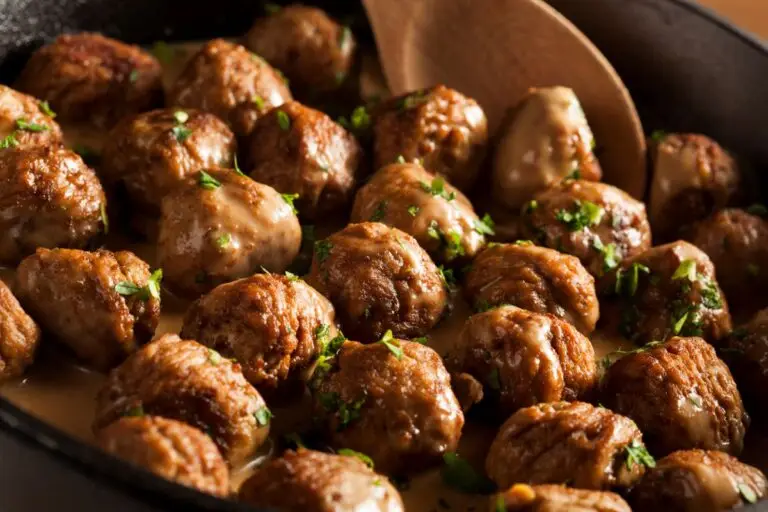
Classic Three Meat Swedish Meatballs Recipe
These tender, creamy Swedish meatballs combine three meats with cream-soaked breadcrumbs and a secret ingredient (instant coffee!) that makes the gravy unforgettable. This vintage 1970s recipe produces 30 restaurant-quality meatballs perfect for entertaining or freezing for easy weeknight dinners.
- Total Time: 65 minutes
- Yield: 30 meatballs 1x
Ingredients
- 3/4 pound lean ground beef
- 1/2 pound ground veal
- 1/4 pound ground pork
- 1 1/2 cups soft bread crumbs
- 1 cup light cream or half & half
- 1/2 cup chopped onion
- 1 large egg
- 1/4 cup finely-chopped fresh parsley
- 1 1/4 teaspoons salt
- Dash of ground ginger
- Dash of black pepper
- Dash of ground nutmeg
- 2-3 tablespoons butter (for browning)
- 2 tablespoons all-purpose flour
- 1/2 cup canned condensed beef broth
- 3/4 cup cold water
- 1/2 teaspoon instant coffee granules
Instructions
- Prepare the meat mixture: Ask your butcher or grocery store meat counter to grind the beef, veal, and pork together twice. If using pre-ground meat, mix it thoroughly by hand for 2-3 minutes first. Transfer to a large mixing bowl.
- Soak the breadcrumbs: In a small bowl, combine the soft bread crumbs with the light cream. Let soak for about 5 minutes until the cream is fully absorbed and the breadcrumbs are very soft.
- Cook the onion: In a large skillet, cook the chopped onion in 1 tablespoon butter over medium heat until tender and translucent, about 5-6 minutes. Set aside to cool slightly.
- Combine ingredients: To the ground meat, add the soaked breadcrumb mixture, cooked onion, egg, parsley, salt, ginger, pepper, and nutmeg. Using an electric hand mixer on medium speed, beat the mixture until fluffy and well combined, about 5 minutes. The mixture should be slightly sticky and hold together well.
- Form meatballs: With dampened hands, shape the mixture into 1½-inch balls (about 30 meatballs total). Place formed meatballs on a plate or baking sheet.
- Brown the meatballs: In the same large skillet, melt 2 tablespoons (or more) butter over medium heat. Working in batches to avoid crowding, brown the meatballs on at least two sides, turning gently. This should take about 6-8 minutes per batch. Remove browned meatballs to a plate and set aside.
- Make the gravy: Using the same skillet with the drippings, stir in the flour, scraping up all the browned bits from the bottom. Cook for 1 minute, stirring constantly. Gradually add the beef broth, cold water, and instant coffee. Heat over medium heat, stirring constantly until the gravy thickens, about 3-4 minutes.
- Simmer the meatballs: Return all the meatballs to the skillet with the gravy. Cover and cook over low heat for about 30 minutes, basting the meatballs with gravy occasionally. The meatballs should reach an internal temperature of 160°F.
- Serve: Transfer to a serving dish and serve hot over buttered egg noodles, mashed potatoes, or wild rice.
Notes
- Meat substitution: If veal is unavailable (or if you prefer not to use it), use 1 pound ground beef and ½ pound ground pork instead.
- Instant coffee: Don’t skip the coffee! It adds depth without making the gravy taste like coffee.
- Prep Time: 20 minutes
- Cook Time: 45 minutes
- Category: Appetizer, Main Dish
- Method: Stovetop
- Cuisine: Swedish, Scandinavian
How to Make Perfect Three Meat Swedish Meatballs
Recipe Variation, Serving Ideas, & Storage
Recipe Variations
Frequently Asked Questions
Yes, these meatballs actually improve when made a day ahead. Brown the meatballs, make the gravy, and combine them in a covered container in the refrigerator overnight. The flavors meld together beautifully. Reheat gently in a covered pot over medium-low heat, stirring occasionally, adding a splash of cream if the gravy has thickened too much.
Meatballs fall apart when the mixture hasn't been mixed enough to develop the proteins that bind everything together. Make sure you're beating the mixture for the full five minutes, and that you've ground the meat twice if possible. The mixture should feel slightly sticky when properly mixed. Also, be gentle when turning them during browning, and make sure your butter isn't too hot.
You can, but the texture will be drier and the flavor less delicate. If you're substituting turkey, increase the cream-soaked breadcrumbs by a quarter cup to compensate for turkey's lean nature. The meatballs won't have quite the same melt-in-your-mouth quality, but they'll still be good.
The instant coffee adds depth and amplifies the savory flavors in the beef broth without making the gravy taste like coffee. It's the same principle as adding cocoa powder to chili or espresso to chocolate cake. You won't taste coffee, but you'll notice the gravy tastes richer and more complex. Don't skip it.
After browning and simmering in gravy for 30 minutes as directed, cut one meatball in half to check. It should be uniformly brown throughout with no pink remaining, and an instant-read thermometer should register 160°F in the center. The meatballs should be firm but still tender when pressed.
These freeze nicely for up to three months. Cool completely, transfer to freezer-safe containers with enough gravy to cover the meatballs, and freeze. Thaw overnight in the refrigerator before reheating gently on the stovetop. The gravy may separate slightly when thawed, but whisking as it reheats brings it back together.
Swedish meatballs use cream-soaked breadcrumbs instead of egg-bound breadcrumbs, creating a more delicate texture. They're seasoned with warm spices like nutmeg, allspice, and ginger rather than garlic and herbs. The gravy is cream-based rather than tomato-based, and Swedish meatballs are traditionally smaller. Swedish versions also often use a combination of three meats for complexity.
Traditional Swedish meatballs do include veal for its delicate texture, but you can substitute with all beef and pork. Use one pound of beef and half pound of pork if you can't find veal. The meatballs will be slightly denser but still delicious. Some butchers carry ground veal only by special order, so call ahead if you want to stay authentic.
Double-grinding creates a finer, more uniform texture that helps the meatballs hold together without becoming tough. The proteins break down more completely, creating an almost emulsified consistency. If you're using pre-ground meat, compensate by mixing the meat mixture very thoroughly for at least five minutes.
After browning the meatballs and making the gravy on the stovetop, you can transfer everything to a slow cooker set to low for 2-3 hours. This works well for parties, keeping the meatballs warm and letting the flavors continue to develop. Don't try to cook raw meatballs directly in the slow cooker, as they need the initial browning for flavor and texture.

These three-meat Swedish meatballs represent a time when recipes were written in cursive on index cards and passed between neighbors who knew good food required more than a microwave. The combination of cream, coffee, and patient browning produces meatballs that taste nothing like their frozen counterparts, and everything like someone's grandmother knew exactly what she was doing. I hope you enjoy this recipe as much as we do!
Did your family serve Swedish meatballs at parties, or was there another appetizer that always appeared on the table? If you make this authentic three meat Swedish meatballs recipe, please leave a rating and review!
0 comments