

Tucked in my collection of vintage cookbooks, this 1953 classic lemon sponge cake recipe caught my attention because it delivers bakery-quality results using just meringue, lemon rind, and fresh-squeezed lemon juice. The separated egg method looks intimidating, but you'll beat the egg whites to stiff peaks in about four minutes, and the gentle folding technique actually protects you from overmixing.
Vintage sponge cakes use cake flour instead of all-purpose, which means less gluten development and more forgiveness when you're learning the folding motion (something David Rose never learned). This 1953 method separates the eggs and beats each component with sugar independently, creating two distinct foams that combine into something lighter than either could achieve alone. You're essentially building structure from air, which sounds complicated until you realize our grandmothers did this every Sunday without stand mixers or thermometers.
Back in the Early 1950s Kitchen
While this sponge cake baked in tube pans across America, families gathered around bulky console televisions to watch The Ed Sullivan Show. Eisenhower was president, a gallon of gas cost 20 cents, and most households had just one car parked in the driveway. Women wore full skirts with crinolines, and the phrase "cake mix" was still relatively new, making scratch baking the default rather than a special occasion choice.
This recipe mattered because it required no butter or oil, which were still rationed memories from the war years and felt precious even when readily available. Eggs, sugar, and flour were affordable, though. The recipe traveled from neighbor to neighbor through handwritten cards and telephone calls, building its reputation through reliable results rather than advertising. Church potlucks featured these tall, impressive cakes dusted with powdered sugar or split into layers with fresh whipped cream and strawberries from someone's backyard Victory garden that never quite got replanted with lawn.
Tube pans hung in every kitchen, usually aluminum, often inherited. The center tube conducted heat through the middle of the batter, ensuring even baking without the hot spots that plagued early electric ovens. Hanging the cake upside down, using the cake's own weight to stretch the delicate crumb while it set, prevented the collapse that ruined so many attempts before someone figured out this simple trick.
What Makes This Classic 1950s Sponge Cake Work
Separated Eggs Create Double Structure
Beating egg yolks with sugar creates a thick, pale foam that holds onto tiny air bubbles while adding richness and color. The yolks contain lecithin, a natural emulsifier that helps the batter hold together when you fold in the flour. Beating the whites separately with their portion of sugar builds a meringue with entirely different properties, creating structure through protein networks that trap air and expand in the oven's heat. When you fold these two foams together, you get both richness and height.
Cake Flour Makes Folding Forgiving
Cake flour contains less protein than all-purpose flour, which means less gluten forms when you mix it into the batter. Lower gluten development translates directly into tenderness and also gives you more margin for error during the folding process. You can work the batter a bit longer to ensure everything combines without developing the tough, chewy texture that comes from overworked all-purpose flour. The sifted flour also incorporates more easily, requiring fewer strokes to disappear into the foam.
Lemon Rind and Juice Add Brightness Without Weight
The grated lemon rind contains aromatic oils that perfume the entire cake, while the tablespoon of lemon juice adds just enough acidity to brighten the flavor without interfering with the egg proteins' ability to set. Acid also helps stabilize the egg white foam, though this recipe doesn't need cream of tartar because the lemon juice does that job naturally. The combination tastes like sunshine without the heaviness of lemon curd or frosting.
Room Temperature Eggs Beat to Greater Volume
Cold eggs from the refrigerator don't incorporate as much air when beaten. Room temperature eggs are less viscous, allowing the whisk to move through them more easily and create smaller, more numerous air bubbles. This recipe assumes you're using eggs stored in a cool pantry as most people did in 1953, but if your eggs live in the fridge, set them on the counter for 30 minutes before you start. The temperature difference genuinely affects your final height.
The Ungreased Tube Pan Lets Batter Climb
Sponge cakes need something to grip as they rise, which is why you don't grease the pan. The batter clings to the bare metal as it expands, climbing the sides and center tube to achieve maximum height. When you invert the pan immediately after baking, the cake hangs from those same contact points, stretching gently under its own weight while the structure sets. Greasing the pan would let the batter slide down before it could set, collapsing all your careful work. If this all sounds familiar, you've probably seen the recipe for the 1950s Angel Food cake; they're very similar.
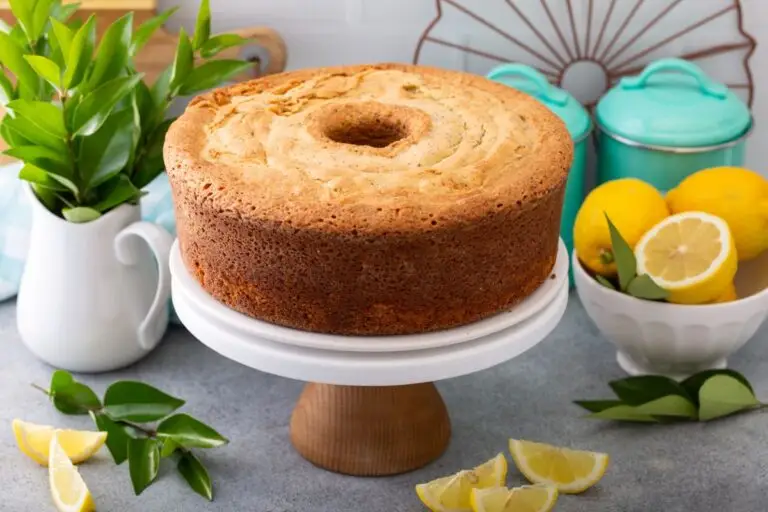
Classic Lemon Sponge Cake Recipe
This authentic 1953 lemon sponge cake uses the separated egg method to create an impossibly light, fluffy tube cake with bright citrus flavor. The meringue technique looks fancy but requires only basic equipment and delivers consistent results even for beginners. Hang the cake upside down while it cools using the same method grandmothers relied on before modern leaveners, and you’ll get that tall, tender crumb that stays fresh for three days. Perfect served plain with powdered sugar, split into layers with whipped cream, or transformed into shortcakes with fresh berries.
- Total Time: 3 Hours 10 Minutes
- Yield: 12 Servings 1x
Ingredients
- 1 cup sifted cake flour
- 1/2 teaspoon salt
- 5 large eggs, separated, at room temperature
- 1 cup granulated sugar, sifted, divided
- Grated rind of 1 lemon (about 1 tablespoon)
- 1 tablespoon fresh lemon juice
Instructions
- Preheat oven: Position oven rack to lower-middle position. Preheat oven to 325°F. Do not grease a 9-inch tube pan. Set aside.
- Sift dry ingredients: Measure cake flour into a sifter after sifting once. Add salt and sift together into a bowl. Set aside.
- Beat egg whites: In a large, completely clean mixing bowl, beat egg whites with an electric mixer on medium speed until foamy, about 1 minute. Gradually add ½ cup sugar, 1 tablespoon at a time, beating well after each addition. Continue beating on high speed until meringue forms stiff peaks that stand straight up, about 4 minutes total. Set aside. Do not wash the beaters.
- Beat egg yolks: In a medium-size bowl, beat egg yolks on medium-high speed until thick and pale yellow, about 2 minutes. Gradually beat in remaining ½ cup sugar, 1 tablespoon at a time, until yolk mixture is very thick and lemon-colored, about 3 minutes. Stir in lemon rind and lemon juice until combined.
- Combine mixtures: Sift flour and salt mixture over the egg yolk mixture. Using a rubber spatula, fold in gently just until blended, about 6 to 8 folds. Do not overmix.
- Fold in meringue: Add the yolk-flour mixture to the beaten egg whites. Fold together gently but thoroughly using a large rubber spatula, cutting down through center, scraping across bottom, and bringing spatula up and over the top. Rotate bowl quarter turn and repeat until no white streaks remain, about 12 to 15 folds total. Work quickly but gently to preserve air.
- Fill pan: Immediately pour batter into ungreased 9-inch tube pan. Smooth top with spatula if needed.
- Bake: Bake on lower-middle oven rack for 50 minutes, or until top springs back when lightly pressed with fingertip. The cake will be golden brown on top.
- Invert to cool: Immediately invert pan upside down. If your tube pan doesn’t have feet, rest the center tube on the neck of a wine bottle or sturdy funnel. Let cake hang upside down until completely cool, at least 2 hours or up to 4 hours.
- Remove from pan: Once completely cool, run a thin knife or offset spatula around the outer edge and center tube to loosen. Remove outer ring of pan. Run knife under the bottom to release. Invert cake onto a serving plate, then turn right-side up.
- Serve: Serve unfrosted, sprinkled with confectioners’ sugar.
Equipment
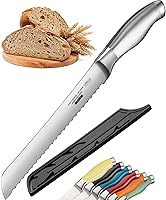
Stainless Steel Serrated Cake or Bread Knife
Buy Now →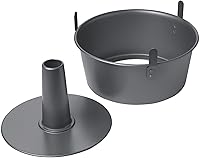
Angel Food Cake Pan with Cooling Feet
Buy Now → Buy Now →
 Notes
- Egg separation: Separate eggs while cold, then let come to room temperature for 30 minutes before using. Room temperature eggs beat to greater volume.
- Clean bowl essential: Any trace of fat (including egg yolk) will prevent egg whites from reaching stiff peaks. Make sure bowl and beaters are completely clean and dry.
- Sifting matters: Both the cake flour and sugar should be sifted. Sifted ingredients incorporate more smoothly with less folding, preserving air in the batter.
- Pan must be ungreased: The batter needs to grip the sides of the pan to climb as it rises. Greasing will cause the cake to collapse.
- Don’t rush cooling: The cake must cool completely upside down. Removing it early will cause collapse and tearing.
Recipe Variations, Serving Ideas, & Storage
Recipe Variations
Frequently Asked Questions
You can substitute all-purpose flour, but the texture will be slightly less tender. For every cup of cake flour, use ⅞ cup all-purpose flour (1 cup minus 2 tablespoons). Sift it three times instead of once to aerate it closer to cake flour's texture. The cake will still work but won't be quite as delicate.
Even a tiny drop of egg yolk or grease in the bowl will prevent whites from beating properly. Make sure your bowl and beaters are completely clean and dry. Also check that your eggs are fresh; older eggs with thinner whites don't beat as well. If your whites look foamy but won't stiffen, start over with a clean bowl.
The cake wasn't fully baked yet. Sponge cakes need the full baking time to set their structure. Even if the top looks done, the interior might still be too moist. Make sure the top springs back with no indentation when pressed, and don't open the oven door before 45 minutes of baking time.
Tube pans are essential for true sponge cakes because the center tube conducts heat through the middle of the tall batter, ensuring even baking. A Bundt pan won't work because the decorative shape makes the cake impossible to remove cleanly, and a regular round pan will give you a squat, dense cake that doesn't rise properly.
Make sure the cake is completely cool, at least 2 hours hanging upside down. Run a thin knife or offset spatula around both the outer edge and center tube, pressing against the pan rather than the cake. Work slowly and gently. If the cake still sticks, it might not be cool enough; wait another hour and try again.
Halving creates problems because you'd need 2½ eggs, and beating a small amount of egg whites doesn't work well since they need volume to build structure. Make the full recipe and freeze half for later, or make the full cake and enjoy it over several days since it stores well.
Sifted sugar dissolves more quickly into the eggs and creates a smoother, more stable foam. It takes an extra 30 seconds but genuinely improves the texture. If your sugar has no lumps, you can skip this step, but don't skip sifting the flour, which is non-negotiable.
You can increase the lemon rind to 1½ tablespoons for more citrus aroma, but don't add more lemon juice beyond the 1 tablespoon specified. Excess liquid will throw off the batter's structure and prevent the cake from rising properly. For stronger lemon flavor, brush the baked and cooled cake with lemon simple syrup instead.
Look for any narrow-necked, stable item taller than the pan's rim: a tall glass, a sturdy funnel, even a can of beans. You need something that will support the center tube while allowing air to circulate around the rest of the cake. Some bakers use three evenly spaced cans to support the outer rim instead.
You deflated the batter during folding. This happens when you stir instead of fold, or when you overfold trying to get every last streak of white mixed in. A few small streaks are fine; stop folding sooner rather than later. Also make sure you're beating the egg whites and yolks to the proper consistency before combining them.
Pin This Light & Airy Lemon Sponge Cake Recipe For Later

This 1953 vintage lemon sponge cake proves that great baking doesn't require complicated ingredients or modern equipment. The separated egg method creates that impossibly light texture using nothing but technique and patience, the same way grandmothers turned out perfect cakes every Sunday without digital thermometers or stand mixers. Once you've beaten the egg whites to stiff peaks and folded everything together with confidence, you'll understand why this recipe survived seven decades.
Does this kind of cake remind you of someone's kitchen? If you make this easy vintage lemon sponge cake recipe, please leave a rating and review to let me know how it turned out!
0 comments