

This vintage cottage cheese lasagna recipe is a gift from my wonderful co-worker Robin and her mom Barb, who've been making this dish for decades as one of their family food traditions. When I mentioned needing something manageable for Christmas dinner, Robin offered her mom's recipe from a well-worn copy of the 1967 Betty Crocker Hostess Cookbook. She also confessed that when she has made it, getting the lasagna filling just right (not too soggy, not too crumbly) can be tricky using the original vintage method, which kept the meat sauce and cheese mixture strictly separated.
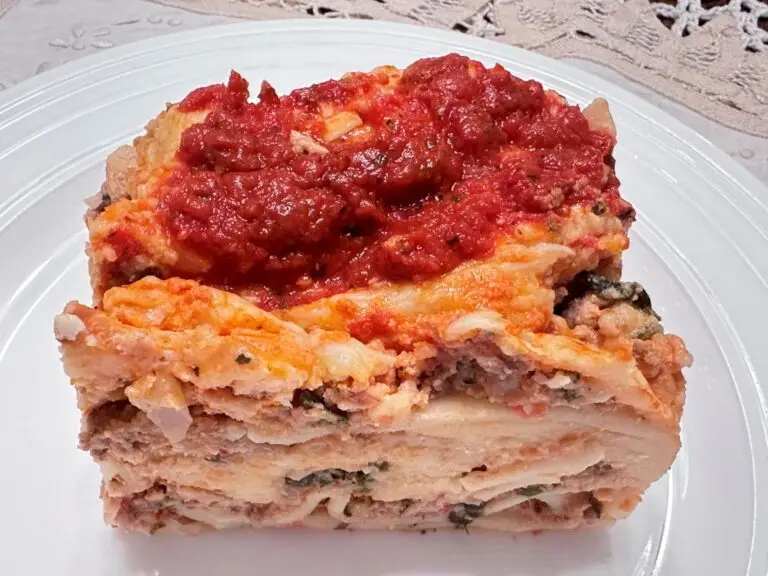
That honest insight saved me. I made the modification of combining the cottage cheese mixture directly into the simmered meat sauce along with beaten eggs and fresh spinach. The result is a cohesive filling that holds its shape when you slice into it, with creamy pockets of tangy cottage cheese throughout instead of a distinct layer that can turn watery or grainy. This is the kind of lasagna people will text you about three months later asking when you're making it again.
Back in the 1960s Kitchen
While The Beatles played on the radio and families gathered around wood-paneled television sets to watch Bonanza, this lasagna bubbled away in ovens across America. Betty Crocker's 1967 Hostess Cookbook arrived during a culinary moment when convenience foods met aspirational entertaining, when cottage cheese was the healthy option showing up in everything from Jell-O molds to casseroles, and lasagna was exotic; serving it to dinner guests was genuinely adventurous entertaining.
This was the era of rotary phones, TV dinners on folding trays, and grocery stores that closed on Sundays. Home cooks worked with what the local supermarket stocked: large-curd cottage cheese in plastic tubs, pre-shredded mozzarella that was revolutionizing weeknight cooking, and whole canned tomatoes that you had to break up with a fork because crushed and diced varieties weren't standard yet. Making lasagna from scratch was a project that signaled special occasions or weekend ambition. You didn't just whip this up between carpool runs.
Families were discovering that Italian-American comfort food could absolutely coexist with their usual rotation of pot roasts and tuna casseroles. Lasagna represented culinary adventure without requiring a passport or ingredients you couldn't pronounce. Plus it fed a crowd, stretched a budget, and the flavor got better as leftovers. Practical magic.
What Makes This Vintage 1960s Lasagna Work
Barb’s Vintage 1960s Lasagna Recipe
This vintage cottage cheese lasagna combines the meat sauce and cheese mixture into one cohesive filling for foolproof texture. Large-curd cottage cheese, ground beef and pork, fresh spinach, and a long-simmered tomato sauce create layers that hold together when you slice them.
- Total Time: 2 Hours 45 Minutes
- Yield: 10 Servings 1x
Ingredients
- 1 1/2 pounds ground beef
- 1/2 pound ground lean pork
- 1 cup chopped onion
- 1 clove garlic, crushed
- 1 can (1 pound 12 ounces) tomatoes
- 1 can (15 ounces) tomato sauce
- 1 1/2 tablespoons parsley flakes
- 1 1/2 tablespoons sugar
- 1 teaspoon salt
- 1 teaspoon crushed basil leaves
- 1 carton (2 pounds) creamed cottage cheese (large curd)
- 1/2 cup grated Parmesan cheese
- 1 tablespoon parsley flakes
- 1 teaspoon salt
- 1 teaspoon crushed oregano leaves
- 8 ounces lasagna noodles, cooked and well drained
- 3/4 pound mozzarella cheese, shredded
- 1/2 cup grated Parmesan cheese
Instructions
- Make the meat sauce: Cook ground beef, ground pork, onion, and garlic in a heavy Dutch oven or large roasting pan over medium-high heat until meat is browned and onion is tender, about 8 to 10 minutes. Drain off excess fat.
- Simmer the sauce: Add tomatoes to the pot and break them up with a fork. Stir in tomato sauce, 1½ tablespoons parsley flakes, sugar, 1 teaspoon salt, and basil. Simmer uncovered for 1 hour, stirring occasionally, until mixture is as thick as good spaghetti sauce.
- Prepare cheese mixture: While sauce simmers, combine cottage cheese, ½ cup Parmesan cheese, 1 tablespoon parsley flakes, 1 teaspoon salt, and oregano in a medium bowl. Set aside.
- Combine meat and cheese: After the sauce has simmered for 1 hour, stir in the cottage cheese mixture and beaten eggs. Simmer together for an additional 10 minutes, stirring occasionally, until mixture is well combined.
- Cook the noodles: Meanwhile, bring a large pot of salted water to a boil. Cook lasagna noodles according to package directions until just tender. Drain well and lay flat on parchment paper or clean cutting board.
- Assemble lasagna: Heat oven to 350°F. Spray a 13x9x2-inch baking dish with cooking spray. Spread a thin layer of the meat-cheese mixture on the bottom of the dish. Layer with noodles, more meat-cheese mixture, and shredded mozzarella. Repeat layers, ending with a final layer of noodles topped with remaining meat-cheese mixture. Sprinkle top with ½ cup Parmesan cheese.
- Bake: Cover loosely with foil and bake for 30 minutes. Remove foil and continue baking for 15 to 25 minutes more, until cheese is golden and bubbly in the center.
- Rest and serve: Let lasagna stand for 15 minutes after removing from oven before cutting into squares. This allows the filling to set up properly.
Equipment

Lodge 7.5 Quart Enameled Cast Iron Dutch Oven
Buy Now →
KitchenAid All Purpose Kitchen Shears
Buy Now → Buy Now →
 Notes
Layer your noodles in alternating directions as you build the lasagna. First layer lengthwise, second layer crosswise, and so on. This crisscross pattern creates structural support that helps the lasagna hold together when you slice it. You’ll want to use a pair of kitchen scissors to cut the cooked lasagna noodles to the right size.
How to Make Perfect Vintage Baked Lasagna
Recipe Variations, Serving Ideas, & Storage
Recipe Variations
Frequently Asked Questions
Watery lasagna means your meat sauce wasn't simmered long enough to thicken properly, or you used low-fat cottage cheese which releases more liquid during baking than a leaky faucet. Make sure your sauce is genuinely thick before mixing in the cheese, and always use full-fat cottage cheese. This is not the time for diet products.
The eggs bind the cheese mixture and keep everything cohesive during baking, so leaving them out will give you looser, more separated texture. If you need an egg-free version, try adding an extra 1/4 cup of Parmesan cheese to help with binding, but know that it won't be quite the same.
Spray your baking dish generously with cooking spray before you start layering and make sure your first layer is sauce rather than naked noodles. That bottom sauce layer creates a barrier between the pasta and the pan.
Absolutely. Assemble the lasagna completely, wrap it tightly in plastic wrap and foil like you're preparing it for arctic storage, and freeze for up to 3 months. Thaw it overnight in the refrigerator before baking, then bake as directed, adding an extra 10 to 15 minutes if it's still cold from the fridge.
Cottage cheese has tangier flavor and distinct curds that create pockets of texture throughout, while ricotta is smoother, creamier, and milder (some would say blander, but we're being polite). Cottage cheese also tends to be higher in protein and lower in fat, which only matters if that matters to you.
Let your lasagna rest for a full 15 minutes after removing it from the oven. This is not a suggestion. The resting time allows the filling to set up properly so your slices hold together instead of sliding into a puddle on the plate while you watch in horror.
Yes and your popularity will increase dramatically. Use two 13x9-inch baking dishes and divide all the ingredients evenly between them. The baking time stays the same since each pan is the same depth.
Dry lasagna means either your meat sauce was too thick to begin with, you didn't use enough sauce between layers (don't be stingy), or you overbaked it. Cover the lasagna with foil for the first 30 minutes of baking to trap moisture, then uncover for the final browning. Your lasagna will thank you by being creamy.
You can use all beef if you must, but the pork adds complexity and subtle sweetness that makes this lasagna taste richer and more interesting. If you skip the pork, consider using 85% lean ground beef instead of 90% so you don't end up with dry, flavorless filling. Fat carries flavor. We're not apologizing.
This vintage cottage cheese lasagna recipe carries forward Barb's family tradition while modifying the fussy parts of the 1960s method. The combination of meat, cheese, and just enough vegetables feels substantial without requiring a post-dinner nap, and the flavors genuinely improve after a day in the refrigerator (if it lasts that long).
Did your family make lasagna with cottage cheese instead of ricotta? Were there modifications that made your version legendary at potlucks? I want to hear about the tweaks and traditions that made it yours. If you make this vintage cottage cheese lasagna recipe, please leave a rating and review!
0 comments