

This tartiflette (French potato casserole) brings layers of tender potatoes, crispy thick cut bacon, and melted cheese together in one showstopping Alpine dish that takes just over an hour from start to finish. I've made this recipe countless times for winter gatherings, and the combination of nutmeg-spiced onions with white wine builds complexity that makes this casserole worthy of your best dinner parties.
For another elegant potato side dish perfect for special occasions, try this make-ahead cream cheese potato soufflé that puffs up beautifully alongside any roast.
The scent of bacon fat mingling with caramelized onions hits you first, savory and rich. Then comes the quiet bubble of white wine reducing in the pan, steam rising as it mingles with black pepper and freshly grated nutmeg. This is cooking that smells like comfort, like someone who actually knows their way around a kitchen is in charge.
French Alpine Cooking Tradition
Tartiflette hails from the Savoy region of the French Alps, where this hearty casserole kept mountain families and weary skiers fueled through long, cold winters. In the 1970s and 1980s, when ski resorts transformed quiet Alpine villages into winter destinations, tartiflette became the signature après-ski meal served in chalets with crackling fireplaces and bottles of crisp Savoie white wine.
The dish takes its name from the Savoyard word "tartifles," meaning potatoes, and originally featured Reblochon, a creamy washed-rind cheese unavailable in the United States. French cooks layered boiled potatoes with bacon lardons, onions, and thick slabs of that distinctive cheese, creating a casserole that balanced richness with the clean, mineral notes of Alpine dairy.
While we can't replicate Reblochon exactly, quality Gruyere, Camembert, or Fontina capture that same luxurious melt and tangy depth that made tartiflette a cold-weather staple.
What Makes This Tartiflette Outstanding
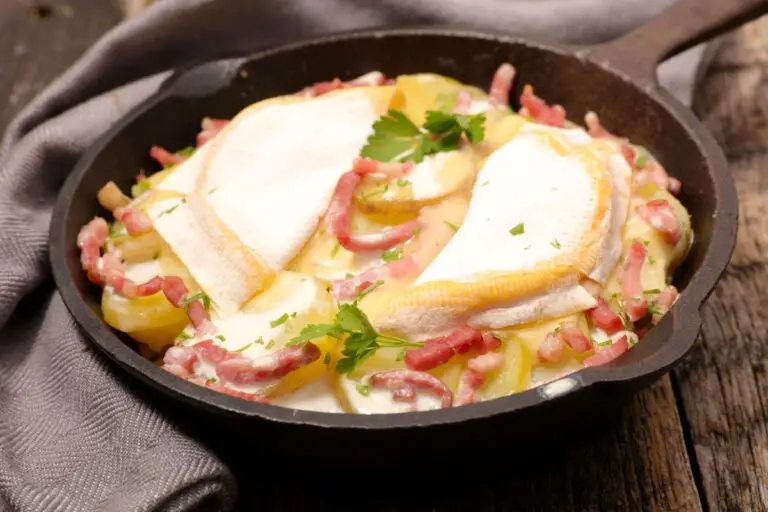
Tartiflette French Potato Casserole Recipe
This tartiflette layers tender boiled potatoes with crispy bacon, caramelized onions, white wine, and melted cheese for an authentic Alpine dish that serves as the ultimate cold-weather side. Originally from France’s Savoy region, tartiflette traditionally features Reblochon cheese, but this accessible version uses readily available Gruyere, Camembert, or Fontina for equally delicious results.
- Total Time: 1 hour 10 minutes
- Yield: 8 servings 1x
Ingredients
- 3 pounds russet potatoes
- 12 ounces thick-cut bacon, cut into half-inch pieces
- 2 large onions, sliced thin
- Salt and pepper to taste
- 1/2 teaspoon ground nutmeg
- 1/2 cup dry white wine
- 3/4 cup crème fraîche
- 1 pound Gruyere, Camembert, or Fontina cheese (or combination), sliced thick with rind intact
Instructions
- Boil 3 pounds of russet potatoes whole and in their skins in salted water for about 20 minutes until fork-tender. Drain and let cool enough to handle.
- While potatoes cool, fry 12 ounces of thick-cut bacon pieces in a dry skillet over medium-high heat until crispy. Use a paper towel to blot out some (but not all) of the rendered fat.
- Add 2 thin-sliced onions, salt, pepper, and ½ teaspoon ground nutmeg to the skillet with remaining bacon fat. Cook until onions are softened and golden, about 8-10 minutes.
- Stir in ½ cup dry white wine, scraping the bottom of the pan to release browned bits. Cook for 2-3 minutes until wine reduces slightly.
- Peel cooled potatoes and cut into half-inch slices. Butter a 2½ quart casserole dish.
- Arrange about half of the potato slices in the bottom of the buttered casserole dish in an even layer.
- Pour the entire skillet contents (bacon, onion, wine mixture) over the first layer of potatoes.
- Arrange remaining potato slices on top of the bacon-onion mixture.
- Spread ¾ cup crème fraîche evenly over the top layer of potatoes.
- Place 1 pound of thick-sliced cheese on top (rind included, but remove any paper or packaging).
- Bake in a preheated 375°F oven for about 45 minutes until cheese is melted, golden brown, and bubbling at the edges.
- Let rest for 5-10 minutes before serving to allow the layers to set slightly.
Notes
Cheese substitutions: Since Reblochon isn’t available in the US, use Gruyere for nutty flavor, Camembert for creamy richness, or Fontina for mild sweetness. A combination of Camembert and Fontina creates the most authentic texture and flavor profile.
How to Make Perfect Tartiflette
Recipe Variations, Serving Ideas, & Storage
Recipe Variations
Frequently Asked Questions
Russet potatoes work best because their starchy texture absorbs the bacon-wine mixture while holding their shape during layering. Yukon Gold potatoes offer a creamier alternative with buttery flavor. Avoid red or new potatoes, as their waxy texture prevents proper absorption of flavors and they can turn gummy during baking.
Camembert provides the closest match with its creamy texture and mild funk, though it melts slightly runnier than Reblochon. Gruyere adds nutty complexity and melts beautifully but lacks Reblochon's characteristic tanginess. For the most authentic result, combine Camembert for texture with Fontina or young Gruyere for structure. Use about 8 ounces of each for the full pound required.
Excess water in your potatoes causes soggy tartiflette. Make sure you drain boiled potatoes thoroughly and let them cool before slicing so excess moisture evaporates. Also check that you're not using too much wine or that your bacon didn't release excessive liquid. If this happens, uncover the casserole for the last 10 minutes of baking to allow excess moisture to evaporate.
Keep the rind intact when using bloomy-rind cheeses like Camembert or Brie in tartiflette. The rind adds earthy flavor and prevents the cheese from completely liquefying during baking. Just make sure you've removed any paper or plastic packaging first. The rind is completely edible and contributes to the authentic Alpine experience.
Absolutely. In France, tartiflette is traditionally served as a main course after skiing, accompanied only by a green salad and crusty bread. The combination of potatoes, bacon, and cheese provides substantial protein and carbohydrates. For American audiences accustomed to lighter main courses, plan on 6 servings rather than 8 if serving tartiflette as the centerpiece.
The cheese should be melted, golden brown, and bubbling vigorously at the edges. Insert a knife through the center of the casserole; it should slide through all layers without resistance. If the cheese browns too quickly before the potatoes finish cooking, tent loosely with aluminum foil and continue baking until a knife passes through easily, usually another 10-15 minutes.
Tartiflette uses boiled potato slices layered with bacon, onions, and wine, then topped with thick slices of semi-soft cheese. Scalloped potatoes feature raw potato slices baked in a milk or cream sauce, often with cheese sauce throughout rather than just on top. Tartiflette has more distinct layers and bolder flavors from bacon and wine, while scalloped potatoes offer a creamier, more uniform texture.
Replace the white wine with chicken or vegetable stock if you prefer to avoid alcohol. The wine adds acidity and depth, so consider adding a tablespoon of white wine vinegar or lemon juice to the stock to mimic that brightness. The flavor will be slightly different but still delicious.
You need higher heat and patience for properly crispy bacon. Start with a cold skillet and bring it up to medium-high heat gradually, allowing the fat to render slowly. Cook the bacon pieces until they're deeply browned and crisp, stirring frequently. If your bacon seems to be cooking unevenly, it might be cut too thick. Aim for half-inch pieces that have enough surface area to crisp up properly.
Boil and slice the potatoes up to one day ahead, storing them covered in the refrigerator. Cook the bacon and onion mixture the same day you plan to bake for the best flavor and texture. Alternatively, assemble the entire casserole up to 24 hours before baking, as mentioned in the make-ahead section.
This French potato casserole tartiflette brings a taste of the Alps to your winter table with honest ingredients and straightforward technique. The layers of tender potatoes, savory bacon, and melted cheese create something far greater than fancy scalloped potatoes, making it worthy of your holiday spread.
What's your favorite cold-weather casserole that transports you to another time or place? If you make this tartiflette recipe, please leave a rating and review!
0 comments