

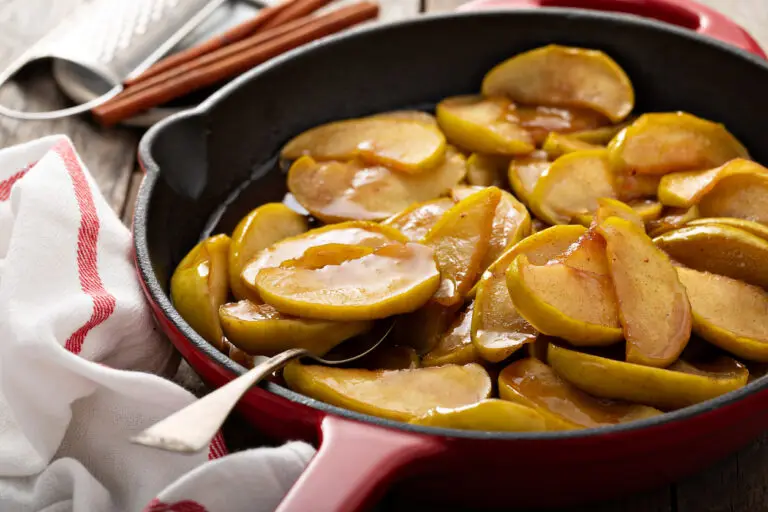
Want to know how to make stewed apples the old fashioned way? These tender, warmly spiced apples cook in just 15 minutes using only five ingredients and one simple pot. The apples hold their shape as they become fork-tender and fragrant with cinnamon, nutmeg, and vanilla. Serve them warm over oatmeal for breakfast, spooned over vanilla ice cream for dessert, or straight from the bowl with a drizzle of heavy cream.
Winter apples stew gently in their own juices, creating a naturally sweet syrup that needs nothing more than a hint of spice. We made these recently, and I was reminded of how that unmistakable scent of cinnamon and cooked apples fills the entire house.
When Stewed Apples Graced Every Table
In the 1940s and 1950s, stewed apples appeared on American tables with remarkable regularity. Home cooks kept bowls of them in the icebox, ready to serve at breakfast with oatmeal or cream of wheat, tucked alongside pork chops at dinnertime, or warmed for a simple dessert. The recipe reflects an era when families preserved their own apple harvests, when root cellars held bushels of winter keepers like Winesaps and Northern Spies through the cold months.
This wasn't the age of instant gratification. Women planned meals days in advance, and recipes that could multitask earned their place in recipe boxes. Stewed apples fit perfectly into this rhythm. They used apples that might be slightly past their prime for fresh eating, transformed them with minimal sugar during years of rationing, and provided vitamins during the winter months when fresh fruit was scarce. Radio programs like "The Breakfast Club" filled morning kitchens while these apples simmered gently on gas or electric stoves, replacing the wood-burning ranges of previous generations.
The ritual of keeping a bowl of stewed apples on hand speaks to a different pace of cooking. Women like my grandmother and great-aunts understood the value of simple preparations that could anchor multiple meals.
What Makes This Stewed Apples Recipe Work
Old Fashioned Spiced Stewed Apples Recipe
These old fashioned stewed apples are tender, warmly spiced, and ready in just 15 minutes. Made with winter apples, cinnamon, nutmeg, and vanilla, they’re perfect for breakfast, dessert, or as a comforting side dish. This vintage recipe produces fork-tender apple slices in a naturally sweet syrup.
- Total Time: 15 minutes
- Yield: 6 servings 1x
Ingredients
- 10 large winter apples (such as Granny Smith, Honeycrisp, or Northern Spy), pared, cored, and cut into 8 slices each
- 1/2 cup granulated sugar
- 1/4 teaspoon ground cinnamon
- 1/4 teaspoon ground nutmeg
- 1 teaspoon vanilla extract
- Heavy cream for serving (optional)
Instructions
- Prepare the apples by peeling, coring, and cutting each apple into 8 equal slices.
- Place prepared apple slices into a large saucepan and add 2 inches of hot water to the bottom of the pan.
- Cover the saucepan with a tight-fitting lid and bring to a simmer over medium heat.
- Simmer the apples for 3 to 5 minutes, until tender when pierced with a fork. Check at 3 minutes for firmer texture, or go the full 5 minutes for very soft apples.
- Turn off the heat and remove the lid. Stir in the sugar, cinnamon, nutmeg, and vanilla extract, mixing gently to blend the seasonings without breaking the apple slices.
- Remove the cover and let stand briefly to allow seasonings to meld, or serve immediately.
- Serve hot or warm with heavy cream spooned over the top, or serve cold straight from the refrigerator.
Equipment
 Buy Now →
3 Quart Heavy Bottom Sauce Pan
Buy Now →
OXO Good Grips Silicone Spatula Set
Buy Now →Nutrition
- Serving Size: 1 cup
- Calories: 261
- Sugar: 58.8g
- Sodium: 2mg
- Fat: 0.6g
- Carbohydrates: 67.8
- Fiber: 9.0g
- Protein: 1.0g
How to Make Perfect Old Fashioned Stewed Apples
Recipe Variations, Serving Ideas, and Storage
Recipe Variations
Frequently Asked Questions
Yes, you can leave the peel on for less prep work and added fiber. The peels soften during steaming and add a slight texture contrast. Personally, I prefer skins on! However, the vintage recipe specifically calls for pared (peeled) apples for a more refined, traditional presentation.
Stewed apples cook directly in liquid, simmering until tender. The apples sit in the water, absorbing some of it while releasing their own juices.
Steamed apples cook above the water in a steamer basket, where only the steam touches them. This requires minimal water (usually 1 inch), and the apples never sit in liquid
Absolutely. Place apples in a steamer basket over 1 inch of water and steam for 4 to 5 minutes. After steaming, transfer to a bowl and stir in the sugar and spices. This method works well if you want to drain off excess liquid.
Work quickly and keep cut apples submerged in cold water with a squeeze of lemon juice until you're ready to steam them. Drain well before placing in the pot. Alternatively, cut and cook immediately, as the brief browning won't affect the finished dish.
Yes, you can reduce the sugar to 1/4 cup or omit it entirely if using naturally sweet apples like Fuji or Gala. Taste after steaming and add sugar gradually until it reaches your preferred sweetness. Keep in mind that vintage recipes typically used tart cooking apples that needed more sugar.
Yes, stewed apples make an excellent first food for babies. Omit or drastically reduce the sugar, and mash or puree the apples to the appropriate texture for your child's age. The natural sweetness of the apples is usually sufficient for young palates.
If your apples become too soft, you've successfully made applesauce! Embrace it by mashing them slightly and serving as a chunky applesauce. To prevent this next time, check your apples at 3 minutes and use firmer apple varieties.
Yes, place apples in the Instant Pot with 1 cup water, seal the lid, and pressure cook on high for 2 minutes with a quick release. Stir in the sugar and spices after cooking. The texture will be slightly softer than stovetop steaming.
Pierce an apple slice from the center of the pan with a fork. It should slide in easily but the apple should still hold its shape. If there's resistance, steam for another minute. If the apple falls apart, it's overcooked (but still delicious).
Yes, but you'll need a very large pot or work in batches. Overcrowding the pan prevents proper steam circulation and leads to uneven cooking. If doubling, use your largest stockpot with a tight-fitting lid and add 3 inches of water instead of 2.

Who in your family kept a bowl of stewed apples on hand? I'd love to hear how your grandmother or great-aunt served them. Was it at breakfast with cream, or as a side dish at Sunday dinner? If you make this old-fashioned stewed apples recipe, please leave a rating and review below! Your feedback helps other readers and means the world to me.
0 comments