

Percolator coffee tastes better than drip, bolder than Keurig, and more forgiving than a Moka pot because the brewing method continuously cycles water through the grounds instead of running through once and calling it done.
This 1919 Mirro Aluminum pot from Manitowoc, Wisconsin, shows exactly what made these stovetop brewers worth keeping for decades: a hollow stem system that creates layered extraction, a rivetless no-burn ebonzied knob, and a heat-resistant handle you could actually grip without burning yourself.

The percolator method works through continuous cycles. Water heats at the bottom, shoots up through a hollow stem, runs through the coarse coffee grounds in a metal basket, then drips back down to repeat the process. It takes patience, but you get a bold, full-bodied cup that drip machines don't come close to matching.
The Mirro Revolution: When Aluminum Changed Coffee
The Great War had just ended, and December 1919 found America transitioning back to everyday life. The Aluminum Goods Manufacturing Company in Manitowoc was shifting back to household goods after producing military canteens and mess kits during WWI. Their new Mirro brand, launched just two years prior, was advertising heavily in magazines like The Ladies' Home Journal. This was an era when kitchens still relied on cast iron and enamelware, making lightweight aluminum feel revolutionary.
What Makes Stovetop Percolated Coffee So Good
How to Brew Coffee in a Stovetop Percolator
1.
Start with Cold Water
Fill the percolator's main chamber with cold water up to your desired cup level. Most stovetop percolators have measurement marks stamped somewhere on the body. Cold water gives you control over the heating curve, allowing flavors to develop gradually instead of shocking the grounds with immediate heat.
2.
Measure Your Grounds
Start with one tablespoon of coarse coffee per cup of water, then adjust to taste. Place the grounds in the percolator basket while it's removed from the pot to avoid spilling loose coffee into the water chamber. Some people tuck a paper filter inside the metal basket for a cleaner cup, though it's optional and slightly reduces the oils that give percolator coffee its body.
3.
Assemble and Heat Slowly
Insert the pump stem into the water, slide the basket onto the stem, and snap the lid closed. Place the percolator on your stovetop over low to medium heat. Watch the glass knob if your model has one. After a few minutes, you'll see clear bubbles rising. That's your signal to start timing and dial the heat down to low if the bubbles are climbing too fast.
4.
Time the Brew
Set a timer for 8 to 10 minutes once you see the first bubbles. Eight minutes gives you a milder brew; ten produces a stronger pot. If you hear loud, rolling bubbles or see steam pouring from the spout, your heat is too high. Turn it down immediately.
5.
Let It Settle
Once your timer goes off, remove the percolator from the heat and give it 30 seconds to settle. This stops the brewing cycle and lets the grounds sink. Carefully remove the basket and stem if your pot design allows it, or simply pour slowly to avoid disturbing sediment at the bottom. The coffee will be very hot, so use a towel on the handle even if it's wood.
The Allure of Vintage Stovetop Percolators
Before specialty coffee became its own entire personality type, percolators were just how coffee was made. These pots were built to last decades, and a well-made Mirro from the 1940s or 1950s still brews a perfect pot today. They work anywhere you have a heat source but no electricity, which makes them quietly essential for camping, power outages, or simply wanting coffee that doesn't depend on a functioning outlet.
There's something grounding about using a tool that hasn't fundamentally changed in over a century. The 1919 Mirro in this advertisement looks nearly identical to models made forty years later, proof that some designs simply work. The company closed its Wisconsin factory in 2003, but these pots remain widely available at estate sales, antique shops, and online.
Worth noting: most experts suggest using vintage aluminum for display rather than daily brewing due to concerns about aluminum exposure and the condition of old interior finishes.
Contemporary Stovetop Percolator Options

This is the budget option that gets the job done if you're camping or just want to try percolator coffee without spending much. At 9 ounces, it's the lightest percolator you'll find, which matters when you're packing for a trip. The glass knob lets you watch the brew darken, and the aluminum heats evenly on gas stoves, electric burners, or campfires.
Reality check: the 9-cup capacity is overstated. You're actually looking at 4 to 6 cups, and there are no measurement markings inside to guide you. Works best if you're brewing for a small group and don't mind a learning curve.

This is the closest modern percolator to the vintage Mirro pots. Heavy-duty stainless steel with a mirror finish looks good enough to leave on the stovetop, and the permanent filter basket means no paper filters to deal with.
The advertised capacity is accurate. You can brew anywhere from 3 to 8 cups depending on whether you're making coffee for yourself or a group. Works on gas and electric stoves, and the whole unit is dishwasher safe.
Comes with a lifetime warranty.
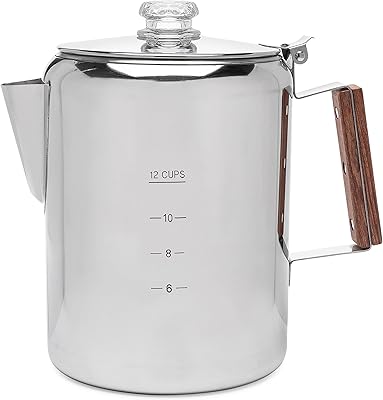
This is what a modern percolator should be: all stainless steel with zero aluminum or plastic touching your coffee. The glass dome on top lets you watch the brew darken from pale gold to rich brown, just like vintage models did. Rosewood handles stay cool enough to grip without a towel, and the heavy-gauge construction means this pot won't dent in your camping gear.
Works equally well on gas stoves, electric burners, or campfires. Note that the actual capacity is closer to 6 cups rather than the advertised 9, so size up if you're brewing for a group. Comes with disposable paper filters and a lifetime replacement guarantee.
Frequently Asked Questions
You can, but you'll get better results with coarse grind. Regular pre-ground coffee is usually medium grind, which slips through the percolator basket's holes and makes your coffee cloudy with a gritty texture. Coarse-ground coffee or beans you grind yourself to a coarse consistency will give you a cleaner cup.
Bitterness usually means the water boiled too hard or you percolated too long. Keep the heat low enough that you see gentle, steady bubbles every few seconds rather than a rolling boil. Anything over 10 minutes starts over-extracting harsh compounds from the coffee grounds.
A percolator continuously cycles water through the grounds for 8 to 10 minutes, while a Moka pot uses steam pressure to push water through grounds just once in about 5 minutes. Both make strong coffee, but percolators produce a larger volume for serving multiple cups, while Moka pots create espresso-style concentration for one or two servings.
Use 6 tablespoons of coarse-ground coffee for a standard 6-cup percolator, which equals one tablespoon per cup. If you prefer stronger coffee, increase to 1.5 tablespoons per cup. Start conservative because you can always make the next pot stronger, but you can't fix an over-extracted batch.
Stovetop percolators work on electric, gas, and camping stoves. On electric stoves, use a low to medium heat setting and be patient with the warmup time since electric coils heat more slowly than gas flames. Remove the pot from the burner when brewing finishes because electric elements stay hot longer.
Mirro no longer manufactures percolators, but vintage models are widely available on Etsy, eBay, and at antique shops. Look for pots with intact glass knobs, all interior basket pieces, and minimal denting. Expect to pay $20 to $50 for a well-preserved model from the 1940s through 1960s.
Coarse grind is essential. The texture should resemble raw sugar or coarse sea salt, with visible, distinct particles you can see. If you're buying pre-ground, look for labels that say "coarse" or "percolator grind," or grind your own beans on the coarsest setting your grinder has.
Did your grandmother's percolator end up in a cabinet somewhere, too pretty to use but too meaningful to donate? If you dust it off and try this method, I'd love to hear how it goes. Drop a comment below with your coffee-to-water ratio and whether you went the full 10 minutes or stopped early.
0 comments