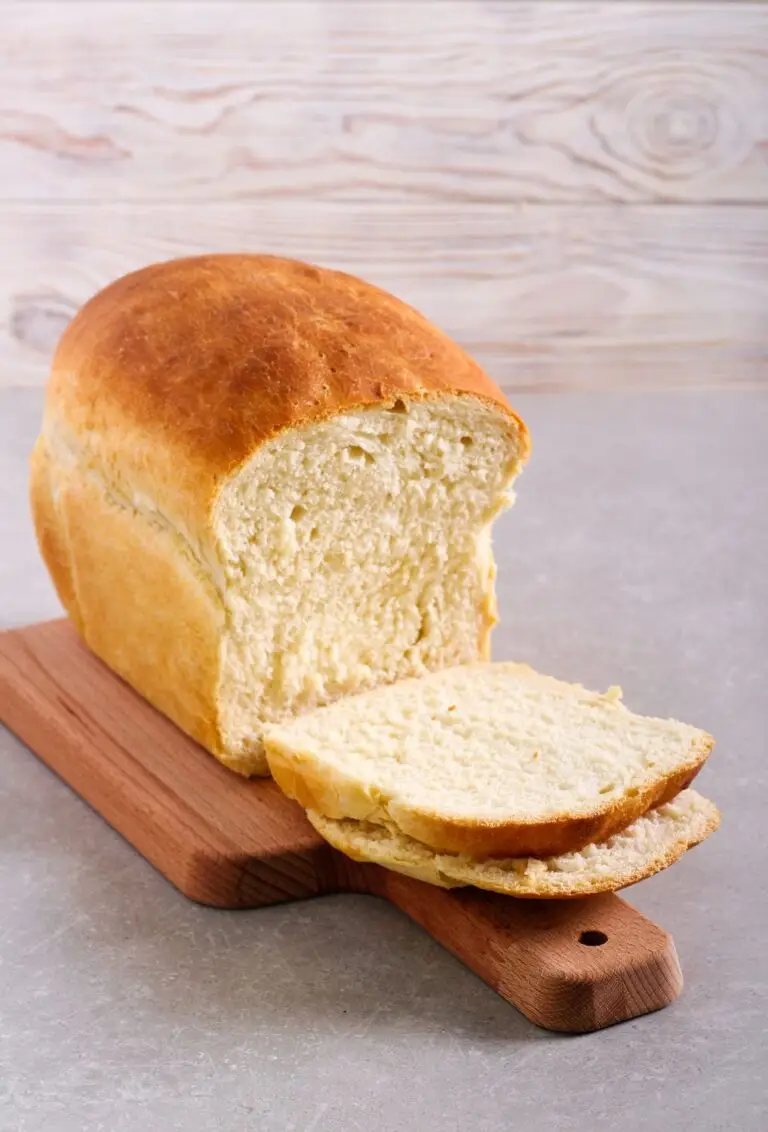
Ingredients
Units
Scale
- 1 cup whole milk, room temperature
- 3 tablespoons granulated sugar
- 1 package dry yeast (active dry yeast or instant yeast)
- 1/4 cup warm water
- 1 egg, room temperature
- 2 tablespoons vegetable oil OR 2 tablespoons melted butter
- 1 teaspoon salt
- 3 1/2 cups bread flour, plus up to 1/3 cup additional for kneading
Instructions
- Step 1: Activate the yeast
Combine the warm water, sugar, and yeast in a large measuring cup. Stir gently and let the mixture sit undisturbed for 5 to 10 minutes. You are looking for a foamy, bubbly layer that rises across the surface. That foam is your confirmation the yeast is alive and active. If nothing happens after 10 minutes, your yeast is not viable. Start with a new package before going further. While the yeast activates, crack your egg into a small bowl or glass and beat it fully until the yolk and white are completely combined. - Step 2: Combine the dry ingredients
In the large bowl of a stand mixer (or a large bowl if mixing by hand), combine the bread flour and salt. Mix them together thoroughly so the salt is evenly distributed before the wet ingredients go in. Salt and yeast should never make direct contact before mixing; if the salt hits the yeast mixture before it is buffered by flour, it can inhibit yeast activity. - Step 3: Build the dough
Create a well in the center of the flour. Add the beaten egg, oil or melted butter, and the full yeast mixture into that well. Mix on low speed using the dough hook attachment until the ingredients start to come together and the sides of the bowl are mostly clean, about 2 to 3 minutes. Increase to medium speed and knead for 8 to 10 minutes total, until the dough is smooth, elastic, and pulls cleanly from the bowl. Stop and do the windowpane test: stretch a small piece of dough between your fingers. If you can see light through it without it tearing, the gluten is developed and the dough is ready. If it tears, keep kneading in 2-minute increments and test again. - Step 4: First rise
Drizzle about a teaspoon of oil over the dough in the bowl and turn the dough once so it is lightly coated on all sides. This prevents a dry crust from forming on the surface. Set your oven to its lowest setting for one minute, then turn it off. Place a glass measuring cup filled with boiling hot water in the bottom of the oven. Put the bowl in and close the door. Let the dough rise for about 1 hour, or until it has doubled in size. Doubled means visibly twice the original volume, not just puffed. At this point, the hardest part of the recipe is already behind you. - Step 5: Shape the loaf
Turn the risen dough out onto a clean, lightly floured surface. Punch it down firmly with the heel of your hand to release the air bubbles, then knead for 2 to 3 minutes, adding flour in small amounts only as needed to keep it from sticking. Stop when the dough is smooth and stretchy. Use your fingers and palms to flatten it into a rectangle roughly the width of your prepared loaf pan. Roll the dough tightly into a cylinder, pressing out any air pockets as you go. Pinch the final seam firmly along its full length to close it, and place the loaf seam-side down into the greased and parchment-lined loaf pan. - Step 6: Second rise
Return the pan to the warm oven with a fresh measuring cup of boiling hot water. Leave the loaf uncovered and let it rise for 45 to 60 minutes. Do not rush this stage. The dough is ready when the crown rises 1 to 1.5 inches above the top of the pan. That height tells you the yeast is fully active and the loaf will have good structure in the oven. If the crown is barely clearing the rim, give it more time. - Step 7: Preheat and bake
About 5 to 10 minutes before the second rise looks complete, remove the pan from the oven and preheat to 375°F. Place the loaf pan directly on the center rack in the middle of the oven. Bake for 30 to 40 minutes, until the top crust is deep golden brown, the bottom of the loaf sounds hollow when tapped, or an instant-read thermometer inserted into the center reads 190 to 195°F. If the top starts to darken faster than expected, loosely tent it with aluminum foil during the final 10 minutes. - Step 8: Cool the loaf
Remove the pan from the oven and let the bread cool in the pan for 5 minutes. Then turn the loaf out onto a wire cooling rack. For a softer top crust, brush the surface with melted butter while the loaf is still hot. Allow the loaf to cool completely to room temperature before slicing. Cutting into a hot loaf collapses the crumb and compresses the interior texture you worked to build. Thirty minutes of patience makes a real difference in the final slice.
- Prep Time: 20 Minutes
- Rise Time: 2 Hours
- Cook Time: 40 Minutes
- Category: Bread
- Method: Baking
- Cuisine: American