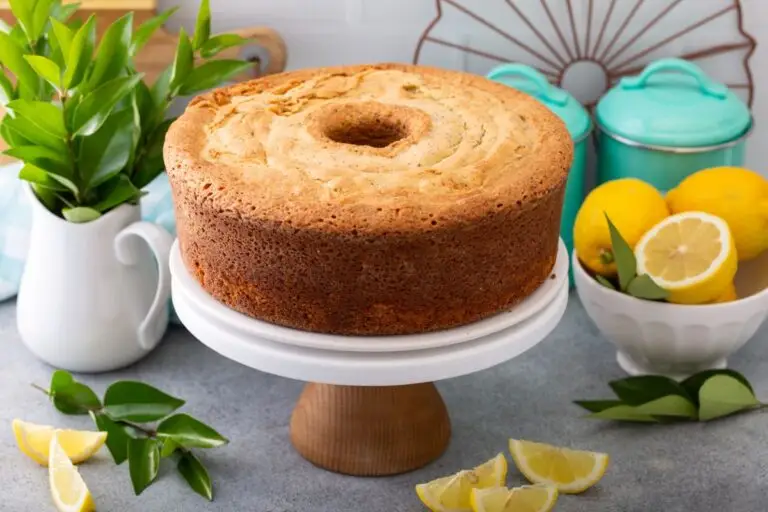
Ingredients
Units
Scale
- 1 cup sifted cake flour
- 1/2 teaspoon salt
- 5 large eggs, separated, at room temperature
- 1 cup granulated sugar, sifted, divided
- Grated rind of 1 lemon (about 1 tablespoon)
- 1 tablespoon fresh lemon juice
Instructions
- Preheat oven: Position oven rack to lower-middle position. Preheat oven to 325°F. Do not grease a 9-inch tube pan. Set aside.
- Sift dry ingredients: Measure cake flour into a sifter after sifting once. Add salt and sift together into a bowl. Set aside.
- Beat egg whites: In a large, completely clean mixing bowl, beat egg whites with an electric mixer on medium speed until foamy, about 1 minute. Gradually add ½ cup sugar, 1 tablespoon at a time, beating well after each addition. Continue beating on high speed until meringue forms stiff peaks that stand straight up, about 4 minutes total. Set aside. Do not wash the beaters.
- Beat egg yolks: In a medium-size bowl, beat egg yolks on medium-high speed until thick and pale yellow, about 2 minutes. Gradually beat in remaining ½ cup sugar, 1 tablespoon at a time, until yolk mixture is very thick and lemon-colored, about 3 minutes. Stir in lemon rind and lemon juice until combined.
- Combine mixtures: Sift flour and salt mixture over the egg yolk mixture. Using a rubber spatula, fold in gently just until blended, about 6 to 8 folds. Do not overmix.
- Fold in meringue: Add the yolk-flour mixture to the beaten egg whites. Fold together gently but thoroughly using a large rubber spatula, cutting down through center, scraping across bottom, and bringing spatula up and over the top. Rotate bowl quarter turn and repeat until no white streaks remain, about 12 to 15 folds total. Work quickly but gently to preserve air.
- Fill pan: Immediately pour batter into ungreased 9-inch tube pan. Smooth top with spatula if needed.
- Bake: Bake on lower-middle oven rack for 50 minutes, or until top springs back when lightly pressed with fingertip. The cake will be golden brown on top.
- Invert to cool: Immediately invert pan upside down. If your tube pan doesn’t have feet, rest the center tube on the neck of a wine bottle or sturdy funnel. Let cake hang upside down until completely cool, at least 2 hours or up to 4 hours.
- Remove from pan: Once completely cool, run a thin knife or offset spatula around the outer edge and center tube to loosen. Remove outer ring of pan. Run knife under the bottom to release. Invert cake onto a serving plate, then turn right-side up.
- Serve: Serve unfrosted, sprinkled with confectioners’ sugar.
Equipment
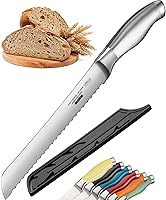
Stainless Steel Serrated Cake or Bread Knife
Buy Now →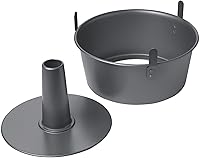
Angel Food Cake Pan with Cooling Feet
Buy Now → Buy Now →
 Notes
- Egg separation: Separate eggs while cold, then let come to room temperature for 30 minutes before using. Room temperature eggs beat to greater volume.
- Clean bowl essential: Any trace of fat (including egg yolk) will prevent egg whites from reaching stiff peaks. Make sure bowl and beaters are completely clean and dry.
- Sifting matters: Both the cake flour and sugar should be sifted. Sifted ingredients incorporate more smoothly with less folding, preserving air in the batter.
- Pan must be ungreased: The batter needs to grip the sides of the pan to climb as it rises. Greasing will cause the cake to collapse.
- Don’t rush cooling: The cake must cool completely upside down. Removing it early will cause collapse and tearing.
- Prep Time: 20 Minutes
- Cooling Time: 2 Hours
- Cook Time: 50 Minutes
- Category: Dessert
- Method: Baking
- Cuisine: American